


Woven Anatolian Rug
A woven anatolian rug brings centuries of village tradition and intricate knotting into a room, offering tactile warmth and enduring character.

Woven Anatolian Rug
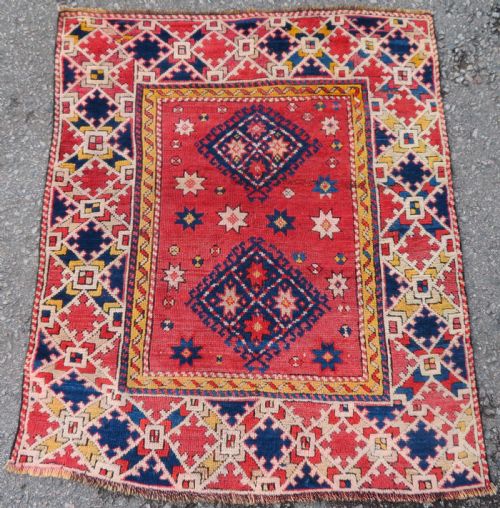
A woven anatolian rug encompasses diverse village and town floor coverings originating from Turkey across the nineteenth and early twentieth centuries. These textile items appear in formats ranging from large carpets and runners to smaller prayer rugs and flatweave kilims.
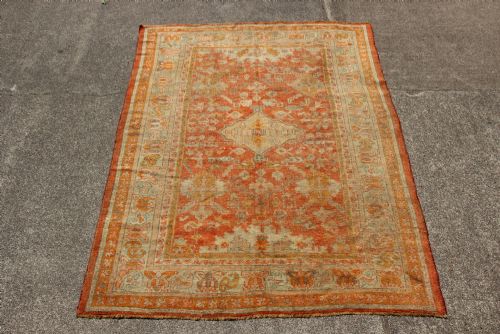
Buyers encounter distinct regional styles such as Oushak, Ghiordes, Kirsehir, and Bergama, alongside utilitarian forms like yastics and cushions. The selection leans heavily toward nineteenth-century and early twentieth-century examples shaped by traditional Turkish weaving centres.
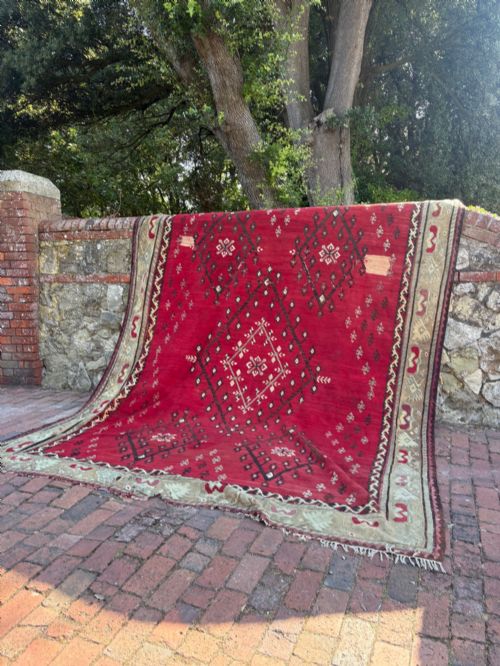
Beyond traditional floor carpets, the inventory includes flatwoven kilim panels, runner rugs, and embroidered cicim wall hangings. Each piece reflects specific Anatolian tribal or Ottoman design traditions passed down through generations of makers.
Materials and Construction Methods
Makers constructed these floor coverings primarily using wool, cotton, and silk, often employing hand-spun wool for the pile and foundations. Mercerised cotton and art silk appear in select pieces alongside leather details on specific cushions.
Weavers utilised techniques spanning hand-knotted pile construction and flatweave flat-surface building, including cicim embroidery. The integration of natural dyed yarns and hand-spun fibres provided the structural resilience seen in surviving examples.
Listings span nineteenth-century pieces to 1930s examples, incorporating wool, cotton, silk, and hand-spun wool across rug, runner, and cushion formats.
Assessing Quality and Execution
Quality rests on the fineness of the knotting, the handling of the wool, and the clarity of the regional design execution. Finer knots and dense hand-spun wool foundations produce greater resilience and sharper pattern definition.
The sophistication of the palette and the integrity of the natural dyes separate standard village pieces from exceptional town workshops like Oushak or Ghiordes. Material selection, such as pure silk versus standard cotton foundations, dictates the refinement of the finished textile.
Ghiordes design·Oushak carpet·Kirsehir rug·Konya weaving
The Woven Anatolian Rug Glossary
- Kilim
- A flatwoven carpet or rug produced without a pile by tightly interweaving warp and weft strands. This technique creates a lightweight textile with identical patterns visible on both sides.
- Prayer Rug
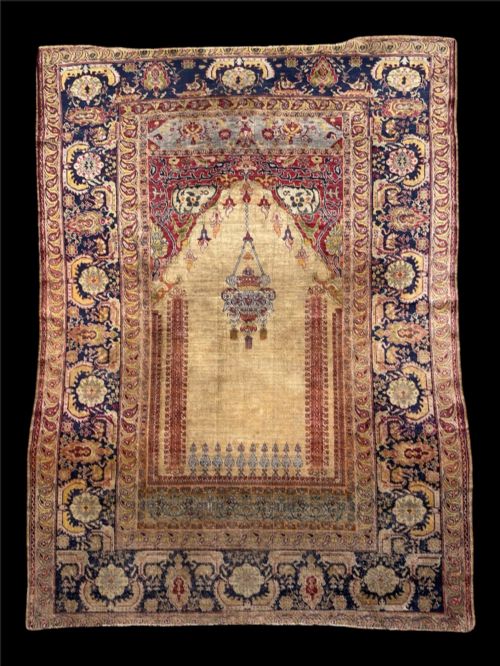
- A small carpet featuring a mihrab design motif intended to indicate the direction of Mecca during daily prayers. These formats typically display focused architectural arches and niche compositions.
- Yastic
- A small Turkish cushion face or small rug traditionally utilised for sitting or leaning against in regional interiors. They often mirror the iconography of full-sized carpets in a compact format.
- Cicim
- An embroidered flatweave technique where supplementary threads are sewn onto a completed woven ground foundation to create raised geometric patterns. It adds distinct surface texture to decorative panels.
- Warp
- The stationary vertical foundation threads stretched lengthwise on a loom before weaving begins. Wefts are interlaced across these structural elements to form the body of the textile.
Woven Anatolian Rug: Frequently Asked Questions
How do I identify a prayer rug?
A prayer rug is distinguished by a prominent arch or niche design known as a mihrab, which directs the visual focus toward one end of the textile. These smaller formats were traditionally utilised for personal devotion.
Craftsmen often incorporated specific symbolic borders and floral motifs that separate these pieces from standard floor carpets and runners.
What is the difference between a kilim and a carpet?
Kilims are flatwoven textiles constructed without a pile by interlocking coloured weft threads through the warp foundation. This method yields a lighter, reversible fabric without the plush surface of knotted carpets.
Carpets feature a hand-knotted pile sheared to create a dense, textured surface that stands up to heavy foot traffic.
How should I care for an antique rug?
Vacuum these textiles gently using suction only, avoiding revolving brush attachments that can catch fragile antique wool or cotton foundations. Professional cleaning by specialists in historic oriental carpets ensures the dyes and fibres remain protected.
Rotating the placement periodically prevents uneven wear patterns and sun exposure across the surface.
Where were these textiles originally made?
These pieces were produced across various towns, villages, and nomadic encampments throughout the Anatolian region of Turkey. Specific weaving hubs like Oushak, Bergama, and Kirsehir developed distinct local patterns and colour palettes.
Local access to specific sheep breeds and native dye plants influenced the distinct character of each regional production centre.