





Wool Verdure Tapestry
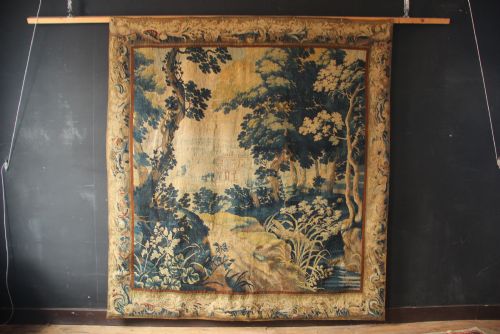
A wool verdure tapestry brings a dense, leafy woodland scene into a room, offering deep greens and rich historical texture.
Wool Verdure Tapestry
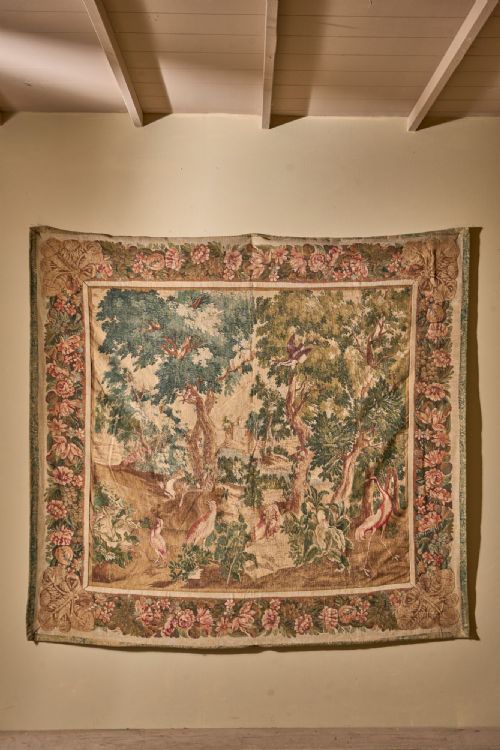
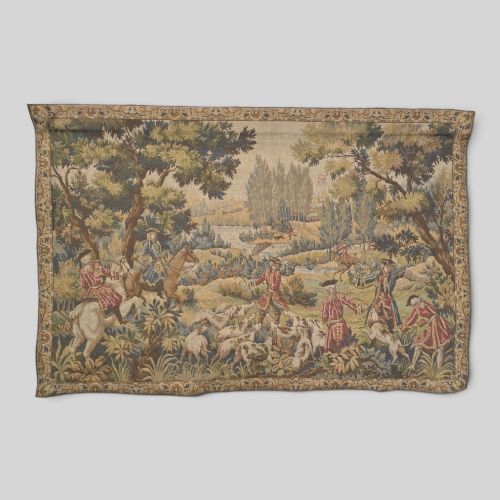
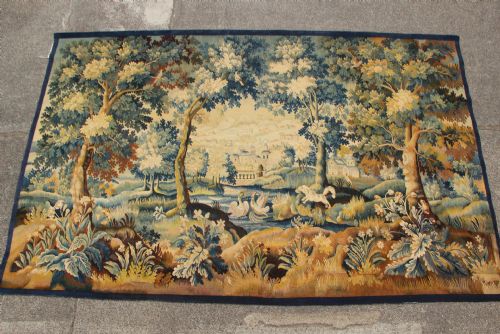
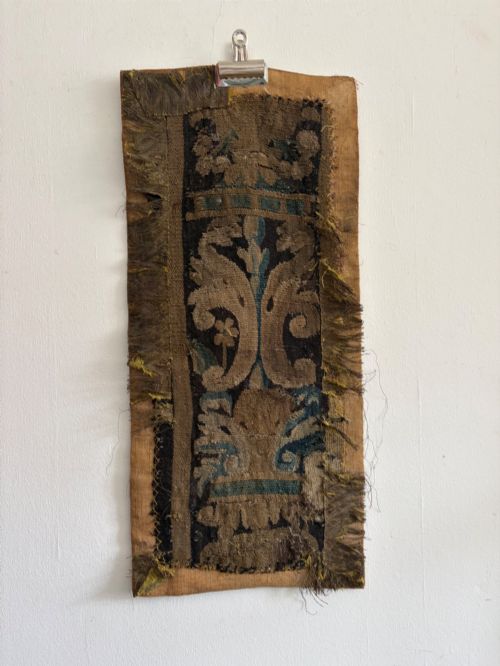
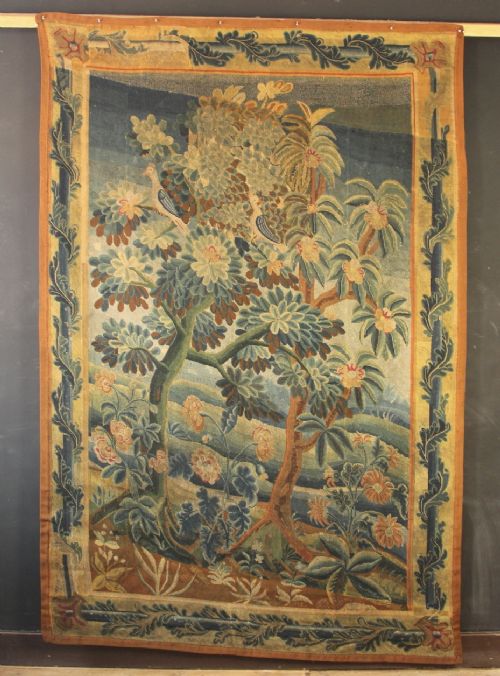
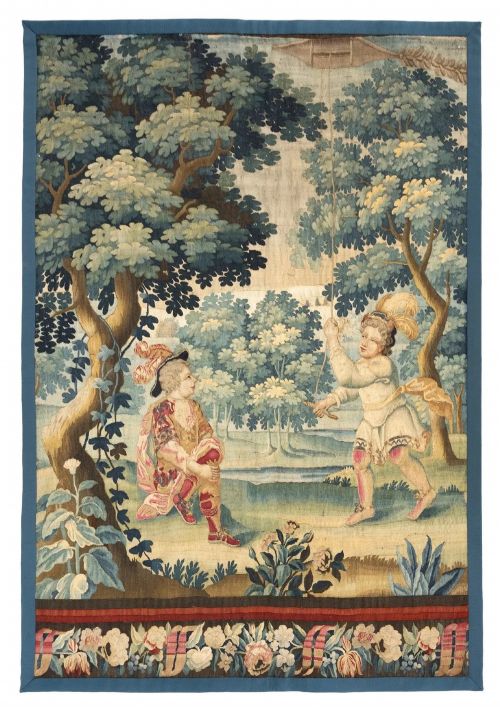
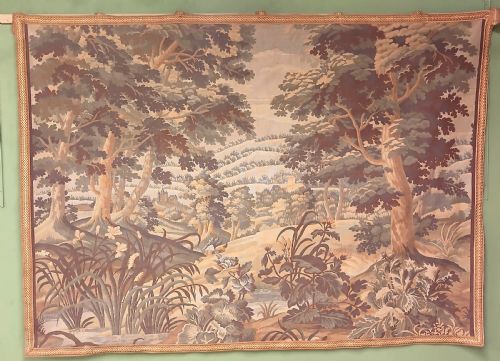
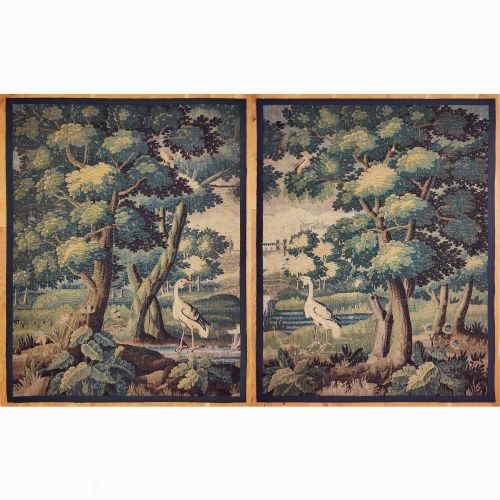
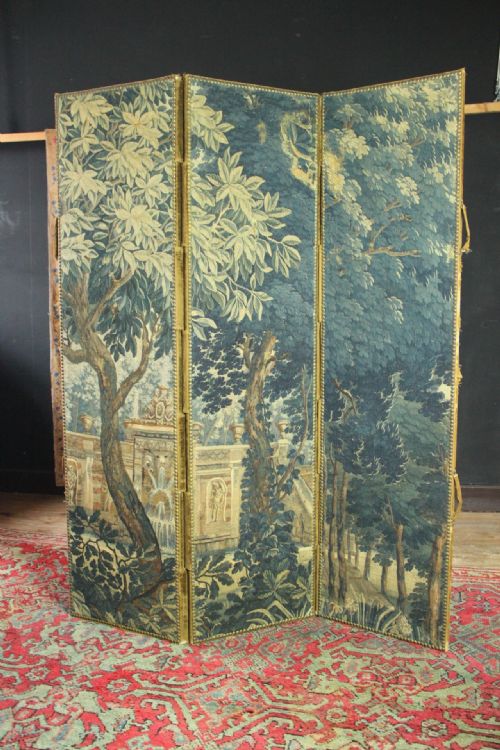
When you search for a wool verdure tapestry, you encounter large woven wall hangings and panels dominated by lush foliage, trees, and often distant chateaux or birds. These textiles serve primarily as wall art, though collectors also find folding screens and smaller border fragments mounted for display.
The pieces appearing here span several centuries, with a strong representation of seventeenth and eighteenth-century Flemish and French origins. Buyers frequently meet large formats alongside long panels and occasional pairs designed to span substantial wall spaces.
The imagery focuses on verdant landscapes rather than human figures, drawing the eye into wooded glades and shaded groves. This distinct pastoral and forest focus defines the category across both Flemish and French workshops.
Materials and weaving techniques
These textiles rely predominantly on wool for the main structural weave and heavy visual weight, frequently combined with silk to add subtle highlights and varied texture to foliage and sky. Cotton and linen appear less commonly, sometimes utilised for backing, mounting, or structural support in fragments.
Weavers constructed these large panels on looms using dyed threads to build up complex pictorial depth through overlapping shades of green, brown, and ochre. Wooden stretchers, brass mounting hardware, and linen backings often support surviving fragments and panels to ensure stability when hung.
Listings span from the seventeenth century through the twentieth century, featuring wool, silk, linen, and cotton across Flemish and French styles.
Judging quality and visual depth
Quality in these textiles rests upon the density of the weave and the preservation of the dye colours, particularly the greens which can shift over centuries. Finer examples retain intricate detail in the rendering of leaves, foliage, and distant architectural elements.
The distinction between standard panels and the finest works lies in the subtlety of the colour palette and the complexity of the landscape composition. Surviving borders and well-proportioned panels command attention through balanced design and careful historical survival.
The Wool Verdure Tapestry Glossary
- Verdure
- A type of tapestry featuring a landscape or botanical design dominated by trees, plants, and foliage. These scenes typically exclude large human figures to focus entirely on the forest environment.
- Flemish
- Pertaining to Flanders, a historical region renowned for master weavers and major production centres during the seventeenth and eighteenth centuries. Flemish pieces often display robust Baroque styling.
- Aubusson
- A town in France famous for its tapestry production, originating distinct French regional styles from the seventeenth century onward. Aubusson pieces often present lighter, more pastoral compositions.
- Audenaarde
- A significant Flemish weaving centre known for producing dense, dark woodland tapestries with rich verdure motifs. Pieces attributed to this origin share distinct regional weaving traits.
- Fragment
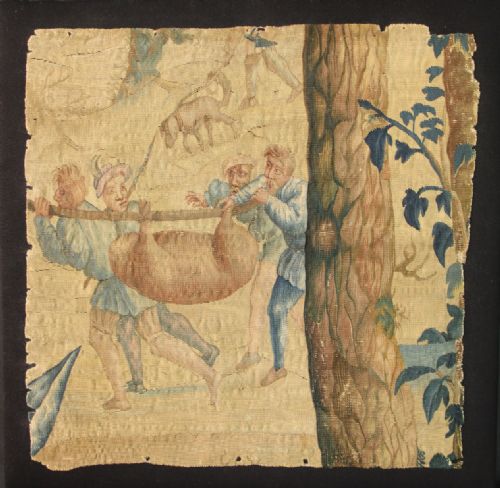
- A surviving portion of a larger tapestry, such as a border or a section of foliage. These are frequently mounted onto linen to allow safe display on a wall.
Wool Verdure Tapestry: Frequently Asked Questions
How do I hang a large tapestry?
Large wall hangings require even distribution of weight across the upper edge to prevent distortion of the weave. Dealers often recommend mounting the textile to a lined wooden batten or using a discreet sleeve stitched to the reverse.
For fragile or fragmented pieces, mounting onto stretched linen provides a stable backing that protects the historical fibres from direct tension.
Where were these tapestries made?
The primary centres of production represented in this category are Flanders and France, particularly historic towns such as Aubusson and Audenaarde. Workshops in these regions flourished during the seventeenth and eighteenth centuries.
Master weavers in these areas developed distinct regional palettes and botanical styles that allow modern collectors to trace their geographic origins.
How do I care for historic wool textiles?
Protecting these textiles from direct sunlight is essential, as ultraviolet rays fade natural wool and silk dyes over time. Gentle, regular vacuuming through a mesh screen helps remove dust without disturbing the delicate fibres.
Professional textile conservators should handle any significant cleaning or structural repair to preserve the integrity of the weave.
What is a verdure scene?
A verdure scene depicts a stylised forest, woodland, or garden landscape filled with dense trees, large leaves, and occasionally birds or small animals. Human figures are absent or minimal, placing the full emphasis on botanical forms.
This genre allowed weavers to showcase their skill in rendering complex shades of green and natural depth using dyed wool and silk.