
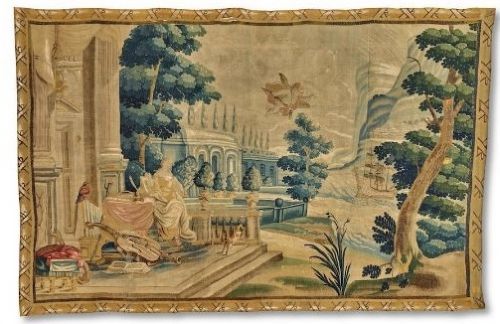


Historical Wall Textile
These historical wall textile pieces range from grand Flemish tapestries to Victorian samplers, offering centuries of textile artistry for your walls.
Historical Wall Textile
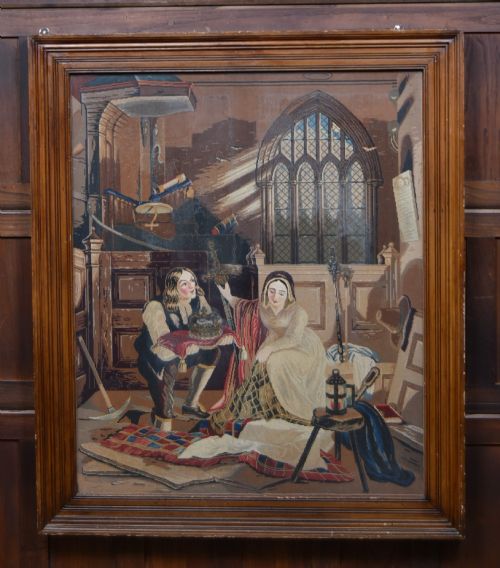
A historical wall textile encompasses everything from grand mythological Flemish tapestries to framed needlework samplers and embroidered linen coverlets. Buyers searching for a historical wall textile will find pieces spanning the 16th century through to the Victorian era, including Gothic Revival, Baroque, and French Empire styles.
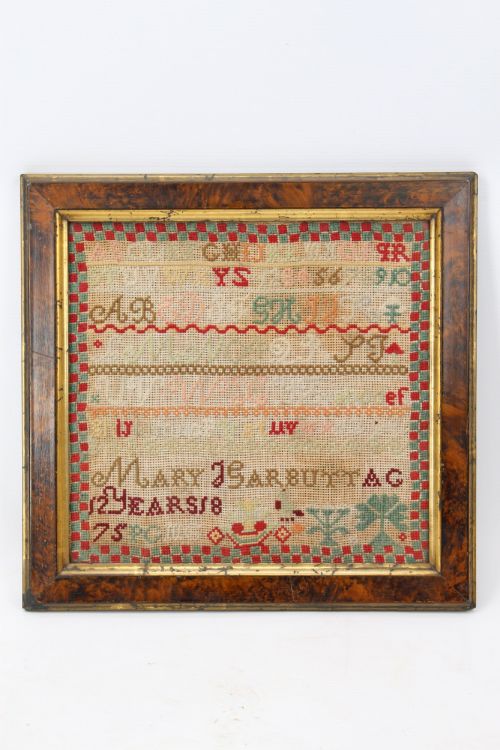
The most common examples on this page are needlework samplers from the Victorian and Georgian periods, alongside larger wall hangings and framed textile art. These works reflect both domestic handcraft and monumental woven art from centuries past.
How they were made
Makers utilised natural fibres such as wool, silk, linen, and cotton, often combined with silk thread on canvas or wood frames. Woven tapestries and embroidered panels relied on meticulous hand-working techniques passed down through generations.
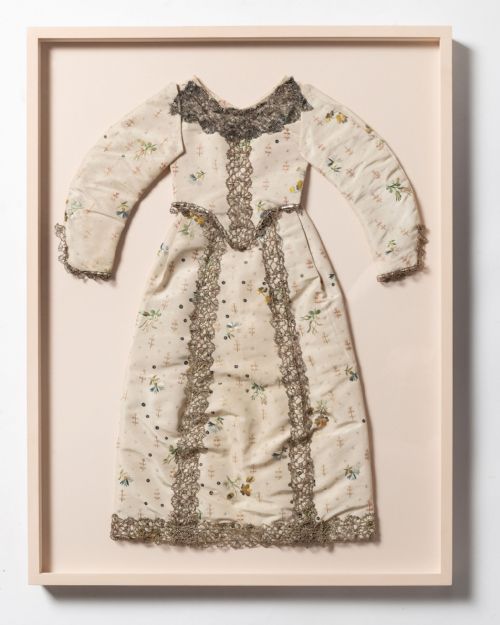
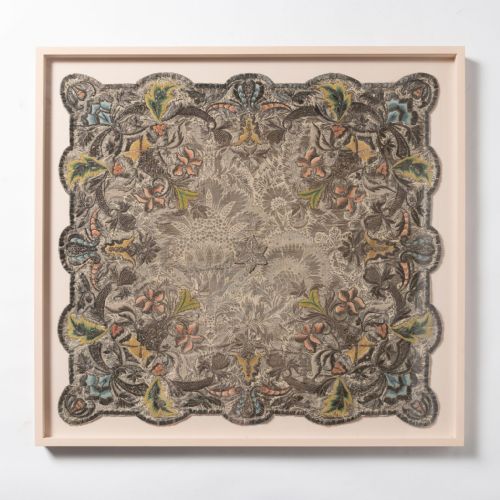
Surviving examples frequently feature protective framing using glass and wood to preserve delicate textiles like ciselé silk velvet and antique dress panels against environmental wear.
Mary J Garbutt recorded her exact age as 12 years old while stitching her needlework sampler in 1875.
What varies in quality
The distinction between exceptional pieces and simpler works lies in the complexity of the design, the fineness of the threadwork, and the historical intactness of the textile. Grand scale Flemish tapestries demonstrate intricate pictorial narratives, whereas schoolgirl samplers show charming domestic skill and dated lettering.
Condition and original context dictate the character of each piece, with older 16th and 17th-century fragments holding distinct archaeological interest compared to later 19th-century revival works.
The Historical Wall Textile Glossary
- Sampler
- A piece of needlework produced as a demonstration or test of skill in various stitches, often featuring alphabets, numbers, and maker details from the Georgian or Victorian periods.
- Tapestry
- A form of textile art traditionally woven on a vertical loom, depicting figurative scenes or verdure landscapes using wool and silk threads.
- Ciselé velvet
- A velvet fabric in which the pattern is created by a combination of cut and uncut loops, producing a textured surface seen in 18th-century hangings.
- Coverlet
- A decorative bedcover or hanging made from embroidered linen or textile remnants, serving both utilitarian and ornamental purposes.
- Verdure tapestry
- A type of woven wall hanging dominated by botanical motifs, trees, foliage, and often small animals or distant architectural elements.
Historical Wall Textile: Frequently Asked Questions
How do I hang a heavy antique tapestry?
Large woven pieces require weight-distributing hanging systems such as Velcro strips stitched to the reverse or concealed wooden battens that support the top edge evenly across the wall.
Avoid hanging textiles directly in strong sunlight or damp areas to protect the natural wool and silk fibres from degradation.
What is the difference between a sampler and a tapestry?
Samplers are typically smaller needlework exercises stitched by individuals, often recording dates and maker names, whereas tapestries are large woven pictorial wall hangings.
Samplers reflect domestic education and needlecraft, while traditional tapestries represent complex loom-woven artistry.
Can framed textiles be removed from their glass?
Framing protects delicate fibres like silk, cotton, and linen from dust, atmospheric pollutants, and physical handling during everyday life.
Removing the glass risks exposing fragile historical materials to humidity and airborne particles.
How do I date an antique needlework piece?
Many samplers and embroidered works include stitched dates and the names or ages of their makers, providing a direct anchor for historical period identification.
Stylistic cues such as Gothic Revival or Baroque motifs further help place pieces within the 17th, 18th, or 19th centuries.