
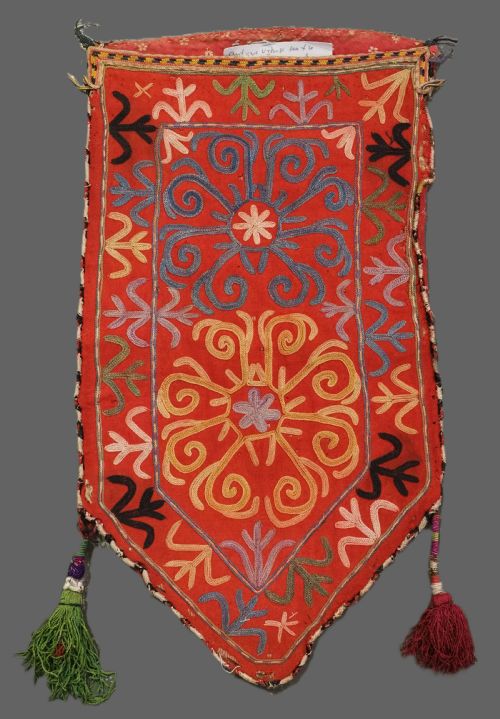
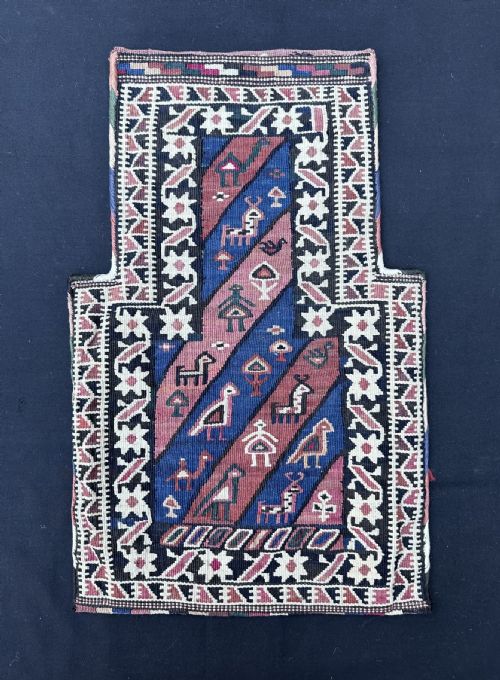
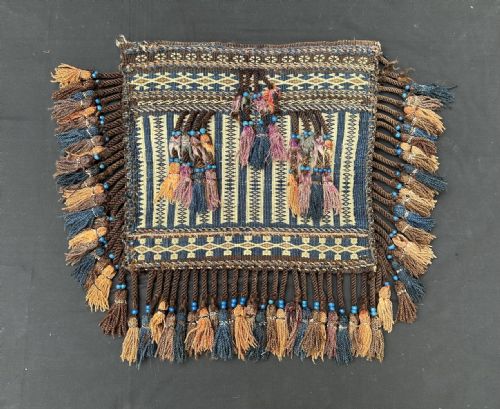
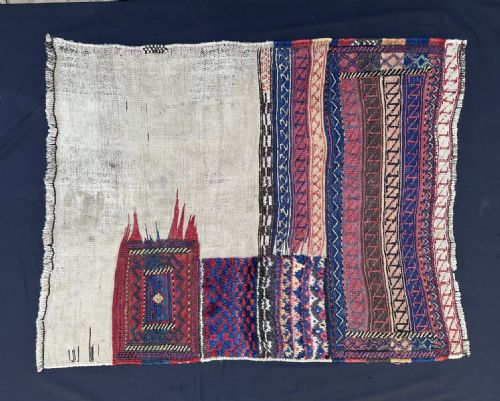

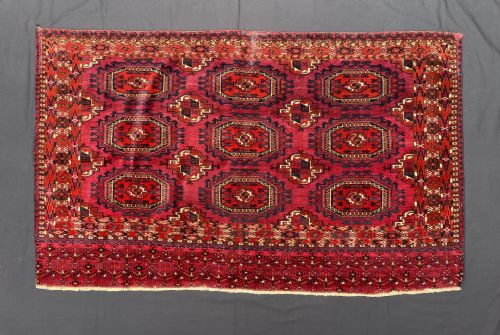


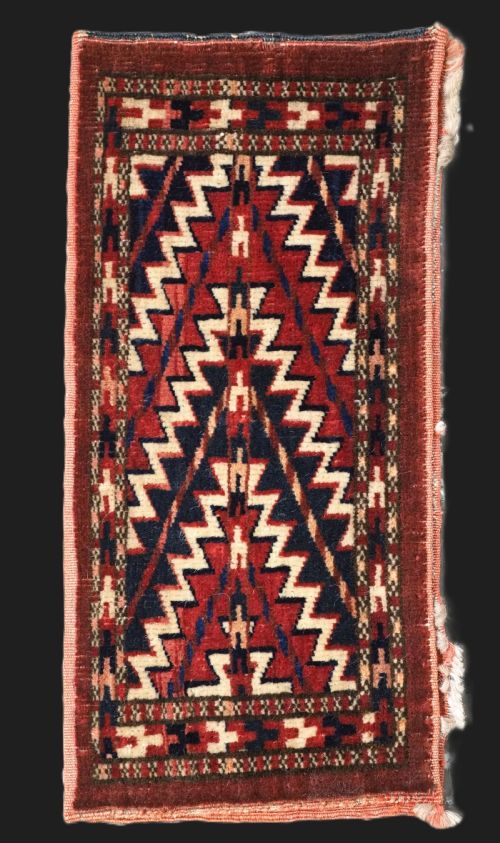
Wool Tribal Storage Bag
A wool tribal storage bag brings the textile traditions of nomadic weavers into domestic spaces through resilient utility.
Wool Tribal Storage Bag
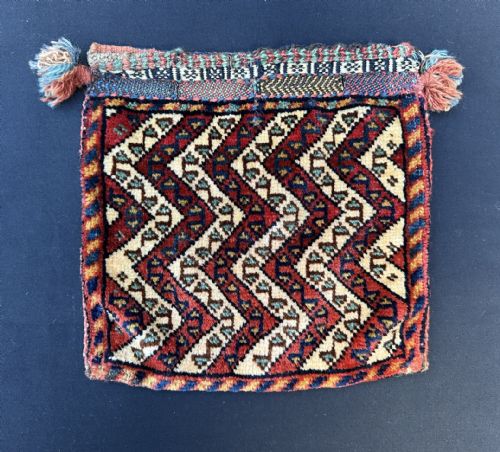
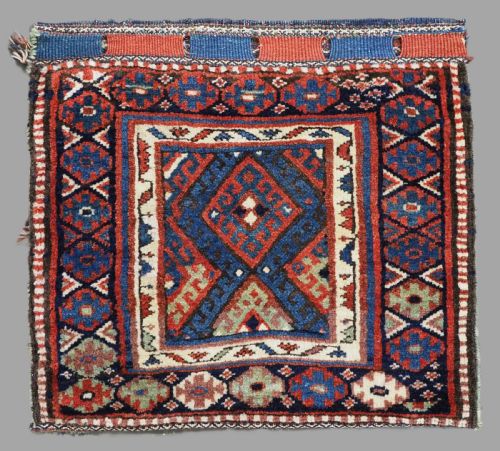
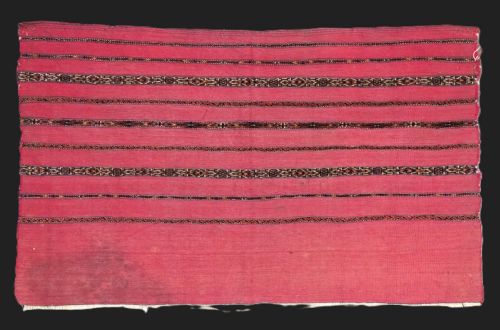
Many examples survive as complete pieces featuring original plain weave backs, while others appear as individual bag faces separated from their backing structures over time. These textiles reflect regional weaving dialects through distinct structural formats, tribal motifs, and utility purposes ranging from small personal containers to large tent storage units.
How They Were Made
Weavers utilised hand-spun wool and natural dyes to build durable pile-woven and flatwoven structures designed for heavy daily use inside nomadic tents. Supplementary materials such as cotton, silk highlights, goat hair, and glass beads appear in specific regional examples to add detail and strengthen structural edges.
Nomadic workshops employed knotting and flatweaving techniques on portable looms, integrating warp and weft threads to create dense, protective textiles. Natural dye baths yielded deep, saturated colour palettes that mellowed gracefully over decades of exposure and handling.
Some spindle bags still retain traces of ancient sheep lanolin in the wool, smelling faintly of the high mountain pastures where the flocks grazed.
What Varies in Quality
Quality rests upon the tightness of the weave, the precision of the tribal motifs, and the purity of the natural dye palette used by the weaver. Finer knot counts and carefully balanced proportions distinguish masterwork examples from standard utilitarian items produced for everyday household tasks.
The survival of original components, such as plain weave backs, hanging loops, and complete side closures, elevates the historical integrity of a piece. Depth of colour saturation and the creative handling of traditional gul patterns further separate exceptional tribal examples from simpler regional outputs.
The Wool Tribal Storage Bag Glossary
- Chuval
- A large Turkmen storage bag traditionally used for bedding and household goods inside the yurt. These rectangular containers were often woven in matched pairs.
- Torba
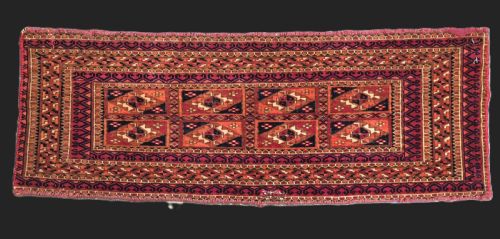
- A medium-sized Turkmen storage bag used for smaller possessions and hung against the tent wall. They display characteristic tribal güls and border arrangements.
- Gul
- A primary medallion or repeating design motif central to Turkmen and other Central Asian tribal weaving traditions. Each tribal group utilised distinct geometric forms.
- Mafrash
- A rectangular storage bag or panel associated with Persian and Caucasian nomadic groups, often forming the sides of a bedding chest. They frequently feature banded flatweave or pile designs.
- Plain weave
- A simple structural technique where warp and weft threads cross alternately to create a flat, unpiled surface. These weaves often form the durable backs of storage containers.
Wool Tribal Storage Bag: Frequently Asked Questions
What were wool tribal storage bags used for?
Nomadic families utilised these containers to store bedding, clothing, tent poles, and grain inside portable dwellings. Their sturdy construction protected contents from damp ground and dust.
Different formats served specific household tasks, from small spindle or salt containers to large tent bags hung against interior lattice walls.
How do I identify a Turkmen storage bag?
Turkmen bags typically feature deep red colour fields dominated by repeating octagonal motifs known as güls. Specific tribal branches incorporated distinct border patterns and secondary ornaments.
Many examples survive as individual faces or complete containers with utilitarian flatweave backs attached for wall hanging or display.
Can I use these bags for modern storage?
These antique textiles handle gentle domestic use, though fragile historical pieces benefit from light placement rather than heavy loading. Placing them flat or hanging them securely distributes weight evenly across the structure.
Keeping them away from direct sunlight protects the natural wool fibres and vegetable dyes from fading over time.
What is the difference between a torba and a chuval?
A chuval is a large storage bag designed for bulky bedding, measuring significantly wider than it is tall. A torba is smaller in scale and functions as a secondary container for personal items.
Both forms display sophisticated tribal patterns, but their dimensions reflect their original storage functions within the nomadic tent.