


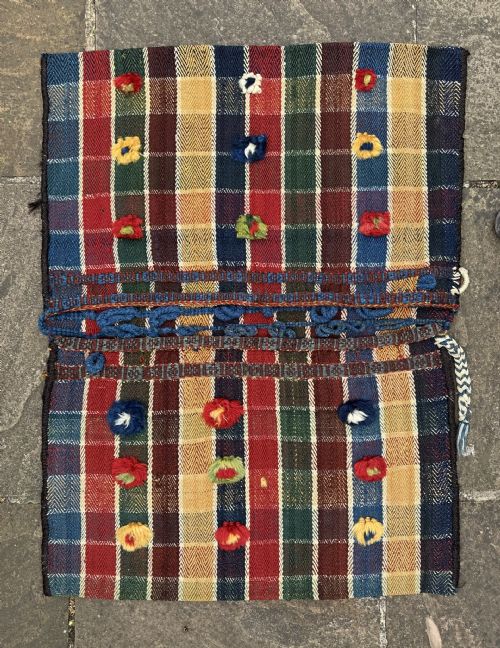


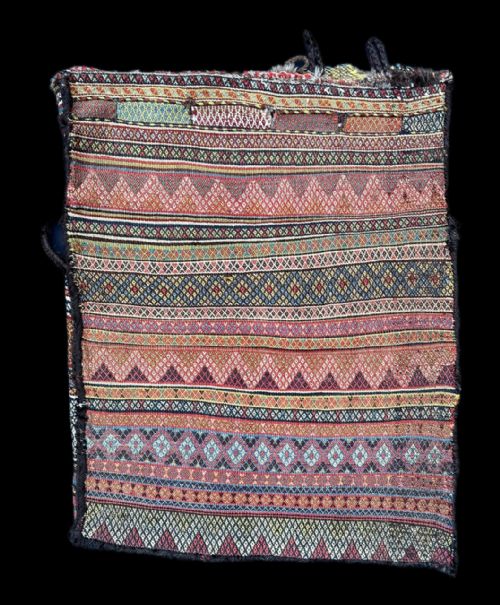
Red Qashqai Bag
These red antique qashqai bag pieces are tribal textiles offering nomadic Persian artistry and rich wool texture for your interior.
Red Qashqai Bag
A red antique qashqai bag brings authentic Persian tribal history directly into a domestic space through nomadic weaving traditions. You are looking at genuine utilitarian items created by the Qashqai confederacy in south-west Persia during the nineteenth and early twentieth centuries.
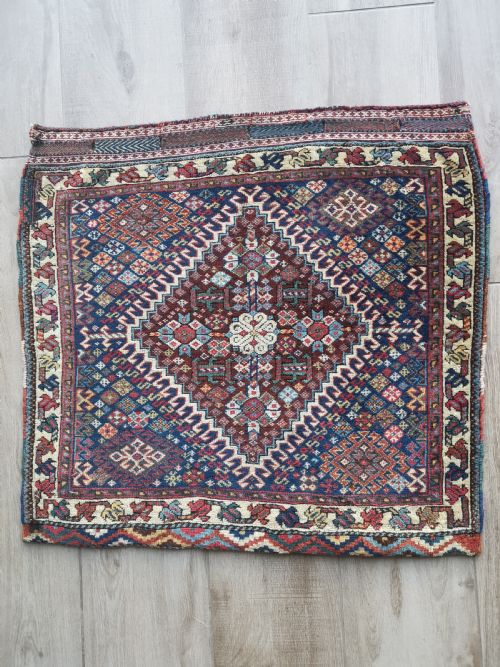
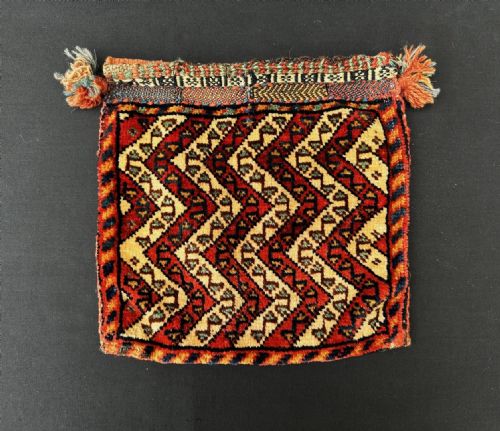
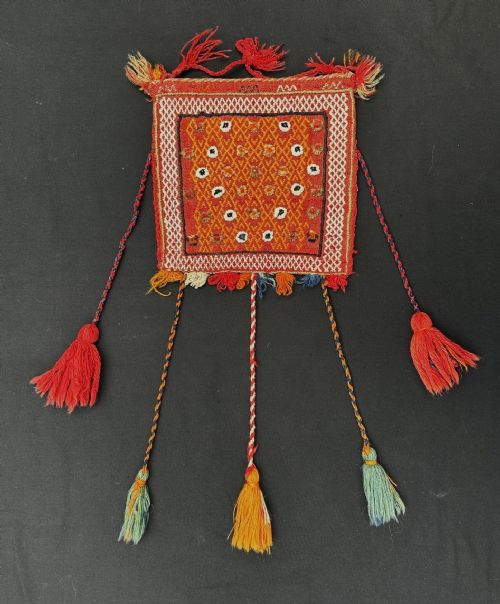
The version you are most likely to meet on this page is a saddlebag face or small storage bag originating from the Fars Province. These textiles represent specific tribal groupings such as the Kashkuli Tayefeh, Darrehshuri Tayefeh, and Ard Kapan Taifeh.
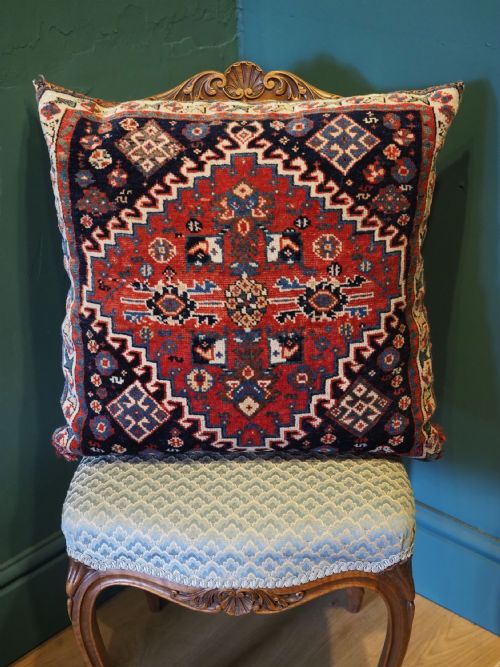
Makers produced these functional bags for nomadic life using geometric patterns and rich red tones that reflect their cultural heritage. Surviving examples range from complete double saddlebags down to individual bag faces and repurposed cushion covers.
How they were made
Weavers constructed these tribal pieces using hand-spun wool combined with cotton foundations to ensure durability during nomadic migrations. The reliance on natural dyes yields deep red colour palettes that develop a subtle patina over time.
Nomadic artisans utilised traditional upright looms set up temporarily during seasonal camps across south-west Persia. Every bagface demonstrates dense knotting techniques tailored for heavy daily use on animal transport.
The current listings span a chronological window from the late nineteenth century into the early twentieth century, specifically covering periods from eighteen-eighty to nineteen-twenty.
What varies in quality
The nuance in quality hinges upon the crispness of the tribal design and the complexity of the secondary motifs woven into the red field. Superior examples display tighter knot counts and finer hand-spun wool that heightens the tactile handle of the textile.
Origin plays a defining role, with specific tayefeh sub-groupings yielding more sophisticated colour gradations and intricate iconography. Preserved structural integrity across the original wool and cotton edges elevates an individual piece above standard utility grade.
Kashkuli Tayefeh·Darrehshuri Tayefeh·Ard Kapan Taifeh
The Red Qashqai Bag Glossary
- Bagface
- The decorative front panel of a nomadic storage or saddle bag, woven to be displayed outwardly during transport. These panels survived independently after the utilitarian rear sections wore away or were cut down.
- Tayefeh
- A specific sub-tribe or clan within the greater Qashqai confederacy of south-west Persia. Different tayefeh groups developed distinct weaving signatures and colour preferences.
- Fars Province
- The traditional territory in south-west Persia where nomadic Qashqai tribes pitched their seasonal camps. This geographical region is the recognised source for these tribal textiles.
- Natural Dyes
- Organic colourants derived from plants, roots, and insects used by nomadic weavers before the introduction of synthetic alternatives. They impart the characteristic rich red hues found in these antique bags.
Red Qashqai Bag: Frequently Asked Questions
What is a qashqai bag?
A qashqai bag is a woven textile created by nomadic tribes in south-west Persia for carrying possessions during seasonal migrations.
These pieces typically feature geometric motifs and rich red wool coloration produced on portable horizontal or vertical looms.
How were these bags used?
Nomadic families slung these durable containers across pack animals to transport household goods, grain, and personal belongings.
Over decades, many complete double bags separated into individual bag faces as sections wore out or families repurposed them.
How do I live with one?
You can mount these textile fragments securely on a wall or place sturdy examples onto low-traffic surfaces as decorative accents.
Keeping them away from direct sunlight preserves the natural red wool dyes and prevents the historic fibres from drying out.
How do I date these bags?
Dating relies on examining the characteristics of the wool, the depth of the natural red dyes, and the complexity of the tribal iconography.
Pieces originating from the nineteenth century generally exhibit softer hand-spun wool and more organic colour variations than later twentieth-century examples.