




Wool Saddlebag Face
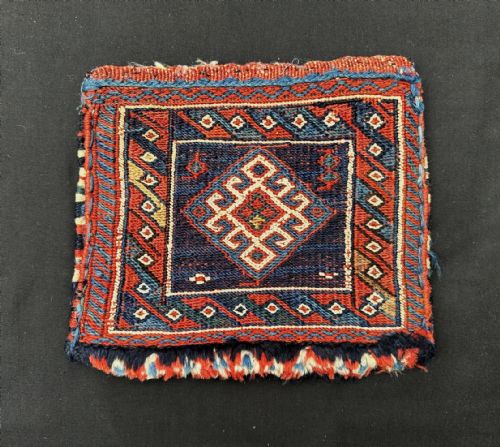
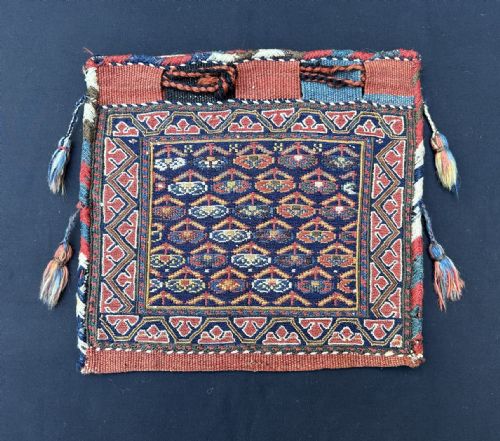
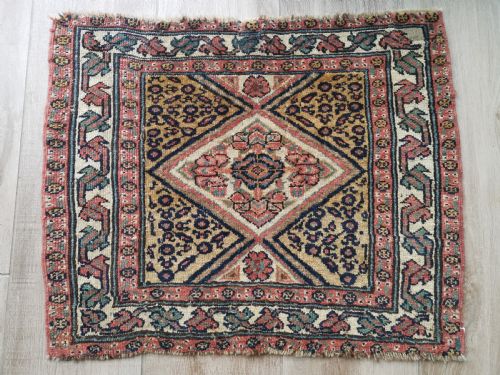
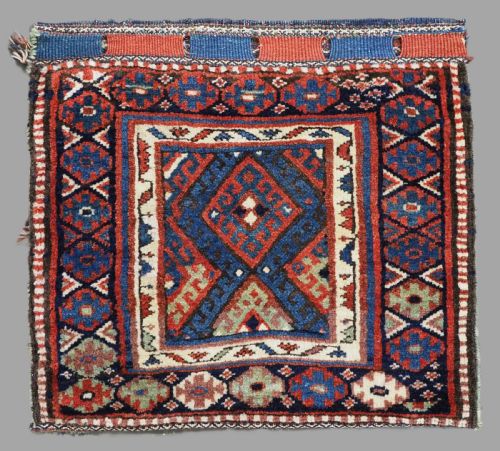
A wool saddlebag face represents the woven front panel of a nomad's pack, collected for its concentrated tribal design and portable scale.
Wool Saddlebag Face
A wool saddlebag face is a surviving fragment or complete front of a nomadic utility bag, originating primarily from Persian tribal confederations like the Qashqai, Afshar, Shahsavan, and Jaf Kurd during the nineteenth and early twentieth centuries.
Buyers searching for a wool saddlebag face encounter square or rectangular panels displaying central medallions, boteh motifs, or banded weft work designs intended originally for animal transport.
How they were made
Weavers utilised hand-spun wool and natural dyes, combining hand-knotted pile with flat-woven sumac techniques to create durable surfaces for daily nomadic life.
The structure relies on cotton or wool foundations supporting dense pile work, while supplementary weft wrapping defines the geometric precision seen in Shahsavan and Uzbek pieces.
Wool Saddlebag Face Retail Price Guide 2026
Typical asking prices for wool saddlebag face among the pieces listed under this phrase on Sellingantiques today, from the lower quarter to the upper quarter. They describe what is for sale here now, not the wider market.
The listings show nineteenth-century dates spanning from the 1850s to the 1930s, executed in wool, cotton, and natural dyes.
What varies in quality
Quality rests upon the handled suppleness of the wool, the saturation of the natural dyes, and the crispness of the tribal geometry executed by the weaver.
Finer examples demonstrate tighter knot density, more complex medallion distribution, and wool possessing a lustrous, luminous quality that enhances the secondary motifs.
The Wool Saddlebag Face Glossary
- Khorjin
- A traditional double-sided saddlebag used by nomadic groups for transport and storage. These were often separated over time, leaving single faces for collectors.
- Sumac
- A flat-weave technique where coloured weft threads wrap around warp threads in a continuous sequence. This method produces a textured, sturdy fabric without a pile.
- Boteh
- An almond-shaped or paisley motif of Persian origin representing a floral sprout or cypress tree. It appears frequently in Afshar and tribal compositions.
- Medallion
- A central ornamental design anchor placed in the middle of the field. Tribal weavers oriented these geometric figures to be viewed from one end.
- Plain weave
- A simple alternating interlacing of warp and weft threads creating a flat, unpatterned textile. This technique formed the sturdy backs and sides of complete bags.
Wool Saddlebag Face: Frequently Asked Questions
What is a wool saddlebag face?
A wool saddlebag face is the decorative front portion of a nomadic pack used on animals for carrying belongings. These textile fragments preserve the concentrated artistry of tribal weavers in a manageable format.
Over time, many double-sided bags were divided into single panels or half-khorjins. They survive as individual decorative objects displaying traditional regional patterns.
Who made these bags?
Nomadic and village tribes across Persia and neighbouring regions produced these pieces for their own practical use. Groups such as the Qashqai, Afshar, Shahsavan, and Jaf Kurd wove them on portable looms.
Each confederation utilised distinct colour palettes and geometric vocabularies. These design traits allow modern observers to trace pieces to specific tribal territories.
How were they used originally?
Pastoral nomads loaded these bags in pairs across the backs of horses, donkeys, or camels during seasonal migrations. They served to transport household goods, food, and personal possessions.
The sturdy construction and flat-woven backs ensured the packs withstood the rigours of travel. Once worn or separated, the decorative faces were preserved for their utility and beauty.
How should I display a bag face?
Because of their compact size, these panels suit placement as small wall hangings or table mats. Proper mounting distributes the weight evenly across the textile without straining the foundation.
Placing them away from direct sunlight protects the natural dyes from fading. Allowing the wool to breathe maintains the flexibility of the historical fibres.