



Wool Horse Blanket
A wool horse blanket brings striking tribal textile artistry into a modern interior as a rich wall hanging or floor cover.
Wool Horse Blanket
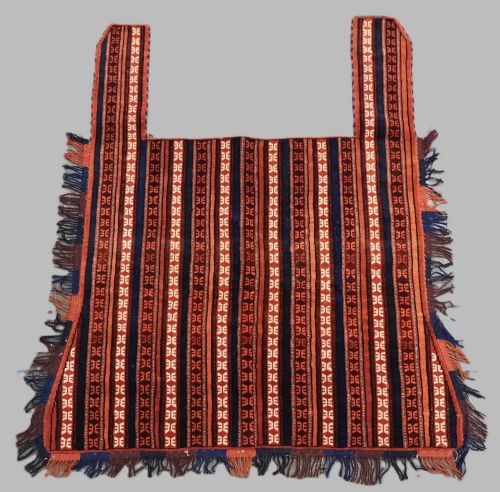
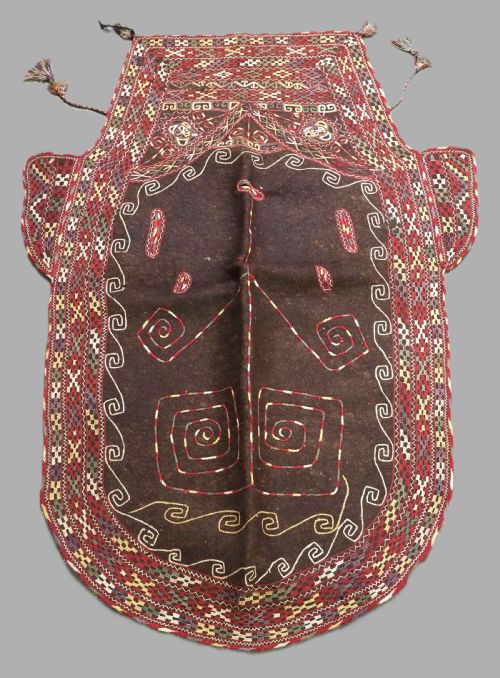
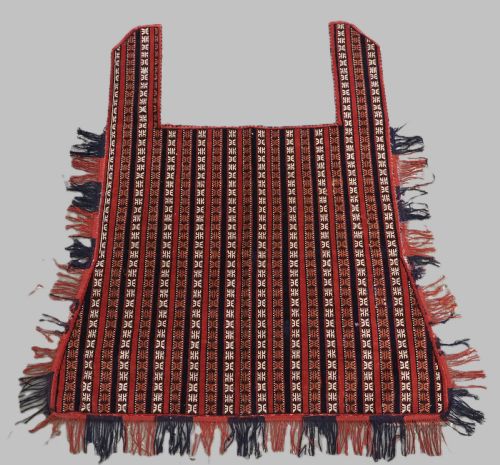
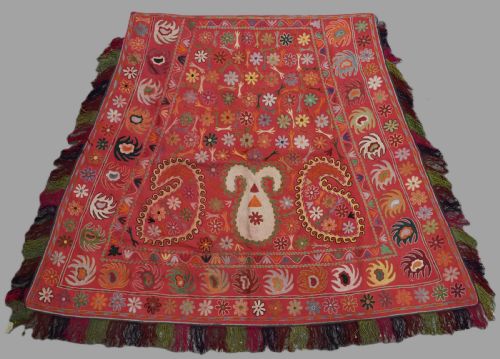
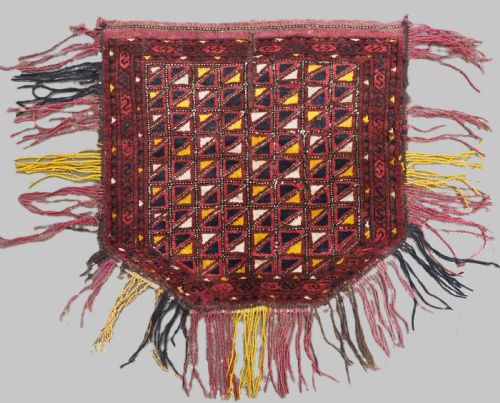
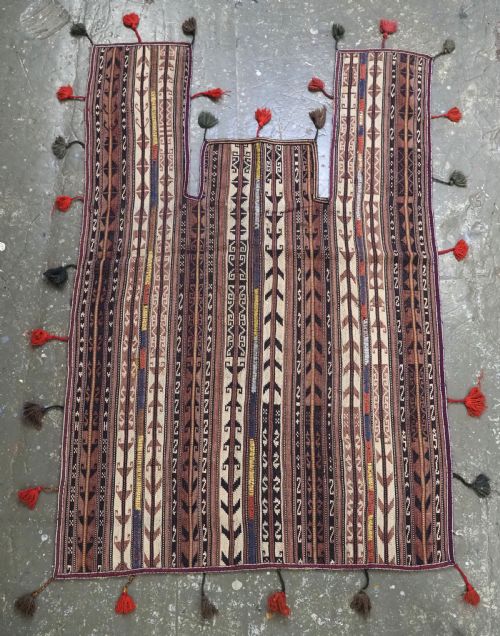
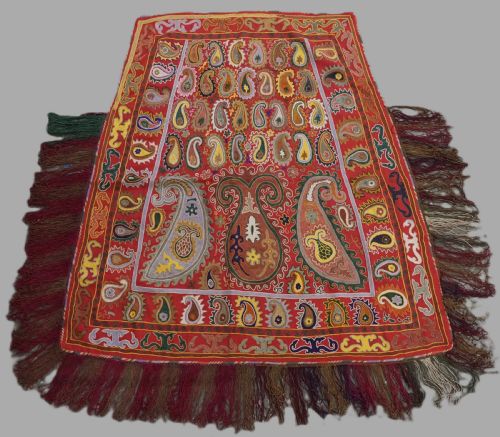
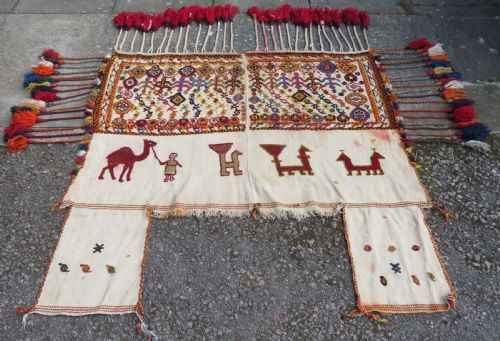
A wool horse blanket is a tribal textile created for ceremonial use by various groups across Central Asia and Persia. These pieces function simultaneously as horse covers, saddle rugs, and elaborate animal trappings designed for display rather than utility.
The selections on this page span the period from eighteen ninety to nineteen twenty. They originate from makers such as the Yomut Turkmen, Ersari Turkmen, Lakai tribe of Uzbekistan, Northern Afghan groups, and Qashqai tribes of southwest Persia.
Forms include horse covers, saddle covers, and horse blankets that often retain original tassels. Each piece reflects the specific weaving and embroidery traditions of its tribal origin.
How They Were Made
Construction relies primarily on wool, felted wool, and cotton, enhanced with structural elements of cotton thread and silk thread. Artisans combined woven textiles with dense needlework to create durable ceremonial surfaces.
Tribal makers utilised specialised embroidery techniques to ornament the heavy wool and felt grounds. The integration of original tassels and fine threadwork demonstrates traditional craftsmanship tied to nomadic and semi-nomadic life.
Wool Horse Blanket Retail Price Guide 2026
Typical asking prices for wool horse blanket among the pieces listed under this phrase on Sellingantiques today, from the lower quarter to the upper quarter. They describe what is for sale here now, not the wider market.
Many ceremonial horse covers still boast their original dancing tassels, ready to shake off a century of quiet retirement.
What Varies in Quality
Quality rests in the density of the wool and felt ground, alongside the intricacy of the embroidery executed with silk and cotton threads. Pieces that retain original tassels display a higher degree of preservation.
The clarity of tribal designs and the complexity of the needlework distinguish standard examples from more elaborate ceremonial items. Craftsmanship varies according to the specific regional traditions of the Turkmen, Uzbek, and Qashqai makers.
The Wool Horse Blanket Glossary
- Felted wool
- Wool processed through moisture, heat, and pressure to create a dense, non-woven fabric. This material forms a sturdy base for tribal embroidery.
- Ceremonial item
- An object created for ritual or display rather than everyday utility. These pieces often feature specialised decorative work.
- Saddle cover
- A textile designed to sit beneath or upon a riding saddle. Many examples double as decorative rugs.
- Tribal textile
- Handcrafted fabric produced by distinct ethnic groups following traditional regional patterns. These works embody specific cultural aesthetics.
Wool Horse Blanket: Frequently Asked Questions
What is a wool horse blanket?
A wool horse blanket is a tribal textile traditionally used as a ceremonial horse cover or saddle rug by nomadic groups in Central Asia and Persia. These pieces combine heavy wool and felt with intricate embroidery.
They served both functional and decorative purposes during tribal ceremonies, displaying distinct regional patterns and textile techniques.
How were horse blankets used?
These textiles were draped over horses during ceremonies, processions, and tribal gatherings to showcase status and artistic skill. They functioned as elaborate saddle covers and horse trappings rather than stable blankets.
Today, collectors repurpose these durable textiles as decorative wall hangings or statement floor rugs in residential spaces.
Which tribes made these horse blankets?
Makers include Turkmen groups such as the Yomut and Ersari, as well as the Lakai tribe of Uzbekistan and Northern Afghan weavers. Persian examples are represented by Qashqai tribes of the southwest.
Each group applied distinct aesthetic traditions, materials, and embroidery styles to their ceremonial animal covers.
How do I date an antique horse blanket?
Dating relies on stylistic analysis, material composition, and historical context linking the piece to periods around eighteen ninety, nineteen hundred, and nineteen twenty. Examining the specific tribal motifs helps place the textile within its era of production.
Natural wear and traditional construction methods further assist in confirming the age of these antique textiles.