


Wool Hooked Rug
A wool hooked rug brings textured pattern and warmth to a room, offering authentic folk art or tribal craft from the nineteenth and early twentieth centuries.
Wool Hooked Rug
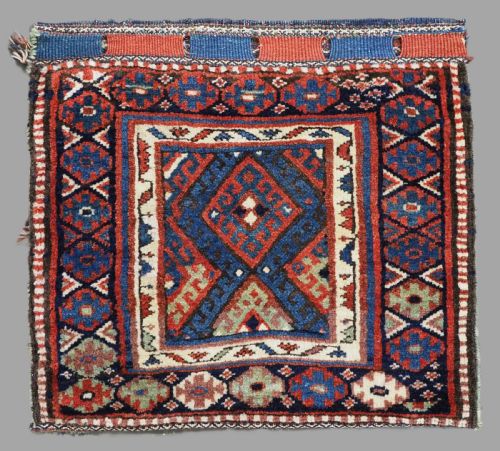
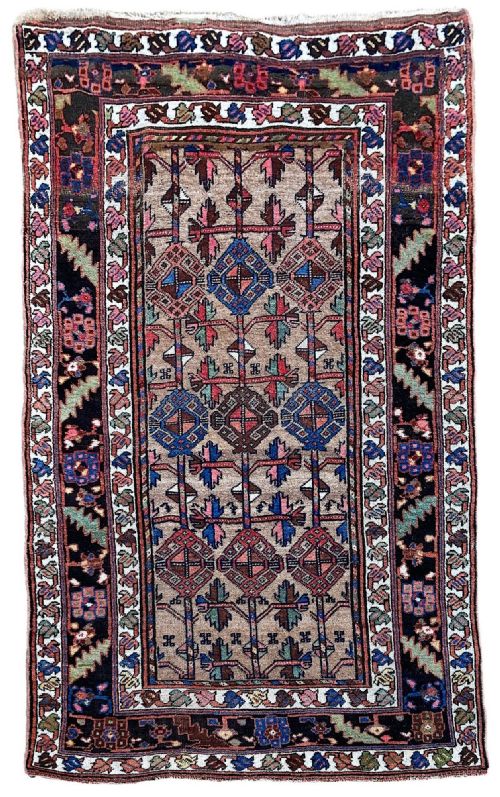
When searching for a wool hooked rug, buyers encounter a selection spanning the late nineteenth century through to the early twentieth century, originating primarily from Caucasian, Kurdish and American folk traditions. These pieces take various forms including area rugs, long runners, saddlebag faces and complete bags.
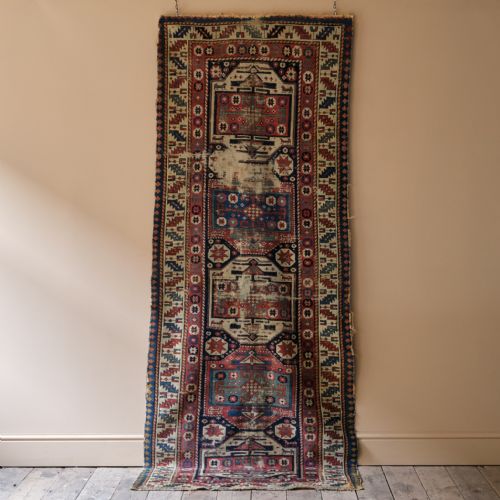
The most frequent examples on this page are Caucasian Kazak rugs featuring geometric medallion designs, alongside Kurdish tribal work and American folk examples. Each piece displays distinct regional patterns, from latch hook medallions to Memlinc type guls.
The selection ranges from small square formats to substantial runners and long rugs. Dating spans from the 1870s up to the 1920s, capturing diverse nomadic and folk weaving practices.
How they were made
The construction of these textiles relies on sturdy foundation materials such as burlap, cotton and jute, which provide the structural base for the textile work. Over these backings, makers looped and packed natural fibres to build up dense, tactile surfaces.
Makers utilised wool, hand-spun wool and camel hair for the pile and surface loops, yielding durable textures designed for everyday use. These organic materials absorbed natural dyes effectively, producing the soft colour palettes seen across the Caucasian and Kurdish pieces.
Some items survive only as fierce little saddlebag faces, once strapped to a camel or donkey for a bumpy mountain trek.
What varies in quality
The standard of a piece rests upon the fineness of the execution and the balance of the geometric composition. Rugs with well-proportioned medallion layouts and harmonious colour distribution stand apart from simpler or more irregular examples.
Material selection also dictates the character of the piece, with hand-spun wool and camel hair adding depth and tactile richness to the surface. The integrity of the plain weave backs and the precision of the latch hook detailing further distinguish superior examples.
The Wool Hooked Rug Glossary
- Burlap
- A coarse woven fabric typically utilised as a foundation backing material in American folk textiles and related floor coverings. It provides the heavy base through which loops of yarn are pulled.
- Latch hook
- A geometric motif featuring stepped edges, frequently seen in rows or central medallions across Caucasian and Kurdish rugs. This angular design element is characteristic of tribal weaving traditions.
- Gul
- A medallion or repeating octagonal motif often found in tribal and nomadic carpets. In these pieces, specific types such as Memlinc guls denote particular regional designs.
- Kazak
- A designation for rugs produced in the region of the Caucasus mountains, known for bold geometric patterns and striking primary colours. These pieces date from the nineteenth and early twentieth centuries.
- Saddlebag
- A utilitarian container woven in nomadic communities, often encountered in surviving fragments or complete bag faces. They display compact versions of traditional tribal patterns.
Wool Hooked Rug: Frequently Asked Questions
How do I date an antique rug?
Dating relies on stylistic analysis, material composition and structural characteristics typical of specific decades between the 1870s and 1920s. Comparing medallion designs and wool types helps place a piece within its proper era.
Evidence from nineteenth and early twentieth-century production guides these estimations, as specific dying techniques and tribal motifs shifted over time.
Where were these rugs made?
The pieces originate from regions across the Caucasus, Kurdish territories and America. Each area developed distinct geometric vocabularies and weaving structures.
Caucasian workshops produced Kazak and Dagestan runners, while Kurdish weavers created tribal rugs and practical saddlebags using local materials.
What is a runner rug?
A runner rug is a long, narrow format designed for corridors, stairways or hallways. These pieces balance length with a manageable width to fit transitional spaces.
In this collection, long rugs and runners frequently showcase repeating medallion designs that draw the eye along the length of the textile.
Can I use these rugs on the floor?
Many of these sturdy wool and camel hair textiles were built for daily use, though fragile antique pieces benefit from thoughtful placement and appropriate underlays. Placing them in low-traffic areas helps preserve the natural fibres.
Assessing the density of the weave and the condition of the foundation fabric will guide how heavily a particular rug can be used.