

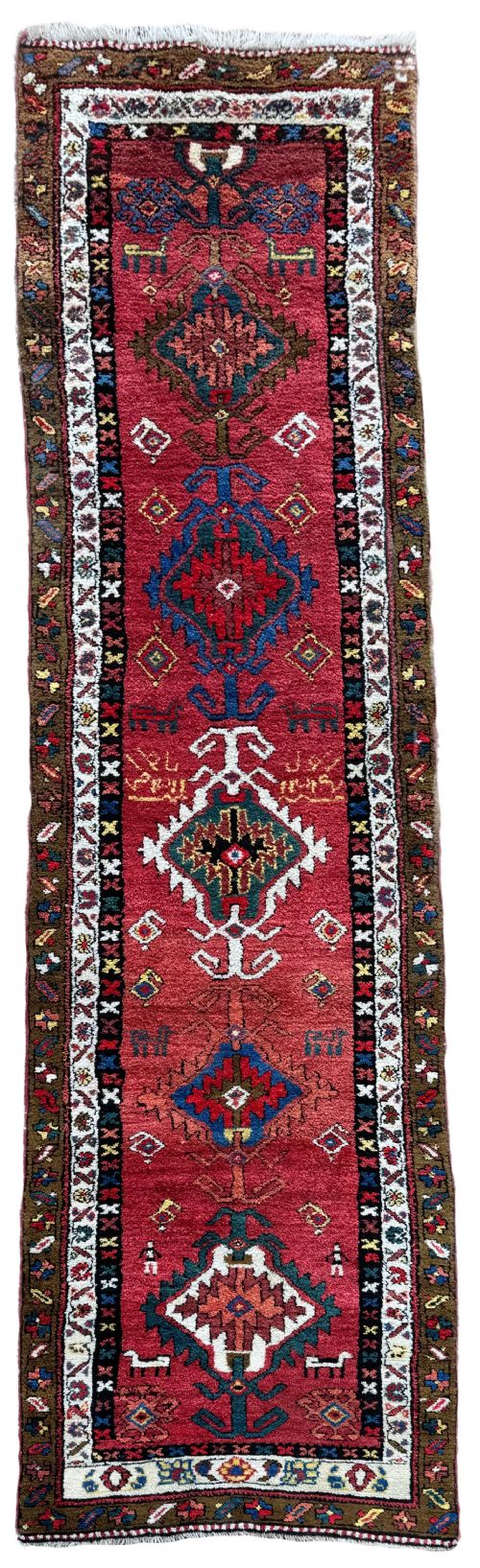
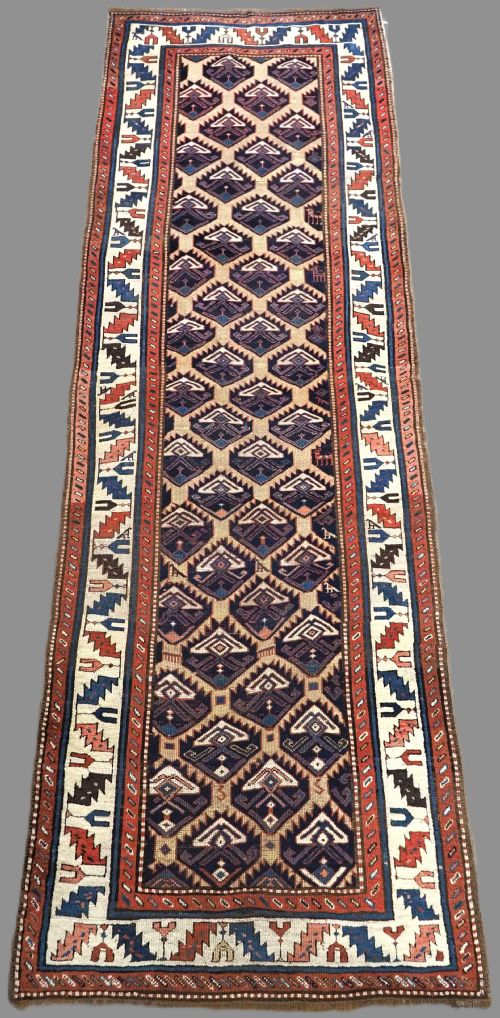
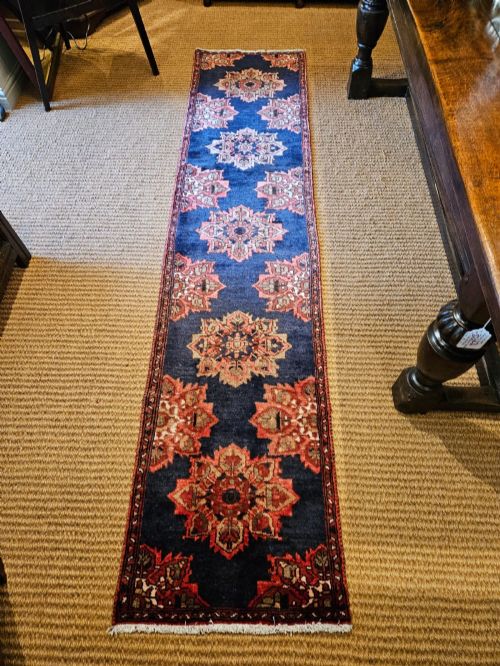
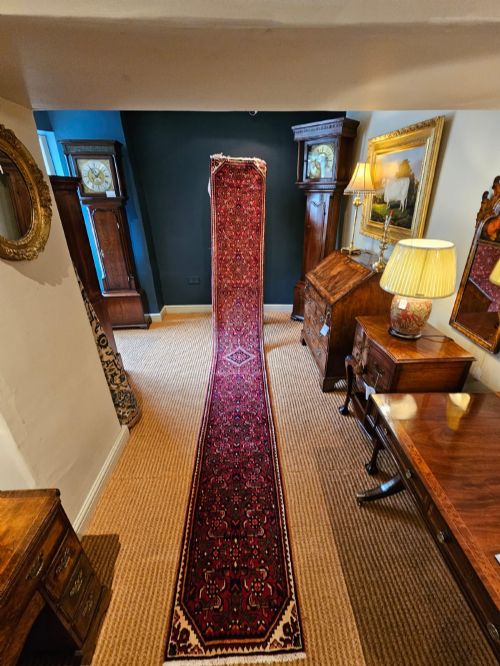


Wool Hall Runner Carpet
These wool hall runner carpet pieces bring enduring craft and deep colour to narrow spaces.
Wool Hall Runner Carpet
A wool hall runner carpet is a long, narrow textile designed specifically to protect and decorate corridors, hallways, and landings. When searching for a wool hall runner carpet, buyers encounter pieces originating from Persian, Caucasian, and Anatolian weaving traditions. These textiles span periods from the nineteenth century into the twentieth century, with distinct regional patterns and formats.
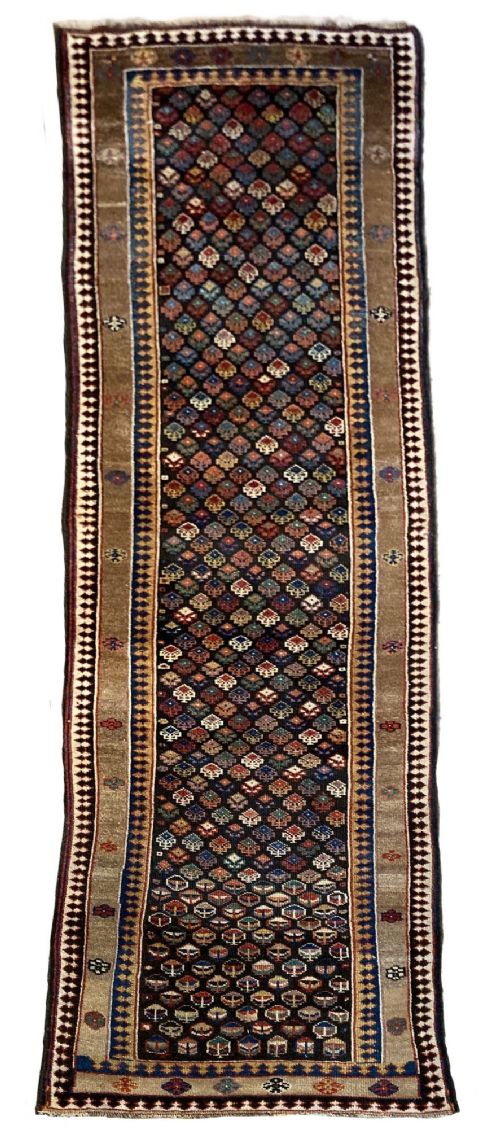
The most common versions met on this page include Heriz, Kurdish, and Caucasian runners that measure several metres in length yet remain narrow enough for hallways. Pieces such as Hamadan, Sarouk, and Bakshaish runners appear frequently alongside tribal formats like Gabbeh and Baluch. Their formats reflect practical domestic requirements for transit spaces in period homes.
Materials and construction
The foundational material across these listings is wool, often hand-spun and combined with cotton for structural warps and wefts. Camel hair also appears in specific tribal weaves, providing natural resilience in high-traffic areas.
Makers utilised natural dyes to achieve rich colour saturation that deepens with age. Artisans knotted or wove these materials by hand, producing dense piles designed to withstand daily wear.
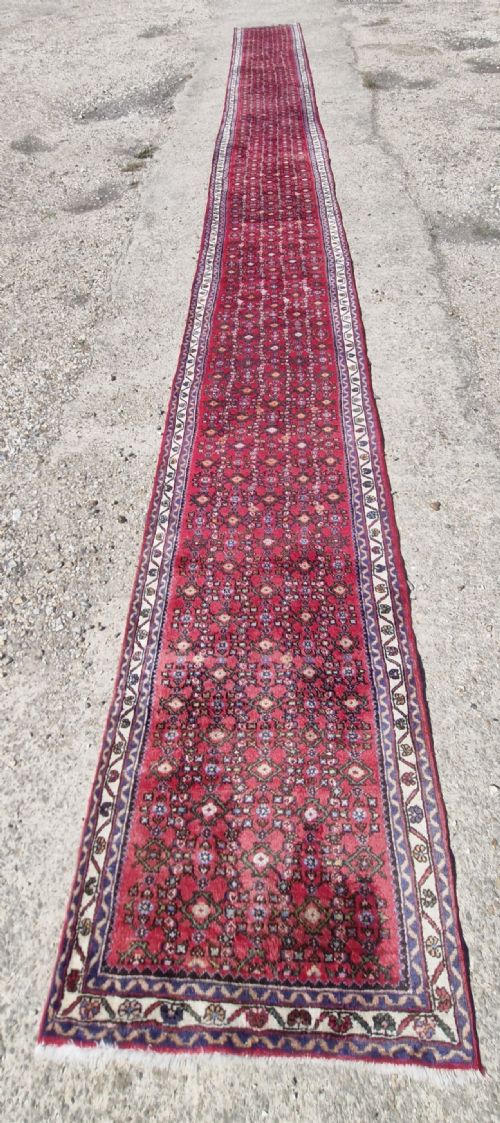
One exceptional corridor runner stretches an impressive thirty-two feet, ready for a very grand hallway indeed.
What separates the best pieces
Quality rests upon the fineness of the weave and the complexity of the design geometry. Tighter knots and precise line work indicate superior craftsmanship from skilled regional workshops or tribal weavers.
The clarity and depth of natural dyes distinguish finer examples from standard production. Material integrity, such as the use of hand-spun wool and intact borders, marks the higher tier of these carpets.
The Wool Hall Runner Carpet Glossary
- Runner
- A long, narrow carpet format intended for corridors, staircases, and hallways. These pieces balance length with restricted width.
- Boteh
- A traditional teardrop or almond-shaped motif with a curved upper end, frequently seen in Persian and Caucasian weaving.
- Warp
- The vertical threads stretched tightly on the loom before weaving begins. These foundational cords support the pile and determine the structural strength of the carpet.
- Weft
- The horizontal threads passed across and through the warp to bind the knots in place. Together with the warp, they form the sturdy backing of the textile.
- Pile
- The upright cut or looped wool surface of the carpet. A dense pile provides physical cushioning and protects the structural foundation from friction.
Wool Hall Runner Carpet: Frequently Asked Questions
Where should I place a wool hall runner carpet?
These long textiles suit narrow architectural spaces such as corridors, hallways, and large landings. They protect wooden flooring while adding warmth and visual interest to transit areas.
Their elongated proportions also make them effective alongside long dining tables or beside bedroom furniture where floor coverings need to fit restricted widths.
How do I care for an antique wool runner?
Regular gentle vacuuming without a rotating brush roll prevents dust accumulation within the wool pile. Professional cleaning suited to antique textiles preserves the natural dyes and fibres.
Keep these carpets out of direct, continuous sunlight to prevent fading of the natural plant and insect-derived colours over time.
How do I identify a Kurdish runner?
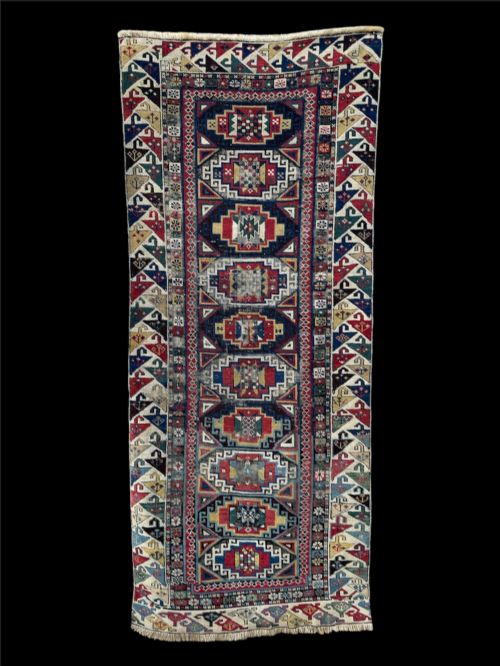
Kurdish runners typically display bold geometric motifs, repeated medallions, and robust wool construction originating from North-West Persia. Their designs often feature rich indigo blues and deep reds.
The tactile quality of the wool tends to be heavy and resilient, reflecting the traditional nomadic and village weaving methods of the region.
What is the difference between Heriz and Caucasian runners?
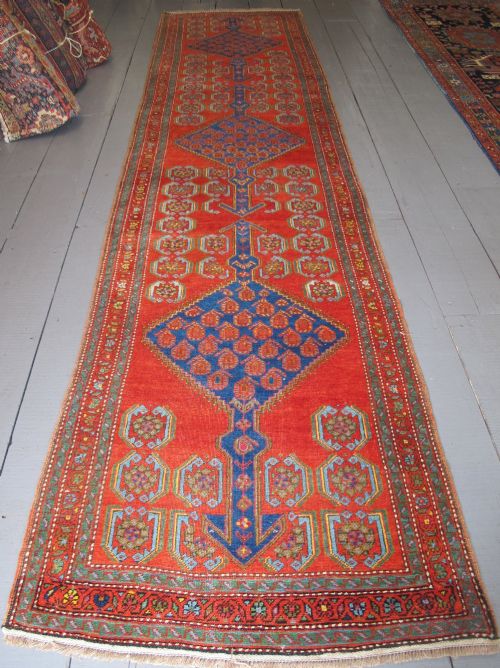
Heriz runners generally feature large, bold geometric medallions and structured, architectural designs associated with workshops in North-West Persia. Their palette often includes rust reds, navy blues, and ivory.
Caucasian runners, by contrast, tend to display sharper geometric patterns, distinct star or lattice motifs, and brighter primary colours originating from the Caucasus region.