


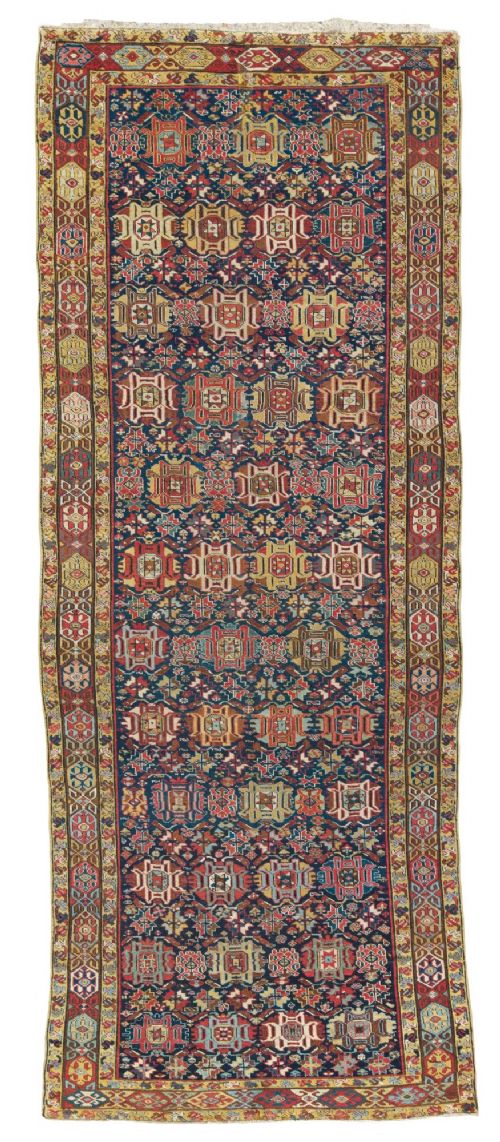

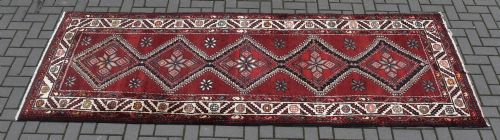

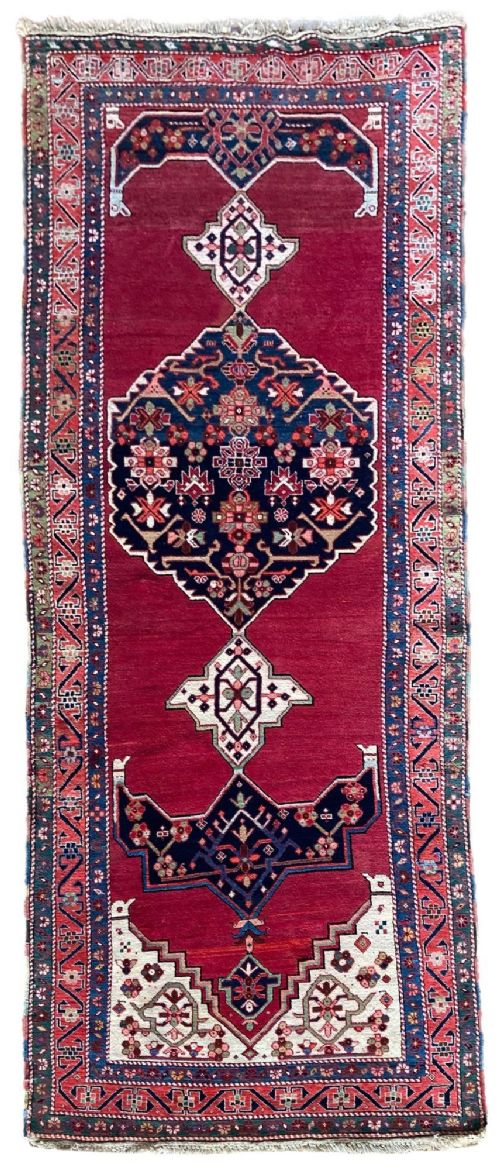

Wool Caucasian Long Rug
Wool caucasian long rug examples combine regional tribal geometry with elongated runner formats suited to corridors and narrow spaces.
Wool Caucasian Long Rug
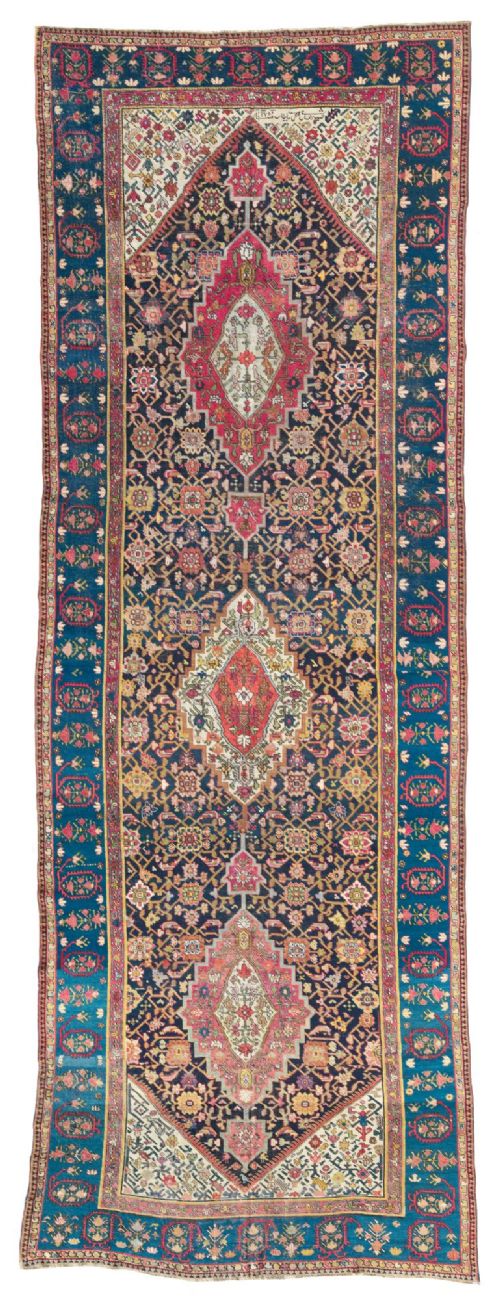
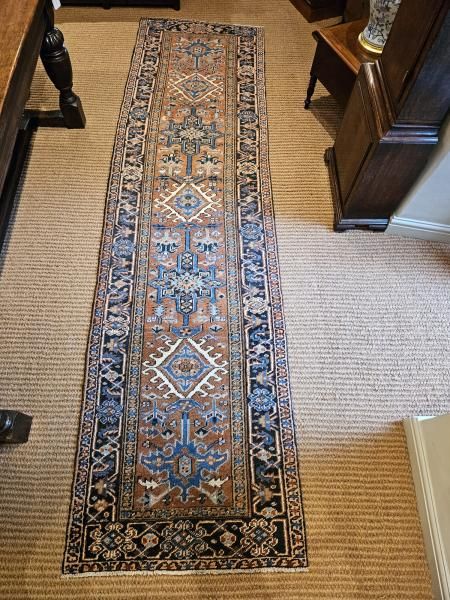
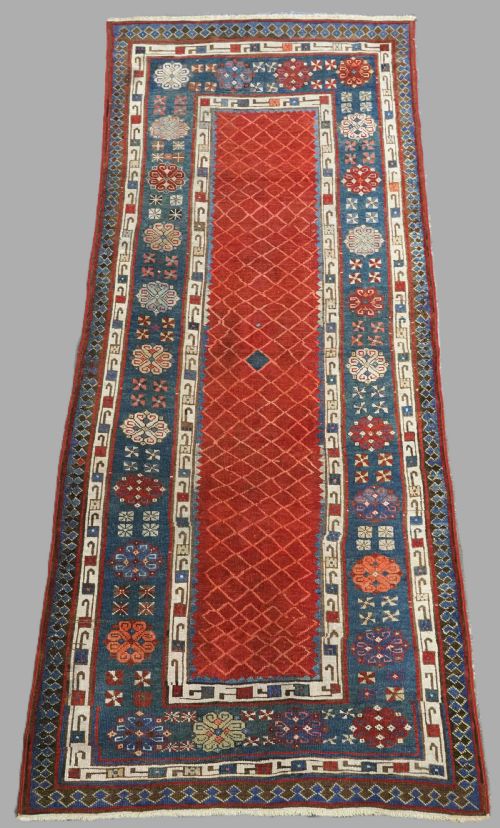
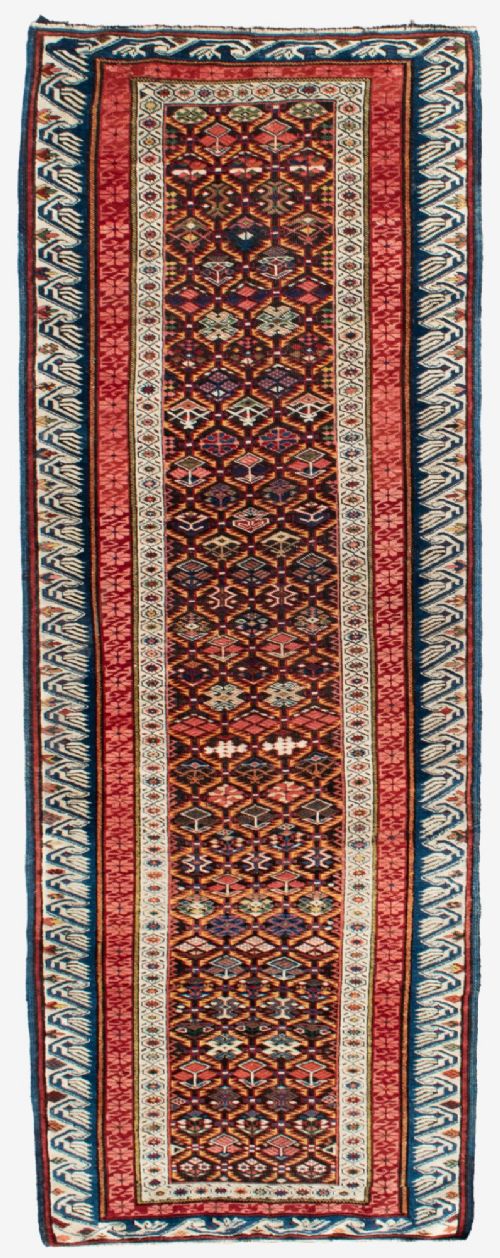
A wool caucasian long rug is a narrow, elongated textile originating from the Caucasus region and surrounding tribal territories during the nineteenth and early twentieth centuries. These pieces serve primarily as hallway runners and long floor coverings, utilising formats designed for specific architectural pathways.
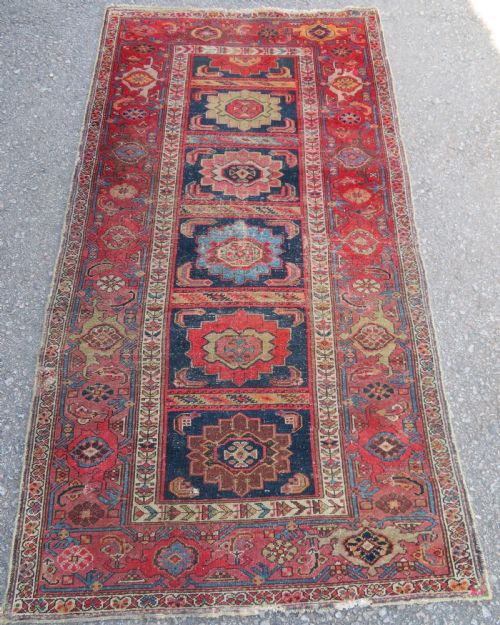
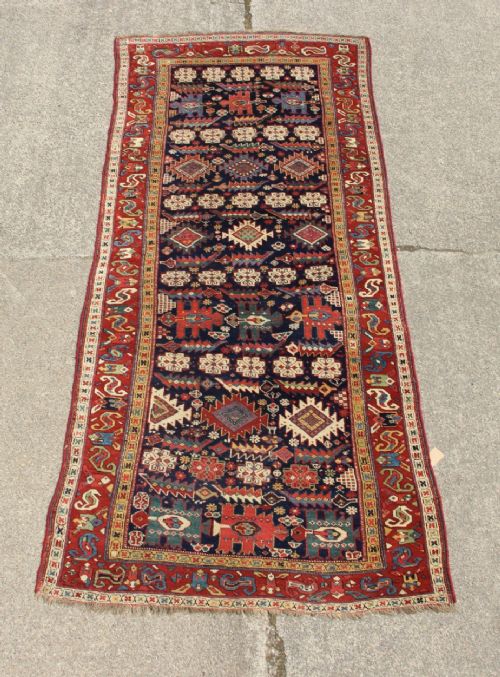
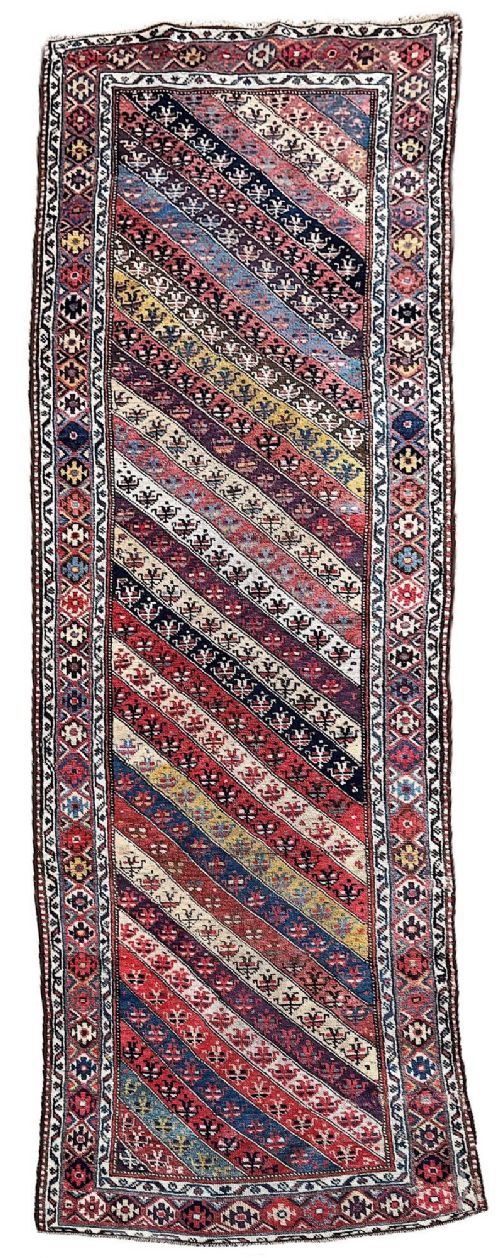
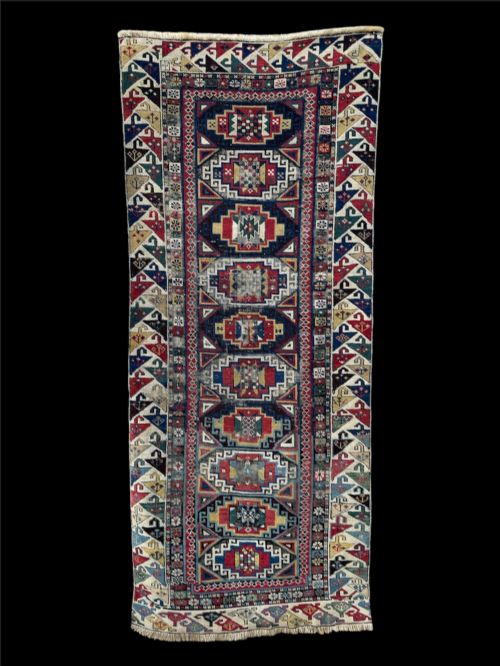
Buyers encounter examples spanning from the 1850s through the 1920s, incorporating tribal motifs, geometric medallions, and lattice patterns. The selections on this page encompass various regional traditions, including Talish, Seychour, Kazak, and Karabagh types.
The format typically manifests as a narrow runner or kelleh, providing a distinct linear layout that distinguishes these rugs from square or room-sized carpets.
What Varies in Quality
The refinement of the weave and the clarity of the geometric or floral lattice design dictate the standard of execution. Pieces featuring precise knotting and balanced colour distribution represent the finer end of the spectrum.
The integrity of the wool pile and the retention of original dimensions also influence the standing of an individual runner, distinguishing well-preserved specimens from heavily worn examples.
Design variations include repeating medallion layouts, boteh patterns, and Akstafa star motifs across runner formats.
The Wool Caucasian Long Rug Glossary
- Kelleh
- A large, elongated format rug traditionally used in Middle Eastern and Caucasian interiors. It offers a narrower proportion than a standard room carpet.
- Talish
- A specific regional style originating from the Talish area in the Caucasus, known for its narrow proportions and open field designs. These pieces often feature medallion columns or lattice patterns.
- Boteh
- A traditional teardrop or paisley motif representing a floral spray or cypress tree. This motif appears frequently across Caucasian and Persian tribal long rugs.
- Runner
- An oblong rug format designed specifically for hallways, corridors, and staircases. The length significantly exceeds the width in these configurations.
Wool Caucasian Long Rug: Frequently Asked Questions
Where were these long rugs used?
These elongated textiles were traditionally placed in hallways, long corridors, and grand entryways to provide durable floor coverings for high-traffic areas.
Their narrow proportions also allowed them to function alongside large furniture pieces in principal rooms.
How do I care for a wool runner?
Regular gentle vacuuming without a rotating brush roll helps remove embedded dust and protects the wool pile from premature wear.
Professional cleaning suited to antique textiles preserves the natural dyes and structural integrity of the foundation.
What defines a Talish long rug?
Talish pieces typically feature a very narrow format combined with an open central field and specific geometric border arrangements.
They often display blue or neutral grounds accented by star medallions or small abstract motifs.
How can I identify a nineteenth-century piece?
Nineteenth-century examples are distinguished by handspun wool, saturated natural dye palettes, and characteristic tribal weaving structures.
Regional designs such as Karabagh or Kazak provide further clues to the specific era of production.