

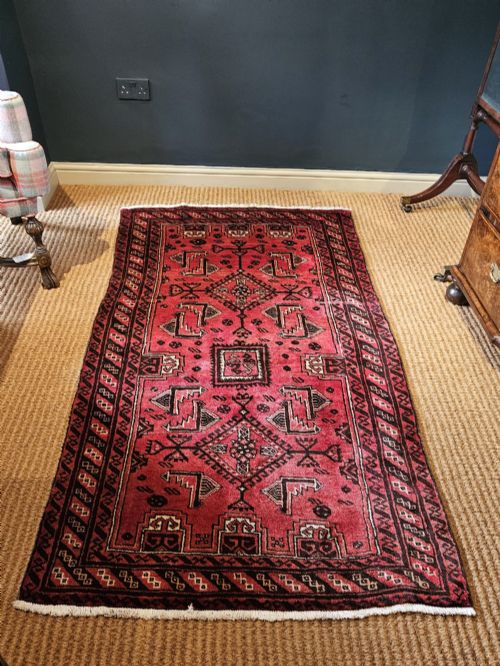
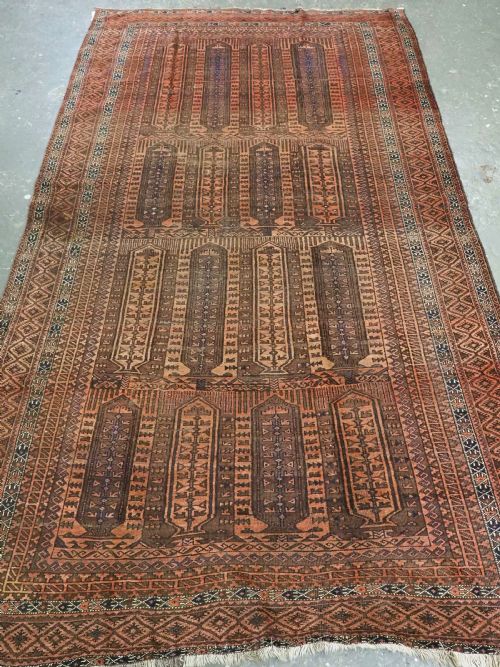
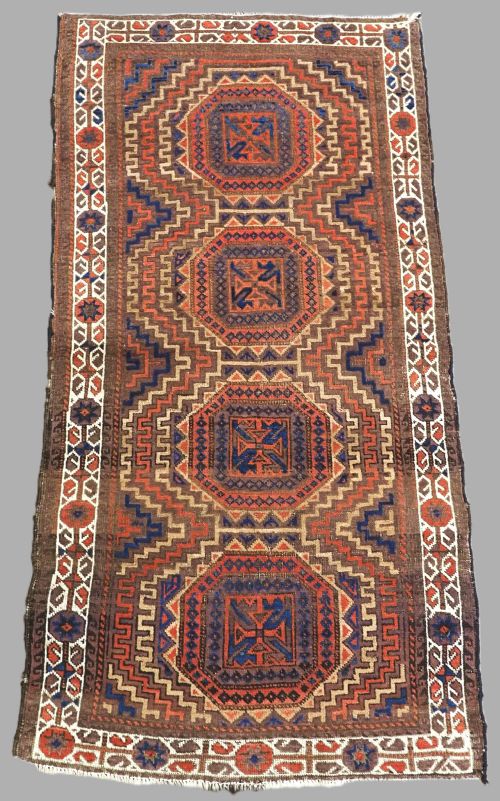
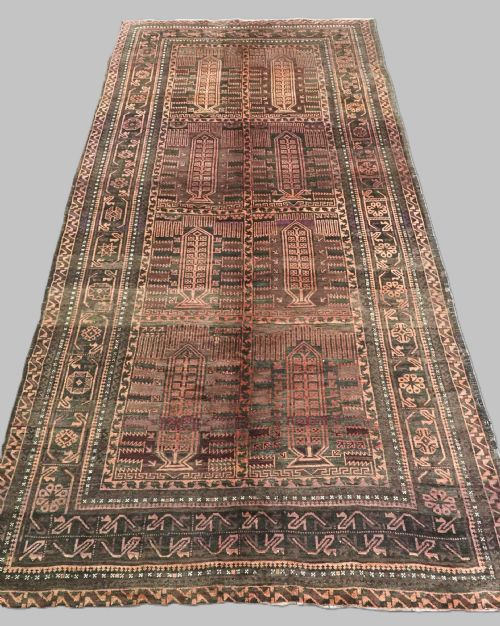


Wool Baluch Carpet
A wool baluch carpet brings tribal nomadic artistry into a room through deep earthy tones and distinctive geometric patterns.
Wool Baluch Carpet
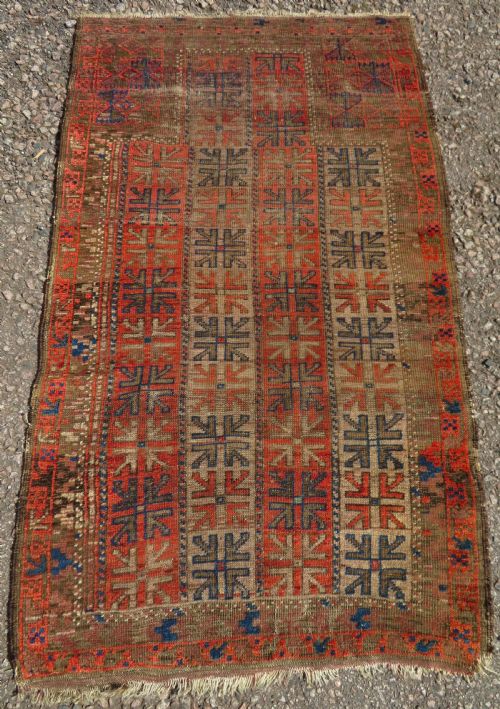
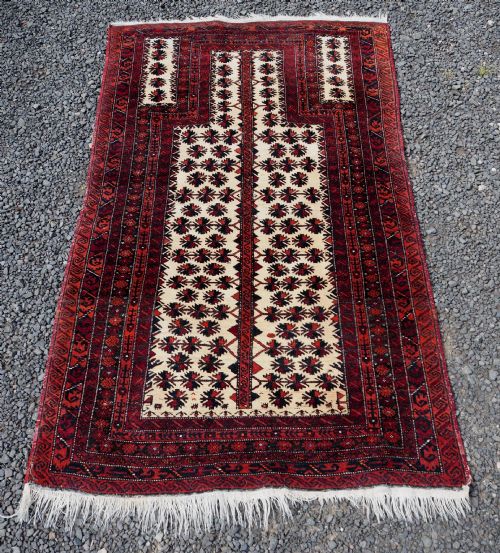
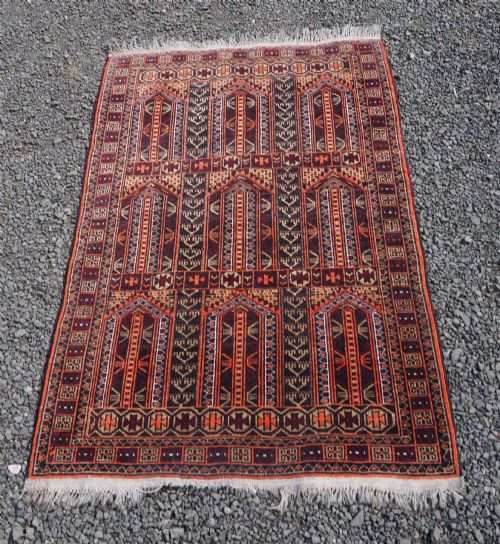
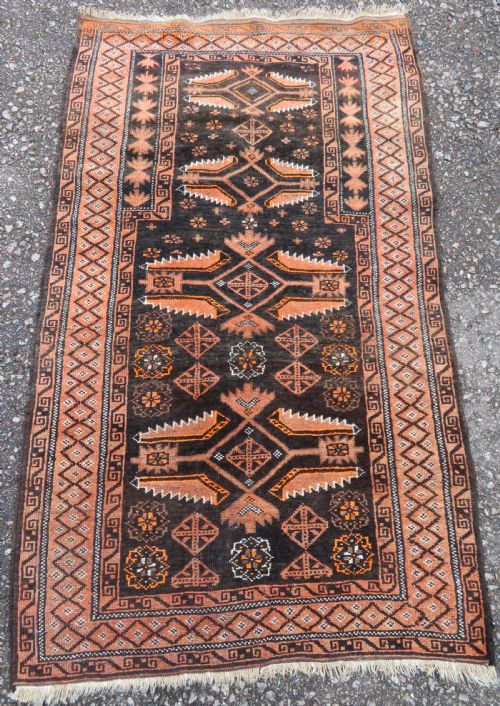
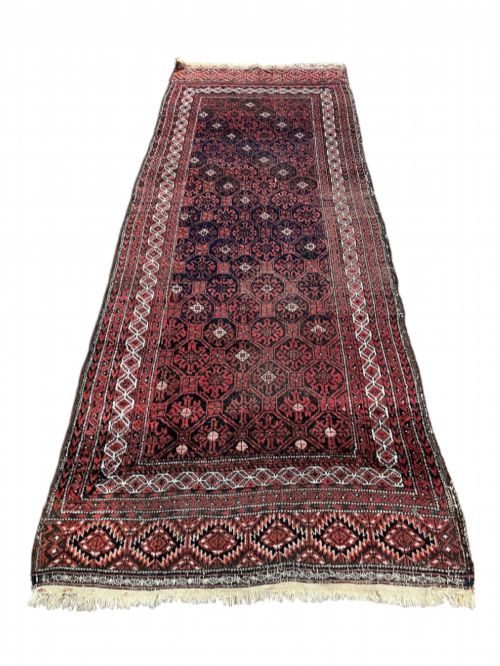
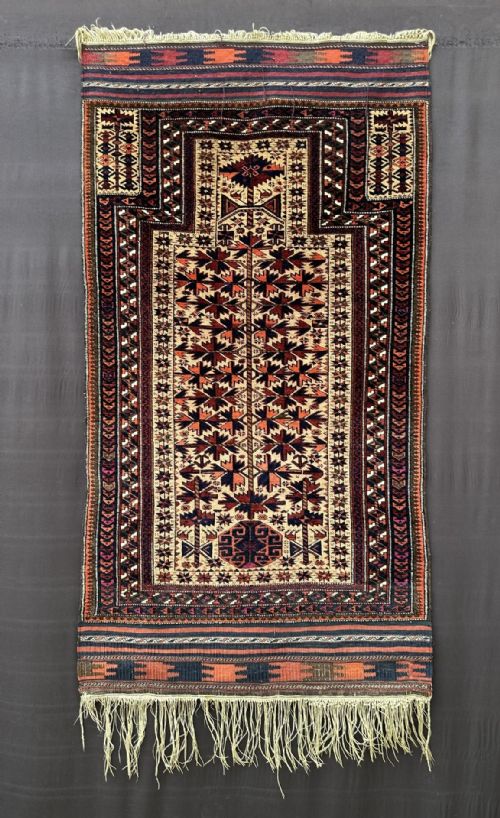
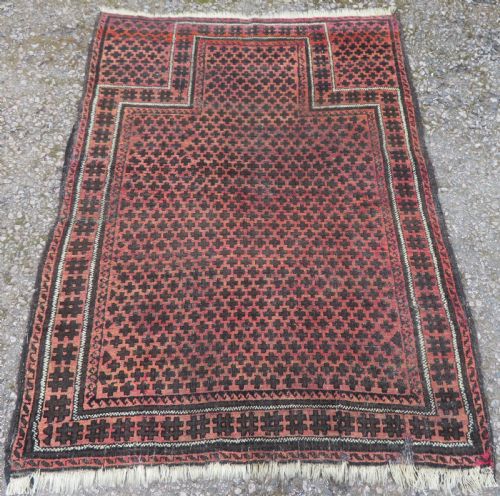
A wool baluch carpet is a hand-knotted tribal weaving originating from the borderlands of Persia, Afghanistan, and Central Asia. These textiles range from compact prayer rugs featuring mihrab arches to larger main carpets and utilitarian sofreh eating cloths.
Most examples encountered on this page date from the late nineteenth century through to the early decades of the twentieth century. They manifest diverse regional styles such as Timuri, Taimani, and Mushwani, often displaying characteristic motifs like guls, tree of life patterns, and kalam donneh designs.
How they were made
Weavers utilised hand-spun wool for the pile, frequently incorporating natural dyes alongside structural elements of cotton and goat hair. Certain tribal pieces also integrate camel wool or camel hair to introduce naturally varied brown and fawn shades into the foundation.
The construction relies on traditional village and nomadic knotting techniques, resulting in flexible, durable textiles with rich tactile surfaces. Mixed technique flatweaves and pile combinations appear regularly among the prayer rugs and runners.
Nomadic weavers occasionally included deliberate minor irregularities in their patterns to ward off the evil eye.
What varies in quality
Quality in these carpets rests upon the handle of the wool, the depth and saturation of the natural dyes, and the crispness of the tribal geometry. Superior pieces exhibit tight knot density and supple handling wool that retains its natural lanolin.
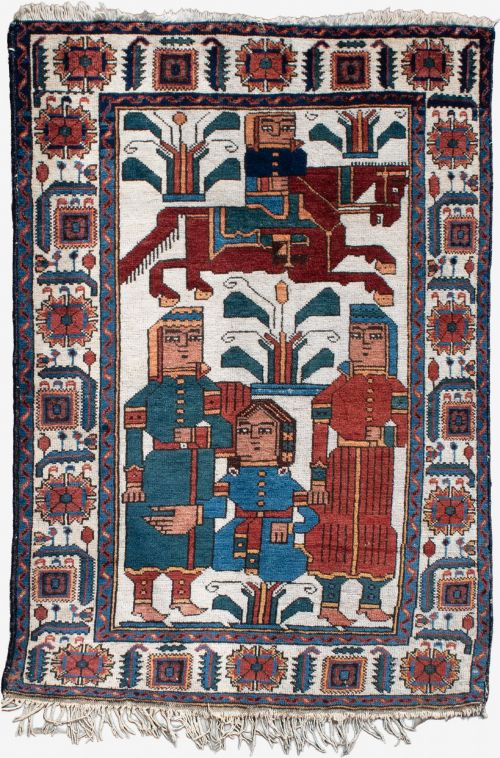
Distinction also lies in the nuance and complexity of the design layout, from standard repeated guls to scarce formats like double mihrabs or pictorial compositions. The integrity of the original borders and the preservation of the pile condition further differentiate individual examples.
The Wool Baluch Carpet Glossary
- Mihrab
- A niche design symbolising the prayer arch, commonly found pointing towards Mecca on Islamic prayer rugs. This architectural motif often dominates the upper field of Baluch prayer formats.
- Gul
- A medallion or floral octagonal stamp repeated across the main field of tribal carpets. Different tribal groups weave distinct variations of these primary geometric motifs.
- Sofreh
- A flatwoven or pile-woven cloth traditionally used for spreading meals or kneading bread on the ground. These utilitarian tribal textiles frequently double as decorative floor coverings.
- Latch hook
- A geometric hook motif extending from the edges of medallions or borders. It serves as a protective talismanic symbol throughout nomadic weaving traditions.
- Kalam donneh
- A repeating boteh or shrub motif resembling a stylised pear or flame. Artisans arrange these graceful teardrop elements in rows across the central carpet field.
Wool Baluch Carpet: Frequently Asked Questions
How do I identify a prayer rug?
Prayer rugs typically feature a distinctive arched mihrab design at one end, indicating the direction of prayer. They are generally smaller in scale to accommodate individual devotional use.
Older nomadic pieces often incorporate tree of life motifs or small repeating shrub patterns within the central niche. Their compact dimensions make them straightforward to position as wall hangings or small accent floor pieces.
What materials make up these carpets?
The pile is predominantly spun from sheep wool, sometimes supplemented with softer camel hair or camel wool for natural colour variations. Foundations frequently combine cotton warps with wool or goat hair horizontal wefts.
Natural dyestuffs provide the traditional palette of deep reds, indigos, browns, and ivories that mature gracefully with age. These organic materials give the textiles their characteristic soft handle and enduring strength.
Where were these textiles woven?
Weaving centres spanned the rural borderlands and nomadic territories of Persia, Western Afghanistan, and Baluchistan. Independent tribes such as the Timuri, Taimani, and Mushwani produced distinct regional variations.
Makers worked within their specific tribal traditions rather than urban workshops, passing down particular border designs and colour preferences through generations. This regional autonomy accounts for the striking variety seen across surviving examples.
How should I care for an old wool carpet?
Gentle, regular vacuuming without a rotating power brush helps remove grit without disturbing the aged wool pile. Professional cleaning suited to antique textiles preserves the natural lanolin and dyed fibres.
Keeping the piece out of direct, harsh sunlight prevents the natural colours from fading over time. Using an appropriate underlay helps reduce friction against hard floors and keeps the runner or rug secure.