


Wool Anatolian Prayer Mat
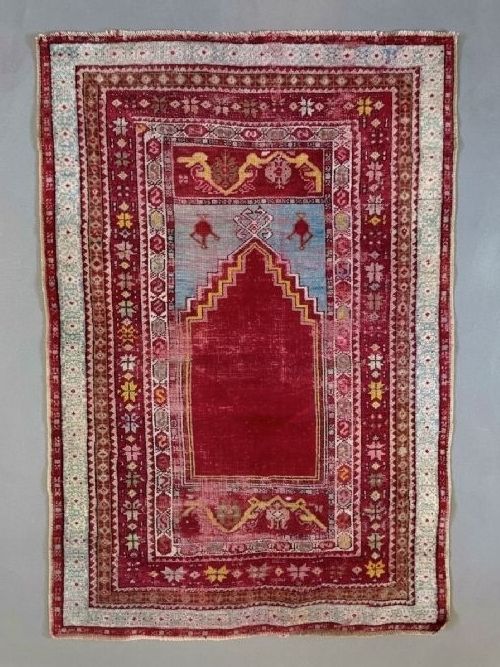
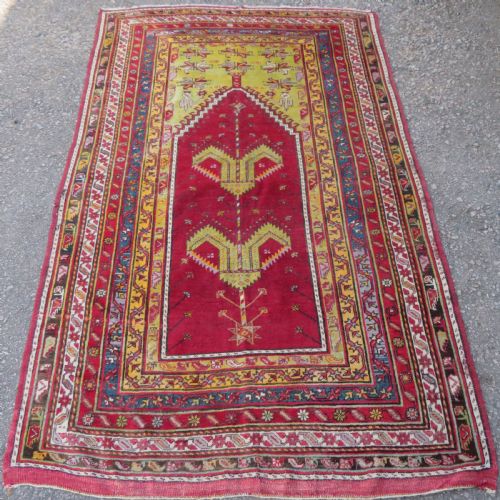
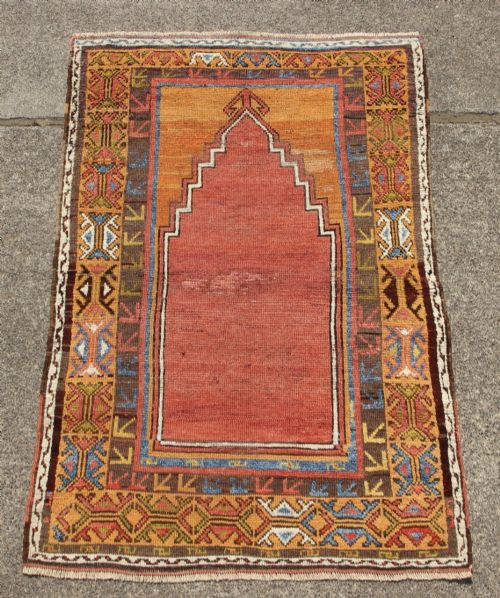
When choosing a wool anatolian prayer mat, collectors seek traditional hand-knotted village weaving from Anatolia featuring characteristic mihrab designs.
Wool Anatolian Prayer Mat
A wool anatolian prayer mat is a portable textile designed for daily Islamic worship, defined by a central arched niche known as a mihrab that directs the user towards Mecca. These portable rugs originate from historical weaving centres across Anatolia, including regional hubs such as Konya, Ghiordes, Kirsehir, Ladik, and Milas.
On this page, the most common pieces are nineteenth-century village rugs employing wool pile on cotton or wool foundations. Examples span smaller formats suitable for specific regional classifications down to compact village formats from West and Central Anatolia.
How they were made
Makers utilised hand-spun wool for the surface pile, combining this animal fibre with cotton foundations in many nineteenth-century examples to provide structural stability. This natural wool accepts dyestuffs readily, yielding tactile pile surfaces that wear evenly over extended periods.
Colour palettes rely upon natural dyes and vegetable dye sources extracted from local plants, roots, and minerals, producing earthy tones alongside vivid accents. Artisans knotted the pile by hand onto warp and weft threads before securing the ends with woven flatweave skirts and side cord selvages.
Village weavers frequently tucked personal tribal symbols and tiny protective amulets directly into the borders of their prayer rugs.
What varies in quality
Quality rests upon the handling of natural dyestuffs and the crispness of the woven geometric or floral motifs within the mihrab field. Subtle tonal variations and harmonious colour saturation distinguish master weaver output from routine commercial village production.
Knot density and structural integrity also separate examples, alongside the retention of original borders and outer guard stripes. Pieces displaying deliberate balance in proportion and well-preserved pile depth represent the upper tier of surviving regional weaving.
The Wool Anatolian Prayer Mat Glossary
- Mihrab
- The arched niche at one end of a prayer rug that mimics the architectural prayer niche found in mosques. This architectural element points the worshipper in the direction of Mecca during daily devotions.
- Saf
- A multi-niche prayer rug containing several arches arranged in a row. This format allowed multiple worshippers to kneel side by side upon a single extended textile.
- Warp
- The vertical threads stretched tightly on the loom before knotting begins. These foundational threads run the entire length of the rug and often terminate in visible fringes.
- Weft
- The horizontal threads passed across the warp strands between rows of knots to bind the structure together. Proper beating of the weft ensures a compact and durable textile foundation.
- Natural Dyes
- Colourants derived from plants, insects, and minerals prior to the introduction of synthetic aniline dyes in the mid-nineteenth century. These traditional dyes mellow gracefully with age.
Wool Anatolian Prayer Mat: Frequently Asked Questions
How do I identify a prayer rug?
A prayer rug is distinguished by its focused design layout, specifically the pointed architectural arch or mihrab at one end. This layout is intended to guide the user's orientation during prayer rather than serve as a floor covering for general seating areas.
Older pieces from Anatolian weaving towns often incorporate specific border motifs and spandrel decorations unique to regional centres like Ghiordes or Ladik. Examining the upper arch helps separate these devotional textiles from standard scatter rugs.
Where were these rugs made?
These textiles were produced in towns, villages, and nomadic encampments across the Anatolian peninsula, which forms modern-day Turkey. Major historical weaving regions include Konya in Central Anatolia, Bergama in the west, and Kirsehir.
Each district developed distinct colour combinations, wool qualities, and structural traits associated with local tribal groups. Village weavers applied traditional patterns native to their specific geography and community.
How should I clean my rug?
Gentle surface cleaning and regular low-suction vacuuming without a rotating brush help maintain wool pile integrity. Professional textile conservators should handle deep washing to prevent dye migration or structural damage to old foundations.
Avoiding direct, harsh sunlight prevents the natural vegetable dyes from fading prematurely over the years. Rotating the position periodically ensures even wear patterns from foot traffic.
Are these rugs suitable for daily use?
Nineteenth-century village rugs constructed from hand-spun wool possess robust material qualities suited for light foot traffic in low-impact areas. Placing them in moderate-traffic zones allows them to be enjoyed as decorative floor elements while preserving the pile.
Alternatively, many collectors mount antique prayer textiles safely on walls to protect the older foundations from physical wear. Proper rug underlays provide additional cushioning and prevent slipping on hard floors.