







Woodland Oil Artwork
Woodland oil artwork captures trees, clearings and forest floors through pigment, offering depth and natural light for interior spaces.
Woodland Oil Artwork
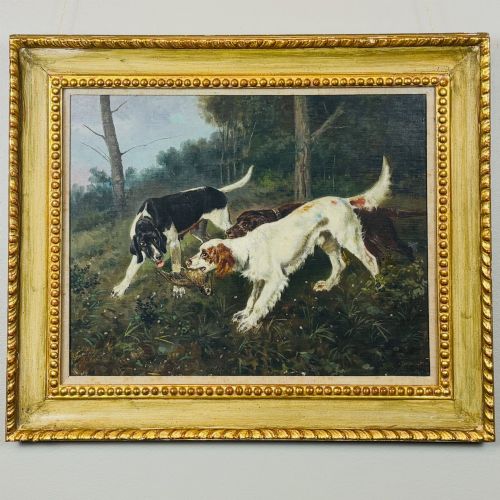
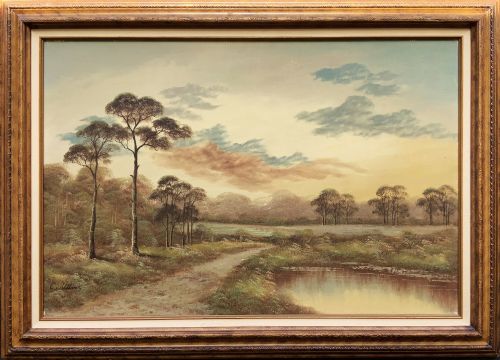
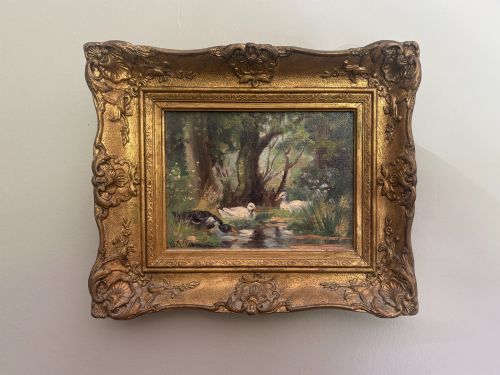
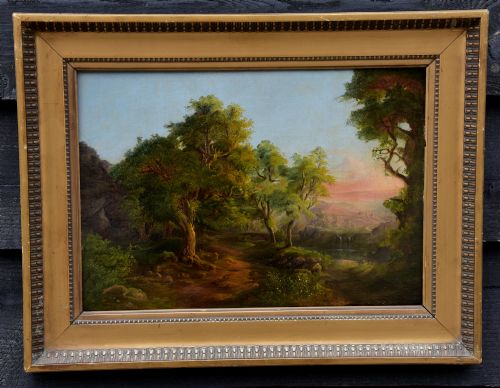
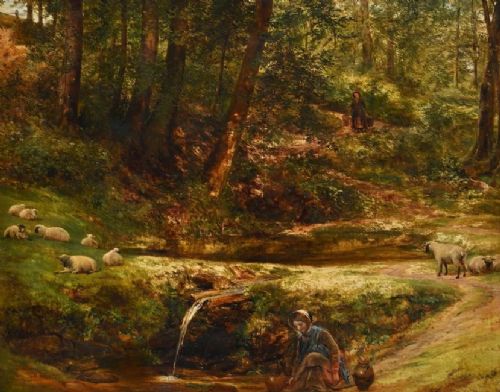
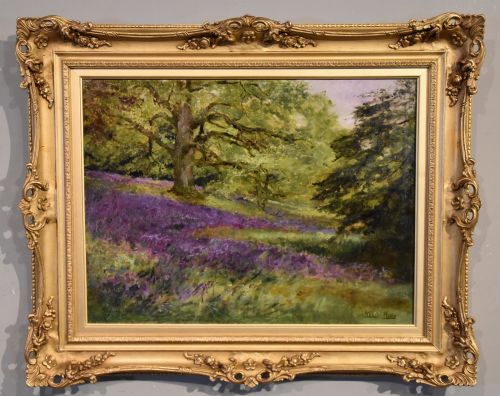
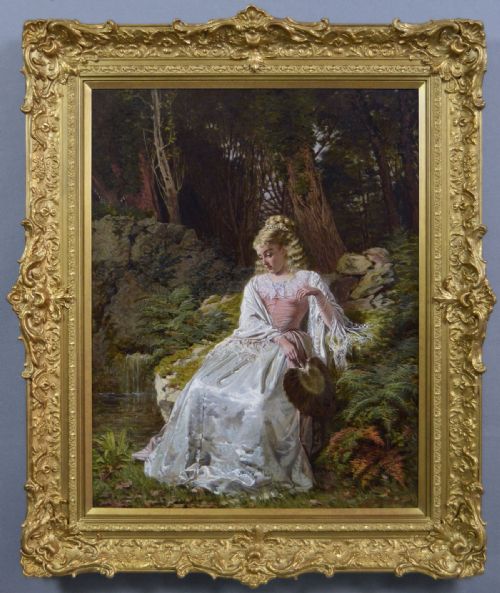
A woodland oil artwork presents painted scenes of forests, trees and rustic glades created using oil pigments. These pieces range from intimate nineteenth-century glimpses of English woodland to larger panoramic vistas featuring rivers and figures.
The selections visible here span Victorian Naturalism, British Impressionism and Edwardian interpretations. Canvas and wood panel provide the primary grounds for these painted representations of rural terrain.
Buyers frequently encounter nineteenth-century works depicting cattle, figures gathering firewood or sunlit forest paths. Later mid-century examples lean towards broader post-war interpretations of the countryside.
Materials and methods
Artists deployed oil paint suspended in drying oils, working primarily upon woven canvas or wooden board. This medium allowed for slow blending of tones to capture dappled light filtering through branches.
Many works incorporate gesso grounds applied to panels or stretched canvas to prepare the surface for pigment adherence. Frames often feature giltwood or gold leaf mouldings that complement the warm tones within the painted scenes.
Woodland Oil Artwork Retail Price Guide 2026
Typical asking prices for woodland oil artwork among the pieces listed under this phrase on Sellingantiques today, from the lower quarter to the upper quarter. They describe what is for sale here now, not the wider market.
Several paintings reveal cattle and timber-hauling horses lingering quietly beneath ancient woodland boughs.
Evaluating quality
Quality rests upon the artist's command of light, shadow and atmospheric depth within the forest canopy. Skilled brushwork distinguishes dynamic depictions of foliage from mechanical or flat reproductions of scenery.
The handling of natural textures, such as rugged tree bark and uneven forest floors, separates accomplished compositions from standard topographical studies. Original framing and signature clarity further elevate the standing of a piece.
Sir Joseph Noel Paton·Richard Sebastian Bond·William H Myers·Thomas W Lascelles·Henry Yeen King·James Mallard Bromley·Owen Bowen·William Mellor·Ernest Higgins Rigg·Herbert Royle
The Woodland Oil Artwork Glossary
- Canvas
- A heavy woven fabric stretched across a wooden frame to serve as a painting surface. It provides texture and durability for oil pigments.
- Gesso
- A plaster mixture applied as a primer to wood or canvas before painting. This creates a smooth and stable surface for the oil layers.
- Giltwood
- Wood carved and coated with a thin layer of gold leaf or metallic paint. It frequently forms the decorative border of period frames.
- British Impressionism
- An artistic movement focusing on spontaneous brushwork and natural light. Artists embraced plein-air painting to capture fleeting outdoor effects.
- Victorian Naturalism
- A nineteenth-century artistic approach emphasising detailed observation of the natural world. Painters recorded flora and fauna with rigorous botanical and topographical accuracy.
Woodland Oil Artwork: Frequently Asked Questions
How do I date an old woodland painting?
Examine the materials, stretcher bars and framing techniques used behind the canvas. Stylistic clues within the clothing of any figures also point towards specific decades such as the Victorian or Edwardian eras.
Signatures, artist registry records and inscriptions on the reverse offer further chronological context. Comparing brushwork techniques to known regional schools helps narrow down the period of creation.
Where should I hang a landscape piece?
Position these works away from direct sunlight and damp environments to protect the oil pigments and canvas substrate. Rooms with stable indoor temperatures help prevent warping in wooden panels and gilt frames.
Consider eye-level placement in living spaces or studies where natural light complements the illumination painted onto the canvas. Adequate wall space allows larger forest vistas to breathe without visual clutter.
What is the difference between canvas and board?
Canvas consists of woven fabric stretched tightly over a wooden frame, offering slight flexibility and a textured surface. Board provides a rigid, solid support made from wood or compressed material that resists punctures.
Painters choosing wood boards often sought a completely smooth ground for intricate detail work. Canvas remains favoured for its resilience and traditional aesthetic appeal.
How do I clean an oil painting?
Dust accumulated on the surface should be removed gently with a soft, dry artist brush. Avoid using water, household cleaners or chemical solvents on the paint layer.
Professional conservators should handle deeper cleaning, varnish removal or canvas repairs. Regular light dusting prevents particulate buildup without risking damage to the original brushwork.