





Woodland Landscape Art
Woodland landscape art brings the quiet depth of trees, paths and filtered light directly onto your walls through centuries of painterly observation.
Woodland Landscape Art
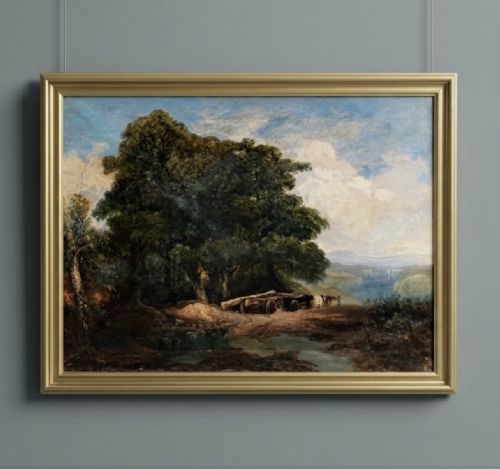
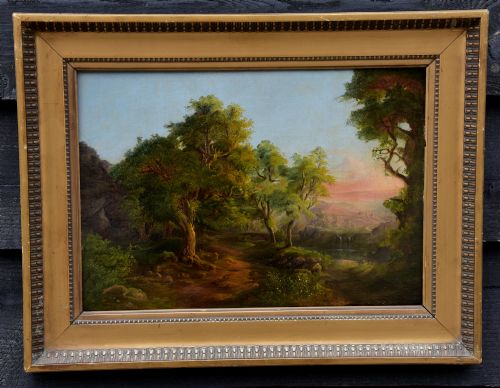
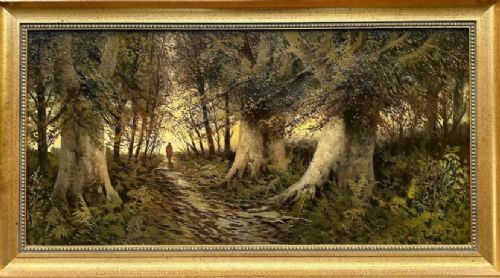
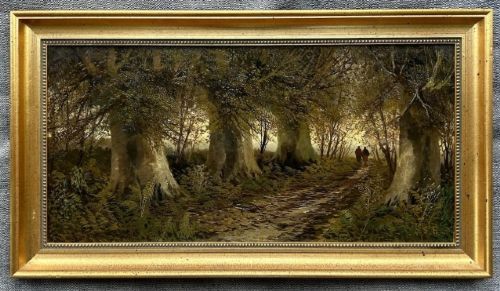
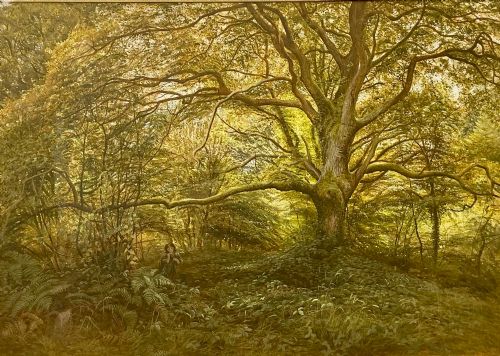
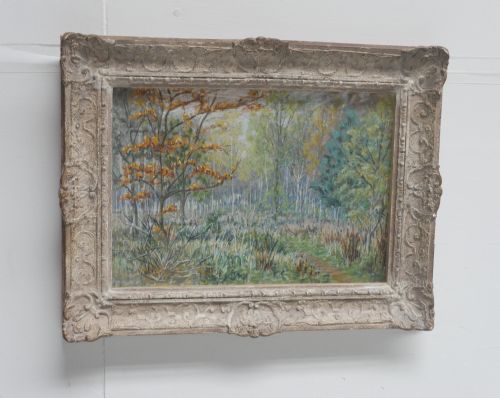
When you search for woodland landscape art, you find depictions of trees, wooded glens and forest paths captured by painters and draughtsmen over hundreds of years. The works on this page span from Victorian canvases to mid-century views, recording forests through changing seasons and shifting light.
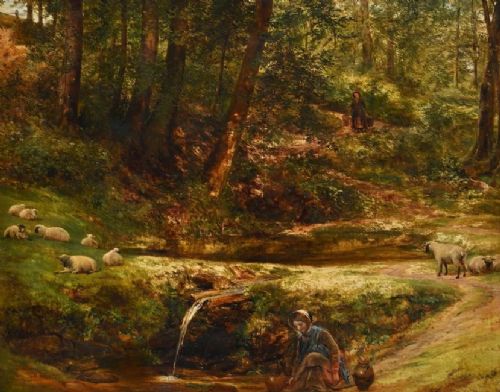
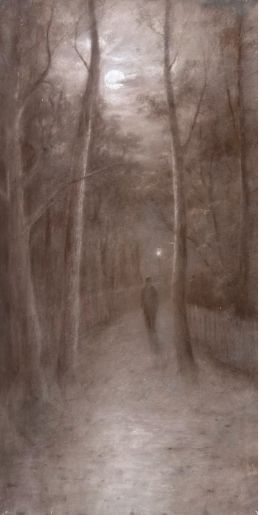
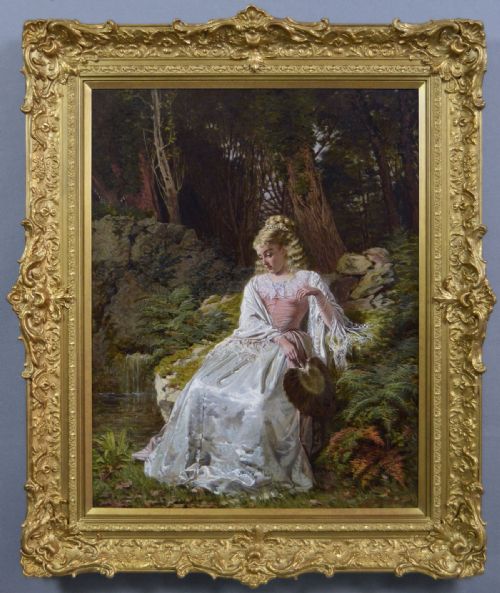
You are most likely to meet 19th-century and early 20th-century oil paintings and watercolours on this page. These pieces often feature figures, cattle or pathways drawing the eye deeper into the trees, reflecting naturalist and impressionist sensibilities of their era.
The subjects range from romantic British river woods to French Barbizon scenes and crisp watercolours. Whether rendered in oil on canvas, board or delicate paper, each piece preserves a specific tract of woodland captured by an artist in the field or studio.
Materials and technique
Artists rendering woodland landscape art relied primarily on oil paint applied to canvas or wood board, alongside watercolours and ink on paper. Oil offered depth for dense foliage and the play of sunlight, while watercolours captured the translucent canopy and damp air of forest floors.
Preparation involved stretching canvas over wooden frames or priming boards with gesso to receive the pigment. Painters built up scenes using brushwork ranging from tight realism to looser impressionistic strokes that suggested rather than detailed every leaf.
Cattle, sheep and fishermen frequently interrupt quiet forest paths, reminding us that nobody wanders woods alone.
Judgement of quality
The distinction between ordinary and exceptional works rests on the artist's command of light, atmosphere and composition. A stronger piece captures the tangible density of a wood and the specific quality of daylight rather than relying on formulaic foliage.
Handling of paint and the integration of figures or animals into the natural setting further separate the output. Confident brushwork and a balanced palette elevate a simple country scene into a compelling study of nature.
Richard Sebastian Bond·William H Myers·Thomas W Lascelles·Richard Redgrave·Paul Désiré Trouillebert·Bonomi Edward Warren·Henry Yeen King·Arthur Herbert Rigg·Thomas Bromley Blacklock·William Hoggatt·Thomas Edward Roberts·James Mallard Bromley·Owen Bowen·Clarence Henry Roe·David Watts·William Mellor·Alfred Grey RHA·Henri Joseph Harpinies·John Wright Oakes·Walter Follen Bishop·James Proudfoot·Rowland Henry Hill·Edmund George Warren·Abraham Hulk Jnr·Alfred W Parsons
The Woodland Landscape Art Glossary
- Canvas
- A heavy woven fabric used as a surface for oil paintings. It is typically stretched over a wooden frame before being painted.
- Gesso
- A white paint mixture consisting of a binder mixed with chalk, gypsum, or pigment. It is applied to panels or canvases to prepare the surface for painting.
- Barbizon School
- A French art movement of the mid-nineteenth century focusing on realism in landscape painting. Painters of this circle worked directly from nature within the Forest of Fontainebleau.
- Collotype
- A photomechanical process that produces high-quality flat prints from a glass plate coated with gelatin. It was widely utilised for fine art reproductions in the early twentieth century.
- Verdure
- A type of antique tapestry featuring a luxuriant landscape filled with foliage, trees and sometimes animals. These large wall hangings date back centuries and were woven in European workshops.
Woodland Landscape Art: Frequently Asked Questions
What periods do these pieces cover?
The selection encompasses works stretching from the seventeenth-century Dutch school and verdure tapestries through to mid-century post-war oils and watercolours.
Nineteenth-century Victorian and Edwardian examples form a large portion of the available pieces, showing how artists returned to woodland subjects across generations.
How should I frame an antique oil painting?
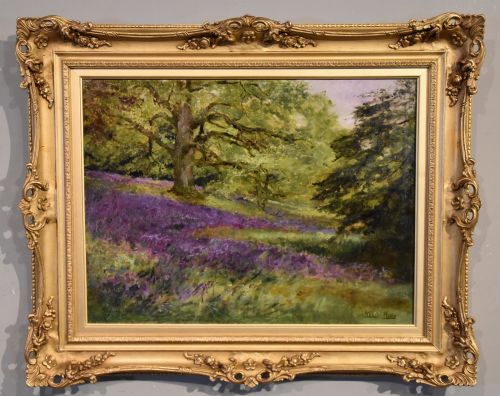
Antique oils are traditionally housed in heavy gilt plaster frames that complement the depth and tone of the canvas.
When re-framing, ensure the rabbet of the frame accommodates the canvas depth without pinching the edges or obscuring the artist signature.
Are watercolours sensitive to light?
Watercolours on paper are susceptible to fading when exposed to direct sunlight over long periods. Hanging them away from bright windows preserves the original pigments.
Glazing with UV-filtering glass provides additional protection against environmental fading in domestic settings.
How do I distinguish a board painting from canvas?
Board paintings utilise rigid wooden or fibrous panels as a support rather than flexible woven fabric.
Examining the reverse of the work usually reveals the flat wooden or composition board surface, sometimes bearing nineteenth-century framer stamps or artist inscriptions.