

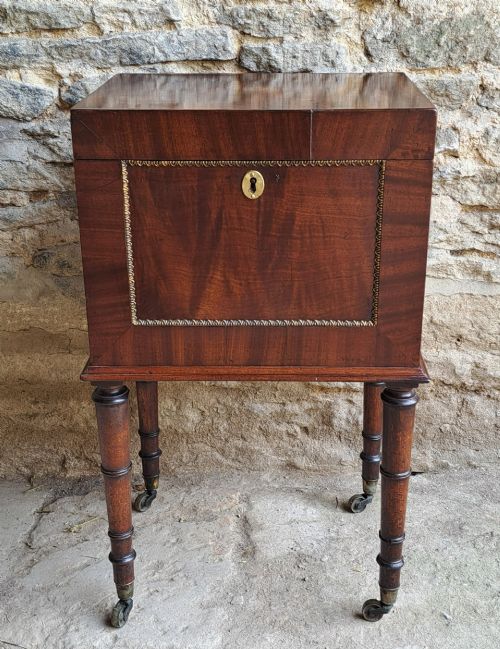
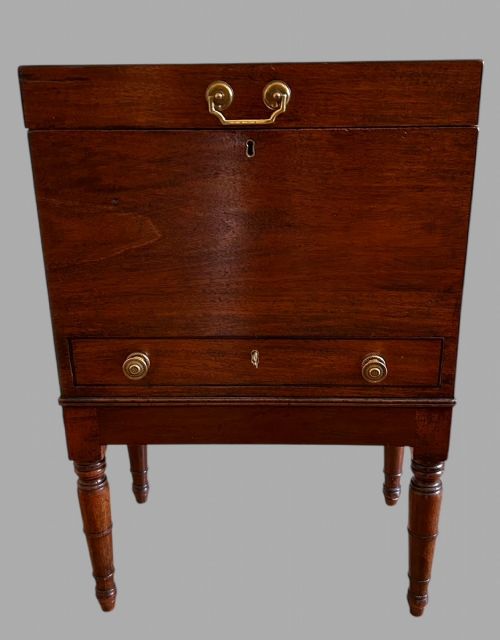

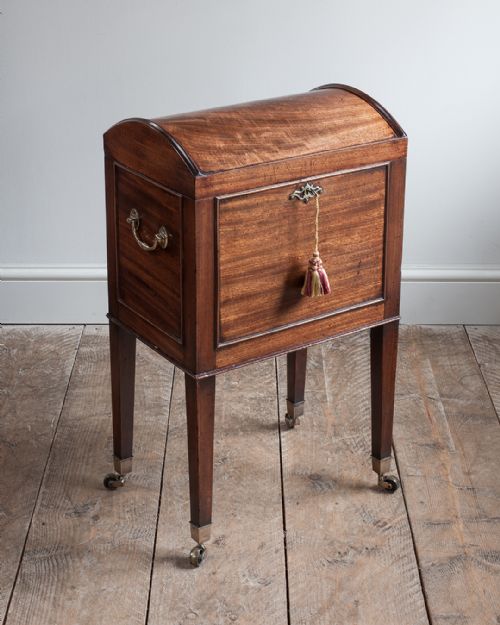


Wooden Wine Chest on Legs
A wooden wine chest on legs is a solid mahogany cellaret built to cool and store bottles during elite dining.
Wooden Wine Chest on Legs
A wooden wine chest on legs is principally a Georgian or Regency cellaret, designed to hold wine bottles securely beneath the dining table. Most examples appearing here date from the eighteenth and nineteenth centuries, spanning George III, Regency, and Edwardian periods.
These vessels range from simple small box cellarettes to large, heavily ornamented wine coolers fitted with interior divisions. Each piece reflects the formal dining rituals of its era, housing spirits and vintages for guests.
Materials and construction
The primary material across these listings is mahogany, often selected as flame mahogany or enriched with boxwood inlay and satinwood banding. Cabinetmakers utilised dense tropical hardwoods to construct sturdy bodies capable of holding heavy liquid loads.
Metalwork played a structural and decorative role, with brass handles, hinges, and ormolu mounts fitted to secure the heavy lids and transport the chests. Ebonised wood details also appear, providing sharp contrast against the warm brown tones of the main timber.
Wooden Wine Chest on Legs Retail Price Guide 2026
Typical asking prices for wooden wine chest on legs among the pieces listed under this phrase on Sellingantiques today, from the lower quarter to the upper quarter. They describe what is for sale here now, not the wider market.
Listings span from George III through Regency and Edwardian periods, utilising mahogany, ormolu, and boxwood inlay.
Assessing quality in a wooden wine chest on legs
Quality rests heavily on the selection of timber and the precision of the cabinetwork. Grain patterns on flame mahogany surfaces and crispness in boxwood stringing differentiate standard utilitarian pieces from high-status commissions.
The sophistication of the brass mounts and ormolu enrichment dictates the tier of the piece. Integrated interior dividers and original locking mechanisms further separate functional storage boxes from master cabinetmaker productions.
Gillows of Lancaster and London
The Wooden Wine Chest on Legs Glossary
- Cellaret
- A lockable container used for storing wine bottles near the dining table. They frequently feature internal compartments designed to hold individual bottles upright or on their sides.
- Sarcophagus
- A coffin-like shape with a domed lid and tapered sides popular during the Regency period. This classical silhouette allowed makers to display elaborate carved mouldings and bold mahogany grains.
- Flame mahogany
- A highly figured wood veneer displaying characteristic ripple patterns resembling tongues of flame. Cabinetmakers applied this to primary display surfaces for maximum visual impact.
- Ormolu
- Gilded bronze used for decorative mounts and handles on fine furniture. It adds metallic contrast to dark timber surfaces.
- Satinwood
- A pale, hard exotic wood utilised for contrasting stringing and banding details. It creates sharp visual borders against darker mahogany panels.
Wooden Wine Chest on Legs: Frequently Asked Questions
What is a wooden wine chest on legs used for?
These chests served as portable cellars during formal dining, keeping wine cool and secure before bottles were brought to the table.
Servants accessed the interior during meals to replenish glasses while keeping the main vintage locked away from guests.
How do I date a wooden wine chest on legs?
Dating relies on observing structural forms, timber choices, and decorative hardware like brass handles or ormolu mounts.
Plain rectangular George III boxes give way to bolder Regency sarcophagus shapes and later Edwardian revival pieces.
How do I fit a wooden wine chest into a modern interior?
These pieces function well as standalone statement tables or side cabinets in living areas and dining rooms.
The deep interior space also provides practical storage for blankets, books, or modern barware out of sight.
What is the difference between a cellaret and a wine cooler?
The terms are often used interchangeably in historical listings to describe lidded mahogany bottle storage chests.
Some wine coolers originally contained lead linings designed to hold melting ice, whereas cellarettes focused primarily on timber compartment storage.