


Wooden Windsor High Chair
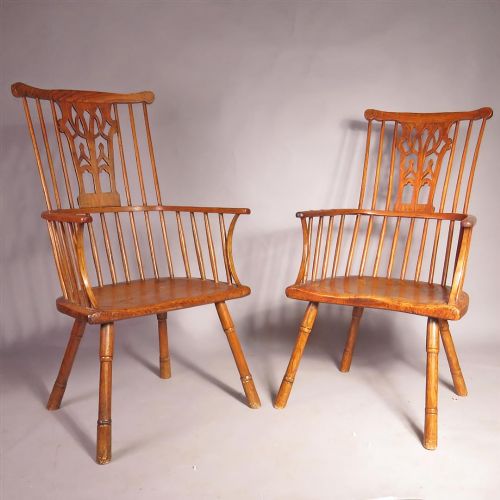
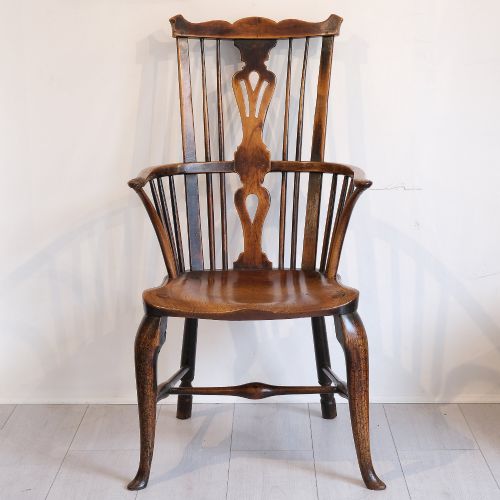
A wooden windsor high chair offers sturdy country seating designed for children, combining traditional turned spindles and solid timber construction.
Wooden Windsor High Chair
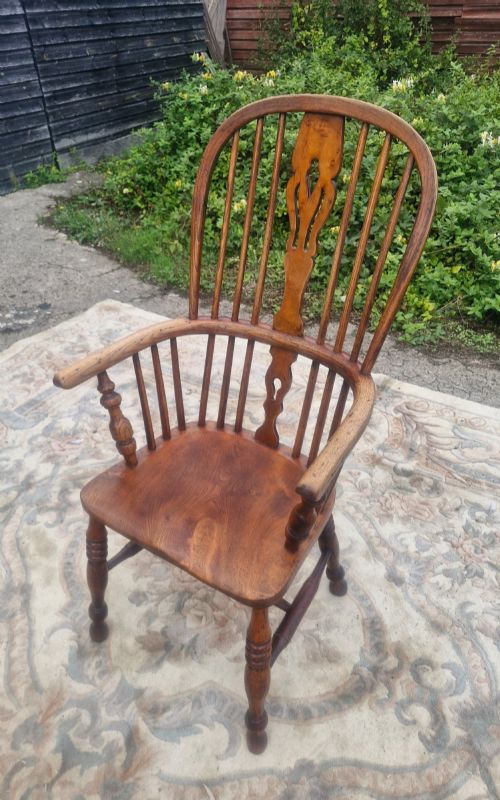
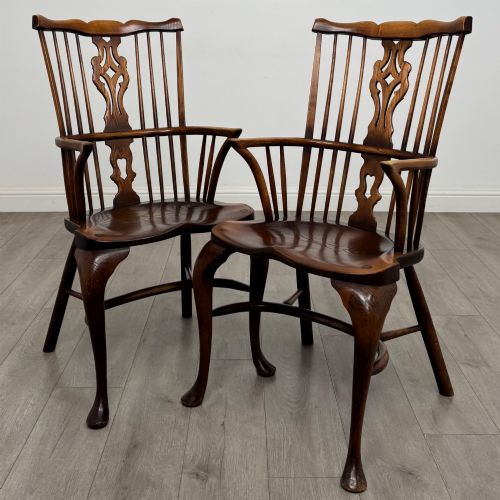
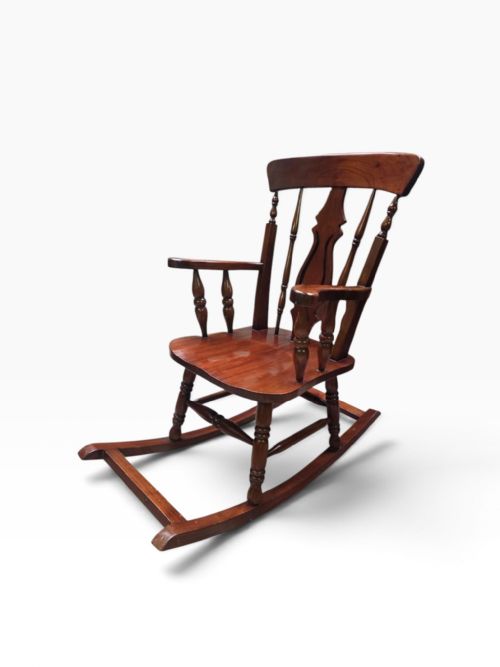
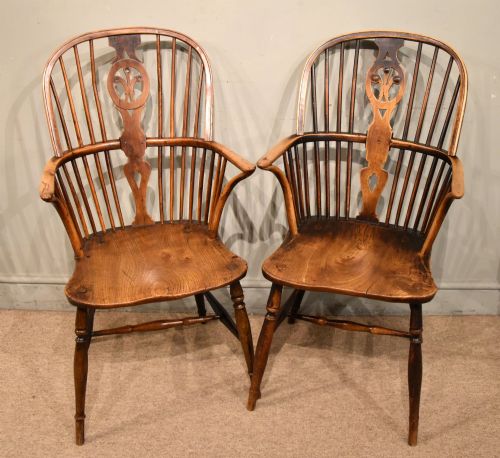
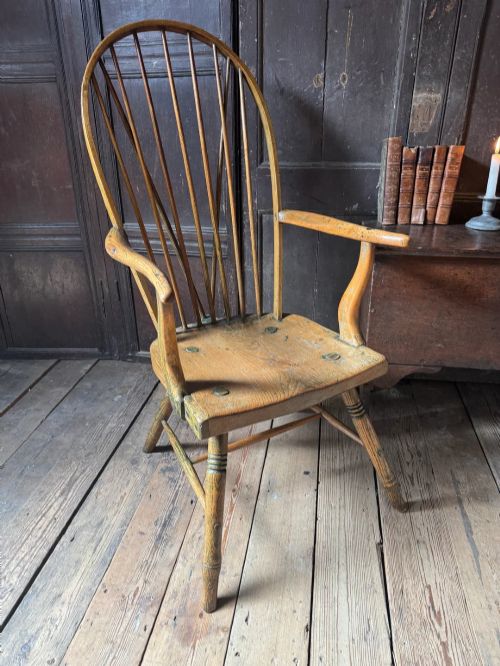
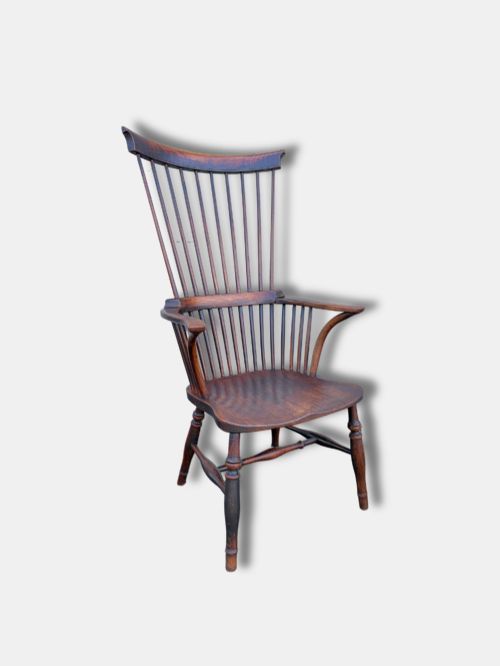
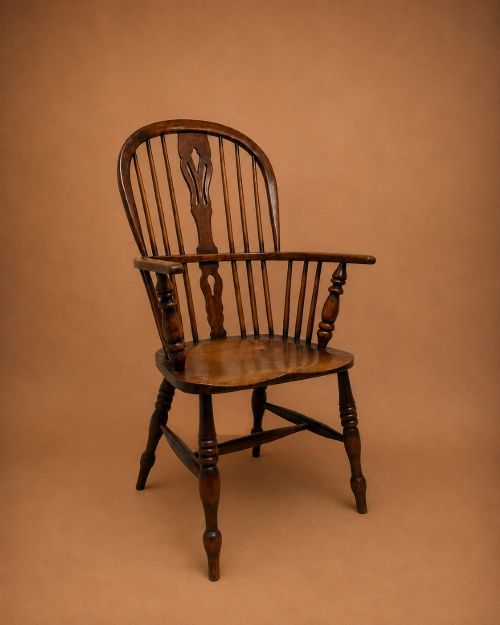
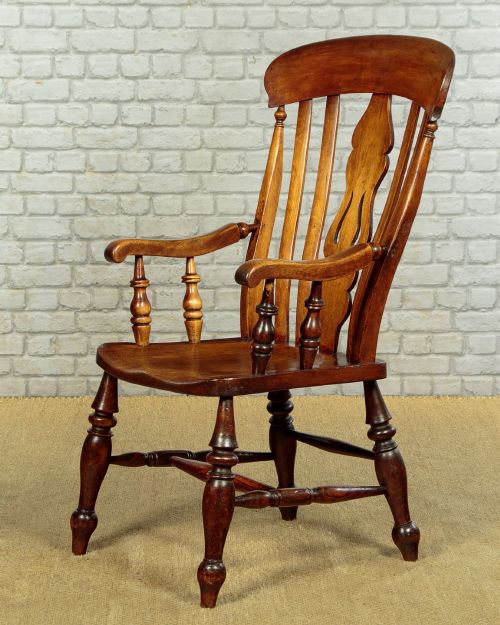
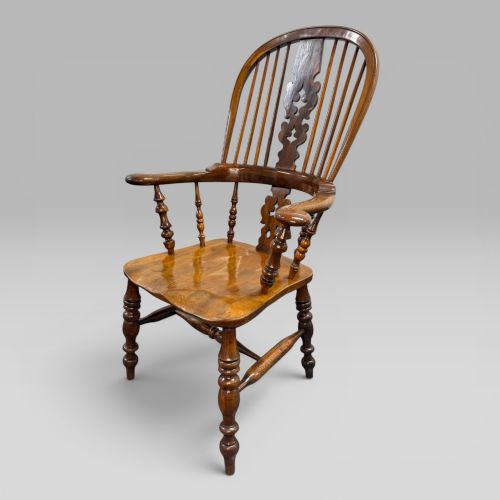
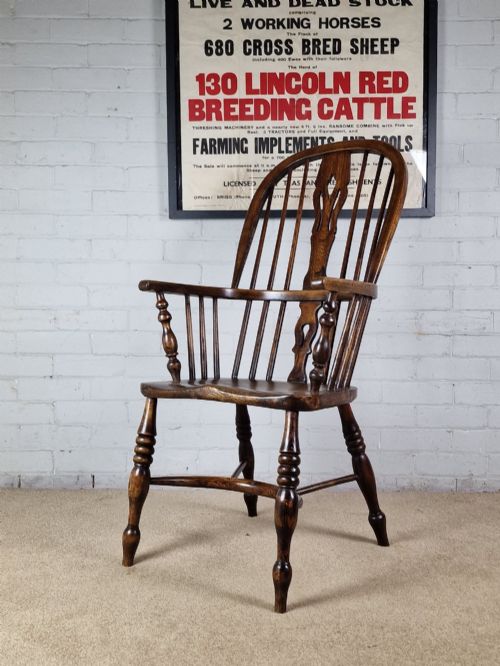
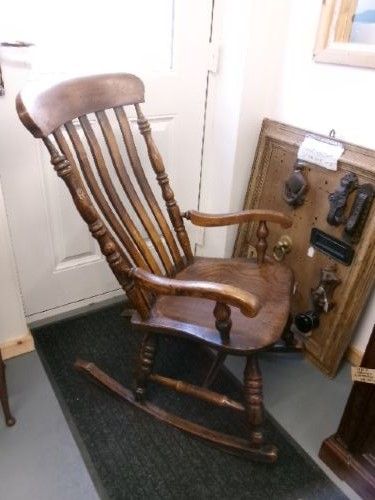
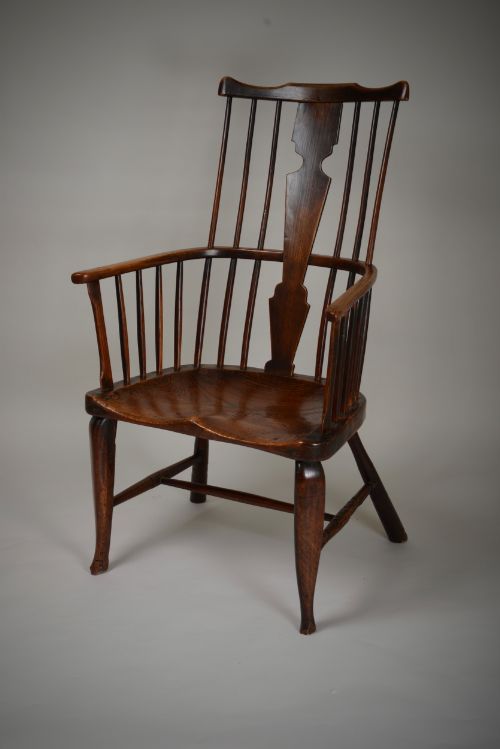
When searching for a wooden windsor high chair, buyers encounter traditional seated furniture built with vertical spindles inserted into a solid wooden seat. These children's seating pieces draw on vernacular English furniture traditions spanning the eighteenth and nineteenth centuries.
The selections on this page predominantly reflect nineteenth-century and Victorian periods, alongside earlier eighteenth-century examples. Forms range from high hoop-backs to comb-backs, created in regional workshops across various English counties.
How They Were Made
Maker practices combined contrasting timbers to suit different structural demands, frequently pairing elm for solid, scooped seats with ash, beech, fruitwood, yew, or oak for bent parts and turned spindles. Steam-bending shaped the characteristic bowed backs while legs and stretchers were shaped on pole lathes.
Joints relied on traditional wedged tenons passing straight through the seat plank, creating robust connections without metal fixings. Surfaces were often left unfinished or simply waxed, allowing the natural grain of woods like elm and ash to develop patination through daily use.
Elm seats were deliberately carved deep to ensure small occupants stayed firmly anchored during mealtime squabbles.
What Varies in Quality
Quality depends on the crispness of the spindle turnings, the selection of timberfigured grain, and the ergonomic comfort of the scooped seat. Superior examples display balanced proportions in the undercarriage and refined tapering in the arm supports.
The integrity of the construction directly influences desirability, particularly where wedged joints remain tight and the original timber retains its surface character without excessive replacement parts.
Duncan McKellar of Fenwick
The Wooden Windsor High Chair Glossary
- Comb-back
- A Windsor chair style where the vertical spindles extend upward to support a horizontal headrest piece resembling a comb.
- Hoop-back
- A continuous bentwood bow forming the back and arm rail of the chair in a single curved sweep.
- Vernacular
- Objects built by regional craftsmen following local traditions rather than strict academic design patterns.
- Saddle seat
- A thick wooden seat base scooped and shaped by hand to provide ergonomic comfort for the sitter.
Wooden Windsor High Chair: Frequently Asked Questions
What woods were used?
Makers selected elm for seats because its interlocking grain resisted splitting when driven with heavy leg tenons.
Ash, beech, yew, and fruitwood provided flexible strength for steam-bent hoops and slender spindles.
How old are these chairs?
Examples span from the eighteenth century through the Victorian era and into the early twentieth century.
Identifying dates relies on examining tool marks, timber shrinkage, and the evolution of the turning profiles.
Where were they made?
Production took place across English rural workshops, with distinct regional styles developing in places like the Thames Valley and Yorkshire.
Local timber availability often dictated the primary woods used in specific geographical areas.
How should I clean the wood?
Maintain the surface by applying traditional beeswax sparingly and buffing gently with a soft cotton cloth.
Avoid modern liquid polishes or harsh detergents that strip the historic patination from the timber.