

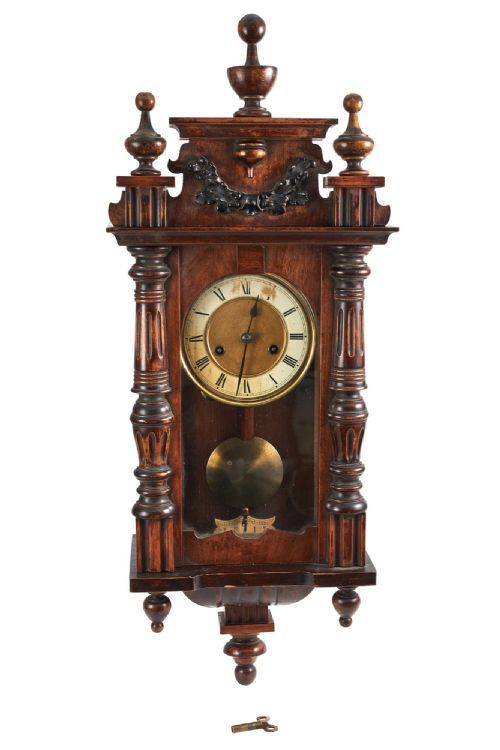

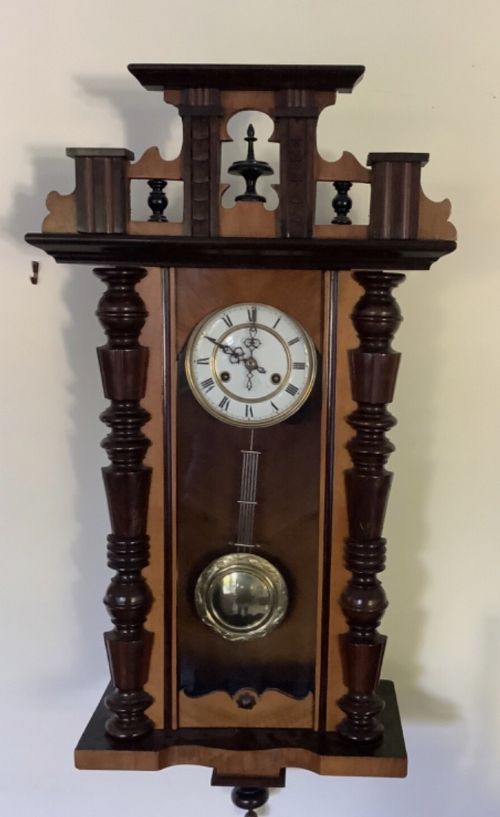


Wooden Vienna Wall Clock
A wooden vienna wall clock brings precise movement and architectural presence to a room, driven by brass and housed in rich timber.

Wooden Vienna Wall Clock
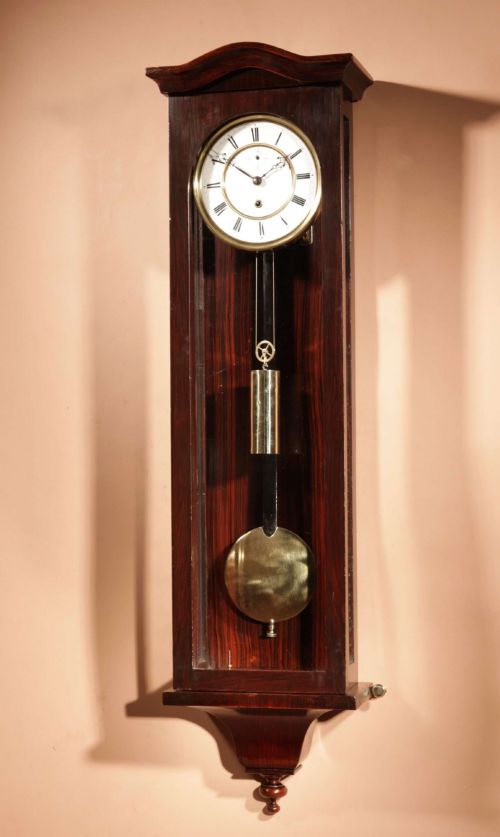
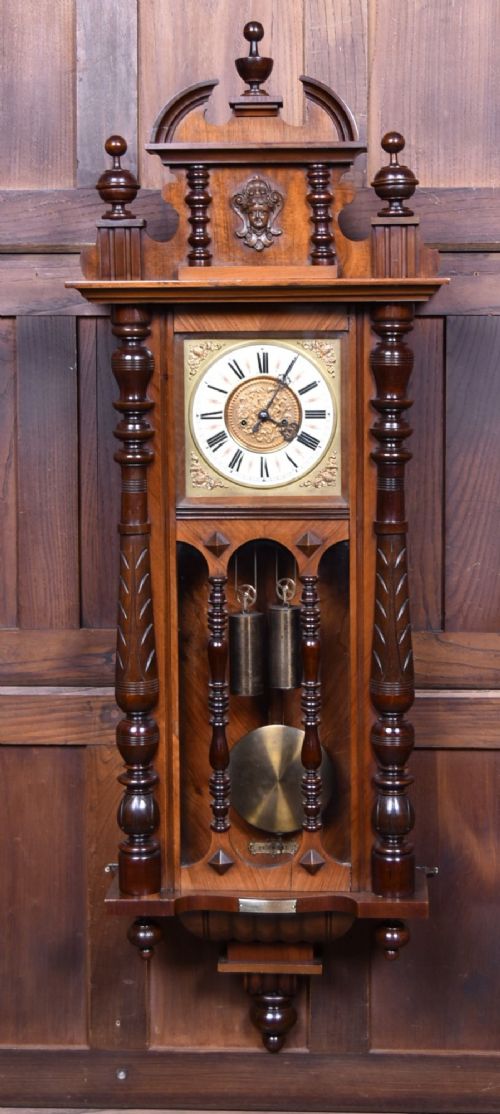
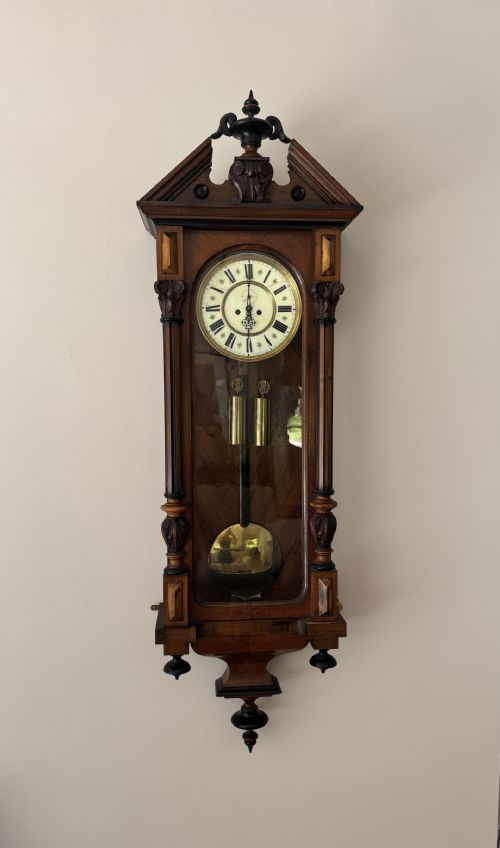
Most examples found on this page adopt the Vienna Regulator format, often rendered in walnut or ebonised wood. They span simple eight-day timepieces to complex double and triple weight models capable of striking movements. Biedermeier variations also appear, reflecting the cleaner lines favoured in earlier Austrian design.
Makers such as Gustav Becker and Johann Baptist Beha represent the standard of these wall-mounted clocks. Collectors encounter both full-sized architectural cases and miniature versions designed for more compact spaces. Each specimen relies on timber construction paired with enamel dials and brass fittings.
What varies in quality
The sophistication of the movement largely dictates the standard of a wooden vienna wall clock, moving from basic timepieces to complex grande sonnerie striking mechanisms. Double and triple weight systems require more intricate gear trains than single weight or spring-driven equivalents. The presence of known makers like Gustav Becker adds significant distinction to an example.
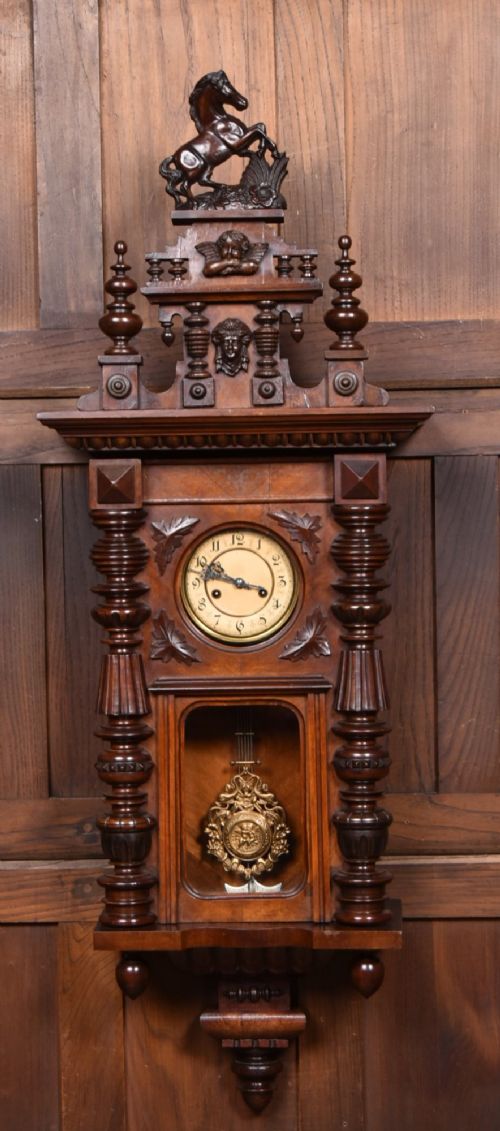
Cabinetwork quality shows in the depth of the carving, the selection of figured walnut or mahogany veneers, and the crispness of the ebonised details. Original enamel dials and matching brass hardware preserve the integrity of the piece. The proportion and balance of the architectural case further separate standard production from superior workshop output.
Some miniature Vienna clocks manage to fit a full striking movement into a case smaller than a standard household mirror.
Johann Baptist Beha·Gustav Becker
The Wooden Vienna Wall Clock Glossary
- Vienna Regulator
- A precision wall clock developed in Austria, known for its long glazed case and accurate weight-driven movement. These clocks were designed to display the pendulum clearly.
- Grande Sonnerie
- A striking mechanism that chimes both the hours and the quarters automatically on every quarter hour. It represents a higher level of clockmaking complexity.
- Ebonised Wood
- Timber treated with a dark finish to imitate ebony, commonly utilised for Victorian clock cases and decorative mouldings. This technique provides a sharp contrast against walnut or gilt brass.
- Biedermeier
- An influential Central European style spanning the mid-nineteenth century, prioritising utilitarian comfort and clean lines over ornate decoration. Biedermeier clock cases tend to display restrained geometric forms.
- Double Weight
- A movement driven by two separate weights, typically powering separate trains for the timekeeping and the striking functions. This system ensures consistent power delivery.
Wooden Vienna Wall Clock: Frequently Asked Questions
How do I wind a wooden vienna wall clock?
Use the provided winding key to turn the arbours on the enamel dial clockwise until resistance is felt. Care must be taken not to overwind the movement.
Ensure the weights are allowed to descend fully before the next winding cycle to maintain proper tension on the brass gear trains.
Where should I hang my wall clock?
Mount the clock on a solid interior wall using a secure fixing capable of supporting the weight of the timber case and brass components. Avoid damp areas and spaces subject to direct sunlight.
A stable wall prevents vibrations that might interfere with the beat of the pendulum and the overall timekeeping accuracy.
Why does my clock not keep time?
Timekeeping discrepancies often stem from an unlevel case or an uneven beat in the pendulum suspension. Adjusting the crutch or shifting the case position usually restores the correct rhythm.
Temperature fluctuations and natural wear in the brass bushings can also affect the rate, requiring professional attention from a horologist.
How do I identify a Vienna regulator?
Look for a tall glass-fronted wooden case that showcases the pendulum and hanging weights in full view. The dial is typically white enamel with clear Roman numerals.
Most authentic examples date from the nineteenth century and house high-grade weight-driven movements manufactured in Austria or Germany.