



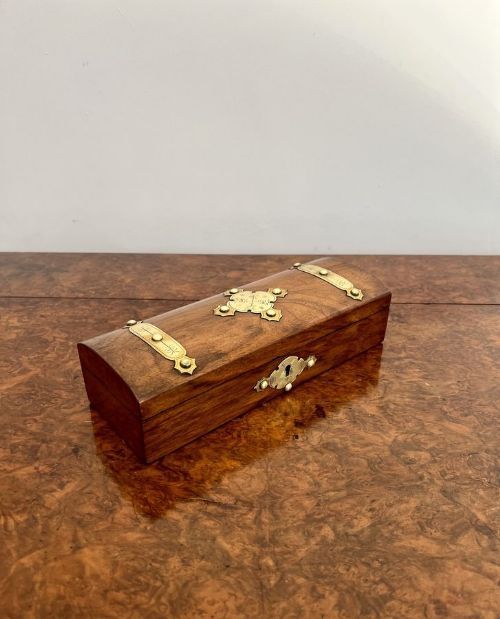
Wooden Vanity Casket
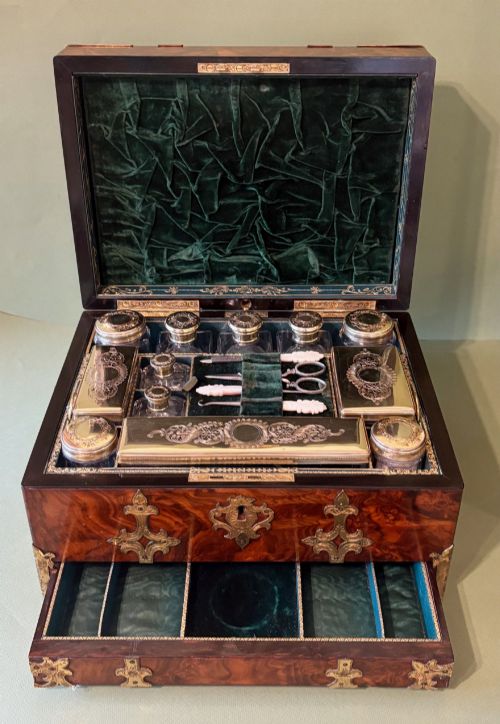
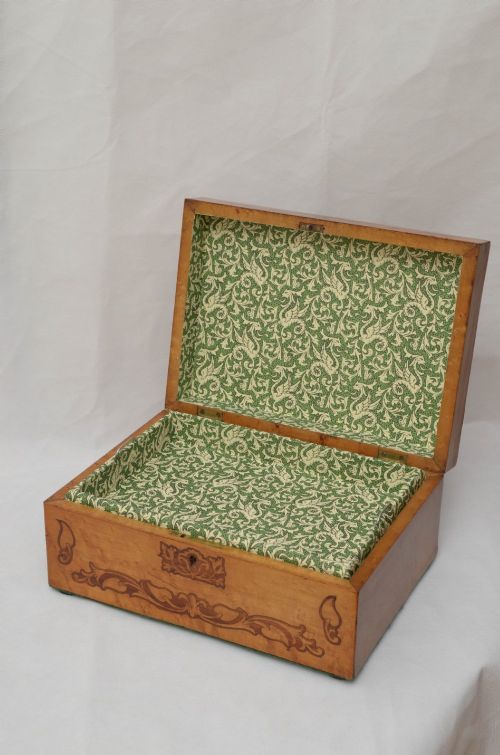
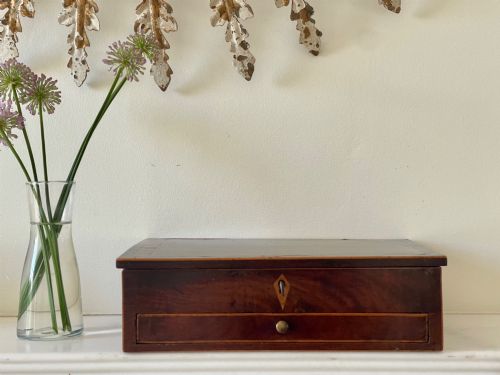
These wooden vanity caskets are portable receptacles for jewellery, letters and keepsakes, built from dense hardwoods and designed to sit on a lady's dressing table.
Wooden Vanity Casket
A wooden vanity casket is typically a desk or dressing-table accessory designed for personal valuables, housing fitted trays, mirrors and compartments for rings, collars and seals. When exploring this selection, a buyer encounters forms that span the Georgian, Regency and Victorian eras, alongside specific nineteenth-century iterations.
The most common examples on this page date from the nineteenth century, particularly the Victorian period, and take the form of jewellery chests, work boxes and glove boxes. These pieces reflect the domestic habits of the period, offering secure storage for small personal items through hinged lids and lockable mechanisms.
Beyond standard rectangular chests, the grouping incorporates specialised receptacles such as scent bottle caskets, document boxes and needlework cases. These variations demonstrate the range of personal storage solutions utilised during the nineteenth century, constructed from timbers selected for grain and colour.
Materials and Construction
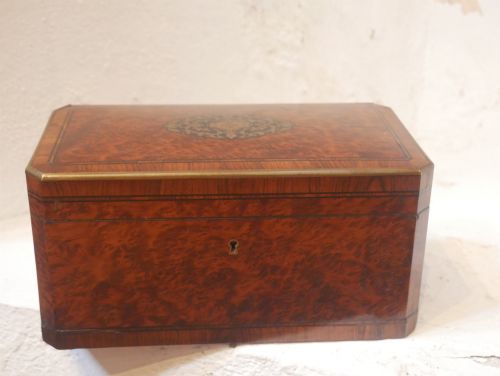
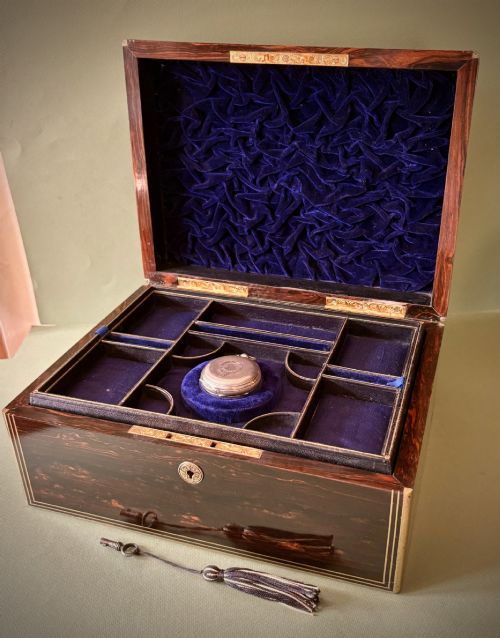
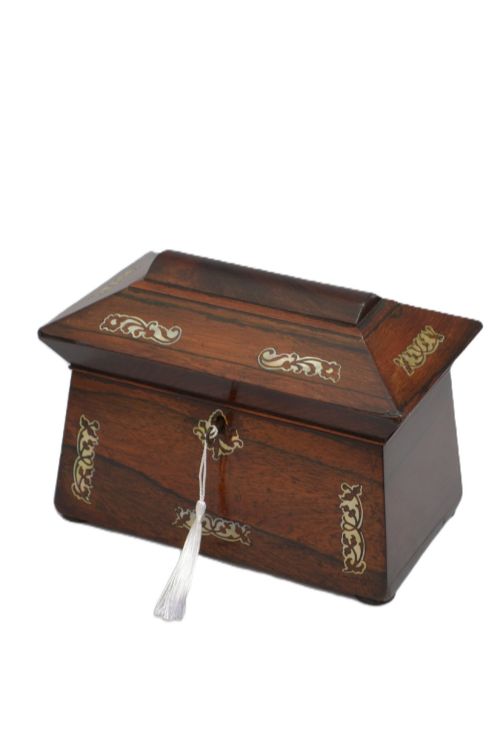
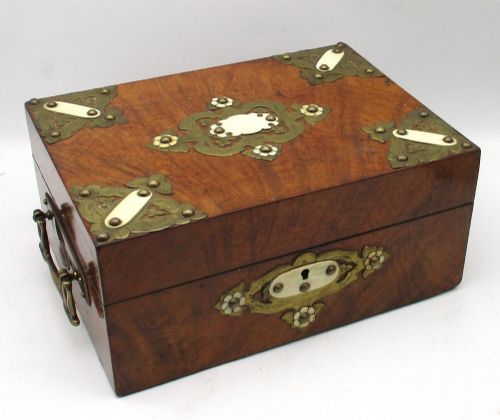
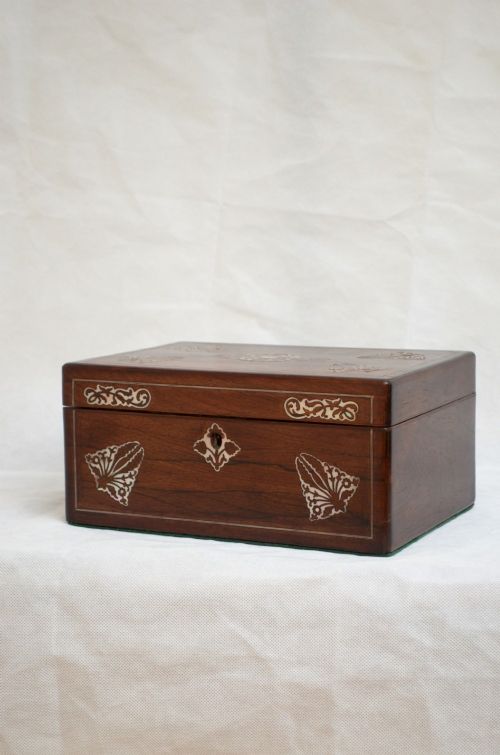
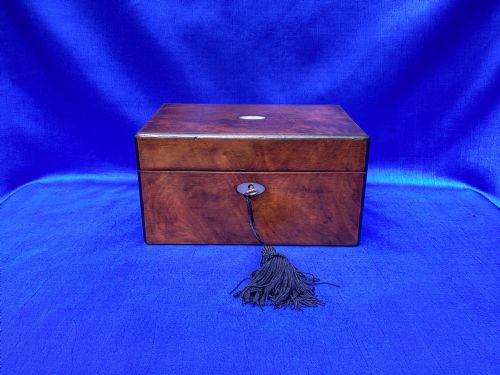
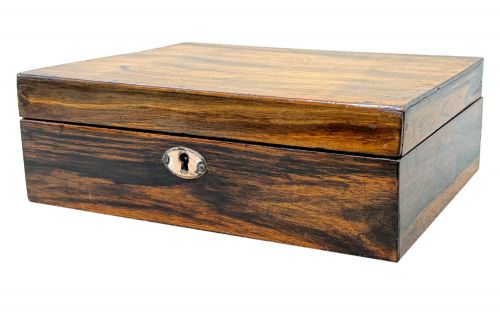
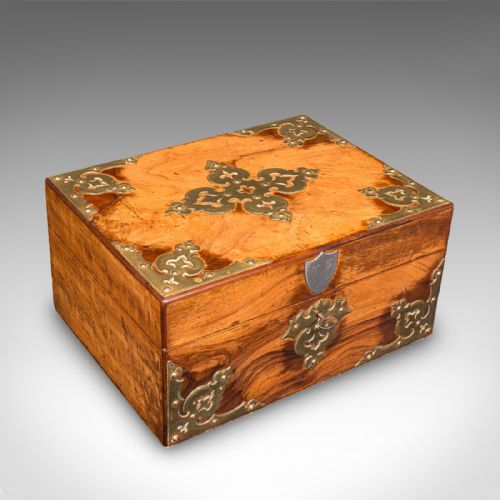
Cabinet makers built these caskets using dense tropical and native timbers such as rosewood, walnut, coromandel and mahogany, often applying burr veneers to produce striking surface patterns. Solid carcases receive carefully matched veneers on exterior surfaces, sometimes reinforced with brass banding or corner mounts.
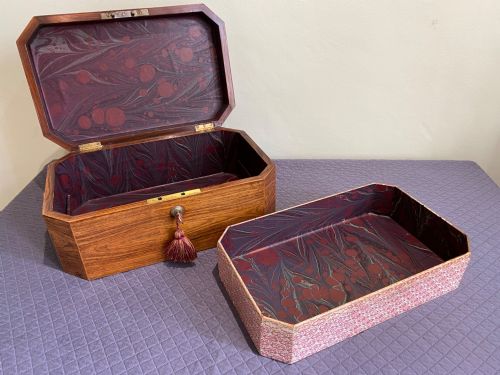
Decoration relied on precision inlay work utilising mother-of-pearl, brass stringing and contrasting satinwood or tulipwood. Interiors incorporated silk, velvet and leather linings, fitted with lift-out trays and compartmentalised sections designed for specific domestic accessories.
Listings feature eighteenth and nineteenth century periods, spanning Georgian, Regency, Victorian, Aesthetic and Arts and Crafts styles.
Factors of Quality
Quality in a wooden vanity casket rests on the selection of timber veneers and the precision of decorative inlay such as mother-of-pearl or brass stringing. Superior examples display continuous grain matching across the lid and sides, whilst simpler versions rely on plain polished surfaces.
Internal fittings dictate the grade of a piece, separating basic storage boxes from elaborate dressing chests. Fully fitted interiors featuring original silk linings, mirror plates, secret drawers and working brass locks with functional keys indicate superior workshop production.
Tahan Paris·Trussell Brighton
The Wooden Vanity Casket Glossary
- Coromandel
- A dense, heavily figured southeast Asian timber prized for its dark brown colour and contrasting black streaks.
- Burr walnut
- Wood taken from a tree growth or burl, yielding a swirling, highly decorative grain pattern used for veneering.
- Parquetry
- Geometric wood inlay work arranged in patterns to create decorative surface designs on box lids.
- Sarcophagus
- A box shape featuring a domed or sloping lid resting on a rectangular base, popular during the Regency period.
- Workbox
- A portable container fitted with compartments and trays specifically designed to hold sewing and needlework implements.
Wooden Vanity Casket: Frequently Asked Questions
What was a wooden vanity casket used for?
These caskets served as secure receptacles for jewellery, letters, seals and personal trinkets kept within a bedroom or boudoir. They kept precious items organised on dressing tables through fitted internal trays and compartments.
Many examples also doubled as work boxes or writing cases, holding sewing implements, spools and stationery. Their lockable lids provided privacy and security for personal possessions.
How do I identify a Victorian casket?
Victorian caskets frequently utilise dense timbers like coromandel and burr walnut, often embellished with mother-of-pearl inlay or brass binding. They tend to feature heavier proportions and elaborate internal arrangements including mirrors and lift-out trays.
Earlier Regency and Georgian pieces display more restrained lines, frequently employing flame mahogany or rosewood with minimal brass stringing. The evolution of internal fittings from simple partitions to complex multi-tiered compartments also helps indicate the manufacturing period.
Are keys usually included with these boxes?
Working keys are occasionally present with antique caskets, though many survive without them due to centuries of displacement. Original locks remain mounted inside, but replacement keys can sometimes be fitted by a specialist restorer.
The presence or absence of a key does not diminish the decorative value of the exterior woodwork or the utility of the internal compartments.
How should I clean the wood surface?
Maintenance requires gentle dusting with a soft, dry cloth to prevent dirt accumulation on polished veneers. Moisture and modern chemical polishes should be avoided to protect antique finishes and delicate inlay work.
Applying microcrystalline wax occasionally helps nourish dry timber surfaces and preserves the natural lustre of walnut and rosewood without harming original polishes.