


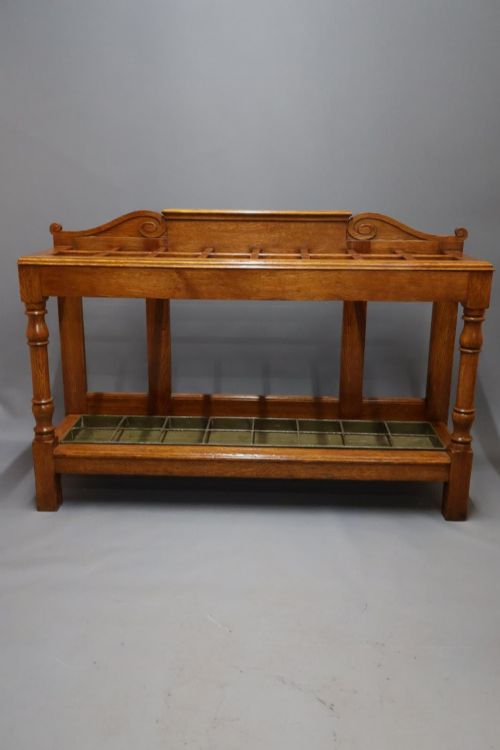

Wooden Umbrella Storage Rack
A wooden umbrella storage rack brings utility and period character to an entrance hall.
Wooden Umbrella Storage Rack
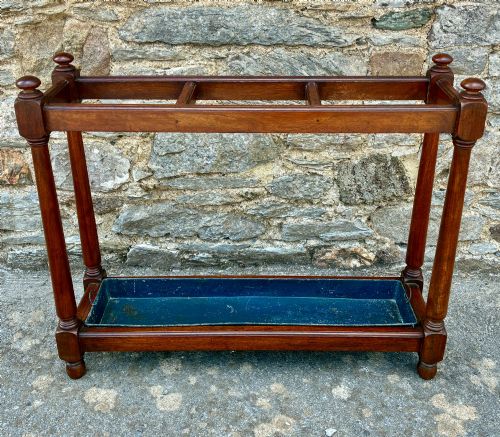
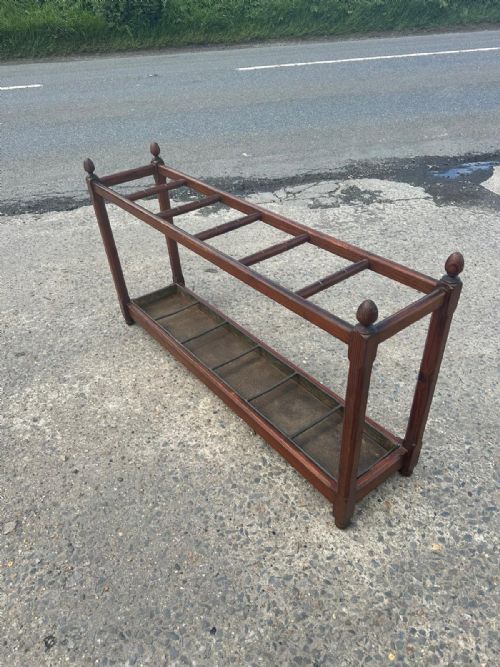
A wooden umbrella storage rack gathers sticks, walking canes and wet umbrellas in a dedicated hallway receptacle. When you search for a wooden umbrella storage rack, you encounter Victorian and Edwardian examples built to serve bustling period households.
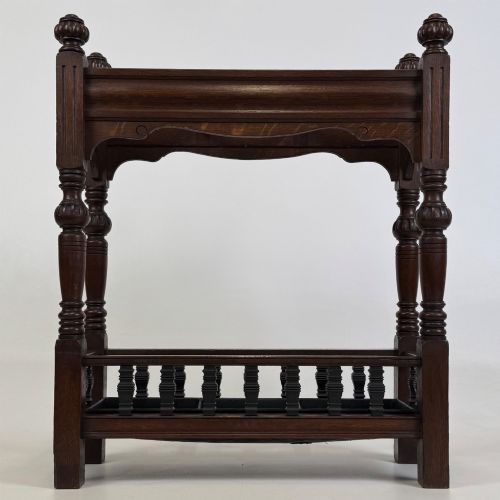
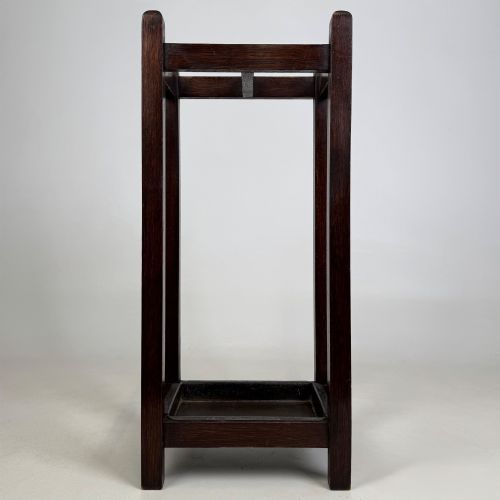
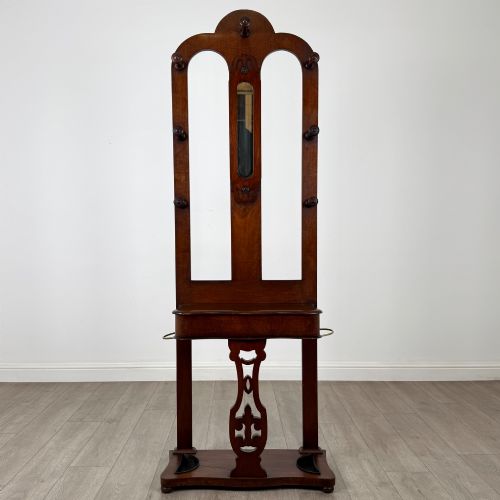
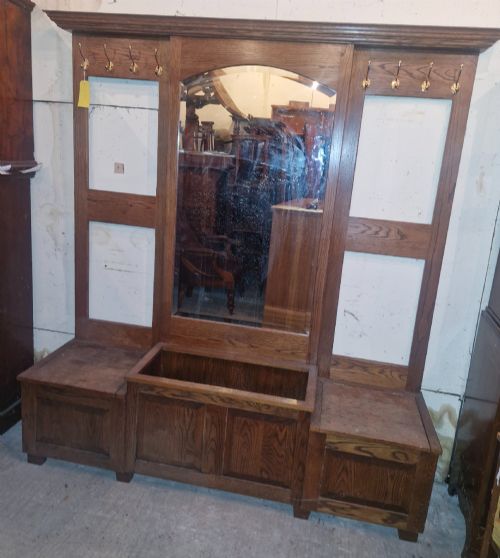
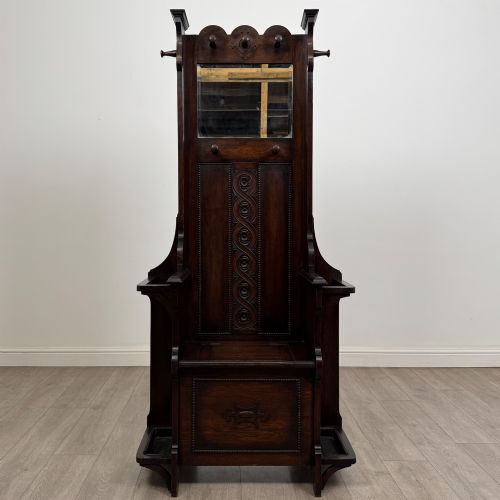
The pieces on this page span several specific forms, including compact stick stands, larger hall stands with integrated seating, and coopered oak barrels. Oak and mahogany dominate the selection, appearing alongside utilitarian pitch pine and warm walnut.
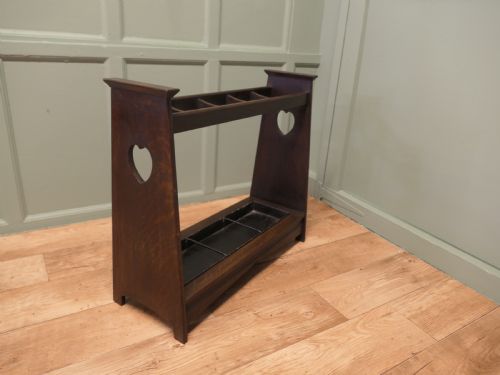
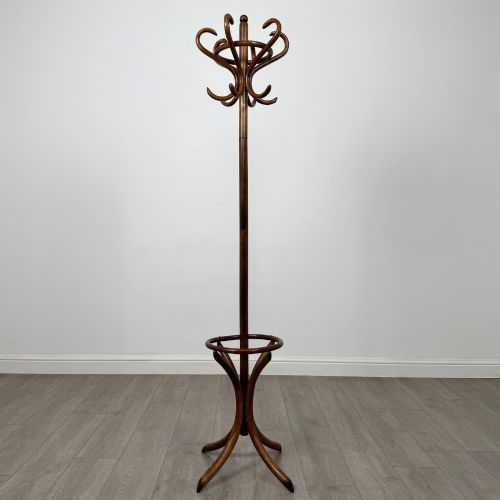
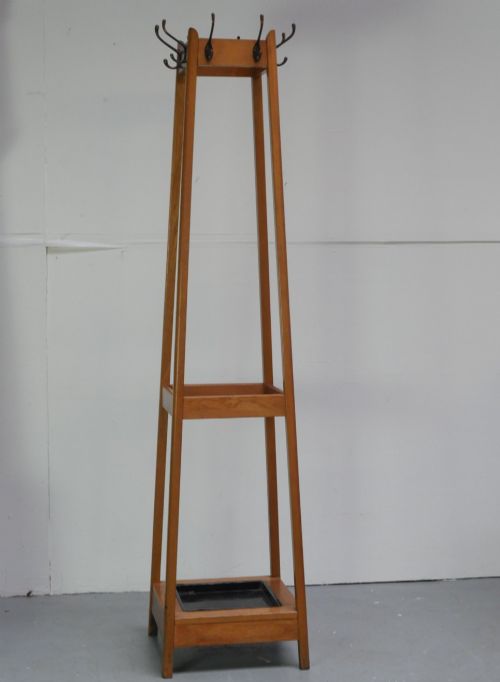
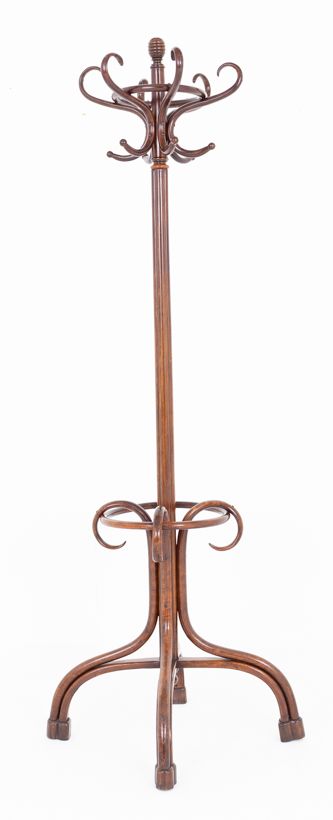
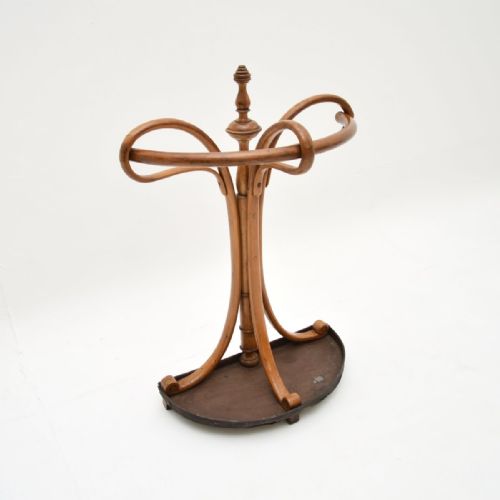
Makers and designers from the Arts and Crafts movement contributed distinct forms, often utilising exposed joinery and linear framing. You also find bentwood items reflecting Austrian production methods alongside robust country house designs.
How they were made
Cabinetmakers constructed these stands using solid hardwoods such as oak, mahogany and walnut, frequently incorporating structural elements of pine and beech. Metal components like brass mounts, iron trays and cast iron inserts provided durable water containment at the base.
Traditional joinery methods governed the assembly, from coopered stave construction in barrel-style stands to mortise and tenon joints on Arts and Crafts hall furniture. Turned wooden spindles and steam-bent beech elements added structural support without excessive weight.
Listings feature items dated across the nineteenth and twentieth centuries, including specific years like 1880, 1890, 1900, 1910, 1920 and 1930.
What varies in quality
The calibre of a wooden umbrella storage rack rests on the selection of timber and the integrity of its original hardware. Stands retaining their fitted metal drip pans and matching brass rails demonstrate superior completeness.
Fine construction is evident in tight joinery and thoughtful detailing, such as decorative carving or hand-turned spindles. Pieces bearing maker attributions or distinct design movement characteristics command greater interest among collectors.
Thonet·Astrola·GW Evans·Shoolbred·R.A. Lister
The Wooden Umbrella Storage Rack Glossary
- Coopered
- Constructed from wooden staves bound together with metal bands, much like a traditional barrel. This technique appears frequently in cylindrical umbrella and stick containers.
- Bentwood
- Wood heated with steam and bent into curved structural shapes. This method defines Austrian designs and seating frames.
- Arts and Crafts
- A design movement favouring honest construction, visible joinery and simple materials. Pieces from this tradition often display understated oak frames.
- Hall Stand
- A large piece of entrance furniture combining coat hooks, a mirror, umbrella storage and occasionally a seat. These multifunctional items dominated Victorian and Edwardian hallways.
- Drip Pan
- A removable metal tray placed at the base of a stand to catch water from wet umbrellas. Original brass or iron pans are a key sign of authenticity.
Wooden Umbrella Storage Rack: Frequently Asked Questions
Where should I place a wooden umbrella storage rack?
These pieces belong in an entrance hall, porch or boot room where wet items are naturally deposited upon entry.
Ensure the floor beneath is protected if the stand lacks its original metal drip tray to catch residual rainwater.
How do I care for antique oak and mahogany?
Dust the wood regularly with a dry cloth and apply a quality beeswax periodically to nourish the surface.
Keep the interior metal or glass drip trays clean and dry to prevent moisture damage from accumulating inside the base.
Did these stands originally include mirrors?
Larger hall stands frequently incorporated bevelled mirrors alongside coat hooks and umbrella wells, serving multiple functions for departing guests.
Smaller dedicated stick stands remained purely utilitarian without mirrors or coat hanging provisions.
How do I distinguish Victorian from Edwardian stands?
Victorian pieces tend to feature heavier timbers, deep carved ornamentation and darker finishes suited to formal interior schemes.
Edwardian examples often display lighter oak, cleaner lines and simpler Arts and Crafts influences.