

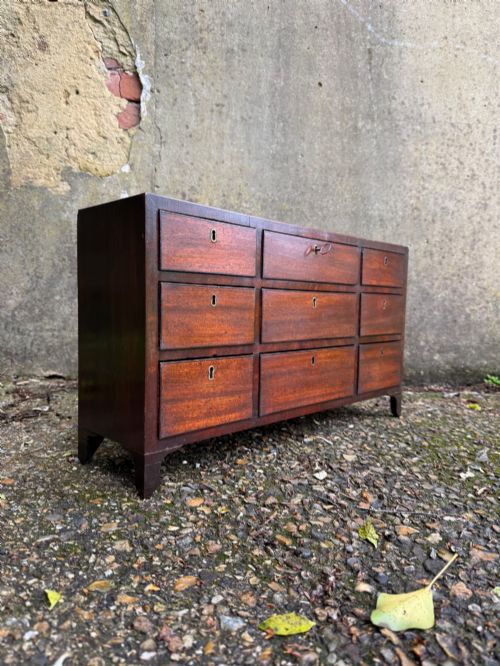


Wooden Trinket Chest Drawers
Wooden trinket chest drawers are compact storage pieces designed for small valuables, bringing period craftsmanship into modern interiors.
Wooden Trinket Chest Drawers
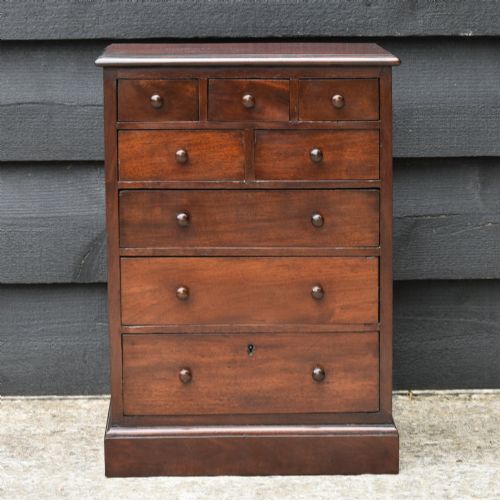
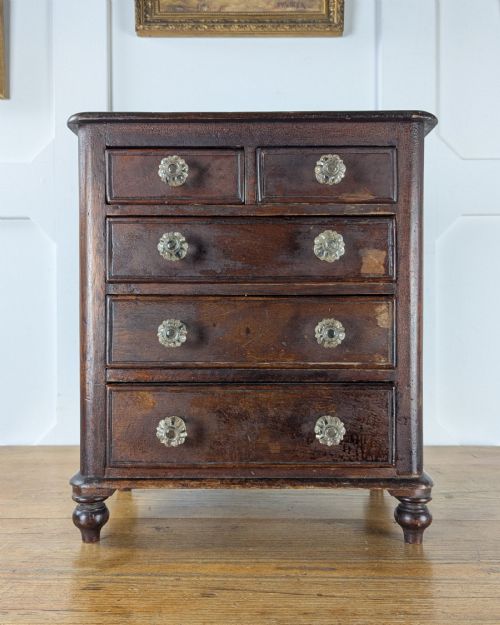
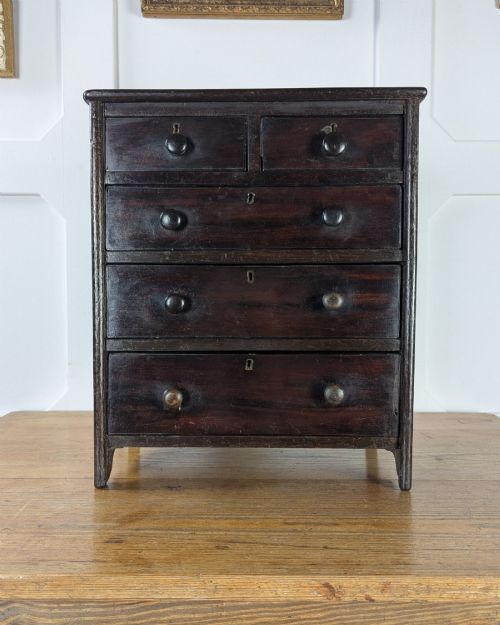
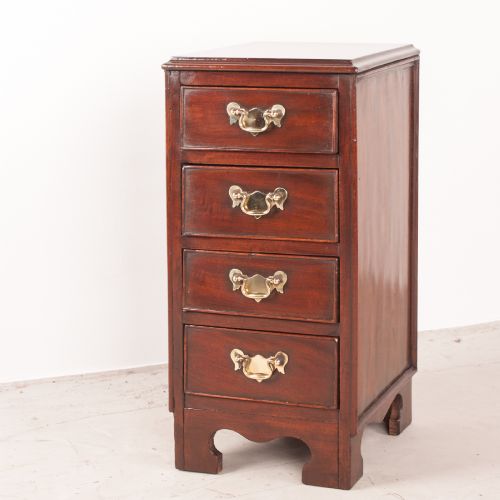
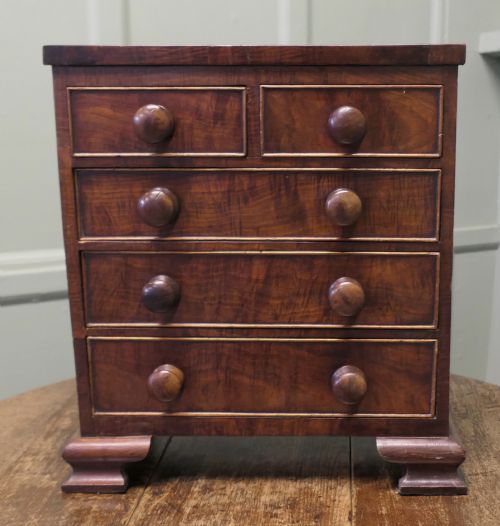
When you search for wooden trinket chest drawers, you encounter miniature furniture forms including apprentice pieces, collector chests, and table cabinets. These scale-down domestic items serve as jewellery boxes and small storage units designed for desktops and dressing tables.
The pieces on this page span several centuries, with nineteenth-century Victorian examples appearing most frequently alongside Georgian, Edwardian, and earlier seventeenth or eighteenth-century pieces. Mahogany forms the backbone of these selections, accompanied by oak, pine, walnut, and exotic hardwoods.
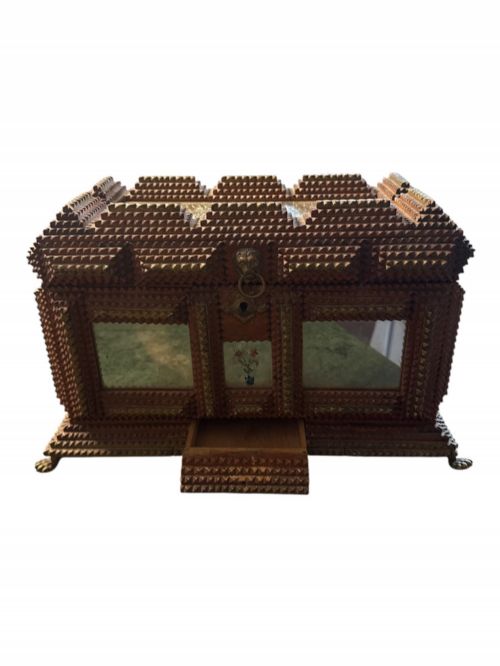
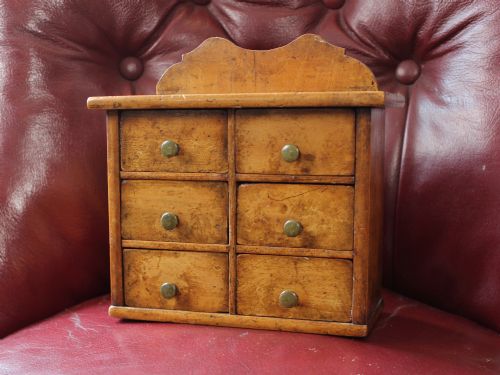
Makers produced these cabinets as miniature chests of drawers, spice cabinets, and flight of drawers configurations. Regional variations such as Anglo-Indian and Dutch Colonial pieces sit alongside British vernacular styles like tramp art and folk art.
How they were made
Cabinetmakers constructed these miniature chests using dense timbers like mahogany, walnut, and oak, frequently applying veneers of amboyna or burr walnut to primary surfaces. Secondary structural elements often incorporate pine or local softwoods.
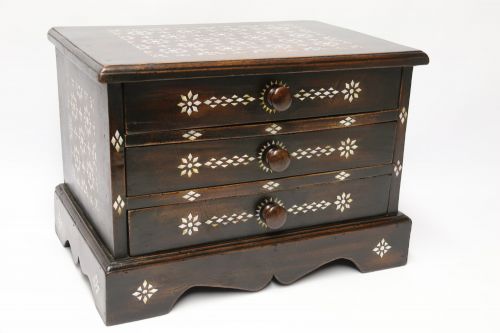
Decorative detailing relies on contrasting materials such as bone and mother of pearl inlay, alongside brass handles, turned feet, and black lacquer finishes. Carving appears on vernacular oak pieces and folk art boxes.
Listings feature 19th Century, Victorian, 18th Century, 1920, Edwardian, 1880, Georgian, and 1900 periods, utilising brass, mahogany, wood, glass, oak, pine, hardwood, and bone.
What varies in quality
The standard of timber selection and surface patination distinguishes superior examples from simpler utilitarian boxes. Finer pieces display carefully matched grain patterns, subtle inlay work, and well-executed bow fronts.
Structural refinement shows in the handling of miniature proportions, dovetail joints on drawers, and the integrity of turned feet or applied mouldings. Original hardware and undisturbed surface ageing elevate the standing of a piece.
The Wooden Trinket Chest Drawers Glossary
- Apprentice piece
- A small-scale item created by a trainee artisan to demonstrate mastery of cabinetmaking skills before admission to a trade guild.
- Patina
- The surface sheen and mellowing developed by wood through age, handling, and exposure to light over centuries.
- Bow front
- A convex, outwardly curved front profile popular in Georgian and Victorian case furniture.
- Tramp art
- Folk art created by self-taught makers using notched, chip-carved scrap wood, often from cigar boxes and packing crates.
- Compactum
- A multi-functional wardrobe or cabinet combining hanging space and multiple drawers within a compact footprint.
Wooden Trinket Chest Drawers: Frequently Asked Questions
What were miniature chests used for?
These small chests served multiple domestic purposes, acting as repositories for jewellery, trinkets, documents, and sewing implements. Their scale made them suitable for desktop use in studies and dressing rooms.
Craftsmen also produced them as salesman samples or apprentice test pieces to demonstrate advanced woodworking abilities to potential employers and clients.
How do I date a wooden chest?
Dating relies on examining the timber species, construction methods, and hardware styles. Georgian and Victorian pieces exhibit distinct joinery techniques and proportions that shift from simple classical lines to more ornate detailing.
Secondary woods inside the drawers provide additional clues regarding the period and geographic origin of the workshop.
What is an apprentice piece?
An apprentice piece is a finely made miniature item produced by a young craftsman learning a trade. These objects mirror full-scale furniture to prove competence in joinery and design.
They are collected today for their exceptional detail and the insight they provide into historical woodworking standards.
How do I care for antique wood?
Keep antique wooden chests away from direct sunlight and heat sources to prevent timber shrinkage and veneer splitting. Maintain a stable indoor environment with moderate humidity.
Dust regularly with a soft cloth and apply occasional specialist wax to nourish the historic surface finish without building up heavy residues.