

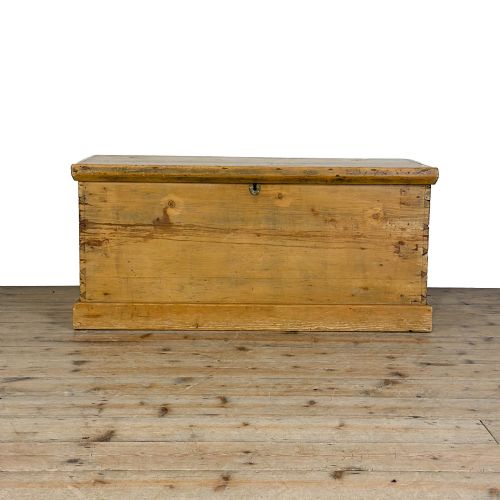
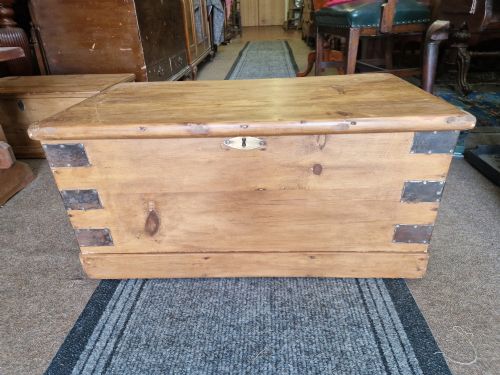
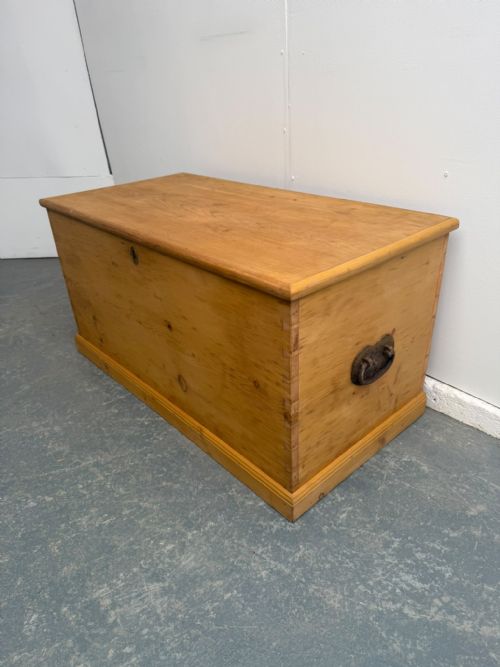


Wooden Toy Chest
A wooden toy chest brings simple utility and enduring character into a room, offering practical storage disguised in honest timber.
Wooden Toy Chest
When you search for a wooden toy chest, you encounter sturdy storage pieces designed to hold belongings while anchoring a room with rustic charm. The selection centres heavily on Victorian pine blanket boxes, storage trunks, and mule chests built for everyday household use.
Most examples hail from the nineteenth century, displaying straightforward vernacular forms rather than elaborate ornamentation. Alongside pine, you find smaller elm bedding boxes and painted vintage nautical trunks from later decades.
These items function equally well as coffee tables, end-of-bed storage, or functional containers in a child's room. Their deep interiors swallow clutter while the wooden surfaces develop a rich patina through generations of handling.
How they were made
Construction relies primarily on solid pine and elm boards joined to withstand heavy daily service. Carpenters shaped these practical items using straightforward hand tools, dovetailing or nailing corners for maximum durability.
Hardware plays a functional role in the manufacture, incorporating iron and brass handles, hinges, and latches to secure the lids. Many surfaces receive a simple wax finish to protect the timber, though occasional examples feature hand-painted decoration.
Wooden Toy Chest Retail Price Guide 2026
Typical asking prices for wooden toy chest among the pieces listed under this phrase on Sellingantiques today, from the lower quarter to the upper quarter. They describe what is for sale here now, not the wider market.
The inventory relies heavily on Victorian pine pieces, complemented by occasional elm boxes and twentieth-century painted nautical trunks.
What varies in quality
Quality rests on the integrity of the timber and the honesty of the construction rather than elaborate decoration. A superior box retains its original boards, solid base, and robust hardware without excessive replacement of parts.
The distinction between ordinary and exceptional examples often lies in the surface treatment, whether a deeply waxed antique pine finish or carefully preserved hand-painted detail. Proportion and scale also matter, as smaller elm boxes and large mule chests serve different architectural demands.
The Wooden Toy Chest Glossary
- Mule chest
- A storage chest featuring one or more drawers beneath the main compartment. This form bridges the gap between a traditional blanket box and a chest of drawers.
- Pine
- A soft timber widely utilised in British vernacular furniture for its accessibility and workability. It takes wax finishes exceptionally well and darkens gracefully over time.
- Elm
- A dense, tough wood frequently chosen for utilitarian boxes and seating due to its resistance to splitting. It provides a distinct grain pattern compared to standard pine.
- Vernacular
- Everyday furniture made by regional carpenters for local use rather than high-style metropolitan workshops. These pieces prioritise practical function over academic design.
Wooden Toy Chest: Frequently Asked Questions
How do I clean a wooden toy chest?
Maintain the timber by dusting regularly with a dry cloth and applying occasional beeswax to nourish the dry surface.
Avoid modern chemical sprays or excessive water, which can damage the historic wax or paint finishes on nineteenth-century pine.
Are these chests safe for modern toys?
These historical trunks serve well for storing toys, blankets, and books in a contemporary home or nursery setting.
Inspect the interior for any protruding old nails or splinters, and consider adding a modern soft-close mechanism if small children use the lid independently.
What is the difference between a trunk and a mule chest?
A standard trunk consists of a simple lidded box meant for holding linens or general belongings.
A mule chest adds a drawer beneath the primary compartment, offering easier access to smaller items without lifting the heavy top lid.
How do I date an old pine box?
Examine the construction marks, nail types, and the overall wear on the timber to estimate the period of manufacture.
Nineteenth-century examples typically display hand-cut joints and aged patination that sets them apart from twentieth-century reproductions.