

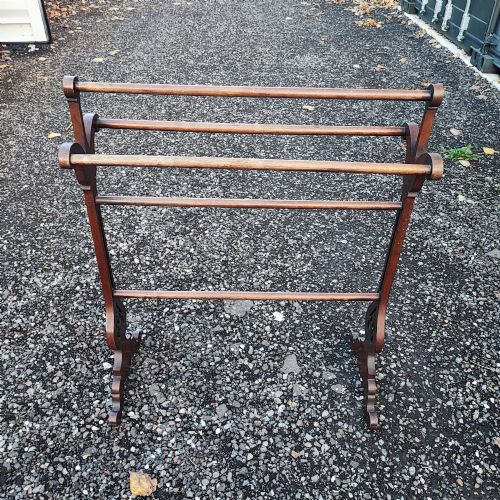
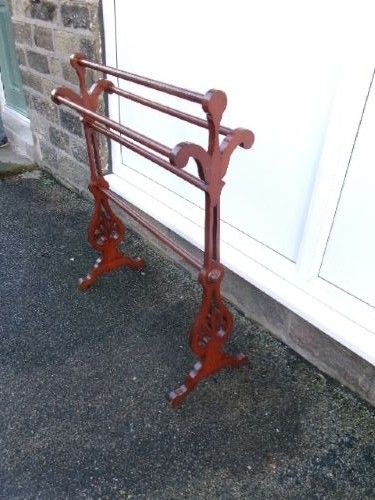
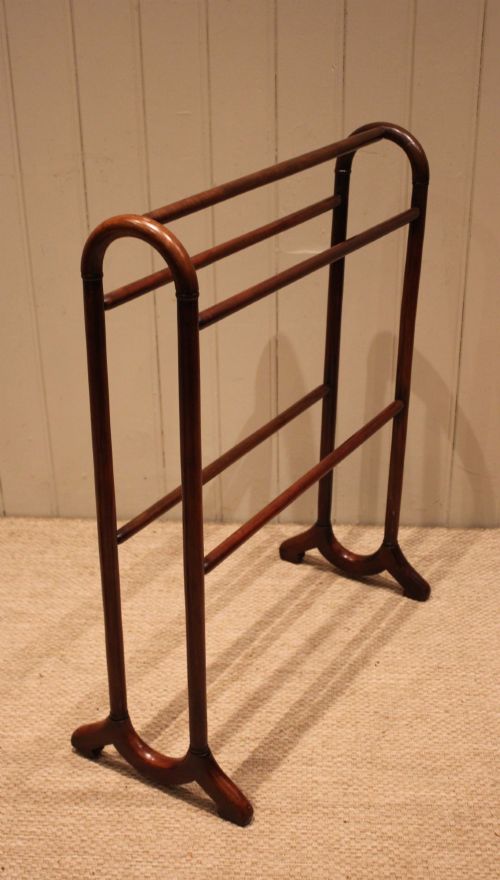
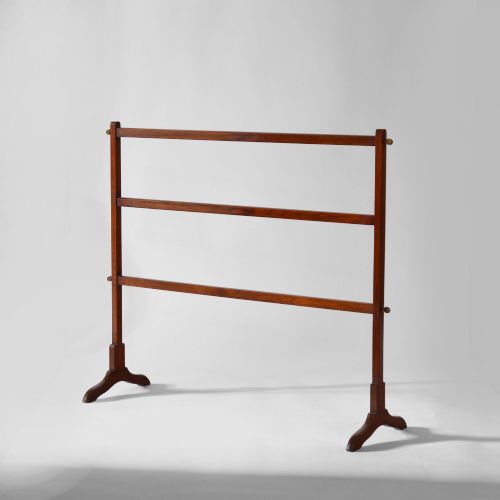
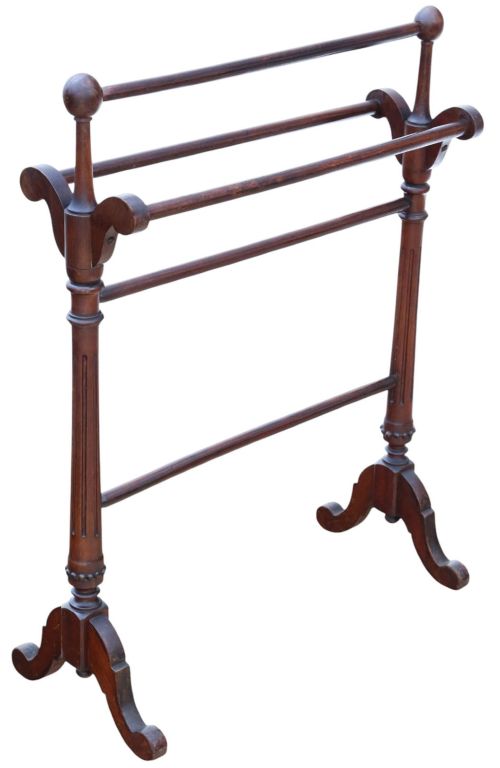
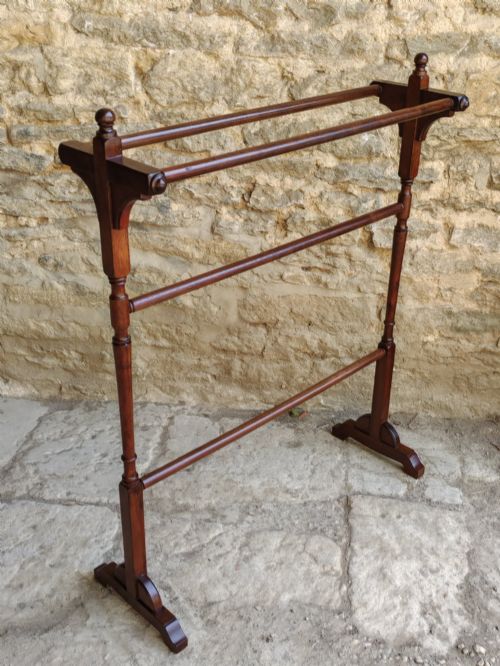
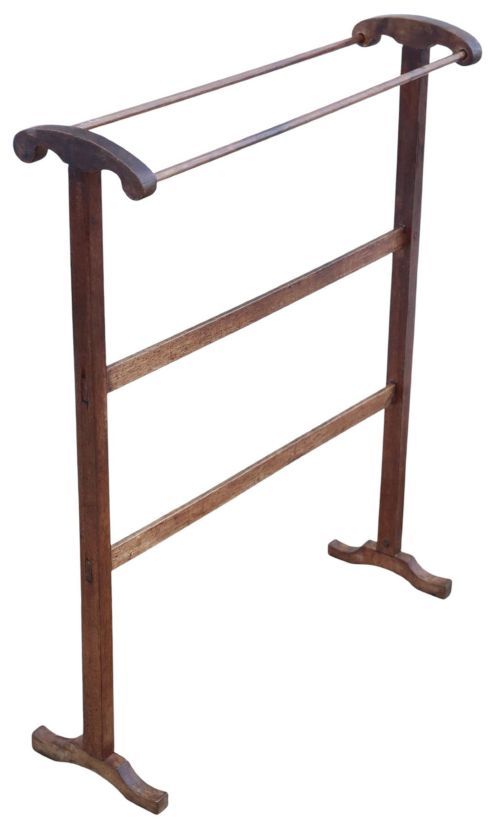
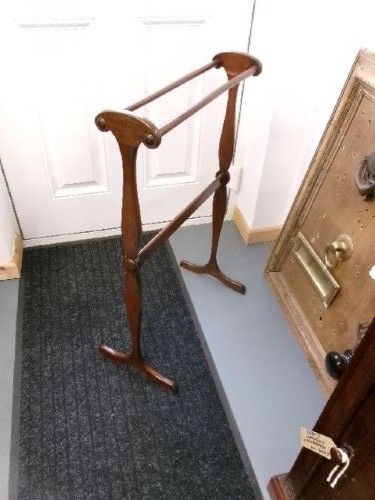

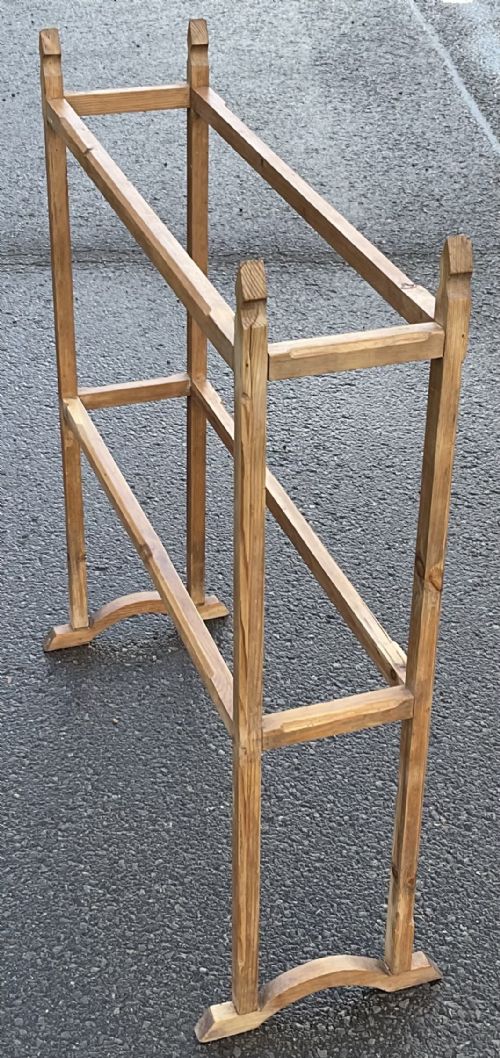


Wooden Towel Horse Stand
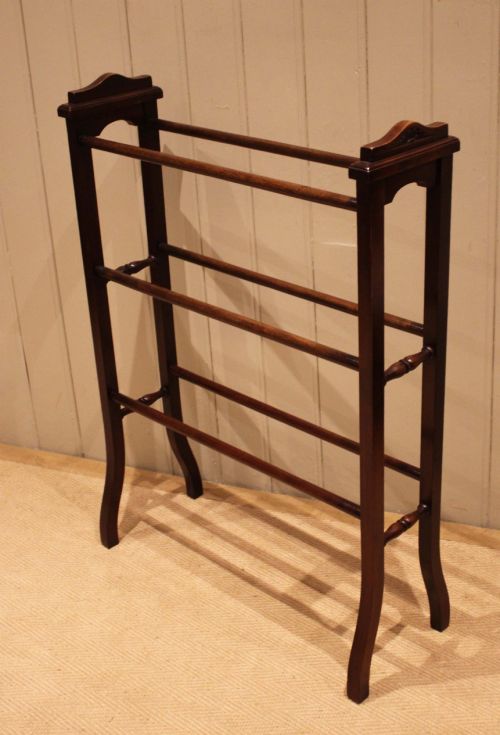
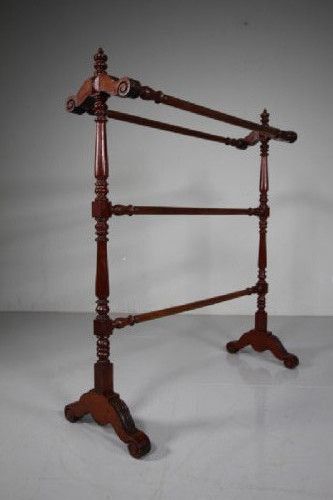
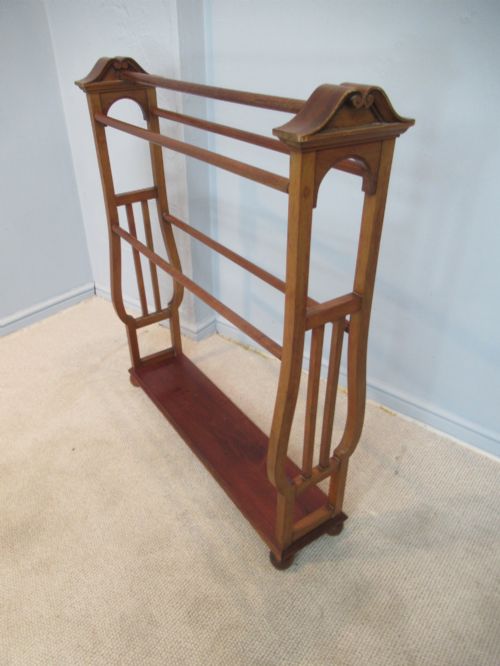
These wooden towel horse stand examples range from the early nineteenth century to the Edwardian period, offering practical utility and period charm.
Wooden Towel Horse Stand
A wooden towel horse stand provides a dedicated framework for airing and holding household textiles. When you search for this phrase, you encounter everything from compact Edwardian folding rails to substantial nineteenth-century designs.
The pieces listed span multiple decades, including Regency, William IV, and Victorian Gothic Revival styles. Mahogany appears most frequently, alongside oak, walnut, pine, and ebonised wood.
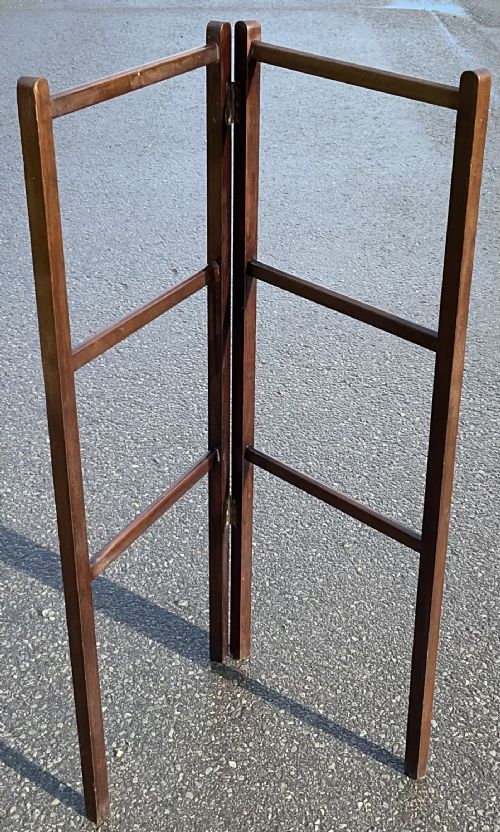
Forms vary from standard three-fold rails to large oversized clothes racks and Chinese lacquered robe stands. Most examples serve as functional bedroom or bathroom furniture with multiple horizontal bars.
How They Were Made
Cabinet makers constructed these stands primarily using hardwoods like mahogany, oak, and walnut, alongside softer utility woods such as pine. Joinery techniques varied from simple pegged joints in Arts and Crafts pieces to finer turned columns and satinwood inlay in Regency and Edwardian examples.
Surface treatments include polished mahogany, dark ebonising, lacquer, and painted pine finishes. Many feature multiple pivoting rails connected by vertical uprights or trestle feet designed for stability.
Wooden Towel Horse Stand Retail Price Guide 2026
Typical asking prices for wooden towel horse stand among the pieces listed under this phrase on Sellingantiques today, from the lower quarter to the upper quarter. They describe what is for sale here now, not the wider market.
A few exceptional survivors feature up to five separate bars or impressive Qing Dynasty lacquer work for hanging robes.
What Varies in Quality
The distinction between standard utility items and finer pieces lies in the timber selection and decorative detailing. Superior examples utilise dense figured mahogany, intricate satinwood inlay, or substantial brass fittings rather than plain pine or basic softwood.
Proportion and scale also separate ordinary rails from exceptional specimens, particularly in large William IV or Arts and Crafts pieces. Robust construction of the pivoting hinges and joints ensures the stand remains stable during daily use.
The Wooden Towel Horse Stand Glossary
- Towel Rail
- A freestanding wooden frame with horizontal bars designed for holding and drying towels or garments.
- Ebonised Wood
- Timber treated with a dark finish to imitate the appearance of expensive ebony.
- Satinwood Inlay
- Decorative contrasting wood veneer inserted into the primary timber surface to create linear or geometric patterns.
- Gothic Revival
- A nineteenth-century design movement incorporating medieval architectural motifs such as pointed arches and heavy mouldings into domestic furniture.
Wooden Towel Horse Stand: Frequently Asked Questions
How were wooden towel stands used?
These stands functioned primarily in bedrooms and dressing rooms for airing freshly laundered linens and hanging daily garments.
Their lightweight construction allowed servants or household members to move them near fires or out of the way as needed.
How do I date a towel rail?
Dating relies heavily on the timber species, secondary woods, and stylistic details like inlay or turnings. Edwardian and late nineteenth-century pieces often show lighter pine or simpler mahogany frames, while Regency examples feature heavier proportions.
Examining the fixings, screw types, and construction methods helps narrow down the decade of manufacture.
Are these stands sturdy enough for daily use?
Most antique wooden stands remain structurally capable of holding modern towels if handled with reasonable care. Solid hardwood versions in mahogany or oak typically offer greater longevity than softer pine variants.
Checking the joints and feet ensures the frame bears weight evenly without wobbling.
What is the difference between a towel rail and a clothes rack?
While both share similar wooden frames, clothes racks often feature larger proportions or taller uprights designed to accommodate full garments and robes. Towel rails generally focus on lower, multi-bar configurations suited for linen.
Some nineteenth-century examples served dual purposes for both clothing and towels.