

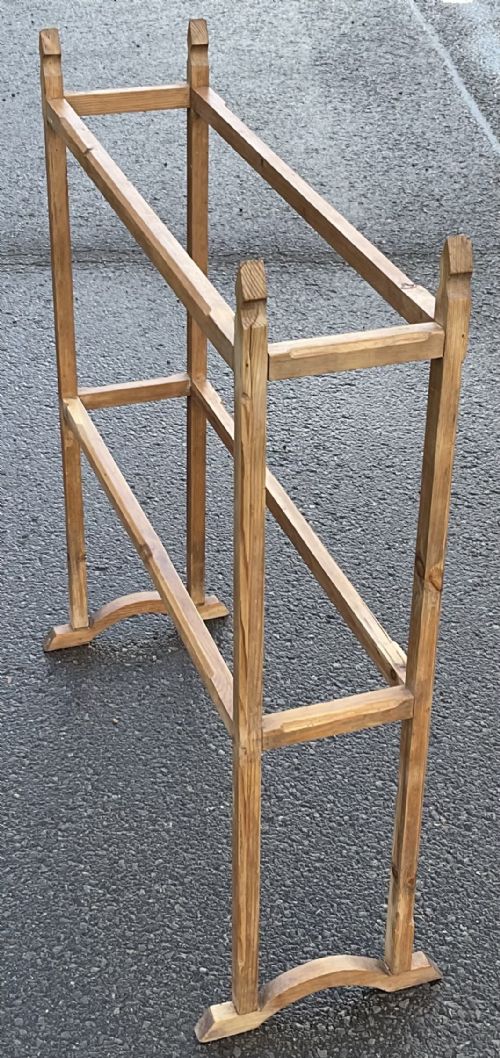


Wooden Blanket Rail
A wooden blanket rail is a practical utility piece designed to hold textiles, combining period craftsmanship with everyday domestic function.
Wooden Blanket Rail
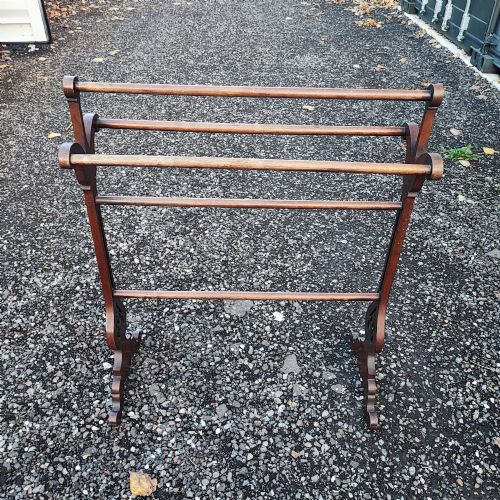
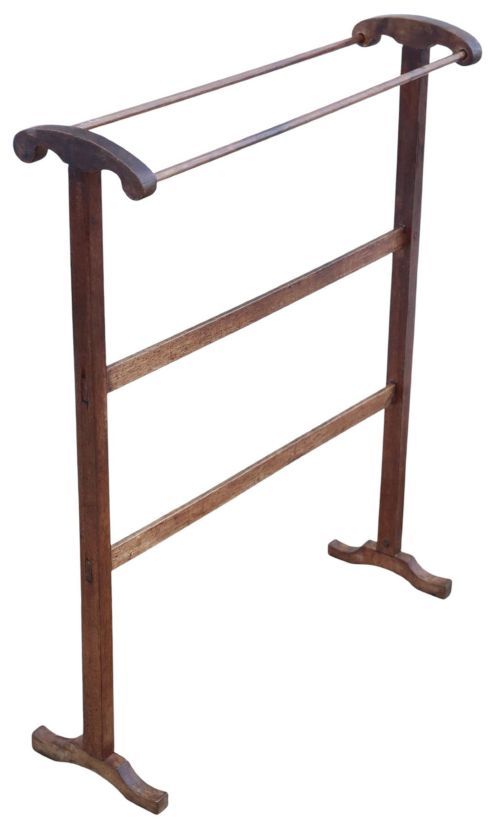
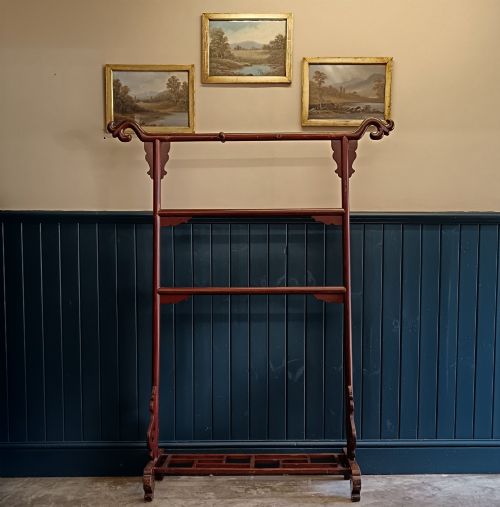
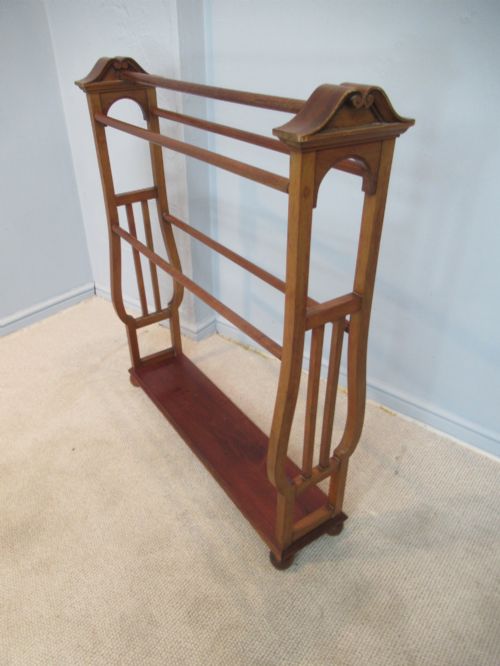
When you search for a wooden blanket rail, you are examining freestanding pieces primarily identified as towel rails, clothes racks, and robe stands in the current listings. These domestic items span periods from the nineteenth century through the Edwardian era, incorporating Victorian and Regency examples alongside a Qing Dynasty lacquered clothes rack.
Stylistic influences range from Edwardian and Victorian designs to specific regional works, including inlaid mahogany and ebonised finishes.
How they were made
Construction relies on solid timbers such as mahogany, oak, walnut, and pine, shaped into standing frames with multiple rails. Workshops utilised contrasting materials like satinwood inlay to decorate the surfaces of Edwardian and nineteenth-century examples.
Finishes include traditional lacquered wood, black ebonising, and applied pigment, particularly visible on Chinese and period English items. Joinery ranges from straightforward standing frames to larger proportions designed for heavy textiles.
Wooden Blanket Rail Retail Price Guide 2026
Typical asking prices for wooden blanket rail among the pieces listed under this phrase on Sellingantiques today, from the lower quarter to the upper quarter. They describe what is for sale here now, not the wider market.
Periods represented span the nineteenth century, Victorian era, Edwardian period, and Regency styles.
What varies in quality
Quality in these pieces is defined by the selection of timber, such as figured mahogany or solid oak, paired with the subtlety of decorative details like satinwood inlay. Proportion and stability separate utilitarian workshop items from more ambitious domestic furnishings.
The execution of specialised finishes, including ebonised surfaces and oriental lacquer work, distinguishes standard production from finer period examples.
Gillows
The Wooden Blanket Rail Glossary
- Mahogany
- A durable hardwood prized for its rich reddish-brown tone and stability in furniture construction. It frequently appears in nineteenth-century and Edwardian rails.
- Satinwood inlay
- A contrasting light-coloured wood inserted into darker timber surfaces to create geometric or floral patterns. This technique elevates the decorative appeal of Edwardian stands.
- Ebonised
- Wood treated with a chemical stain or paint to imitate expensive ebony. This finish provides a stark, dark surface popular on late nineteenth-century pieces.
- Robe stand
- A freestanding vertical frame utilised for hanging garments and textiles. These items offer greater height than standard low rails.
Wooden Blanket Rail: Frequently Asked Questions
What are wooden blanket rails used for?
These freestanding items serve to air, display, and store household textiles, blankets, and garments in bedrooms or bathrooms.
Their multiple rails and standing frames allow air to circulate around heavy fabrics easily.
How do I identify an Edwardian rail?
Edwardian pieces often feature lighter timbers, slender proportions, and decorative elements like satinwood inlay.
They generally date from the period around nineteen hundred and reflect domestic preferences of that era.
Are these rails sturdy enough for heavy blankets?
Most standing rails, particularly larger Victorian and Regency mahogany examples, are built with solid framing to support substantial weight.
Generous proportions and multiple bars distribute the load across the structure.
Where should I place a clothes rack?
Standing rails suit bedrooms, dressing rooms, and bathrooms where textiles require accessible storage or drying space.
Their freestanding nature allows them to move between rooms without permanent installation.