

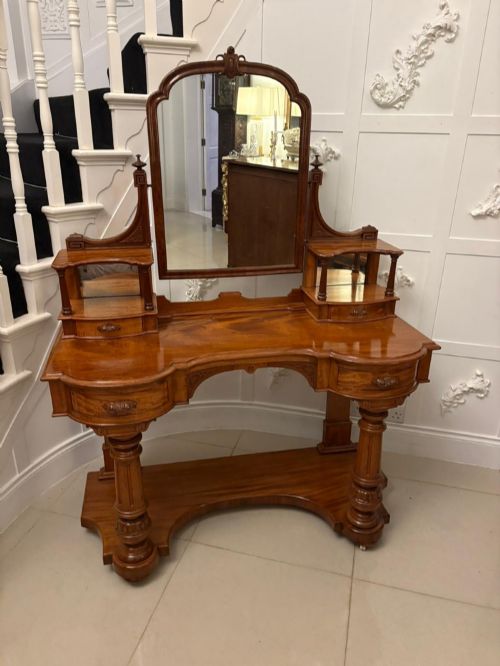
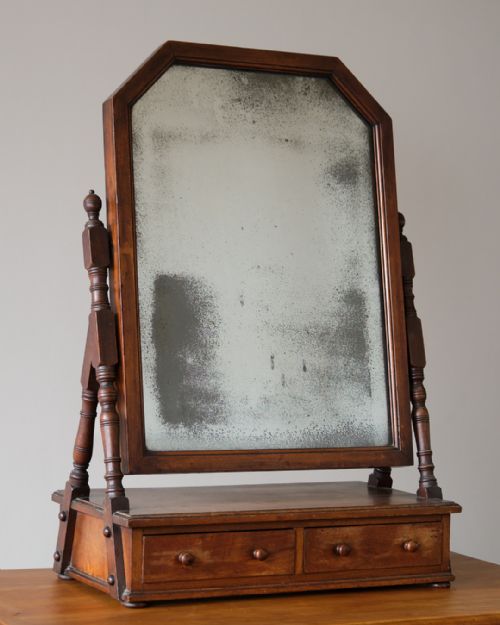
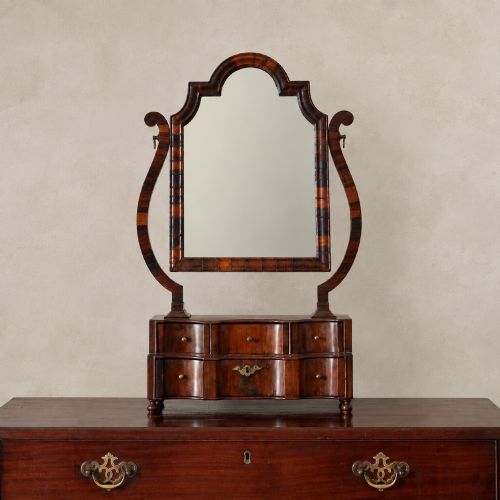
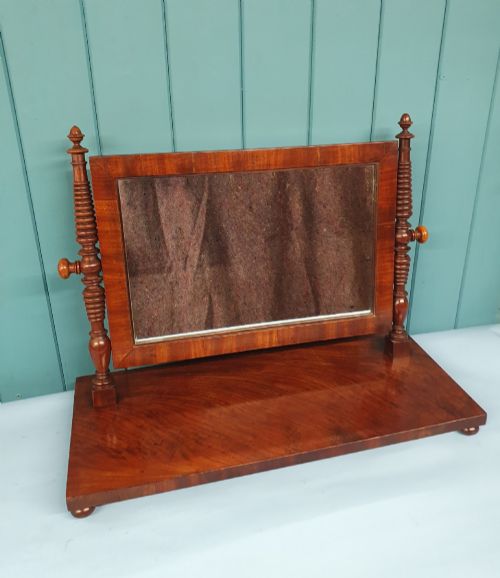
Wooden Toilet Table
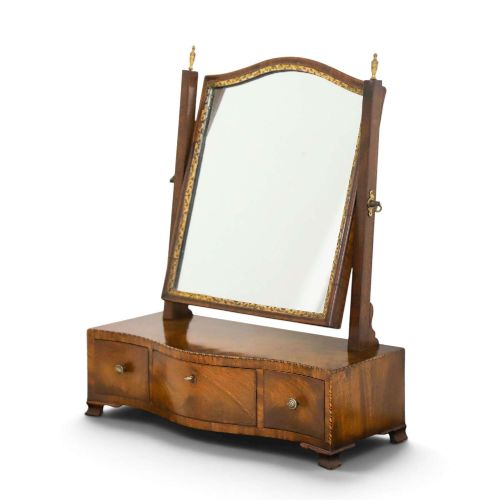
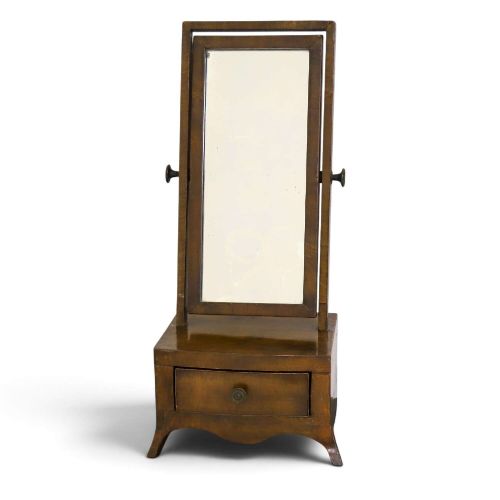
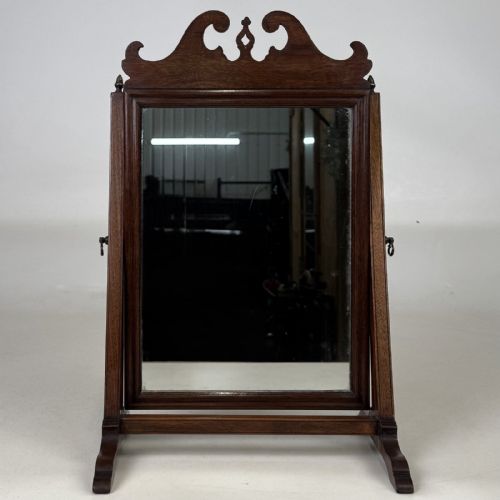
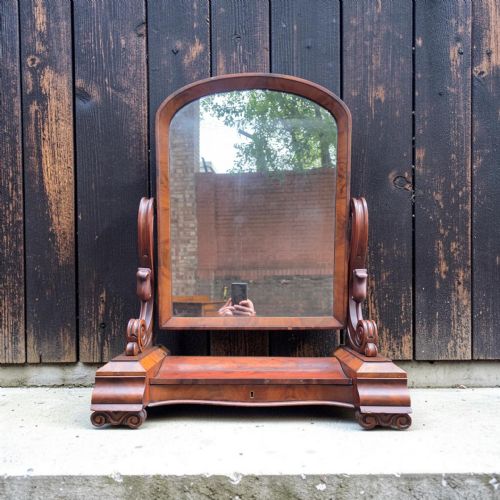
A wooden toilet table brings intimate dressing rituals into focus, offering fitted drawers and swivelling mirror glass for daily grooming.
Wooden Toilet Table
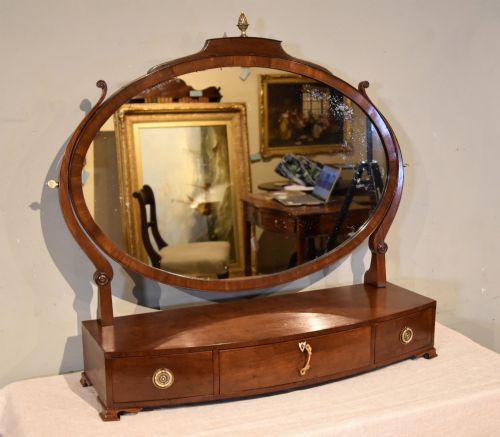
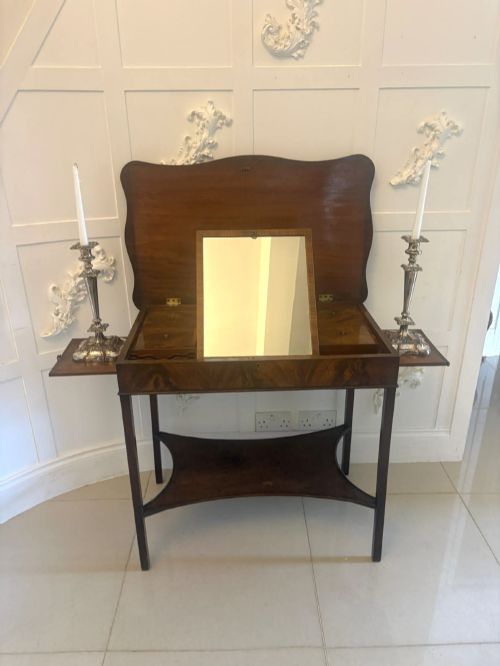
A wooden toilet table encompasses compact tabletop swing glasses and larger freestanding dressing pieces designed for the bedroom. The examples found here span the Georgian, Regency and Victorian eras, alongside Edwardian interpretations.
Most pieces take the form of adjustable table mirrors or vanity boxes resting on chests or dedicated stands. Mahogany and walnut predominate, often featuring small drawer bases to hold personal items.
Originating in earlier domestic routines, these items developed from simple table glass into elaborate units incorporating giltwood, satinwood and oak.
Materials and Construction
Cabinetmakers utilised dense hardwoods such as mahogany, walnut and satinwood, frequently employing figured veneers to enrich the surfaces. Brass fittings secure the pivoting mirror frames and provide handles for small trinket drawers.
Glass panels are bevelled or flat, set within shaped wooden frames supported by upright arms or pedestals. Secondary timbers like oak appear in drawer construction, showing precise dovetail joints characteristic of period workshop practice.
Wooden Toilet Table Retail Price Guide 2026
Typical asking prices for wooden toilet table among the pieces listed under this phrase on Sellingantiques today, from the lower quarter to the upper quarter. They describe what is for sale here now, not the wider market.
Listings feature woods including mahogany, walnut, satinwood, oak and coromandel.
Distinction in Craft
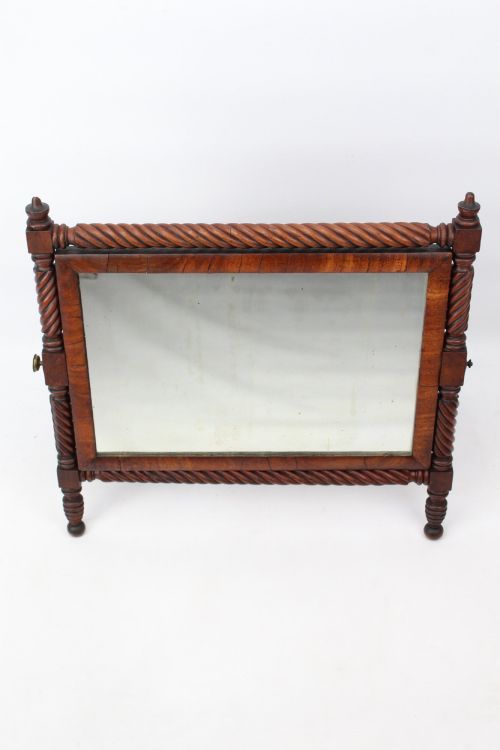
The standard of carving and the selection of timber figure prominently in separating ordinary items from exceptional ones. Finely figured mahogany and intricate rope twist or carved details indicate superior workshop execution.
Proportion and the retention of original mirror glass and brass hardware dictate desirability. Subtle variations in the serpentine or bowfront shaping of the base reflect the maker's competence.
Heal & Sons·P & MA Nicholson·H Mitchell·Gillows
The Wooden Toilet Table Glossary
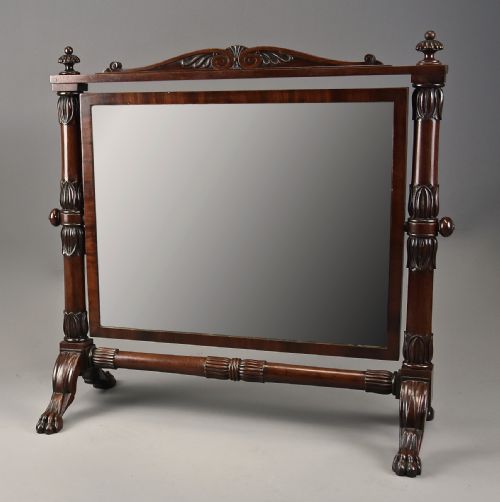
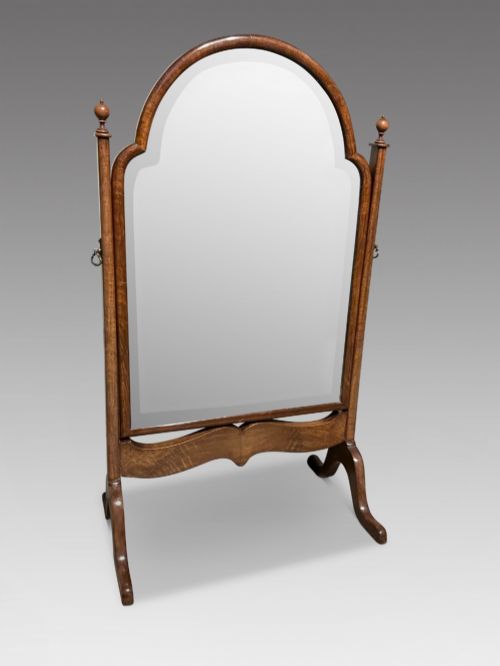
- Cheval mirror
- A freestanding full-length dressing mirror mounted on a pivoting frame between four upright posts. This form allows the user to adjust the angle of the glass entirely.
- Bowfront
- A convex curved front elevation found on the base drawers of dressing tables and mirrors. This design softens rectilinear furniture silhouettes.
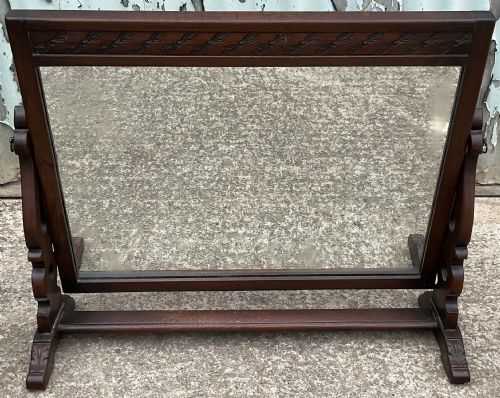
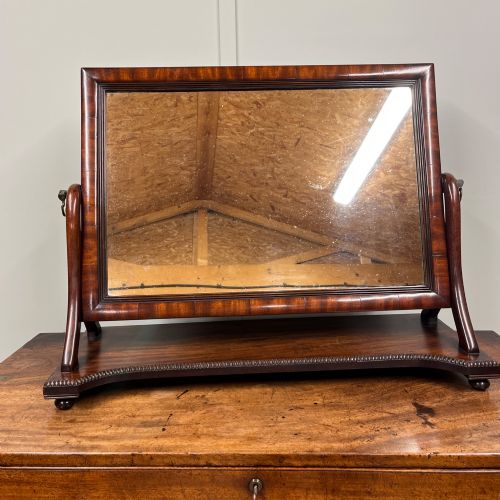
- Swing mirror
- A glass plate suspended on horizontal pivots between two upright standards, allowing it to tilt. It is typically mounted upon a small box base fitted with drawers.
- Serpentine
- A furniture front shaped with a double-concave curve flanking a central convex projection. Cabinetmakers used this complex line to create rhythmic movement on small dressing pieces.
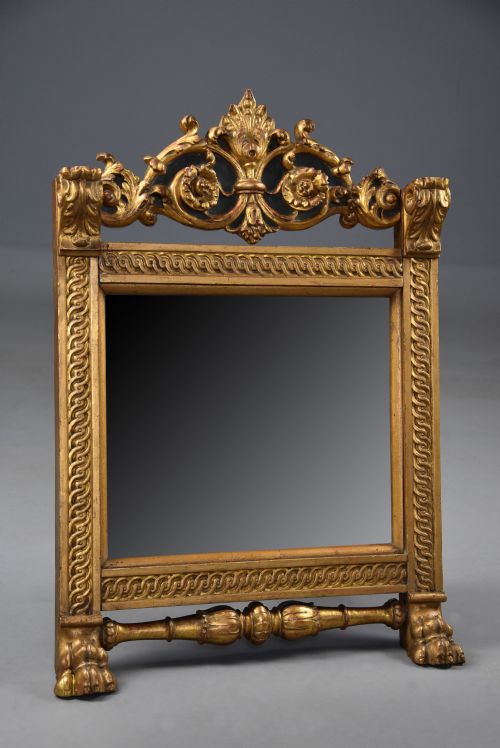
- Giltwood
- Timber carved and coated with a thin layer of gold leaf or metallic gilt pigment. It appears frequently on decorative Renaissance style easel mirrors.
Wooden Toilet Table: Frequently Asked Questions
What is a wooden toilet table?
A wooden toilet table is a piece of antique furniture designed for personal grooming, typically incorporating a table surface and an adjustable mirror.
Such items range from small tabletop swing glasses to larger freestanding dressing tables equipped with drawers for cosmetics and accessories.
How do I date a dressing mirror?
Dating relies upon timber selection, hardware, and structural characteristics associated with specific periods like the Georgian or Victorian eras.
Examining the dovetailing on drawers and the type of mirror glass provides further chronological clues.
Where were these pieces used?
These pieces were placed in bedrooms, dressing rooms, and boudoirs for morning routines and grooming.
They stood upon chests of drawers, washstands, or dedicated dressing tables to catch the best light.
Are the mirror plates original?
Many antique mirrors retain their original glass, which often exhibits characteristic minor oxidation and slight distortion.
Replacement glass is also common due to the fragile nature of early mercury or silvered plates over centuries of use.