

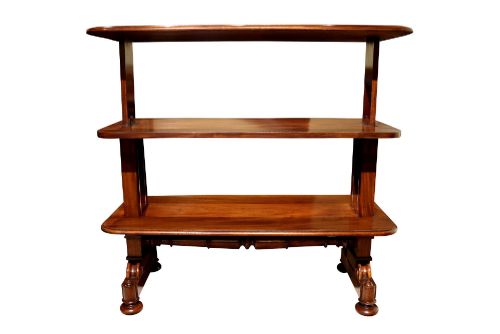
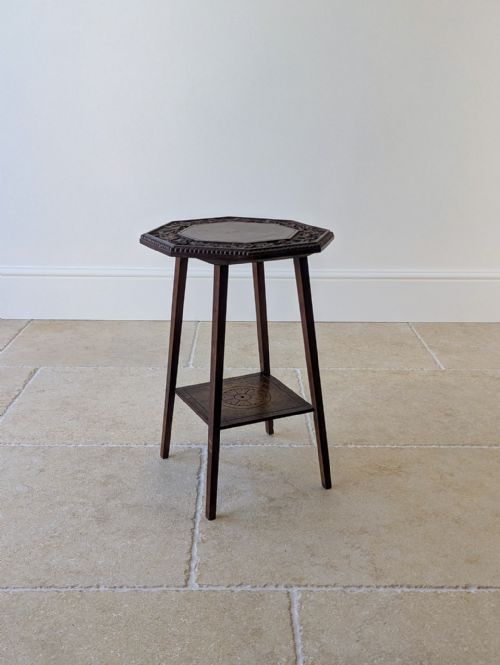
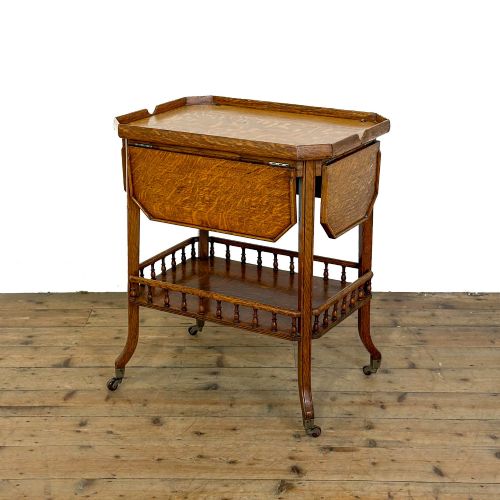
Wooden Tiered Side Table
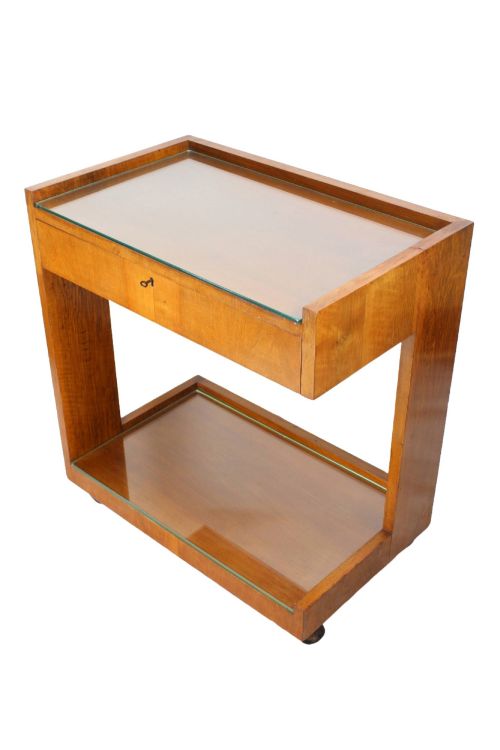
A wooden tiered side table brings functional display space and practical multi-level surfaces into a room with traditional charm.
Wooden Tiered Side Table
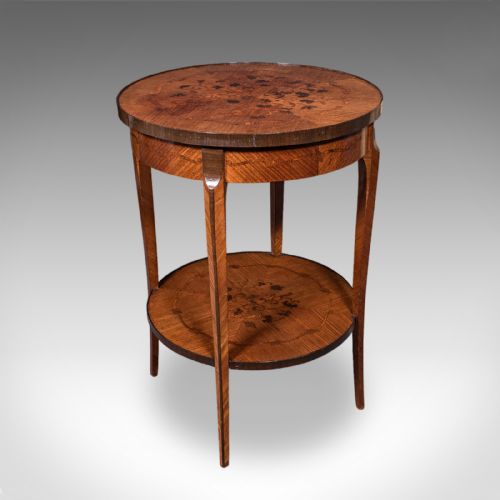
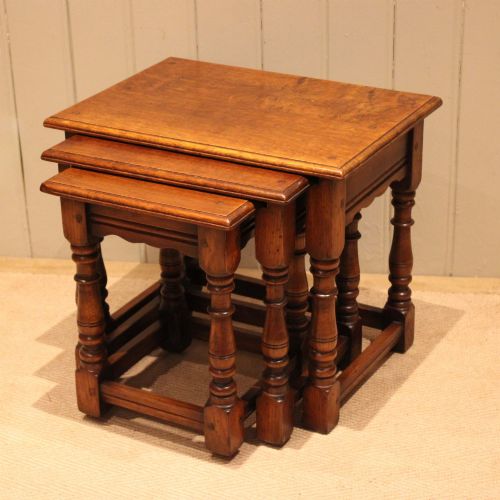
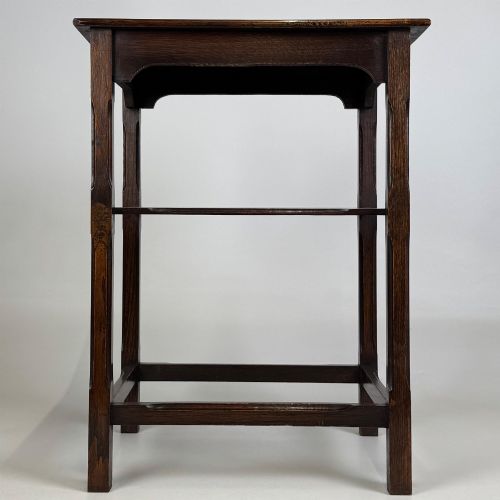
A wooden tiered side table offers multiple surfaces arranged vertically, providing compact utility for display and daily use. These practical items appear in forms such as occasional tables, lamp tables, plant stands, and whatnots across various historical periods.
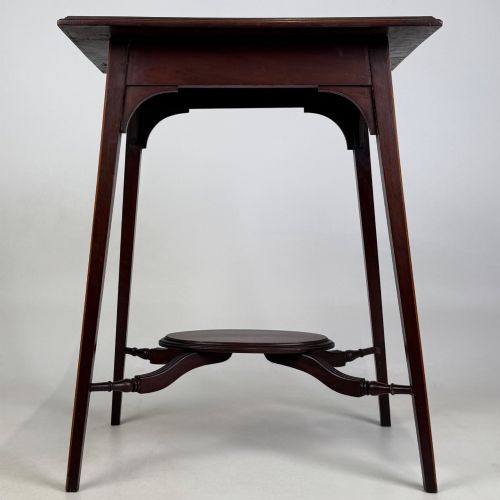
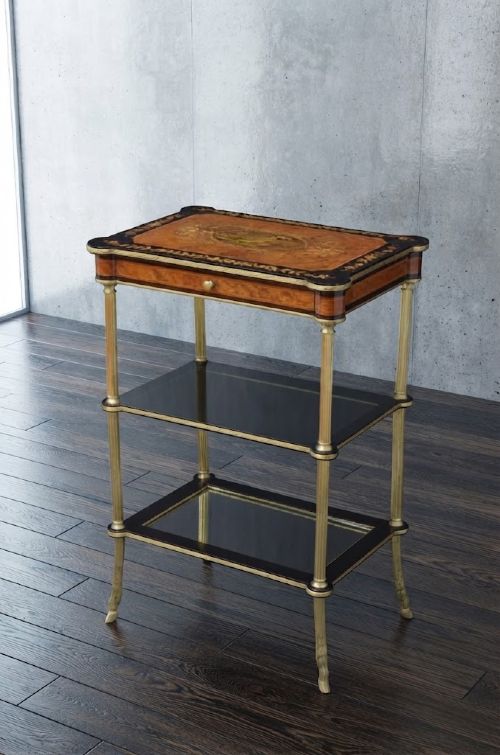
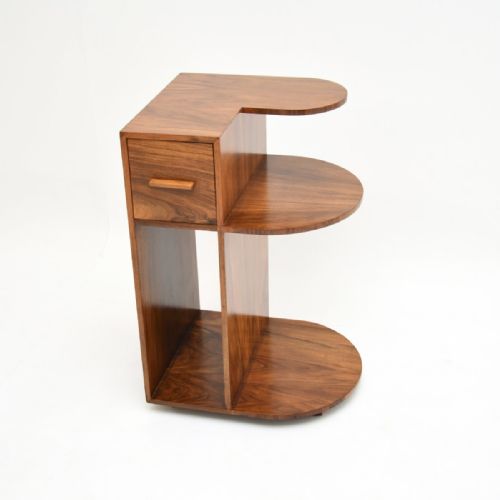
The pieces on this page span the Victorian, Edwardian, and Art Deco eras, alongside nineteenth-century French designs and Arts and Crafts examples. Oak, mahogany, and walnut dominate the selection, forming sturdy structures with stacked platforms or shelves.
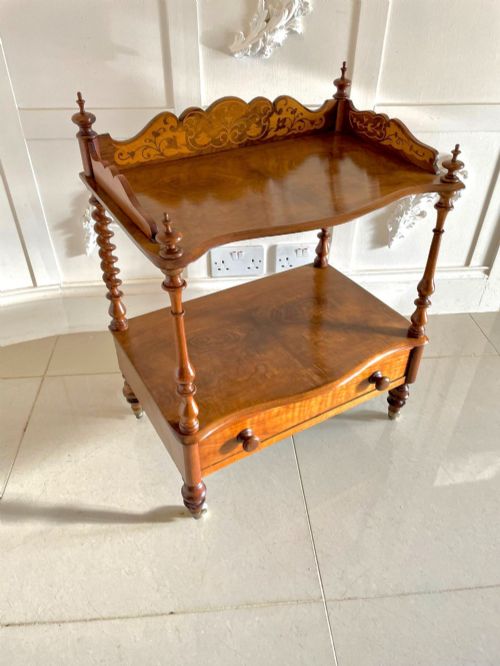
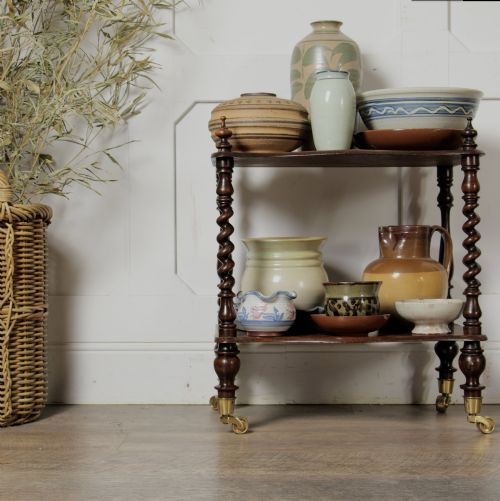
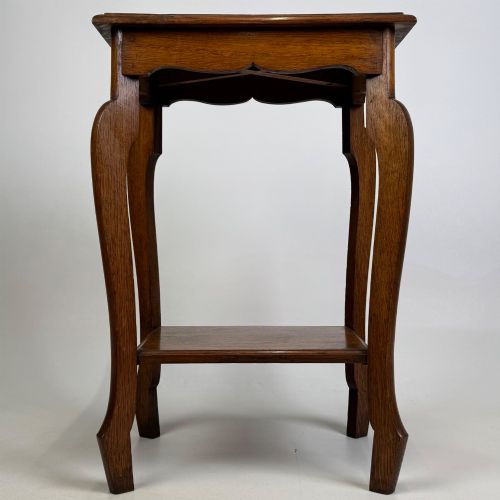
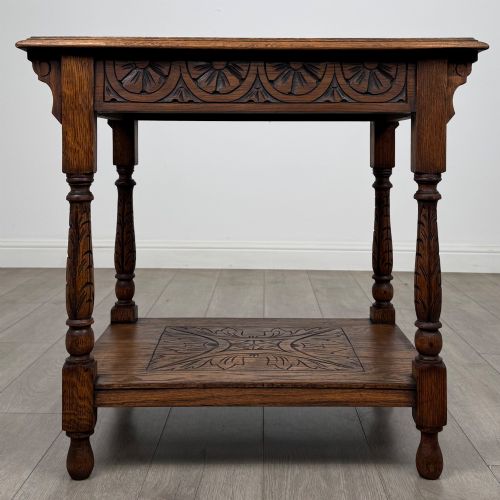
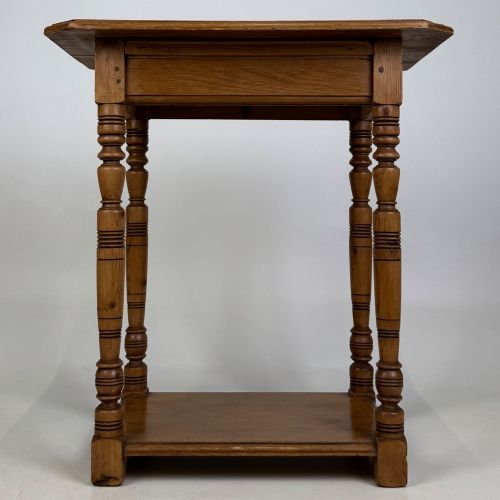
Buyers will encounter simple utilitarian oak stands from the early twentieth century alongside more decorative inlaid walnut or ebonised tiers. Many designs incorporate specific period details, such as barley twist supports, marquetry, or mirrored tiers.
Materials and construction
Cabinet makers utilised solid timbers like oak, mahogany, and walnut for the primary framework and legs, ensuring stability across multiple tiers. Veneers and burr walnut frequently provide decorative grain patterns on table surfaces, complemented by marquetry inlay.
Structural elements include turned legs, barley twist columns, and carved details, while some examples integrate brass, ormolu, or mirrored glass within the tiers. Joinery methods reflect the period of manufacture, ranging from straightforward twentieth-century assembly to detailed nineteenth-century joinery.
Listings feature oak, mahogany, and walnut across Victorian, Edwardian, and Art Deco periods.
Distinctions in quality
Quality rests upon the selection of timber and the precision of the joinery connecting the multiple tiers. Finer pieces demonstrate careful attention to grain matching in veneers, crispness in carved wooden details, and secure structural support between levels.
The integration of secondary materials such as brass mounts, mirrored glass, or intricate marquetry inlay distinguishes standard utility pieces from higher-status furniture. Stability across every tier remains paramount, indicating solid construction and thoughtful weight distribution.
Gregory and Co·Liberty of London·William Birch
The Wooden Tiered Side Table Glossary
- Tiered table
- A piece of furniture featuring multiple horizontal surfaces arranged vertically above one another. This design maximises surface area whilst maintaining a compact footprint.
- Whatnot
- An open set of shelves or tiers used for displaying ornaments, books, or small objects. These items became popular during the nineteenth century.
- Occasional table
- A small, movable table designed for intermittent use in a reception room or bedroom. They often feature extra lower shelves for storage.
- Marquetry
- Decorative woodwork where thin slices of various woods are fitted into a veneer design. It creates elaborate pictorial patterns on table tops.
- Ebonised wood
- Timber treated with a finish to imitate the appearance of ebony. This dark staining technique appears frequently on nineteenth-century statement furniture.
Wooden Tiered Side Table: Frequently Asked Questions
What rooms suit a wooden tiered side table?
These tables fit easily beside a sofa or armchair, holding lamps, books, or drinks across their multiple surfaces. Their compact vertical footprint also suits hallways and corners.
In bedrooms, smaller tiered designs function effectively as bedside tables, providing separate levels for nighttime essentials and reading materials.
How do I distinguish Edwardian tables from Victorian ones?
Victorian examples often feature heavier timber, darker finishes, and more elaborate ornamentation such as burr walnut or carved details. They reflect a preference for solid presence.
Edwardian pieces tend to display lighter construction, simpler lines, and brighter mahogany or oak tones, aligning with an turn-of-the-century shift towards airier interiors.
Were these tables used for tea?
Many tiered designs and specific trolley variants served a practical role in the serving of afternoon tea or drinks. The extra shelves provided space for cups and teapots.
Over time, the function expanded from service items to permanent display surfaces for lamps, plants, and decorative objects.
How do I clean and care for antique wood?
Regular dusting with a dry, soft cloth prevents the accumulation of grit that can scratch delicate veneers. Avoid harsh chemical cleaners which strip historic finishes.
Application of appropriate beeswax periodically nourishes the timber and maintains the natural lustre of older polished surfaces.