


Wooden String Box
A wooden string box is a functional desk accessory designed to keep twine tidy, offering tactile appeal and historical craftsmanship for the modern interior.
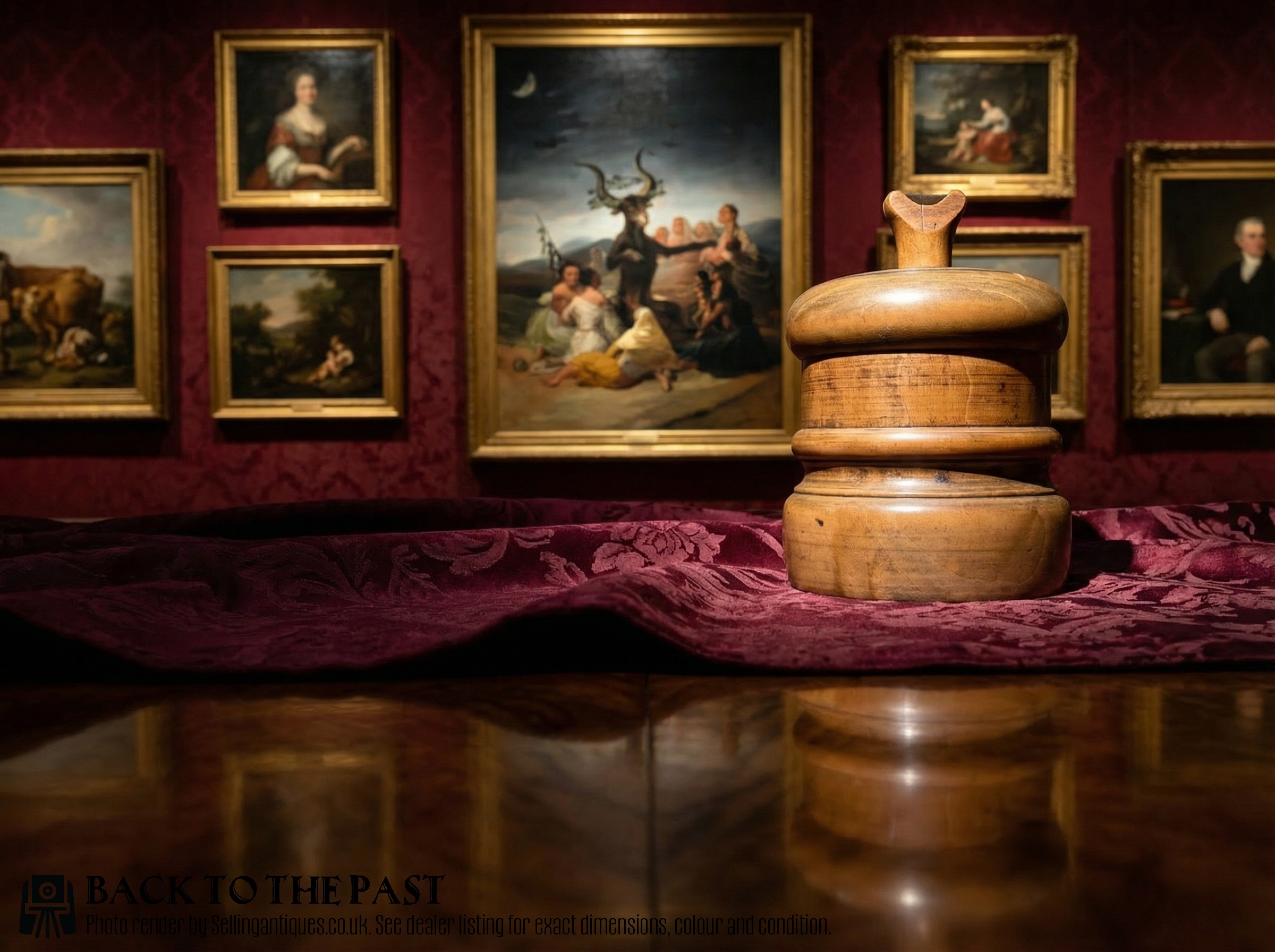
Wooden String Box
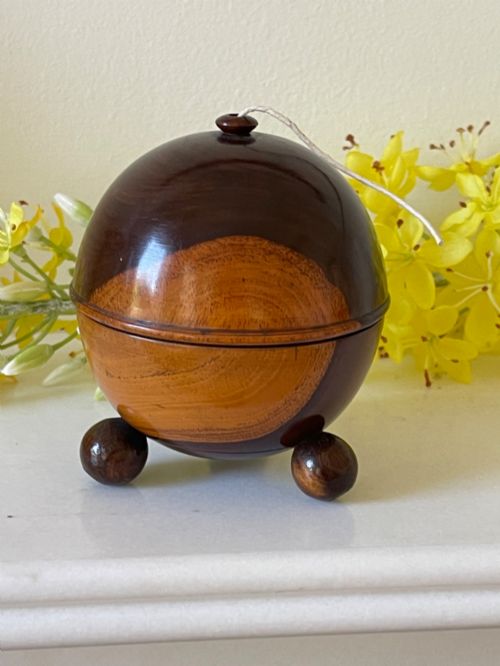
A wooden string box is a specialised desk accessory designed to contain and dispense twine cleanly in a domestic or office setting. The examples found here span the Georgian, Regency, Victorian, and Art Deco periods, showcasing a variety of traditional forms.
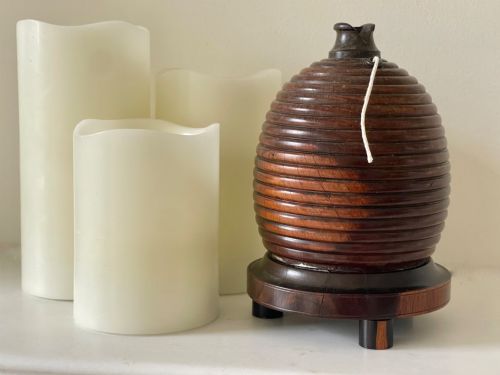
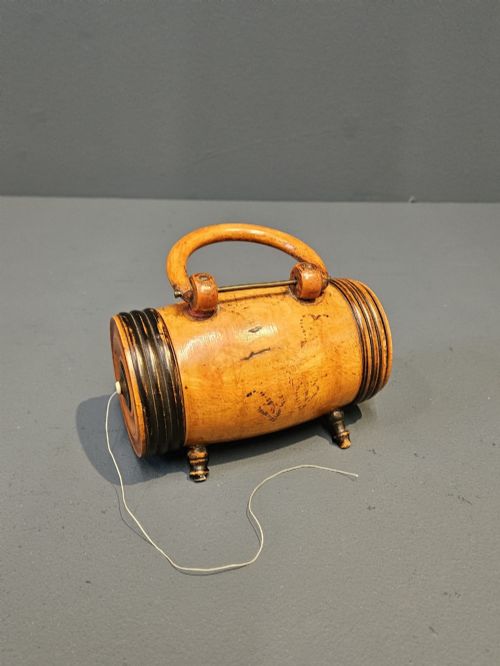
Buyers will encounter several variations of this object across the inventory, ranging from turned sycamore and lignum vitae string holders to decorative barrels and modern Art Deco string balls. These pieces reflect the shift in interior utility from the early nineteenth century into the twentieth century.
How they were made
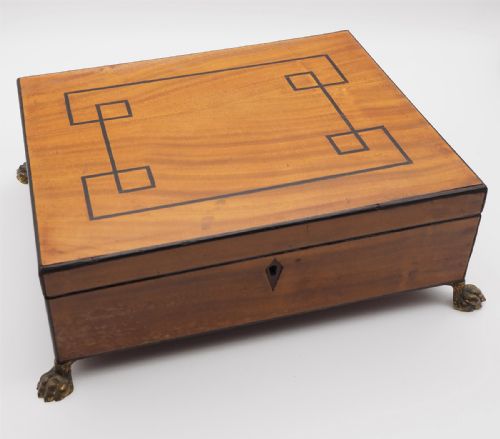
The construction of these pieces relies heavily on dense hardwoods such as lignum vitae, rosewood, sycamore, and maple, often shaped on a lathe to create smooth, rounded barrels and holders. Cabinet makers also employed specialised timbers like coromandel and satinwood for veneering and inlay work.
Metal and organic components frequently accent the woodwork, incorporating brass hardware, silver stringing, and mother-of-pearl inlays to enhance the decorative surface. Selected items feature intricate marquetry and contrasting ebony inlay to define geometric patterns.
What varies in quality
Quality in these objects is determined by the selection of timber and the precision of the turning or cabinetry. Dense hardwoods like lignum vitae exhibit superior weight and durability compared to softer woods.
The sophistication of decorative details sets apart finer examples, distinguished by crisp inlay work, well-fitted lids, and the integration of materials such as tortoiseshell or silver stringing. Simpler turned pieces rely entirely on the natural grain and symmetry of the wood for their visual appeal.
The Wooden String Box Glossary
- Lignum vitae
- A dense, heavy wood often utilised for turned treen and string holders due to its durability and rich grain. Its natural oil content provides a smooth finish.
- Sycamore
- A light-coloured hardwood commonly employed in nineteenth-century treen and utility items. It offers a pale canvas that highlights simple turned profiles.
- String barrel
- A cylindrical container specifically designed to house a ball of twine with a small aperture at the top for dispensing. These are characteristic desk accessories of the Victorian era.
- Marquetry
- The art of applying pieces of veneer to a structure to form decorative patterns. Craftsmen utilised contrasting timbers to achieve pictorial or geometric designs.
- Treen
- Small handmade wooden domestic objects. This category encompasses string holders, boxes, and treen barrels produced before the era of mass manufacturing.
Wooden String Box: Frequently Asked Questions
What is a wooden string box?
A wooden string box is a small turned or constructed container made to hold a ball of twine and dispense it through a central aperture.
These pieces functioned as practical desktop or household accessories in the nineteenth and early twentieth centuries.
How were string holders used?
They were kept on desks, in kitchens, or in sewing rooms to keep twine contained and free from tangles.
The user would pull the cord through the top opening as needed for parcels or packages.
What woods are most common?
Common timbers include dense hardwoods like lignum vitae, rosewood, and sycamore, chosen for their strength and appearance.
Makers also utilised maple, ebony, and satinwood for contrasting details and inlay work.