


Wooden Sofa End Table
A wooden sofa end table brings practical surface space to a seating area, offering compact utility alongside period character.
Wooden Sofa End Table
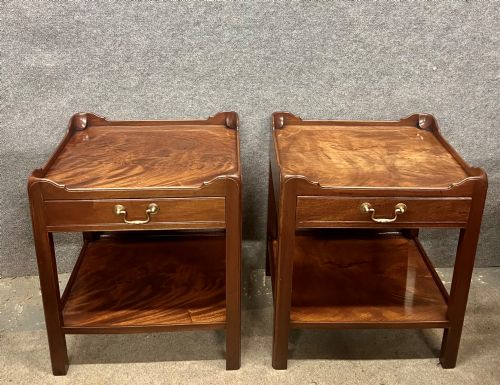
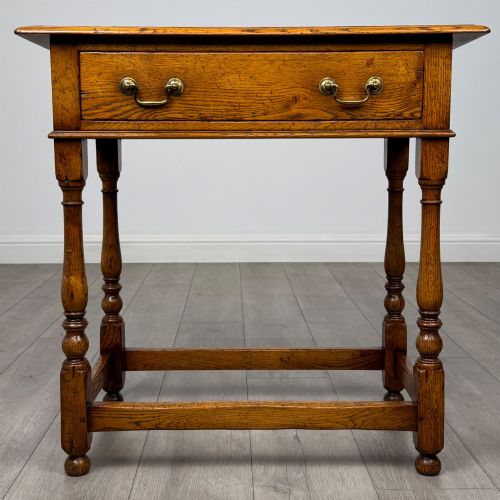
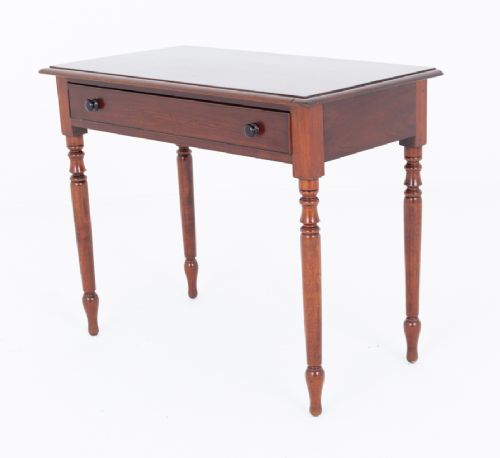
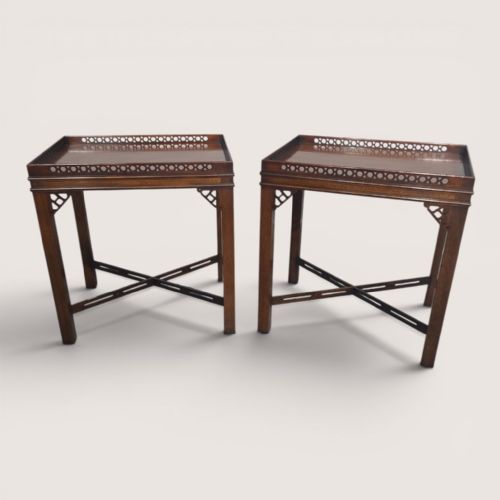
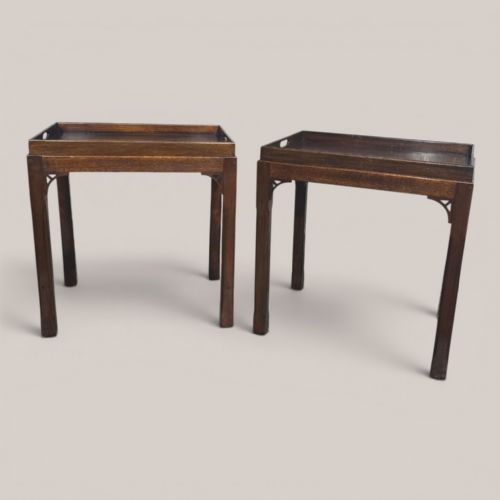
A wooden sofa end table serves as a functional resting place for lamps, books, or drinks beside a main seat, taking various compact forms across different eras. Buyers searching for a wooden sofa end table will encounter pieces designated as side tables, lamp tables, and occasional tables spanning the nineteenth and twentieth centuries.
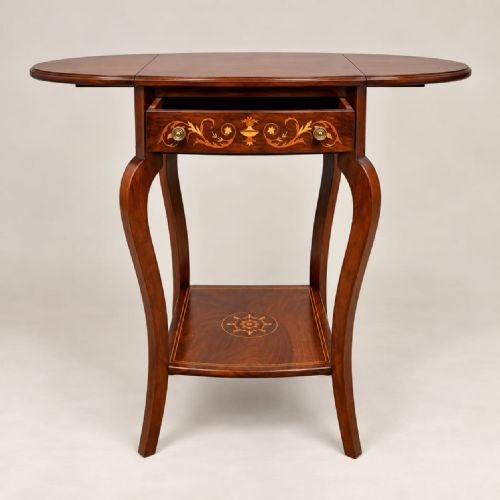
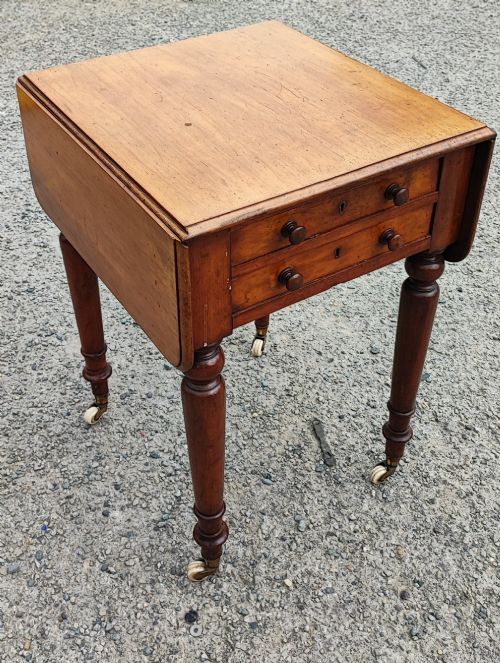
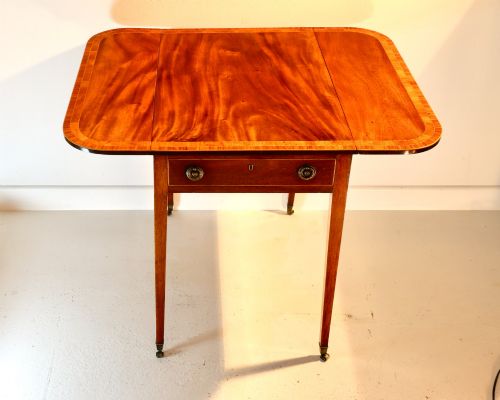
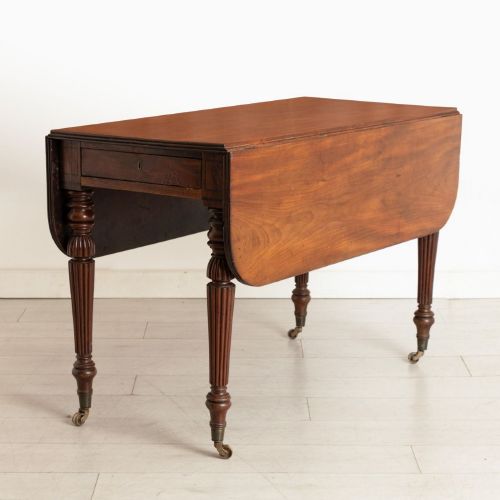
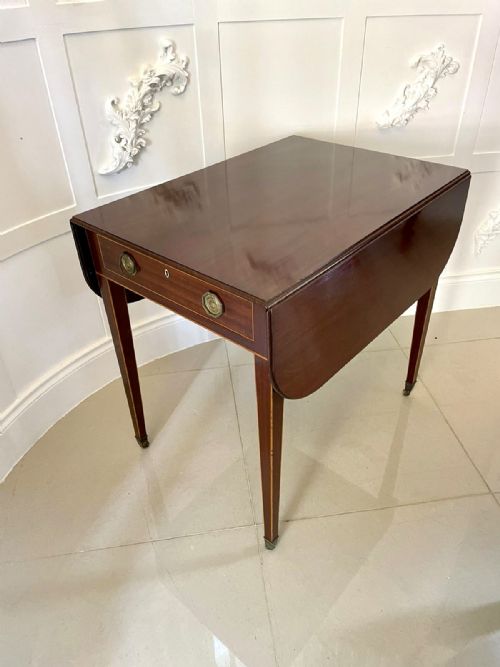
The selection includes drop-leaf and pembroke designs alongside simpler rectangular surfaces, reflecting how makers adapted furniture to suit parlour and drawing-room layouts. Edwardian and Victorian examples appear frequently alongside earlier Regency and Georgian pieces, each bringing distinct proportions and timber choices to modern interiors.
How they were made
Cabinet makers utilised dense hardwoods like mahogany, walnut, and rosewood for their stability, rich grain patterns, and capacity to take fine edge detailing. These primary timbers frequently appear paired with contrasting inlay materials such as boxwood and satinwood to create geometric or floral borders.
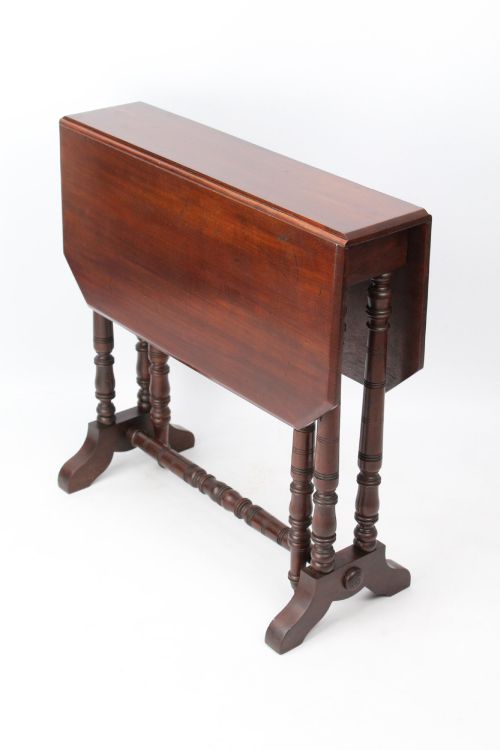
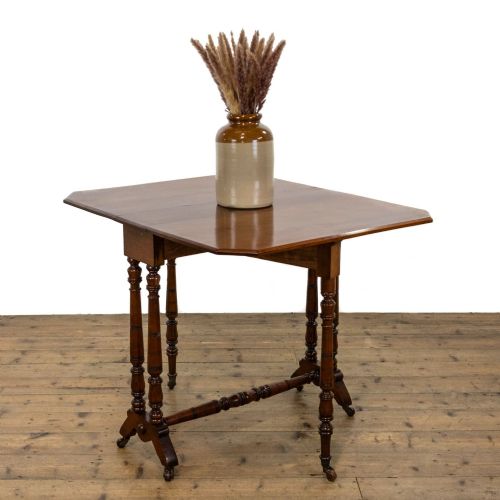
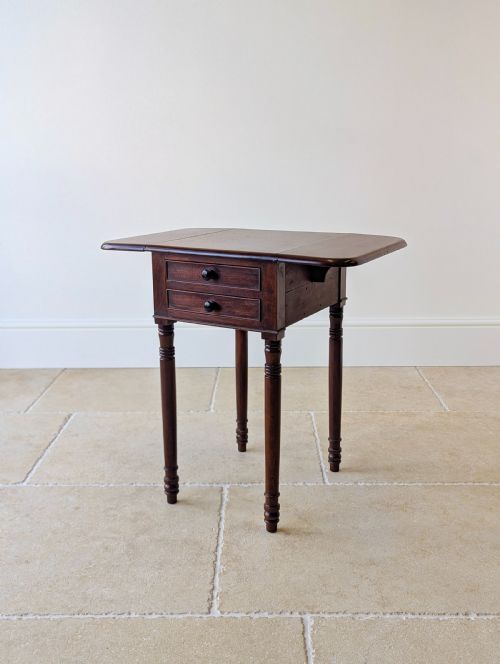
Structural elements often incorporate hinged drop flaps supported by pivoting wooden swing brackets, allowing surfaces to expand or contract according to space. Turned columns, pedestal bases, and delicate gateleg frames distribute weight while maintaining the slender silhouettes characteristic of occasional furniture.
Listings feature mahogany, walnut, and rosewood across the nineteenth and twentieth centuries, alongside oak and satinwood.
What varies in quality
The degree of refinement in the timber selection and veneer matching distinguishes standard utility pieces from finer parlour furniture. Superior examples display carefully chosen grain patterns across the table top and balanced inlay work that follows the structural lines without distortion.
Joinery execution in the drawers, framing, and hinged mechanisms indicates the standard of workshop production. Well-fitted joints and smooth movement in drop-leaf supports demonstrate the care taken during initial construction.
Gillow·Gilbert Rohde
The Wooden Sofa End Table Glossary
- Pembroke table
- A small table with hinged drop leaves on two opposing sides, supported by folding brackets or gates. This form dates back to the eighteenth century and serves multiple functions in a sitting room.
- Drop leaf table
- A table featuring hinged flaps that lower to save space or raise to extend the top surface. These mechanisms allow the footprint of the furniture to adapt to different room layouts.
- Occasional table
- A light, movable table designed for intermittent use rather than a specific permanent task. These pieces frequently double as lamp or side tables in domestic settings.
- Satinwood
- A lustrous yellowish timber native to India and Sri Lanka, often utilised for veneers and contrasting inlay work on nineteenth-century furniture. Its bright tone provides visual relief against darker primary woods.
- Sutherland table
- A narrow drop-leaf table with exceptionally slender leaves and a gateleg support structure. When folded flat, the piece occupies minimal floor space.
Wooden Sofa End Table: Frequently Asked Questions
What is a wooden sofa end table used for?
These tables provide a convenient surface next to seating for small lamps, reading materials, or everyday items.
Their compact dimensions allow them to sit flush against upholstery without crowding the room.
How do I date a wooden sofa end table?
Dating relies on identifying the prevailing timber choices, construction techniques, and stylistic markers of specific periods like the Regency or Edwardian era.
Secondary woods, drawer linings, and leg shapes often provide clear clues to the decade of manufacture.
Can I use an antique table beside a modern sofa?
Period occasional tables blend effectively with contemporary seating by introducing warmth and tactile grain variety.
Matching the height of the table surface to the sofa arm ensures practical daily comfort.
What is the difference between a side table and a pembroke table?
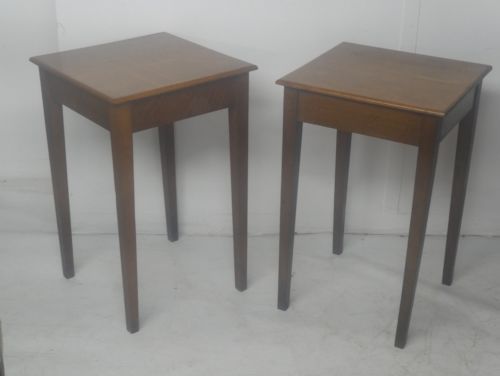
A standard side table offers a fixed, non-expanding surface supported by a simple frame.
A pembroke table incorporates hinged leaves that fold down, offering adjustable surface area.