



Wooden Single Bedsteads
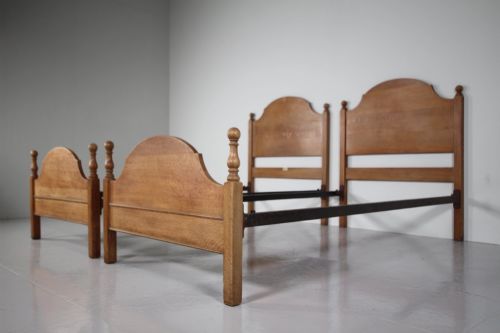
These wooden single bedsteads offer practical sleeping quarters paired with rich period character, spanning simple country oak to sleek Art Deco walnut.
Wooden Single Bedsteads
When buyers search for wooden single bedsteads, they encounter a diverse range of furniture spanning from the late nineteenth century through to the mid-twentieth century. The selection encompasses single frames and paired day arrangements created in styles from simple Arts and Crafts models to ornate French Rococo Revival pieces.
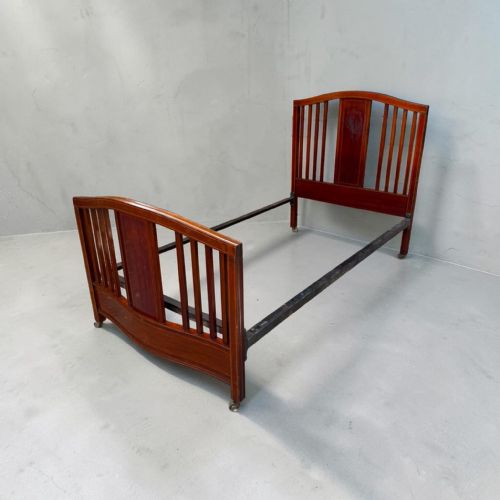
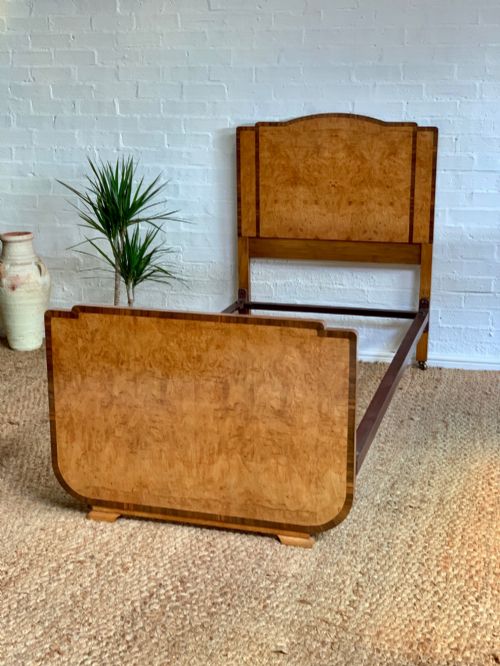
The Edwardian period heavily dominates the selection, bringing substantial output in inlaid mahogany, satinwood, and panelled oak. Art Deco examples from the 1930s also appear frequently, often constructed from burr walnut, blonde satinwood, or fruitwood by notable makers.
Buyers also find occasional nineteenth-century examples alongside rustic country pieces and continental designs such as painted French corbeille beds. These frames suit guest rooms or smaller spaces where period craftsmanship and solid timber construction are desired.
How They Were Made
Cabinetmakers utilised a variety of solid timbers and veneered surfaces, selecting oak, mahogany, walnut, and fruitwood for their durability and grain patterns. Inlaid decoration often incorporated contrasting satinwood or exotic woods to create geometric or floral motifs on headboards and footboards.
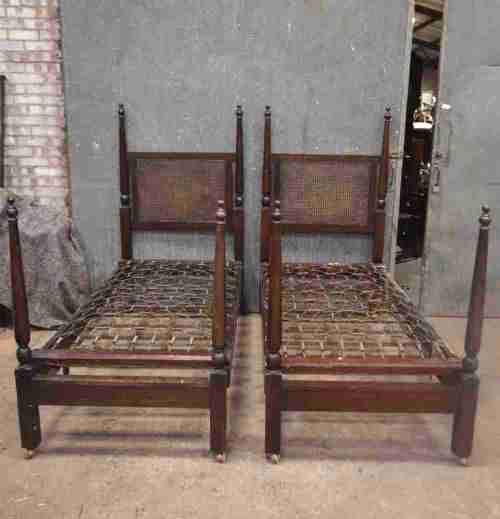
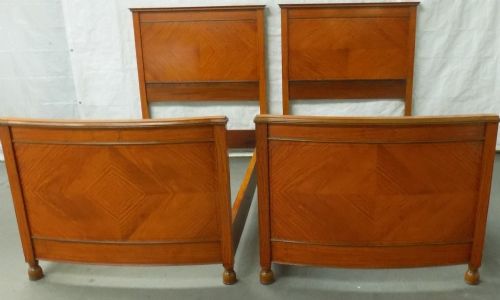
Construction techniques combined traditional joinery with period styling such as carved panelling, bergere cane inserts, and parquetry. Makers applied polished finishes to accentuate the natural figure of the wood, whilst French and continental pieces occasionally received painted surfaces.
Periods represented range from the nineteenth century through Edwardian times to Art Deco designs of the 1930s.
What Varies in Quality
Quality rests primarily on the integrity of the timber selection and the precision of the cabinetmaking. Pieces utilising burr walnut, figured mahogany, or select fruitwood demonstrate superior material choice compared to standard domestic utility framing.
Design ambition and attribution separate standard production pieces from workshop highlights. Items bearing maker labels or executed in distinctive Arts and Crafts or Art Deco styles show elevated attention to carving, inlay, and proportion.
Heal And Son·Waring And Gillow·Oliver Morel·Betty Joel
The Wooden Single Bedsteads Glossary
- Bedstead
- The framework of a bed, comprising the headboard, footboard, and side rails designed to support a mattress base. It differs from a standalone mattress by incorporating decorative woodwork and period style.
- Bergere
- A closed-arm easy chair or, in the context of beds, a panel filled with woven cane webbing. This technique adds lightness and texture to heavy wooden headboards and footboards.
- Inlay
- A decorative technique where pieces of contrasting wood, such as satinwood, are inserted into recessed portions of a base timber. It creates flat ornamentation popular in Edwardian cabinetmaking.
- Parquetry
- Geometric mosaic woodwork used for decorative surface patterns, frequently seen on tabletops and bed panels. It showcases the skill of the marqueterie maker through precise wood alignment.
- Corbeille
- A French bed style featuring an incurved, rounded headboard and footboard reminiscent of a basket shape. These frames are typically upholstered or heavily carved in revival styles.
Wooden Single Bedsteads: Frequently Asked Questions
Will a standard modern mattress fit these wooden single bedsteads?
Many older single beds were built to historical dimensions which can vary slightly from modern standard single mattress sizes. It is essential to check the internal length and width dimensions of the frame before purchasing a mattress.
Some bespoke or continental models may require custom mattress sizing to ensure a correct fit within the side rails. Modern slat systems can often be integrated discreetly to support contemporary mattresses safely.
How do I care for antique wooden bed frames?
Maintain the finish by dusting regularly with a soft, dry cloth and avoiding placement near direct heat sources or strong sunlight. Periodic application of suitable beeswax helps nourish older polish and protects the timber surface.
Check and gently tighten the structural bolts and joints periodically, as movement from daily use can loosen traditional fixings over time. Avoid using abrasive household cleaners or silicone polishes on antique wood.
How do I distinguish an Edwardian bed from a 1930s Art Deco bed?
Edwardian frames frequently feature classical mahogany or oak construction with delicate satinwood inlay, stringing, and carved pediments. They reflect traditional craftsmanship rooted in revivalist aesthetic principles.
Art Deco beds from the 1930s embrace streamlined geometry, blonde finishes, and exotic veneers like burr walnut or fruitwood. Their silhouettes prioritize clean horizontal and vertical lines over historical ornamentation.
Can these beds be easily dismantled for transport?
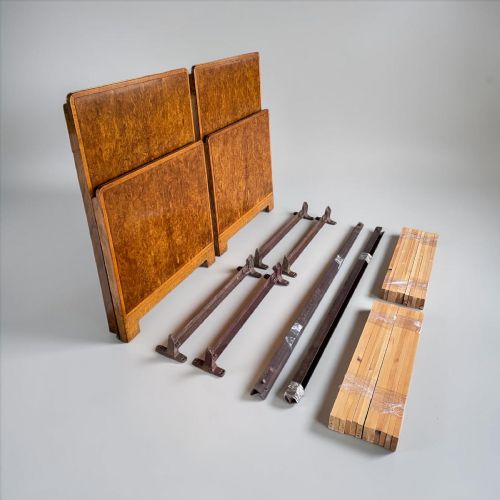
Most antique wooden single beds utilise standard side rail brackets, iron bed bolts, or slot-in tenons designed for straightforward dismantling. This modular construction allowed historical households to move furniture between rooms with minimal effort.
When reassembling, ensure all metal bolts are seated correctly to maintain the structural rigidity of the frame. Having two people handle the assembly prevents strain on antique joints and vulnerable headboard tenons.