






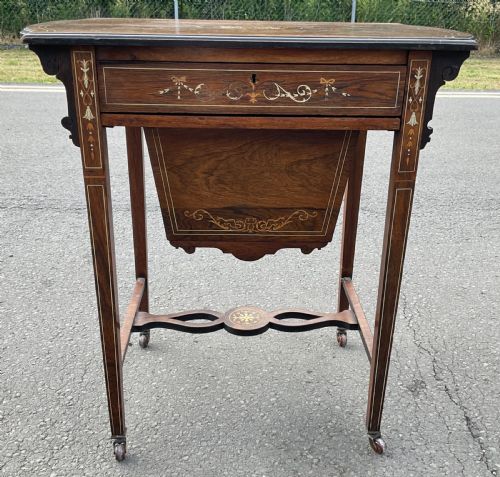
Wooden Sewing Cabinet
A wooden sewing cabinet brings ingenious nineteenth-century storage and fine timber to a modern room.
Wooden Sewing Cabinet
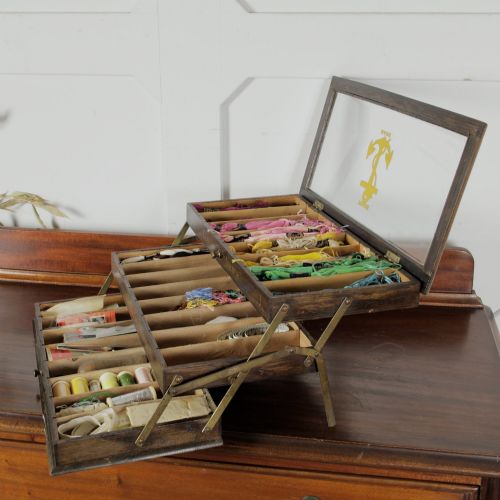
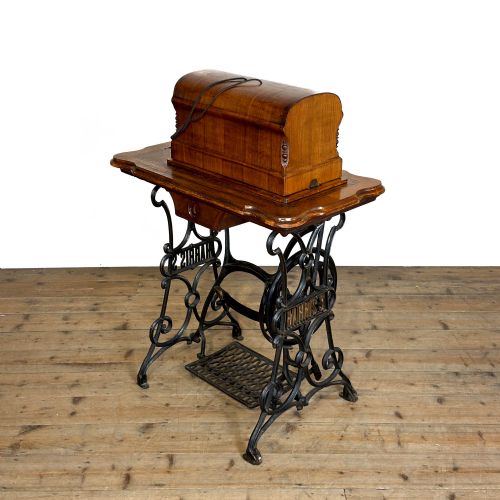
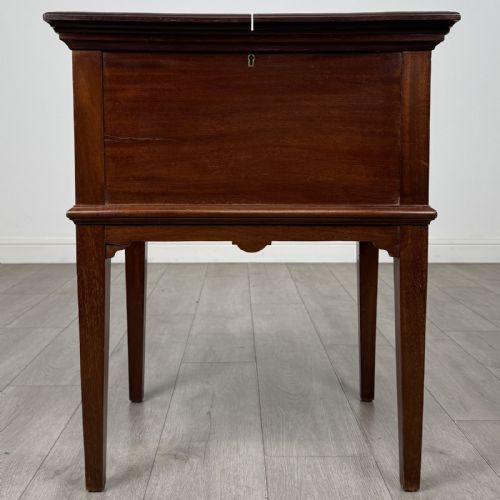
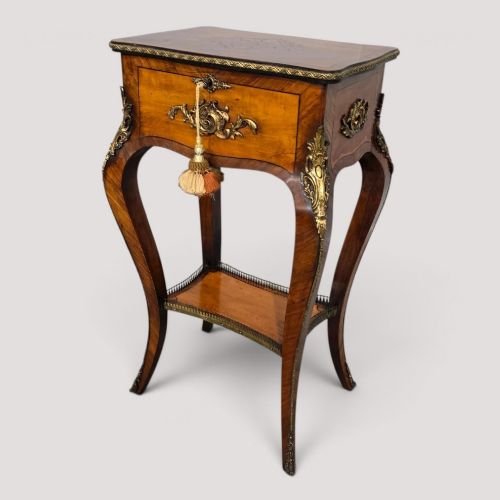
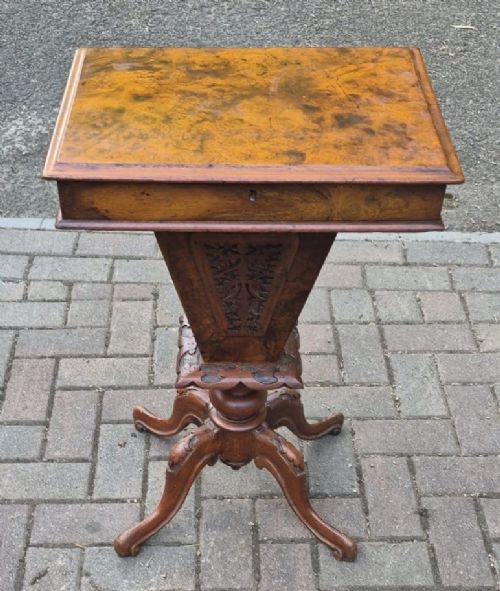
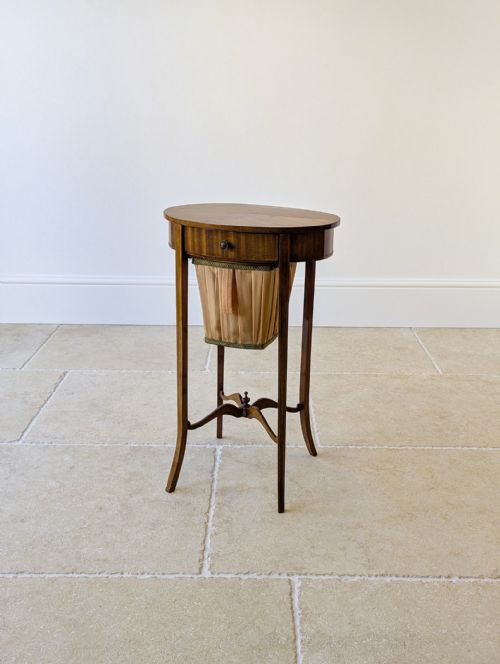
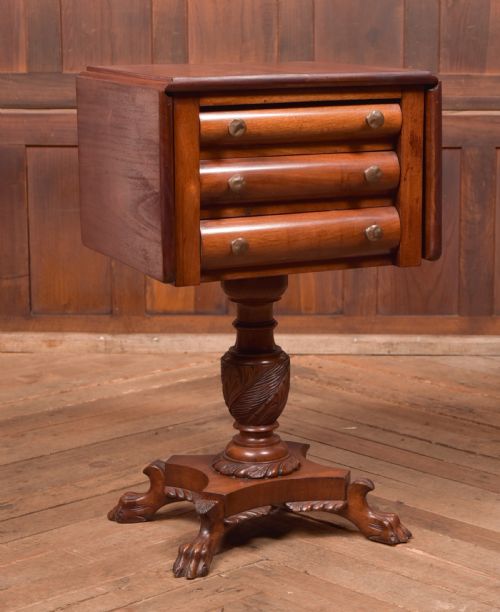
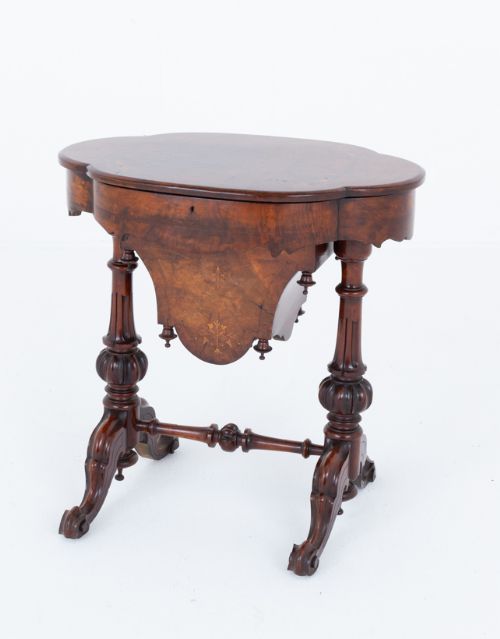
A wooden sewing cabinet combines a useful table surface with fitted internal compartments designed for needles, thread, and textile work. These pieces span the Regency, Victorian, Edwardian, and later periods, appearing as work tables, sewing boxes on stands, and small side tables.
The versions most commonly met on this page are Victorian and Edwardian examples in mahogany and walnut. They often feature hinged lids, small drawers, and hanging fabric bags below to catch scraps or hold ongoing needlework.
Materials and construction
Cabinet makers relied on rich timbers like mahogany, burr walnut, and rosewood, often enhancing the surfaces with delicate boxwood inlay and contrasting satinwood banding. These woods were chosen for their grain pattern and ability to take a smooth, polished finish.
Joinery techniques focused on stability and neat concealment, with fitted interiors requiring precise miniature carpentry for small compartments and trays. Brass hardware, including tiny locks, hinges, and castors, provided both function and subtle ornamentation.
Wooden Sewing Cabinet Retail Price Guide 2026
Typical asking prices for wooden sewing cabinet among the pieces listed under this phrase on Sellingantiques today, from the lower quarter to the upper quarter. They describe what is for sale here now, not the wider market.
Current listings feature pieces spanning the Regency, Victorian, Edwardian, and 1920s periods, executed primarily in mahogany, walnut, and oak.
Assessing quality
Quality rests in the choice of timber and the crispness of the secondary details, such as stringing, inlay, and the figuration of the burr walnut veneer. Finer pieces demonstrate careful grain matching across the lid and drawer fronts rather than simple, plain timber.
The interior fitments also distinguish better cabinets, particularly where compartments remain intact with their original lids, pulls, and paper linings. The integration of the lower sewing bag frame and the fluidity of any drop-leaf actions reveal the maker's original standard of execution.
Chadwick’s Sewing Cottons·Ermen & Roby
The Wooden Sewing Cabinet Glossary
- Work table
- A small occasional table fitted with drawers and compartments specifically designed for needlework and domestic crafts. These tables became essential drawing-room furnishings during the nineteenth century.
- Inlay
- A decorative technique where pieces of contrasting wood, such as boxwood or satinwood, are set into the primary timber surface to create linear borders or geometric patterns.
- Burr walnut
- A highly prized timber taken from the gnarled growth of a walnut tree, yielding complex, swirling grain patterns that look especially striking on table tops.
- Haberdashery cabinet
- A glass-fronted or multi-drawer display unit originally used in shops to organise and showcase sewing cottons, threads, and small drapery goods.
Wooden Sewing Cabinet: Frequently Asked Questions
What is a wooden sewing cabinet used for today?
While originally designed to house threads, needles, and embroidery projects, these cabinets serve admirably as bedside tables, hall stands, or compact storage in a living room. Their small drawers and compartments easily accommodate modern desk accessories, jewellery, or craft supplies.
The fitted interior trays also work well for organising small everyday items while keeping the polished wooden surface clear for lamps or display objects.
How do I date a wooden sewing cabinet?
Dating relies on observing the timber, the style of the legs, and any decorative motifs like boxwood inlay or carved walnut details. Regency and George IV pieces tend to feature heavy pillar supports and sabre legs, whereas Edwardian examples often display lighter inlaid mahogany frames.
The construction methods inside the drawers and the presence of original brass castors or hardware further help narrow the decade of manufacture across the nineteenth and early twentieth centuries.
Are sewing tables and work tables the same thing?
In historical terminology, sewing tables, work tables, and occasional tables often overlap, particularly in nineteenth-century trade descriptions. All generally describe a small movable table equipped with internal storage for needlework.
Some variants include a suspended fabric bag beneath the top, while others rely entirely on small wooden drawers and partitioned compartments to keep domestic sewing paraphernalia tidy.
How do I care for antique wood furniture?
Maintain polished mahogany and walnut surfaces by keeping them away from direct sunlight and sudden changes in room temperature. A gentle dusting with a soft, dry cloth is usually sufficient for daily maintenance.
Avoid silicone-based sprays and excessive moisture, using a traditional wax polish only sparingly when the timber appears dry to preserve the natural lustre of the grain.