
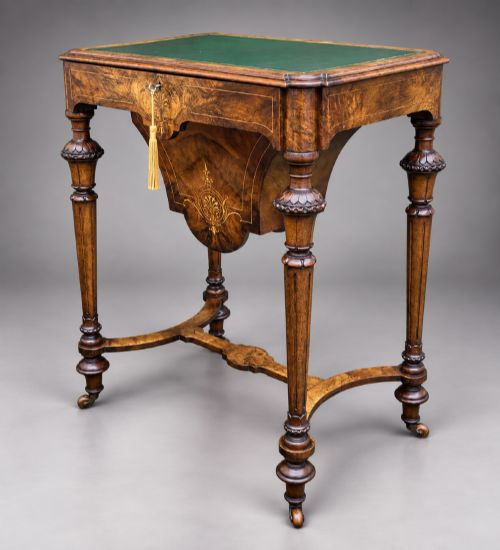
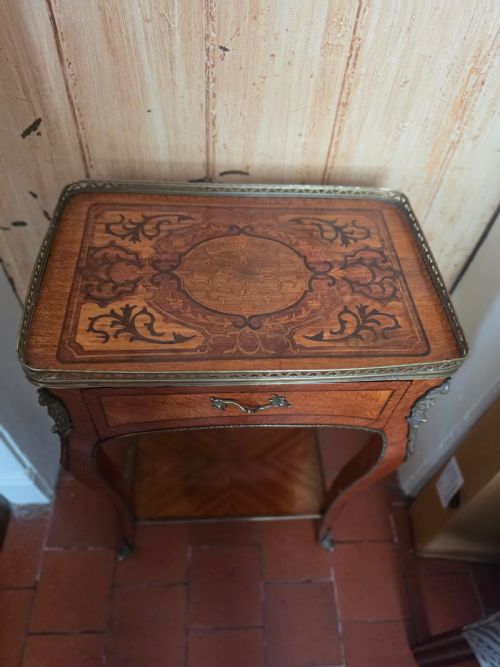
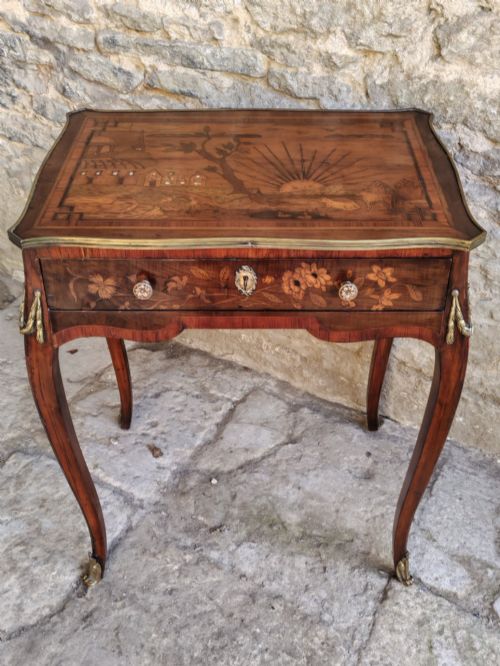
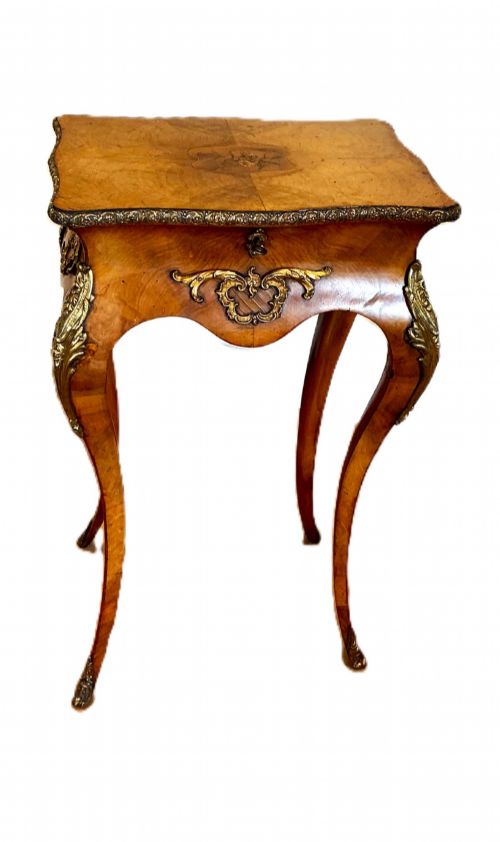


Marquetry Walnut Work Table
A marquetry walnut work table brings intricate floral veneers and clever fitted compartments together for practical use.
Marquetry Walnut Work Table
A marquetry walnut work table combines a compact writing surface, sewing storage and folding game boards into a single piece of furniture. These tables appear most frequently from the Victorian period, alongside French revival designs and eighteenth-century examples.
Makers constructed these pieces as multi-purpose items for the drawing room or boudoir. They incorporate fitted interiors, sliding bags for needlework, and chessboard tops suited for evening leisure.
How they were made
Craftsmen built these tables using walnut and burr walnut veneers laid over solid timber carcases. They integrated contrasting lighter woods such as boxwood and fruitwood to form detailed floral marquetry patterns.
Metal elements such as brass and ormolu add structural mounts and hinges to lids and drawers. Interiors often feature partitioned compartments designed specifically for sewing implements and writing supplies.
Listings feature Victorian, Edwardian, and eighteenth-century periods, utilising walnut, burr walnut, boxwood, and fruitwood.
What varies in quality
The precision and depth of the wood inlay determine the fineness of the piece. Crisp contrasts between boxwood, fruitwood and the burr walnut ground indicate superior workshop execution.
The complexity of the interior mechanism and the stability of the fitted compartments separate standard production from exceptional examples. Tables that combine games boards with sewing boxes demonstrate higher levels of joinery skill.
Waring & Gillow
The Marquetry Walnut Work Table Glossary
- Marquetry inlay
- Decorative patterns formed by fitting small pieces of wood veneer into a prepared ground. This technique creates complex pictorial designs across table tops.
- Burr walnut
- Timber taken from the growth excrescences of walnut trees, yielding highly figured grain patterns. It provides a rich background for inlaid decoration.
- Poudreuse
- A French dressing table equipped with a mirror and compartments for cosmetics. Many double as writing or work tables.
- Ormolu
- Gilded bronze used for decorative mounts and edgings on furniture. It protects vulnerable corners and adds metallic contrast to the timber.
- Trumpet workbox
- A sewing table featuring an octagonal, cone-shaped body widening towards the base. This form stands on a carved pillar with tripod feet.
Marquetry Walnut Work Table: Frequently Asked Questions
What is a marquetry walnut work table used for?
These tables served multiple domestic purposes in nineteenth-century drawing rooms. They provided a stable surface for needlework, writing, and board games.
Beneath the hinged lids, fitted compartments kept sewing threads, bobbins, and small writing accessories organised. Many designs also incorporated sliding fabric bags for wool and cloths.
How do I identify a French style table?
French revival examples often display curved cabriole legs, delicate ormolu mounts, and lighter wood veneers. They tend to emphasise decorative floral motifs and serpentine outlines.
In contrast, English Victorian versions frequently adopt more rectilinear or trumpet-shaped forms with darker walnut carcases and geometric or botanical inlays.
Are the chess boards original?
Many work tables feature reversible or sliding tops inlaid with boxwood and fruitwood chess squares. These dual-purpose tops formed an integral part of the original design for evening entertainment.
Inside, the compartments often retain their original layout for backgammon pieces and gaming counters alongside sewing wells.
How should I care for burr walnut veneer?
Burr walnut requires stable humidity and protection from direct sunlight to prevent veneer lifting and fading. Regular dusting with a dry, soft cloth maintains the polished finish.
Avoid placing these tables near direct heat sources or damp environments, as the varied grain directions react strongly to atmospheric changes.