

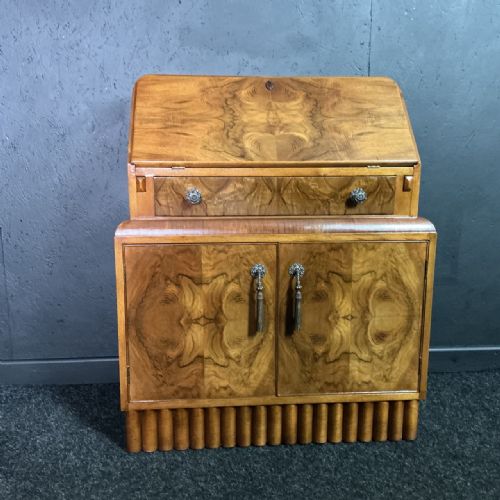
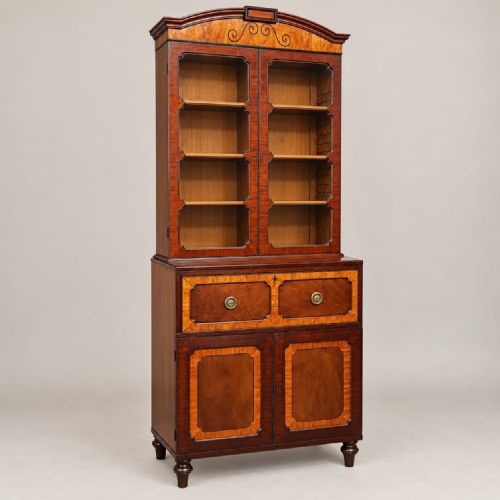
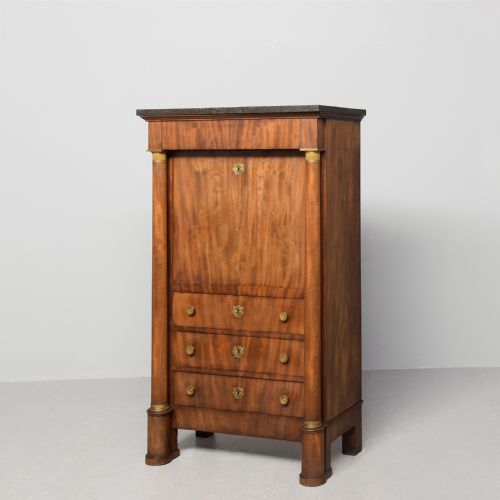
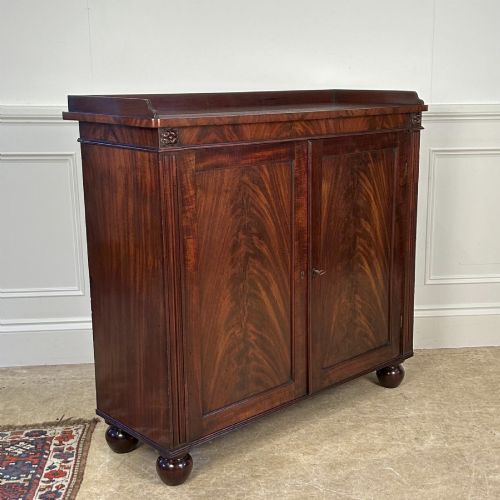




Wooden Secretaire Cabinet
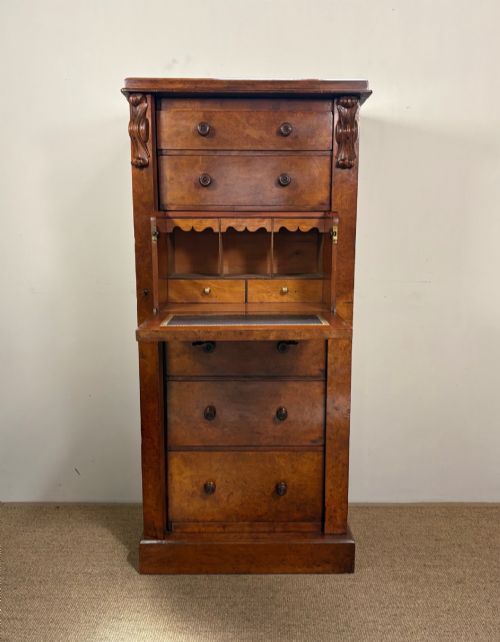
These wooden secretaire cabinet pieces combine structural presence with a hidden writing drawer, offering a practical writing surface alongside domestic storage.
Wooden Secretaire Cabinet
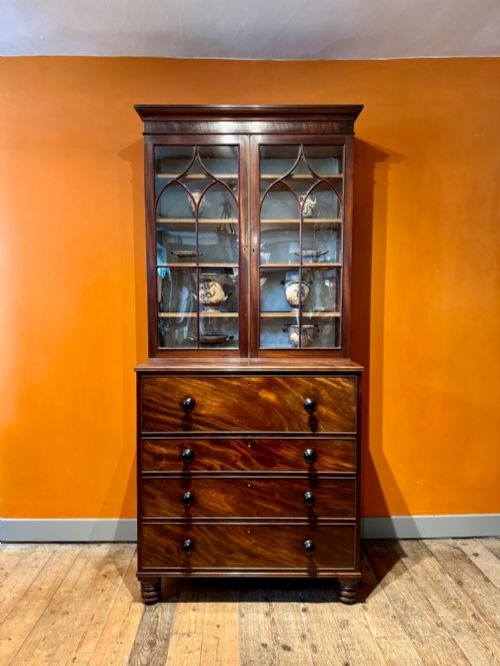
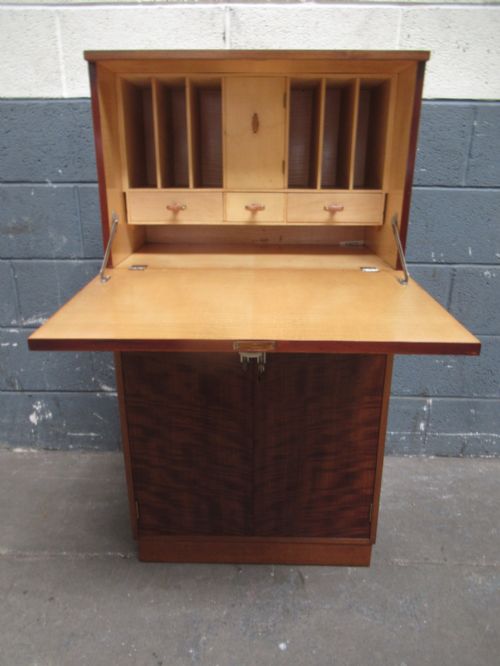
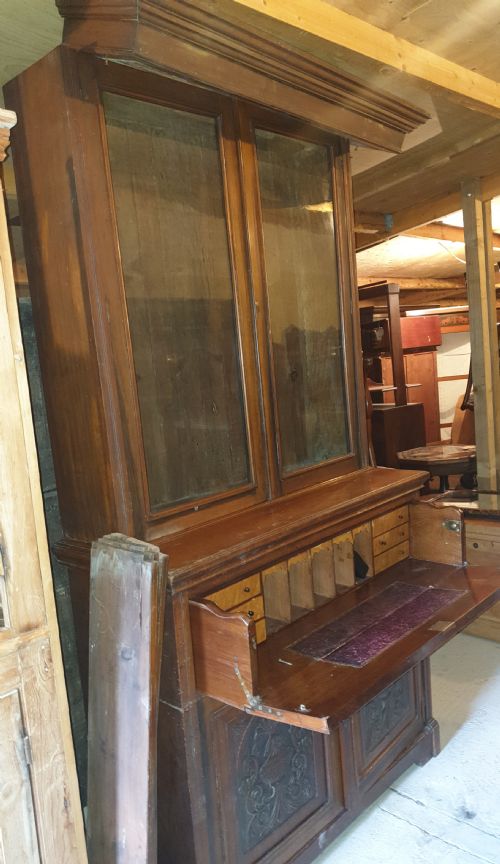
A wooden secretaire cabinet delivers dual utility through a fitted writing drawer that drops down to reveal internal compartments and small drawers alongside shelving or lower storage. When you search for a wooden secretaire cabinet, you encounter forms ranging from tall bookcase combinations down to compact chests and dwarf cabinets.
The pieces on this page span Georgian, Regency, Victorian, and Art Deco periods, with mahogany and walnut forming the backbone of the selection alongside satinwood, pine, and yew. Bookcase configurations and chest variants dominate the available items, reflecting how makers integrated writing surfaces into everyday furniture.
Origins stretch from British workshops to French and Swedish makers, showing diverse regional approaches to the drop-front mechanism. Whether meeting a tall breakfront bookcase or a lower bureau format, the defining feature remains the concealed desk compartment.
Materials and construction methods
Makers utilised solid timbers and veneers of mahogany and walnut, frequently incorporating satinwood for interior stringing and contrast within the writing compartments. Brass hardware provides functional support for handles, hinges, and lock escutcheons across the periods represented.
Interior secondary woods such as pine appear in carcases and drawer linings, while glass panels feature in the upper bookcase doors of taller examples. Leather inserts often line the drop-down writing surfaces, providing a smooth texture for correspondence.
Wooden Secretaire Cabinet Retail Price Guide 2026
Typical asking prices for wooden secretaire cabinet among the pieces listed under this phrase on Sellingantiques today, from the lower quarter to the upper quarter. They describe what is for sale here now, not the wider market.
Listings span Georgian, Regency, Victorian, and Art Deco periods, utilising mahogany, walnut, satinwood, pine, and brass.
Markers of distinction
The refinement of internal pigeonholes, secret drawers, and small compartments dictates the grade of a piece, with intricate layouts marking out finer work. Superior examples demonstrate precise joinery in the drop-front mechanism and clean matching of wood grain across the drawer fronts.
Cabinet proportions and the integration of upper bookcase sections or chest bodies determine visual balance. The presence of secondary timbers chosen for interior linings and the quality of brass fittings separate standard utility items from higher workshop output.
Gillows
The Wooden Secretaire Cabinet Glossary
- Secretaire abattant
- A vertical cabinet featuring a drop-front panel that conceals a fitted desk interior. This form is common in French and continental pieces.
- Breakfront
- A cabinet design where the central section projects forward from the flanking sides. This layout adds architectural depth to large bookcases.
- Wellington chest
- A tall, narrow chest of drawers secured by a hinged locking side stile. These units occasionally incorporate a secretaire drawer within the stack.
- Stringing
- Fine inlay lines of contrasting wood used to outline drawer fronts and panels. It creates decorative borders on mahogany and walnut surfaces.
- Biedermeier
- A Central European style emphasising clean lines and polished wood veneers without excessive ornamentation. Pieces from this tradition focus on timber grain.
Wooden Secretaire Cabinet: Frequently Asked Questions
What is a wooden secretaire cabinet?
A wooden secretaire cabinet is a piece of furniture that combines standard storage, such as drawers or bookshelves, with a drop-front writing drawer.
Inside this drop-front section, you find small compartments and hidden drawers designed for correspondence and paperwork.
How do I use a secretaire drawer?
You unlock and lower the front panel of the drawer to create a horizontal writing surface supported by sliding arms or hinges.
When you finish writing, you fold the surface back up and lock the outer panel to conceal your papers.
Where should I place this cabinet?
These cabinets suit studies, living rooms, and bedrooms where you need both display space and a compact writing area.
Ensure you leave enough clearance in front of the piece for the drop-front writing flap to open fully.
How do I identify the period?
You examine the primary timber, hardware style, and overall proportions to determine the era of construction.
Georgian and Regency pieces tend to feature rich mahogany and classical lines, while Art Deco examples display streamlined walnut veneers.