


Wooden Scientific Instrument
A wooden scientific instrument brings precision and utility together, spanning compasses, barometers, and measuring devices from Georgian and Victorian periods.
Wooden Scientific Instrument
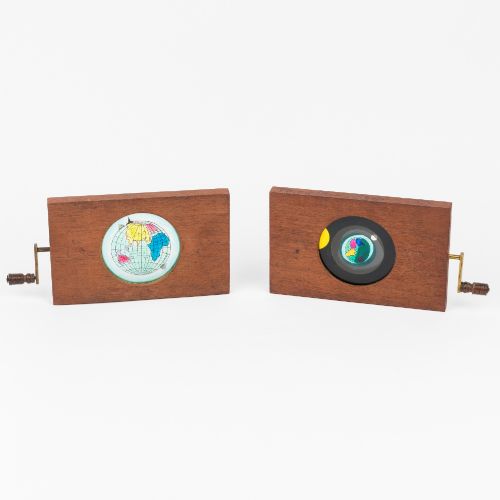
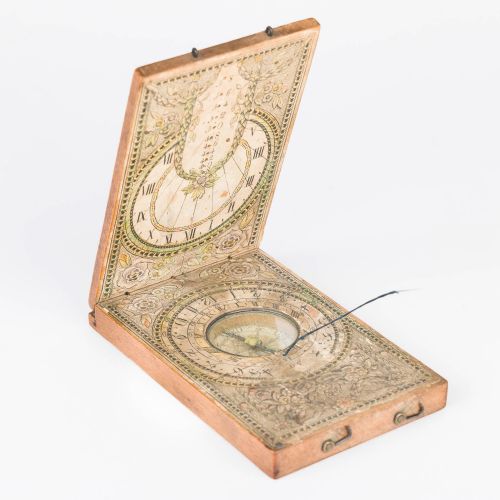
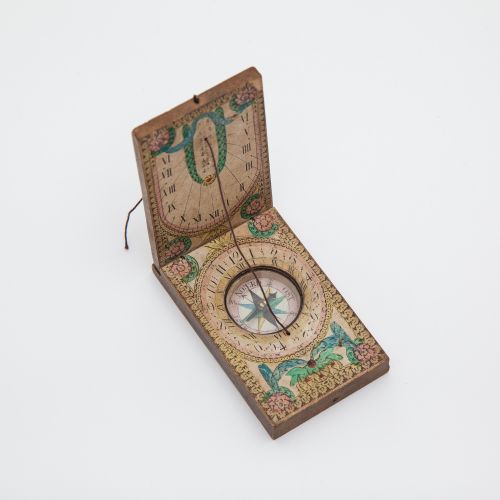
A wooden scientific instrument encompasses practical apparatus utilised for measurement, navigation, observation, and calculation during the Georgian, Regency, and Victorian eras. These items range from pocket compasses and portable sundials to large marine barometers, microscopes, and hydrometers.
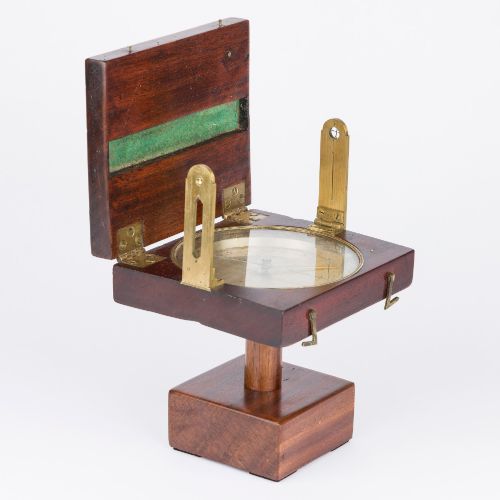
The version most commonly encountered on this page is the domestic or travel-sized barometer, particularly the mahogany wheel or banjo barometer, alongside surveyors' compasses and cased instruments. Makers housed these functional tools in robust woods intended for steady field use or interior placement.
Origins span British provincial towns and London workshops, incorporating styles from Neo-Classical marquetry to Victorian Gothic and Victorian Maritime. Buyers encounter both portable instruments meant for explorers and stationary desk or wall pieces.
Materials and construction
Makers constructed the primary housings using dense hardwoods such as mahogany, rosewood, boxwood, oak, and beech, selected for stability and grain. These woods frequently received fine inlay, marquetry, or ebonisation to suit contemporary interiors.
Craftsmen integrated brass dials, glass lenses, and paper scales into the wooden frames, housing delicate mechanical components, mercury columns, and magnetic needles. Boxwood served particularly well for detailed slide rules and thermoscopes requiring precise graduation markings.
Listings feature instruments spanning the 18th, 19th, and early 20th centuries, utilising mahogany, rosewood, boxwood, brass, and glass.
Distinctions in quality
Quality rests upon the precision of the graduating scales, the clarity of the maker's signature engraved on brass or printed on paper, and the crispness of the cabinetwork. Instruments bearing the names of known makers demonstrate superior mechanical execution.
The selection of timber and the complexity of the timber housing, such as intricate marquetry or figured mahogany veneers, separate standard utilitarian items from exhibition pieces intended for prominent display.
De Grave Short & Co·G. Davis of Leeds·Samuel Porter·Edward Roberts·Molton of Norwich·Negretti & Zambra·Stanley London·Merkelbach & Co Amsterdam·Cox of Plymouth Dock·Watkins & Hill·Jules Richard·Swift & Son·L Casatelli of Liverpool·Chadburn Brothers·Vecchio & Co·Pillischer London·Ciresa of Milan·Alexander Adie·J Hicks·John Gilbert
The Wooden Scientific Instrument Glossary
- Aneroid barometer
- A device that measures atmospheric pressure without liquids, using an enclosed flexible metal box. It typically sits inside a round or banjo-shaped wooden case.
- Barograph
- A self-registering instrument that records atmospheric pressure graphically over time. It combines clockwork mechanisms with aneroid barometer technology inside a wood and glass housing.
- Hydrometer
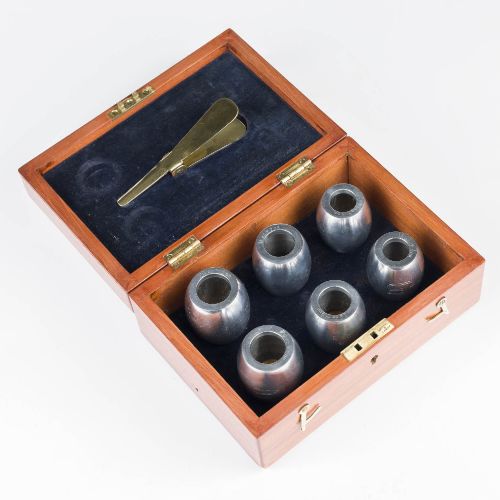
- An instrument used to measure the specific gravity of liquids. These sets often arrive in fitted wooden boxes with glass floats and calibrated scales.
- Theodolite
- A precision optical instrument for measuring angles in horizontal and vertical planes. It relies on internal brass circles and leveling bases.
- Thermoscope
- An early device that indicates changes in temperature without a formalized numeric scale. These appear in boxed wood formats from the Regency period.
Wooden Scientific Instrument: Frequently Asked Questions
What is a wooden scientific instrument?
A wooden scientific instrument is a device created for measurement, navigation, or meteorological observation that incorporates wood into its exterior housing or structure.
These objects include barometers, compasses, slide rules, and telescopes produced across the eighteenth and nineteenth centuries.
How were barometers used?
Barometers measured atmospheric pressure to help users forecast local weather changes at home or on the sea.
Domestic models hung on parlour walls, while marine versions hung in gimbals on ships to counteract rolling waves.
How do I identify a Georgian instrument?
Georgian instruments display simpler lines, often utilising solid mahogany or early veneers without heavy Victorian ornamentation.
Signatures on the dial or scale plates typically point to eighteenth-century London or provincial makers.
Where were these instruments made?
Makers produced these pieces in specialised workshops across London, provincial English towns, and European cities like Amsterdam and Milan.
Many bear the engraved signatures of the specific optician or instrument maker on the brass dial or wooden body.