



Wooden Sample Box
A wooden sample box brings miniature furniture and salesman pieces into your home, offering compact craftsmanship from Georgian and Victorian workshops.
Wooden Sample Box
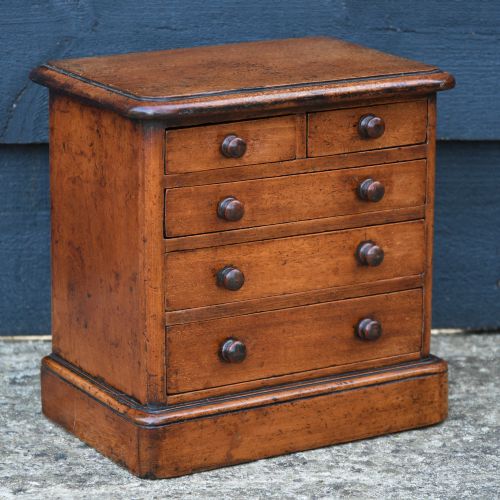
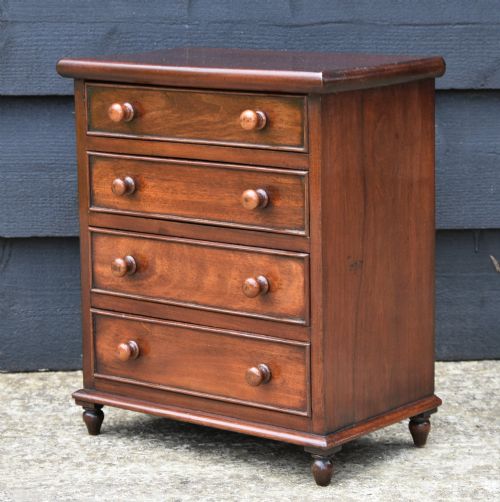
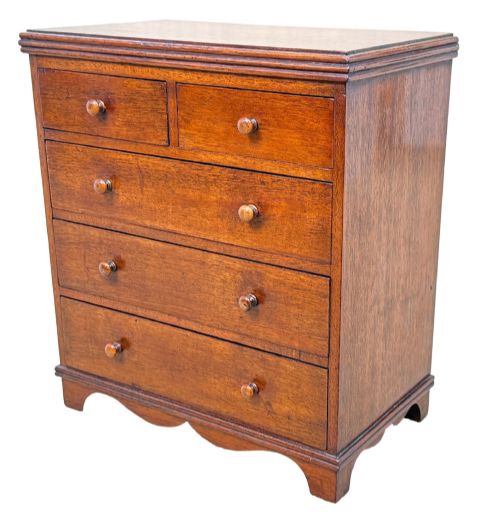
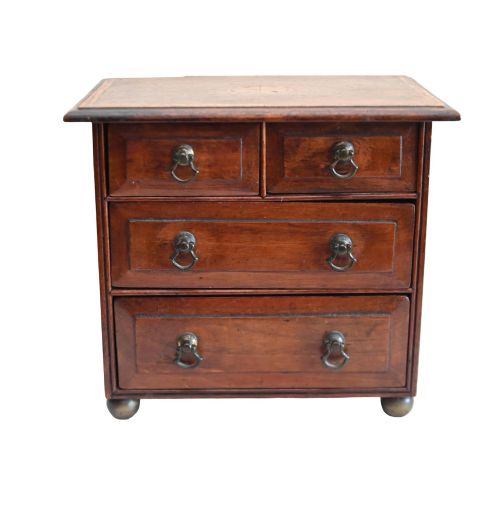
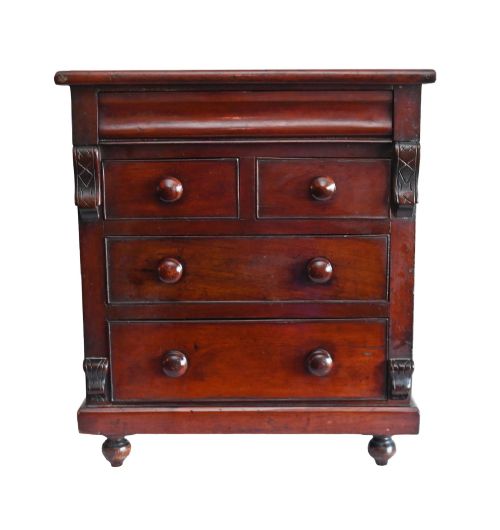
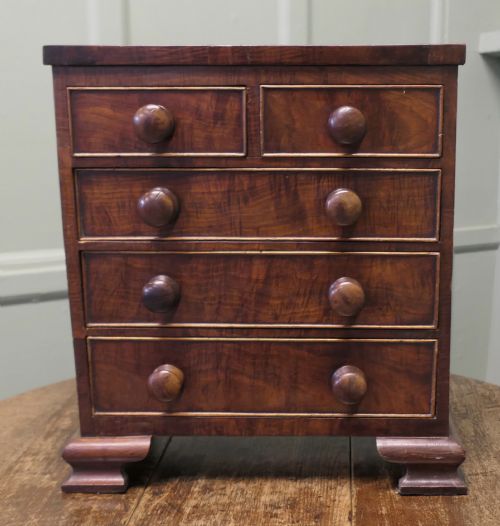
When you search for a wooden sample box, you are looking at miniature furniture, apprentice chests, and salesman pieces. These small items served specific trade and domestic purposes across the eighteenth and nineteenth centuries.
The most common pieces you will meet on this page are miniature chests of drawers and cabinets. They span Georgian, Victorian, and Edwardian periods, often constructed in mahogany, burr oak, and boxwood.
Makers produced these smaller items to demonstrate woodworking skill, showcase furniture designs to clients, or furnish grand dolls houses. They combine domestic utility with miniature scale.
How they were made
Cabinetmakers built these miniature items using traditional timber construction, relying primarily on mahogany, oak, and boxwood. Workshops shaped panels and frames with hand tools, joining corners with dovetails.
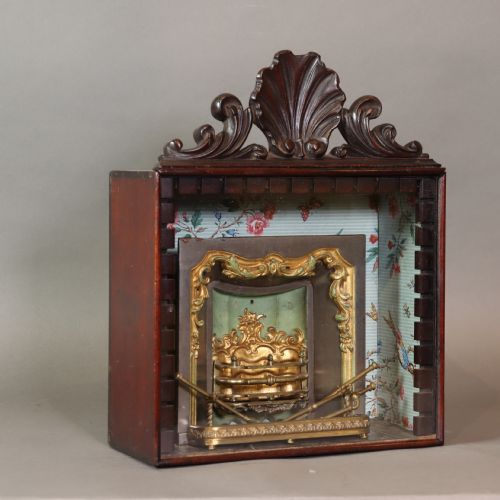
Metal fittings in brass and iron added functional detail to drawers, miniature fireplaces, and cabinet doors. Paper linings and glass elements completed the interior compartments of these small chests.
Wooden Sample Box Retail Price Guide 2026
Typical asking prices for wooden sample box among the pieces listed under this phrase on Sellingantiques today, from the lower quarter to the upper quarter. They describe what is for sale here now, not the wider market.
Secret drawers tucked behind false bottoms remind us that even miniature cabinetmakers loved a hidden hiding place.
What varies in quality
The standard of a miniature chest rests on the precision of its joinery and the selection of timber figures like burr oak. Finely cut dovetails and neatly fitted secret drawers separate superior workshop examples from simpler items.
Proportion and attention to architectural detail determine the success of the piece. Well-balanced miniature furniture mirrors full-scale cabinetmaking with accurate mouldings and appropriate hardware.
The Wooden Sample Box Glossary
- Apprentice piece
- A small item of furniture made by a trainee woodworker to demonstrate mastery of their trade before joining a guild. These pieces often show exceptional attention to detail.
- Miniature chest of drawers
- A scaled-down version of a full-size chest, constructed with working drawers and traditional joints. Cabinetmakers designed them as salesman samples or display models.
- Burr oak
- Timber taken from a tree growth featuring distorted grain patterns, creating rich and complex textures. Makers utilised burr oak veneer on statement furniture surfaces.
- Secret drawer
- A concealed compartment built into a cabinet or chest behind removable panels or false drawer bottoms. Craftsmen used them to secure small valuables.
- Dovetail
- A timber joint formed by interlocking wedge-shaped fingers, prized for its strength in drawer construction. This joint holds corners together without metal fasteners.
Wooden Sample Box: Frequently Asked Questions
What is a wooden sample box?
A wooden sample box refers to miniature furniture and apprentice chests produced by historical cabinetmakers. These items served as trade samples or demonstration pieces.
They reflect the full-scale furniture styles of the Georgian and Victorian eras in a compact format.
How were apprentice chests used?
Apprentice chests allowed young woodworkers to prove their joinery skills to master craftsmen. They replicated standard domestic furniture on a small scale.
Cabinetmakers also utilised them as salesman samples to show clients furniture designs without transporting large pieces.
What woods were used for miniatures?
Makers most frequently worked in mahogany, oak, and boxwood for these miniature items. Burr oak and figured veneers appeared on more decorative examples.
Brass and iron hardware added functional handles and hinges to the small drawers and doors.
How do I date a miniature chest?
Dating relies on timber choices, construction methods, and stylistic details that match larger period furniture. Georgian pieces display different moulding profiles compared to Victorian examples.
Edwardian and Regency variations introduce distinct woods and brass fittings characteristic of their respective decades.