


Wooden Rotating Bookcase
These wooden rotating bookcase designs turn smoothly on their stands, bringing a whole library within arm's reach beside a desk or armchair.

Wooden Rotating Bookcase
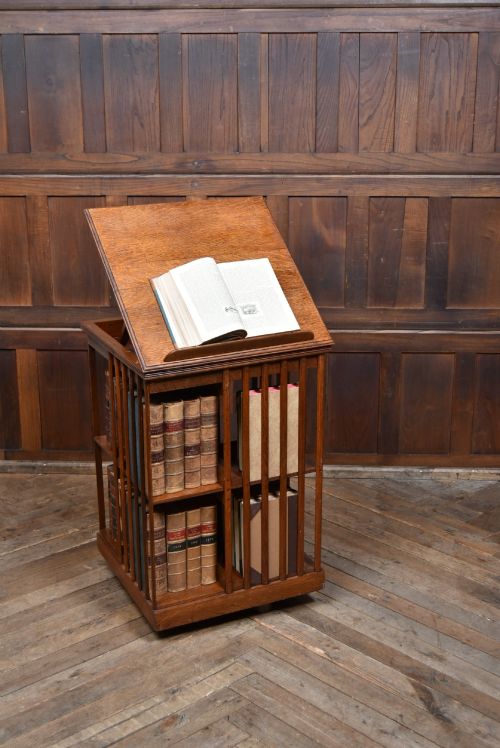
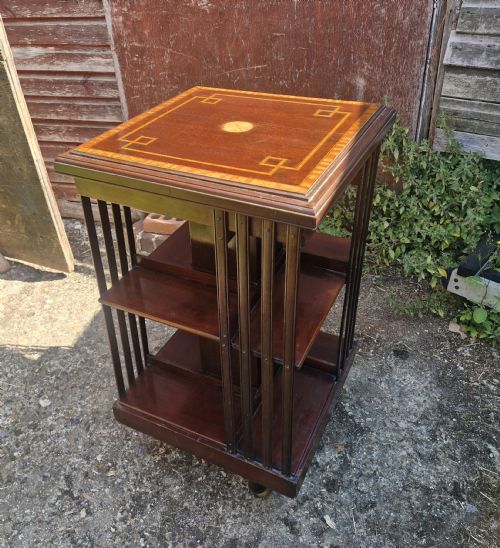
A wooden rotating bookcase is a practical piece of furniture designed to hold volumes upright while allowing the entire shelf unit to spin on a central pivot. Most examples found here date from the Edwardian period and the late nineteenth century, though pieces range from eighteen ninety through nineteen thirty.
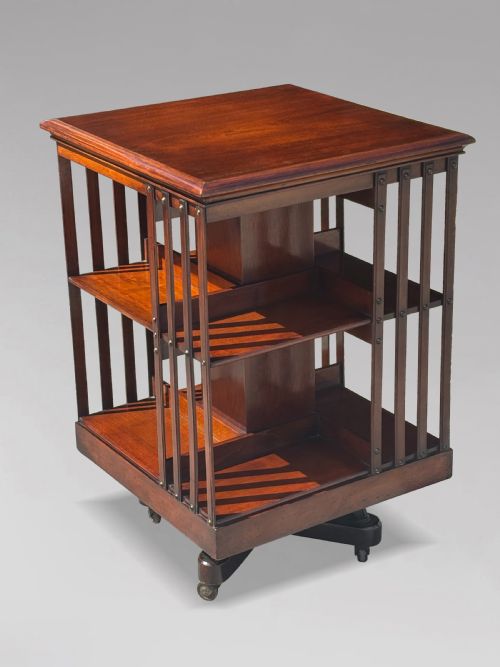
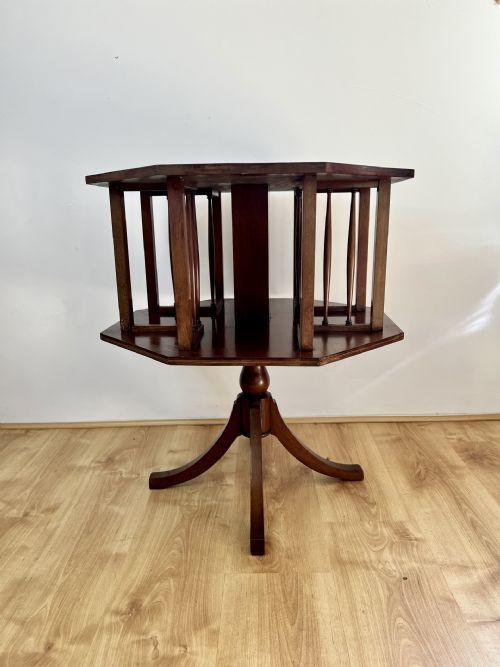
The standard form stands at table height or floor level with three or four tiers of shelving, often topped with decorative inlay or crossbanding. Alongside traditional British mahogany and oak models, the selection includes walnut, satinwood, and distinct regional interpretations such as French Provincial and Anglo-Indian designs.
How they were made
Cabinetmakers constructed these bookcases using solid timbers and veneered panels of mahogany, oak, and walnut, frequently incorporating satinwood stringing and marquetry inlay for surface decoration. The internal framing relies on sturdy joinery to support the weight of heavy volumes on every tier without sagging.
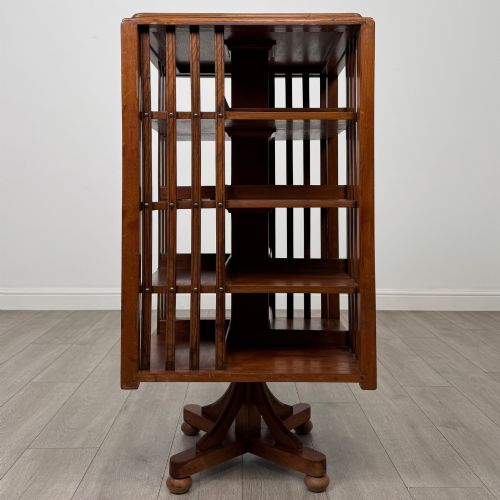
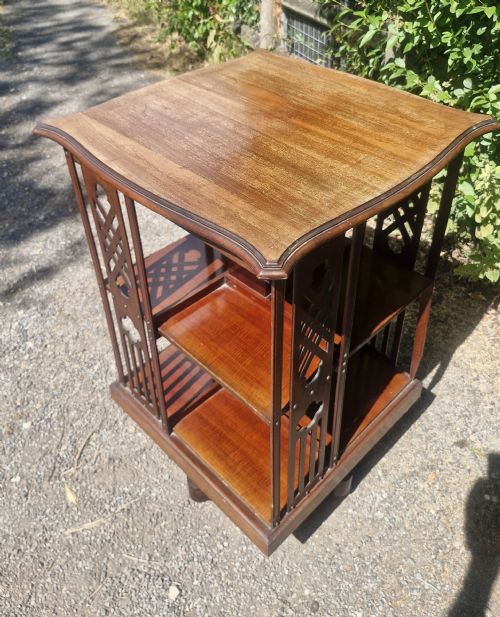
The rotation mechanism depends on durable metal components, utilising cast iron and brass systems hidden beneath the base to ensure a smooth, balanced turn. Lattice sides or vertical wooden slats often protect the books while keeping the overall structure light enough to rotate effortlessly.
Listings feature mahogany, oak, walnut, and satinwood across Edwardian, Victorian, and early twentieth-century periods.
What varies in quality
The distinction between standard utility pieces and finer examples rests upon the choice of timber figure, the crispness of any inlaid decoration, and the stability of the revolving mechanism. Superior pieces display carefully matched mahogany grain, intricate satinwood banding, and substantial brass or iron hardware that moves without friction or wobble.
Scale and proportion also set better examples apart, particularly in petite desk-height models or unusually large multi-tiered formats. Construction details such as dovetail joints in the shelving and finished backs demonstrate the care taken by the original maker.
Maple and Co
The Wooden Rotating Bookcase Glossary
- Inlay
- The technique of inserting pieces of contrasting timber, such as satinwood into a mahogany ground, to create decorative patterns on the top or sides of the bookcase.
- Revolving mechanism
- The hidden internal pivot and bearing system, often incorporating cast iron and brass, that allows the tiers to spin freely.
- Crossbanding
- A border of veneer laid around the perimeter of a shelf top with the grain running perpendicular to the central panel.
- Tier
- An individual level of shelving within the rotating structure, with standard versions offering three or four distinct compartments for books.
Wooden Rotating Bookcase: Frequently Asked Questions
How do these bookcases rotate?
A concealed iron or brass pivot mechanism sits beneath the central column, allowing the entire tier assembly to spin smoothly in either direction.
This ball-bearing or spindle system distributes the weight evenly across the base while keeping the movement quiet and effortless.
What periods do these pieces date from?
The selection consists primarily of Edwardian and late nineteenth century items, alongside occasional pieces from eighteen ninety and nineteen thirty.
Victorian and Edwardian workshops produced the vast majority of these revolving designs in mahogany, oak, and walnut.
Are these bookcases suitable for heavy books?
The sturdy timber construction and internal cross-framing support standard hardbacks and reference volumes across multiple tiers without difficulty.
Heavier volumes sit best on the lower shelves to maintain a balanced centre of gravity during rotation.
How do I identify a quality revolving bookcase?
Look for dense, well-figured mahogany or oak, crisp satinwood inlay, and a smooth mechanism that turns without listing to one side.
Finer examples feature solid brass or cast iron components and precise joinery that remains rigid through decades of use.