
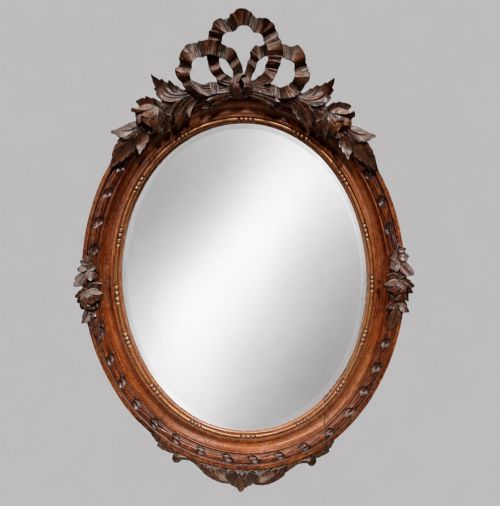
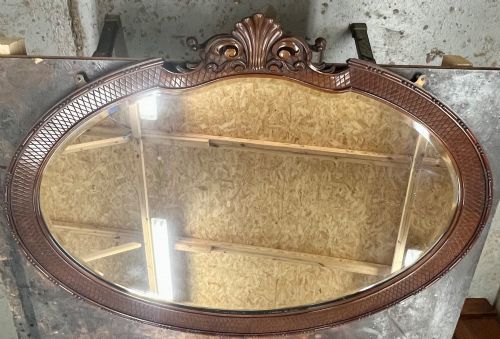


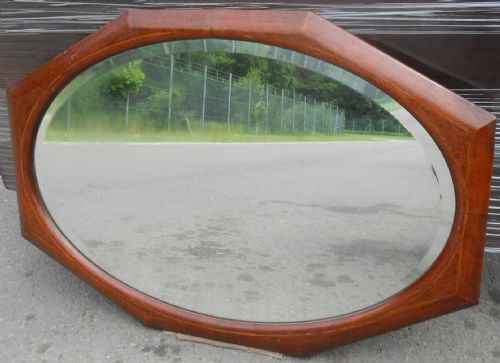

Wooden Oval Hanging Mirror
These wooden oval hanging mirror examples bring warmth and reflection to a wall, combining traditional timber frames with classic curved glass.
Wooden Oval Hanging Mirror
A wooden oval hanging mirror provides a practical and decorative wall fixture shaped with curved edges and housed in timber. These pieces emerge predominantly from the nineteenth and early twentieth centuries, spanning Victorian, Edwardian, and revival eras.
Buyers meet varied iterations on this page, ranging from plain oak frames to intricately carved giltwood and mahogany designs. Wall mirrors dominate the selection, offering vertical or horizontal hanging formats suited to hallways and living spaces.
How they were made
Craftsmen utilised solid timbers such as oak and mahogany to construct the structural frames, often shaping the wood into smooth curves. Gesso and giltwood appear on ornate decorative pieces, providing a gilded surface layer over carved wooden bases.
Makers set mirror glass securely within the wooden rebates, sometimes adding carved wooden ornamentation or Florentine details to the outer edges. Joinery techniques varied depending on the period, ensuring the heavy glass remained safely suspended by hanging fixtures.
Listings feature pieces spanning the nineteenth century, Edwardian era, and nineteen-twenties, constructed from oak, mahogany, and giltwood.
What varies in quality
The sophistication of the woodwork distinguishes standard frames from exceptional examples, particularly where hand-carved motifs or revival styles are involved. Crisp detailing in carved wood and well-preserved gilding demonstrate superior craftsmanship.
The clarity and age of the mirror glass contribute significantly to the character of the piece, alongside the richness of the timber grain in oak and mahogany frames. Subtleties in proportion and the execution of the oval shape elevate the visual impact on the wall.
The Wooden Oval Hanging Mirror Glossary
- Giltwood
- Wood that has been coated with gold leaf or gold paint. This finish appears on decorative frames from the nineteenth century.
- Gesso
- A plaster mix applied to wood surfaces as a base for gilding or paint. It allows artisans to mould crisp decorative details.
- Mahogany
- A durable reddish-brown tropical hardwood favoured for fine furniture and mirror frames. It polishes to a deep lustre.
- Carolean Revival
- A nineteenth-century stylistic movement imitating late seventeenth-century English design. Pieces feature ornate carving and rich timber.
- Edwardian
- Pertaining to the reign of King Edward VII, spanning the early twentieth century. Designs from this period often display lighter proportions.
Wooden Oval Hanging Mirror: Frequently Asked Questions
How do I hang a heavy wooden mirror?
Ensure your wall fixings match the weight of the timber frame and mirror glass. Use appropriate wall plugs and screws secured directly into masonry or wall studs.
Check the integrity of the original hanging wire or brackets on the back of the frame before mounting. Professional picture hangers provide the best support for antique pieces.
What periods do these mirrors come from?
The selection includes pieces from the nineteenth century, the Victorian era, and the Edwardian period. Revival styles such as Carolean and Jacobean also feature prominently.
Dates typically range from the late nineteenth century through to the nineteen-twenties. Each era brings distinct timber choices and decorative carving styles.
How do I clean antique mirror glass?
Apply a mild glass cleaner to a soft cloth rather than directly onto the glass surface. This prevents moisture from seeping behind the frame and damaging the silvering.
Avoid harsh chemicals or abrasive pads that might scratch the vintage glass or harm the wooden frame. Gently wipe the surface and dry it immediately with a lint-free cloth.
Are the mirror plates original?
Many antique mirrors retain their original glass, which often exhibits subtle foxing or age spots. These natural imperfections confirm the age of the piece.
Some pieces may have replacement glass fitted during their history to maintain a clear reflection. Inspect the edges and backing of the plate to understand its history.