

Wooden Nested Tables
Wooden nested tables are spacesaving companions that slide away when floor space matters and separate easily when tea arrives.
Wooden Nested Tables
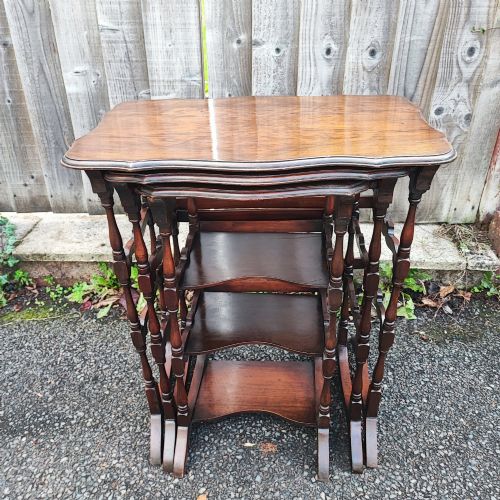
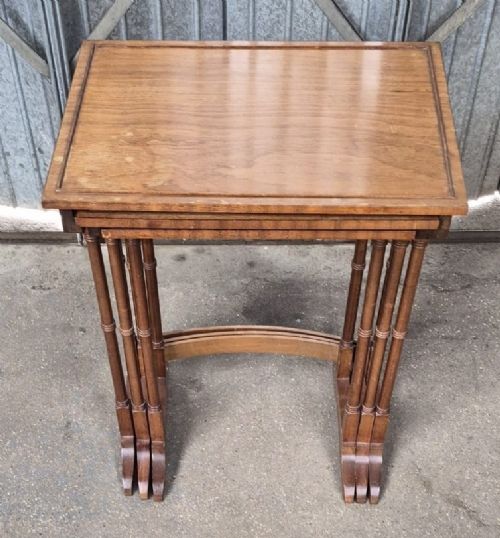
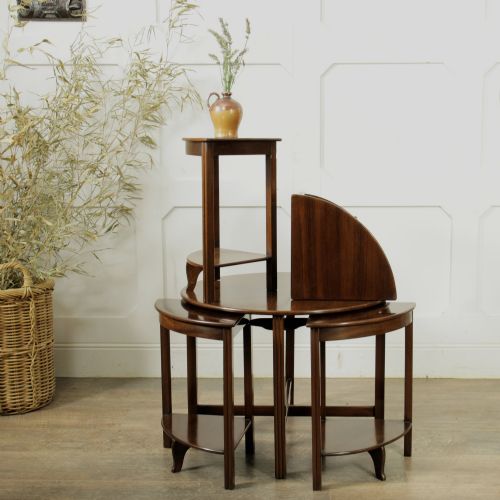
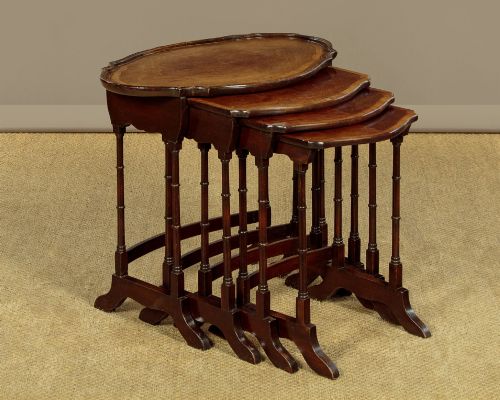
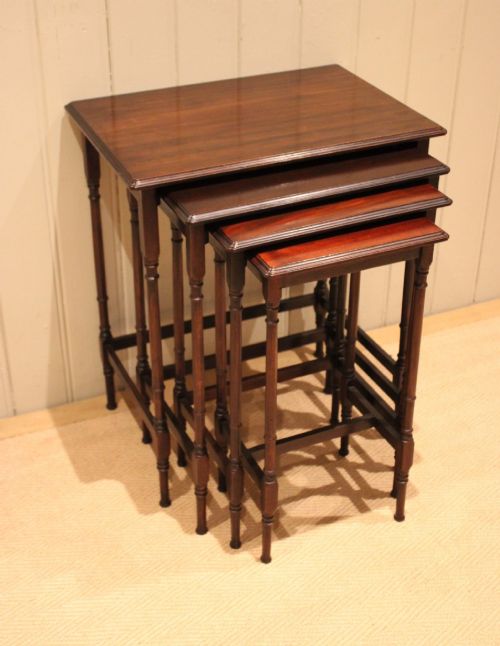
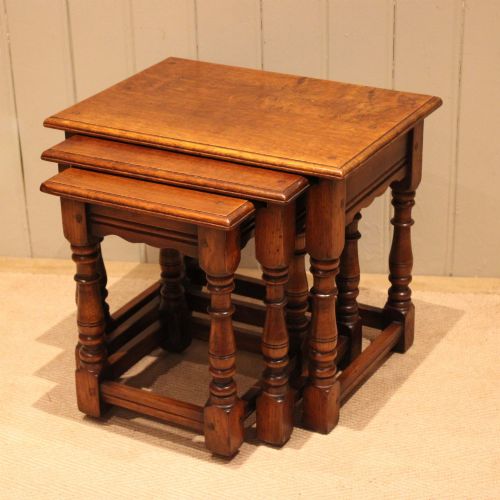
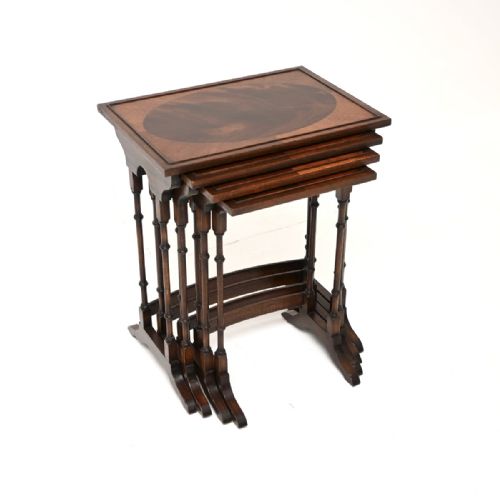
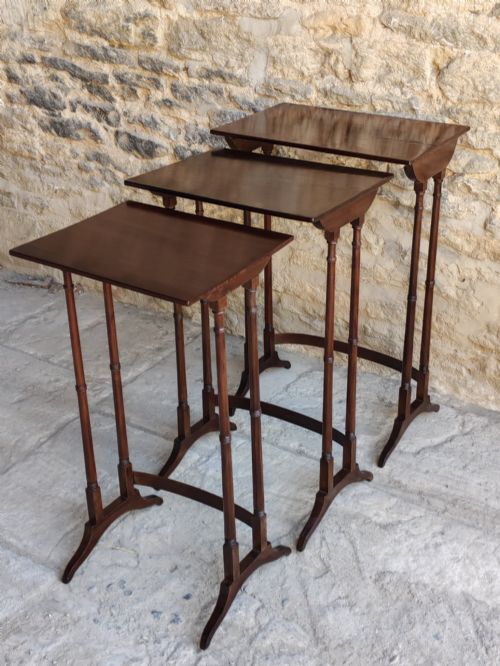
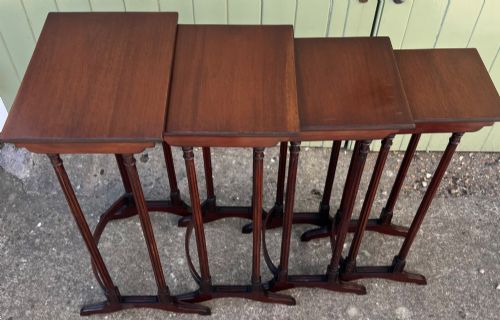
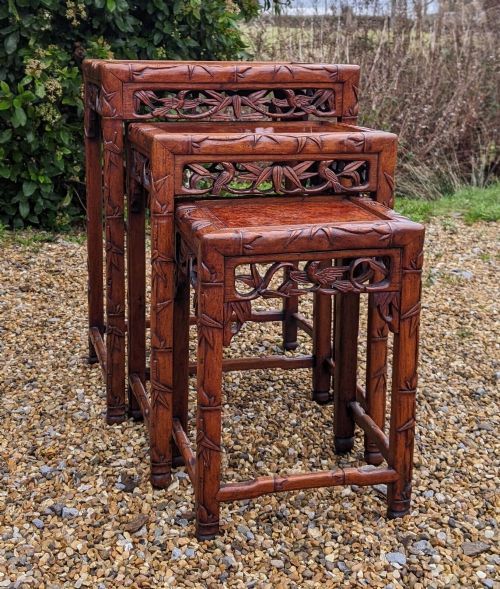
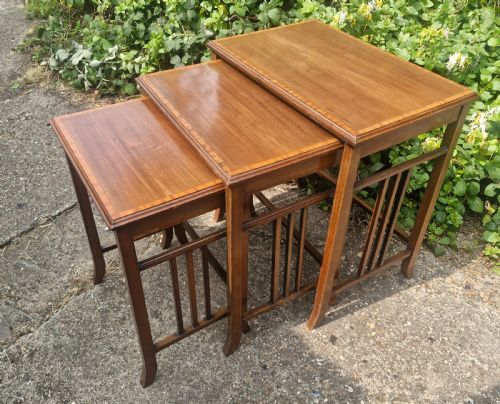
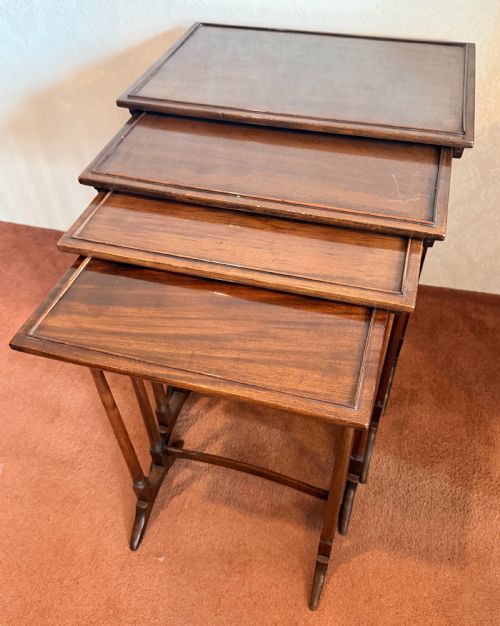
Wooden nested tables consist of graduated sets designed to fit neatly beneath one another, offering multiple surfaces from a single small footprint. You will most frequently encounter Edwardian mahogany quartetto sets on this page, alongside 19th-century examples in various woods.
Sets commonly comprise three or four tables, though five-table arrangements and circular tops also appear. They serve as occasional or coffee tables, moving around a room to hold books, drinks or lamps before returning to their stacked position.
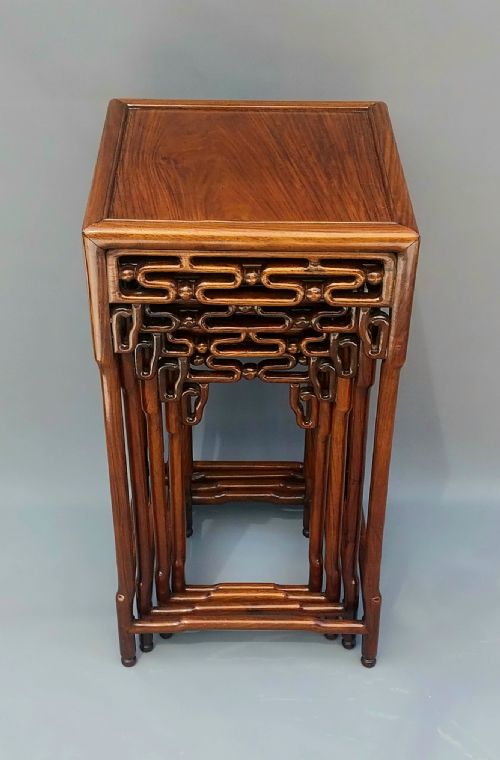
The form spans several periods, including Regency, Victorian, Edwardian and Art Deco, reflecting shifting interior tastes in timber selection and decoration. Regional variations range from British Sheraton revival styles to Chinese hardwood sets.
How they were made
Cabinetmakers constructed these pieces primarily using solid timbers and veneers of mahogany, walnut, satinwood and rosewood. Timber choice dictated the weight and visual grain of the set, with hardwoods providing the structural strength needed for slender legs and running grooves.
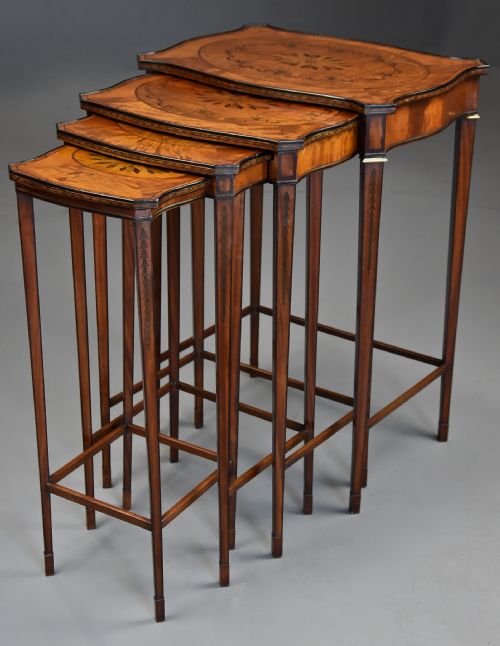
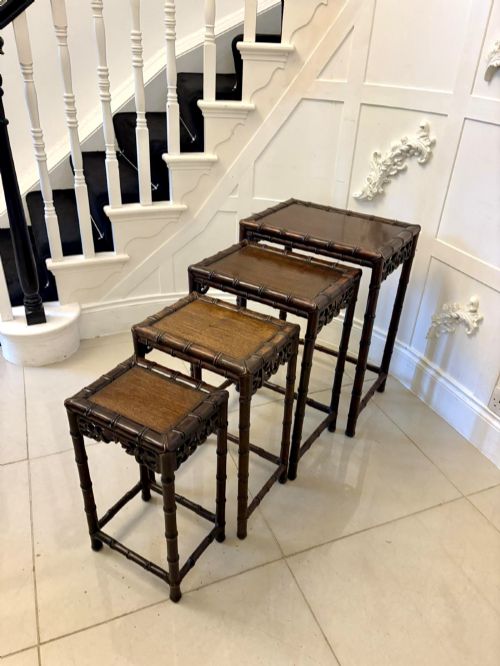
Inlay work, boxwood stringing, satinwood banding and carved details such as faux bamboo or oriental motifs added decoration to the top surfaces. Joinery techniques relied on tight tolerances to ensure the smaller tables slid smoothly into the frames of the larger ones without binding.
Wooden Nested Tables Retail Price Guide 2026
Typical asking prices for wooden nested tables among the pieces listed under this phrase on Sellingantiques today, from the lower quarter to the upper quarter. They describe what is for sale here now, not the wider market.
Certain Art Deco sets bring a touch of the jungle indoors by carving marching elephants directly into the teak.
What varies in quality
The grade of timber and the precision of the cabinetwork define the upper tier of these pieces. Select veneers, crisp inlay work and robust internal framing distinguish finer workshops from standard production.
Proportion and stability matter greatly when smaller tables stack within a parent frame. Sets that maintain rigid alignment and smooth sliding action without excessive wobble represent superior manufacturing.
Heal's
The Wooden Nested Tables Glossary
- Quartetto
- A set of four tables designed to nest together. This term appears frequently in 19th-century and Edwardian listings.
- Satinwood
- A durable, lustrous timber native to India and Sri Lanka, prized for its golden yellow colour and fine grain. It was often used for decorative inlays and cabinet fronts.
- Hongmu
- A traditional Chinese term translating to red wood, used to describe dense, dark hardwoods such as rosewood. These sets often feature traditional carving.
- Stringing
- Thin lines of contrasting timber inlaid into the surface of furniture to create borders and geometric patterns. Boxwood was commonly used against dark mahogany.
- Faux bamboo
- Wood turned and carved to imitate natural bamboo stalks. This decorative treatment became popular during the 19th century under oriental influence.
Wooden Nested Tables: Frequently Asked Questions
What are wooden nested tables used for?
These pieces function primarily as occasional surfaces for drinks, books or lamps in living spaces. When not in use, the smaller tables slide directly under the largest one to preserve floor area.
Their modular design makes them adaptable for entertaining, allowing guests to pull out a separate surface wherever they sit.
How do I identify an Edwardian set?
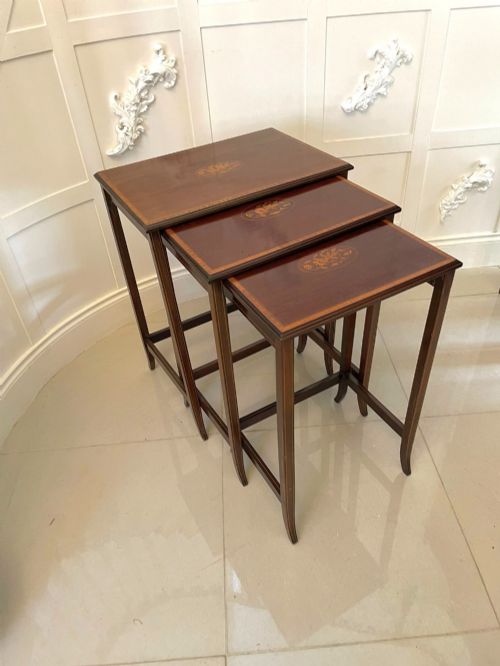
Edwardian examples often feature light mahogany with boxwood stringing, Sheraton revival styling and inlaid satinwood details. They frequently carry the quartetto designation for sets of four.
Construction from this era tends to balance lighter proportions with sturdy frames designed for daily drawing room use.
Are all sets made of mahogany?
While mahogany is the most common timber recorded here, makers also utilised walnut, satinwood, rosewood, oak and teak. Some oriental pieces employ dense regional hardwoods such as huanghuali and hongmu.
Different woods indicate distinct periods and regional styles, from Art Deco Indian rosewood to Regency rosewood quartetto tables.
How do I care for wooden nested tables?
Keep wooden surfaces away from direct heat sources and strong sunlight to prevent the timber and veneers from drying out or fading. Routine dusting with a soft, dry cloth preserves the polished finish.
Lift the tables rather than dragging them across floors to protect the feet and prevent strain on the lower framework.