

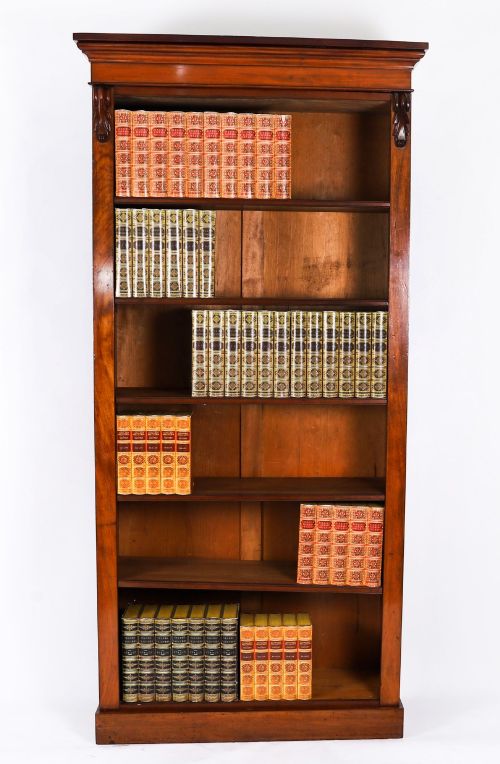
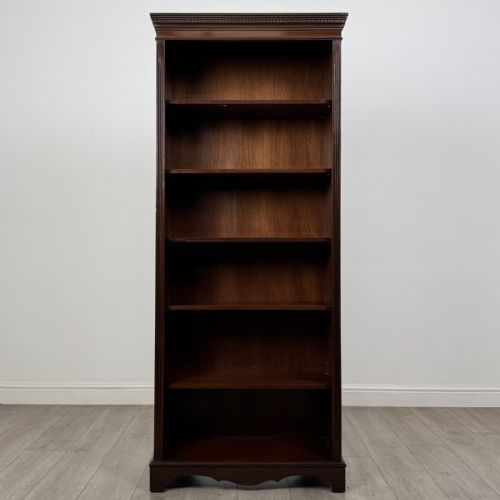
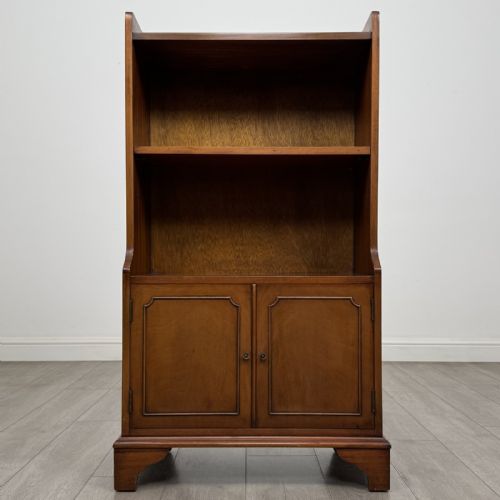
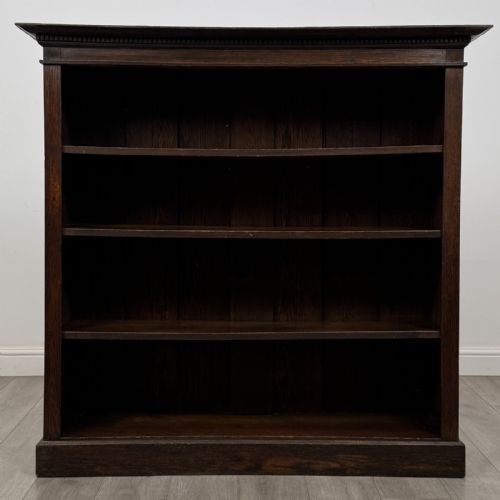


Wooden Library Shelf
A wooden library shelf provides a sturdy home for volumes, spanning periods from the mid-nineteenth century through the Edwardian era.
Wooden Library Shelf
A wooden library shelf encompasses open bookcases, display cabinets, and standalone bookshelves designed to hold books and papers in domestic and institutional settings. These items emerge primarily from Victorian, Edwardian, and early twentieth-century periods, utilising traditional forms like breakfront units and revolving bookcases.
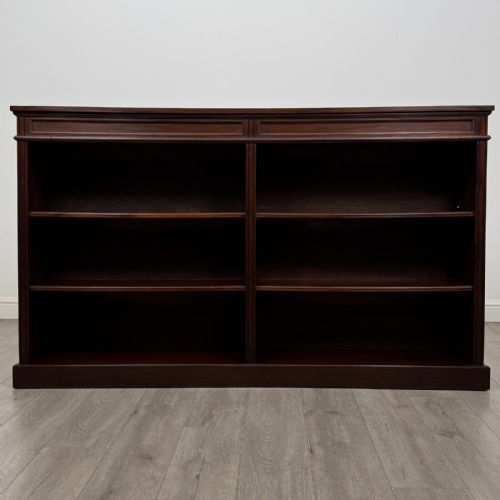
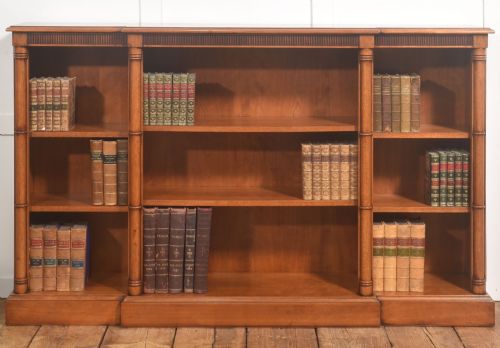
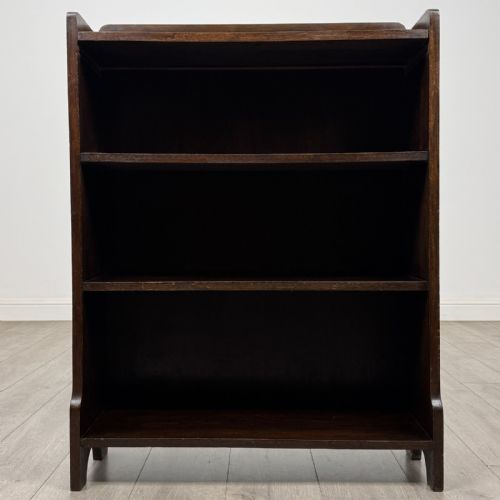
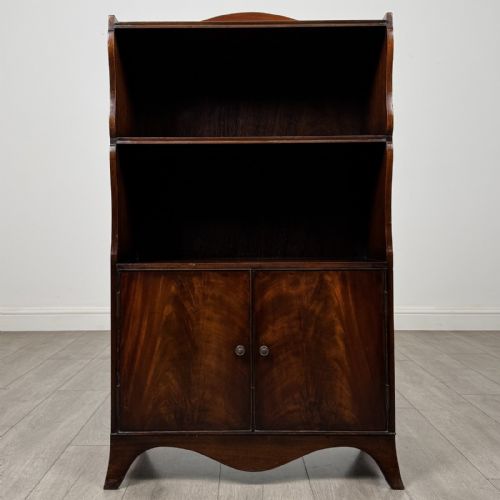
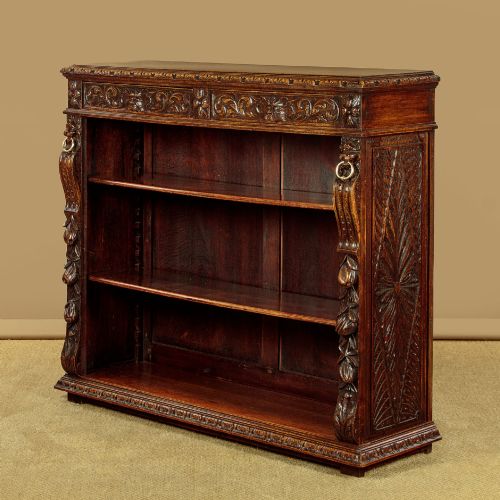
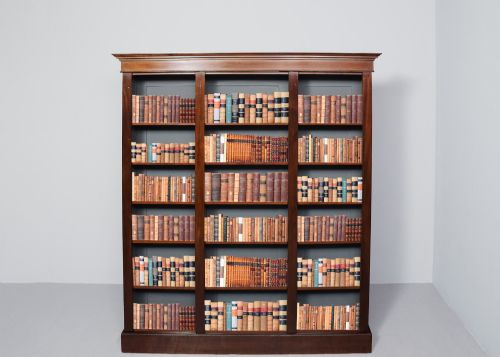
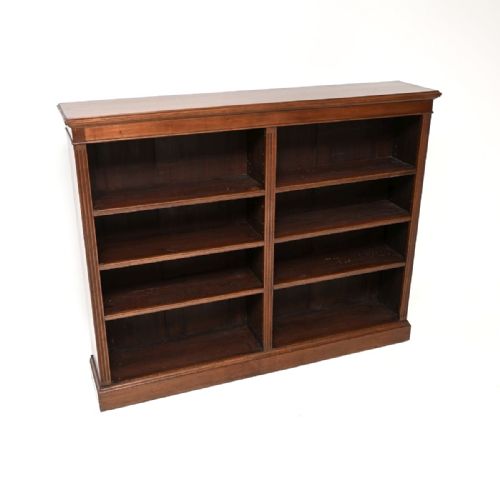
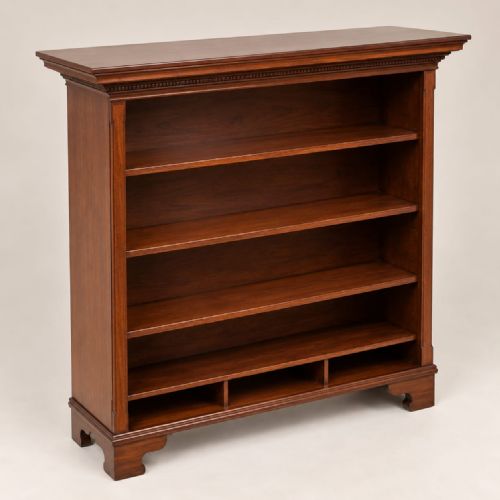
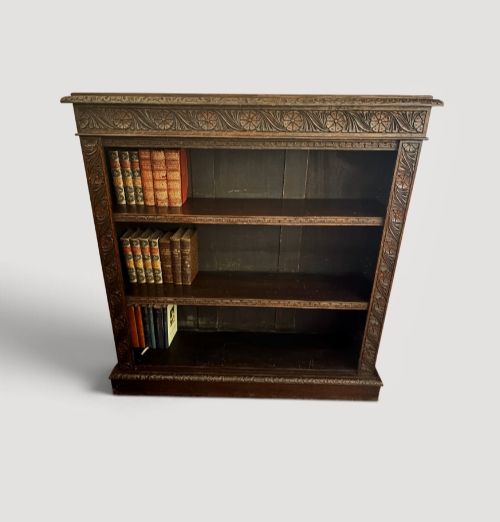
The pieces appearing on this page range from small mahogany compartments to large oak library bookcases featuring adjustable shelves and plinth bases. Buyers frequently encounter Edwardian oak designs alongside solid mahogany constructions from the mid-nineteenth century.
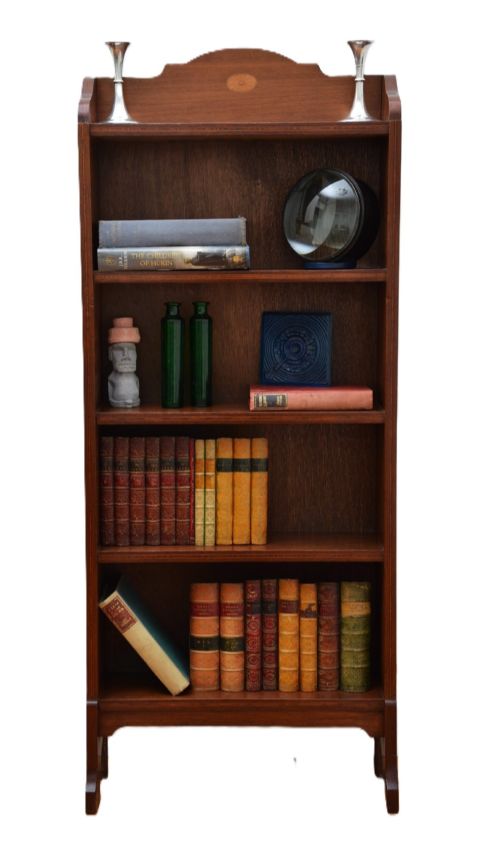
Makers and workshops construct these shelves to serve functional archival needs while providing architectural presence in a room. Variations include raised galleries, dentil cornices, and inlaid decorative motifs.
How they were made
Makers fabricate these shelves using hardwoods such as mahogany, oak, and walnut, frequently incorporating burr walnut veneers for distinct grain patterns. Timber selection dictates both the structural capacity and the visual weight of the bookcase.
Construction techniques involve solid wood joinery, often paired with brass hardware, ormolu mounts, and sliding glass doors in display formats. Adjustable shelf mechanisms allow users to modify internal vertical spaces for varying book heights.
Listings feature oak, mahogany, walnut, and burr walnut across Victorian, Edwardian, and early twentieth-century periods.
What varies in quality
Quality separates through the selection of timber and the precision of architectural details such as dentil cornices, carved oak motifs, and raised galleries. Solid mahogany or burr walnut constructions indicate superior craftsmanship compared to simpler utilitarian variants.
The integration of functional elements, including smooth adjustable shelving systems and robust plinth bases, determines the durability and longevity of each bookcase.
Johnstone and Jeanes
The Wooden Library Shelf Glossary
- Dentil cornice
- A moulding decorated with a series of small square blocks resembling teeth, commonly found along the top edge of Edwardian and Victorian bookcases.
- Plinth base
- The heavy flat slab or architectural block at the bottom of a bookcase that supports the main structure off the floor.
- Raised gallery
- A low decorative railing or rim around the top surface of a piece of furniture, designed to keep items from sliding off.
- Breakfront
- A large cabinet or bookcase where the central section projects forward from the flanking outer sections.
- Adjustable shelves
- Movable horizontal boards resting on pins or track systems that allow the internal vertical spacing to be altered.
Wooden Library Shelf: Frequently Asked Questions
How do I adjust the shelves?
Most wooden library shelf designs utilise wooden peg supports, metal pins, or side grooves that allow boards to lift out and relocate into alternative slots.
Check the interior uprights for rows of small holes or track fittings before attempting to slide the timber boards upward.
What woods are commonly used?
Listings feature substantial timber construction in mahogany, oak, and walnut, occasionally accented with burr walnut veneers and brass hardware.
These materials provide the necessary structural strength to support heavy rows of bound volumes without sagging over time.
Are these shelves suitable for heavy books?
Solid mahogany and oak library bookcases are engineered specifically to hold heavy theological, legal, or reference volumes securely.
Thick timber boards and sturdy vertical divisions prevent the shelves from bending under significant weight.
How do I distinguish Edwardian from Victorian pieces?
Victorian examples generally exhibit darker, heavier timber forms with carved ornamentation, while Edwardian pieces often display lighter golden oak tones and simpler lines.
Examining the construction methods and secondary woods inside the carcass helps confirm the manufacturing era.