




Wooden Library Clock
These wooden library clocks are practical timekeepers housed in timber cases that bring traditional British craftsmanship straight to your desk or mantelpiece.
Wooden Library Clock
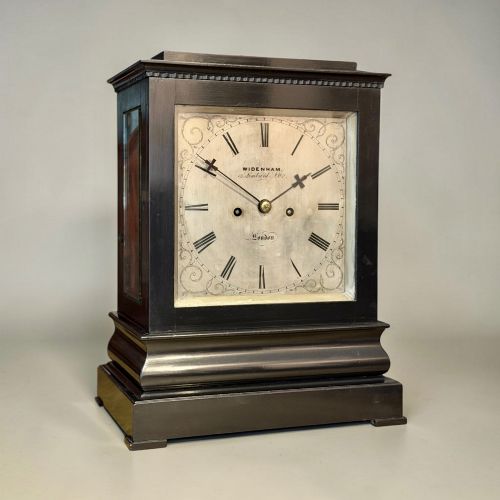
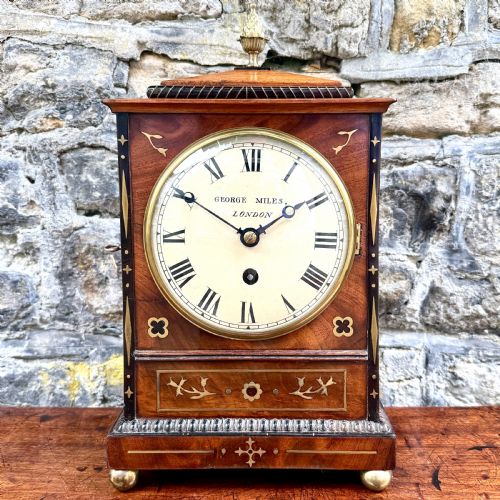
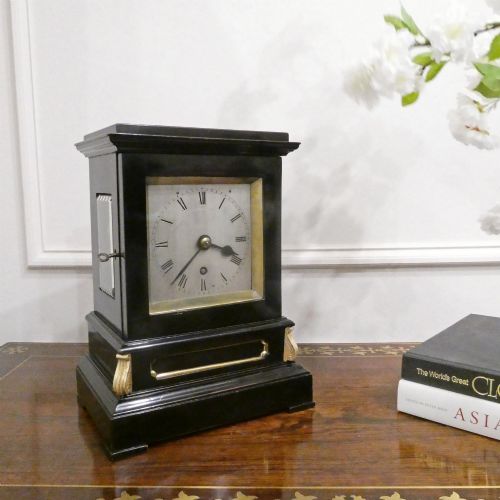
A wooden library clock is a timepiece designed for domestic or institutional studies, appearing across Georgian, Regency, and Victorian periods. The pieces on this page span mantel clocks, bracket clocks, and wall clocks, reflecting diverse forms from the nineteenth century.
You will most commonly meet mahogany or satinwood examples featuring single chain fusee movements and glass panels. These portable or table clocks range from miniature pieces to giant bracket variations made by London makers.
How they were made
Maker workshops built these clock cases using dense hardwoods like mahogany, rosewood, and satinwood, often applying ebonised finishes to the timber. Brass components, silvered metal dials, and steel parts support the mechanical fusee movements within.
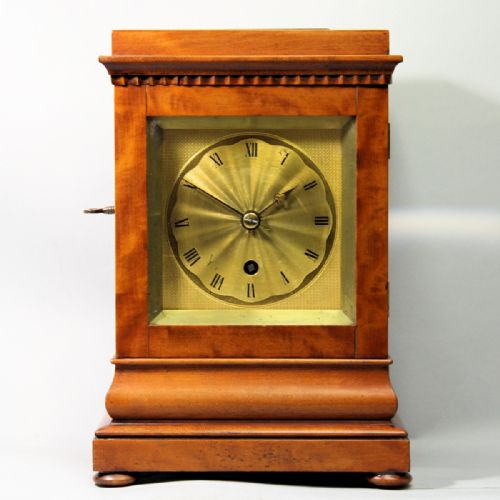
Dials frequently display engine-turned gilded details behind glass, allowing visibility of the regulated gear mechanisms. Cabinet makers housed these intricate movements inside robust timber structures designed to endure.
The listings show mahogany and satinwood as the primary cabinet timbers, alongside specialist ebonised wood and brass-framed glass panels.
What varies in quality
The standard of a wooden library clock rests on the sophistication of its movement and the selection of its cabinet woods. Master London makers integrated complex year-going capabilities or five-glass cases that elevate the construction.
Finely figured satinwood or rich mahogany paired with engine-turned gilded dials separates standard timepieces from exceptional examples. The crispness of the signature engraving on the dial also marks the distinction between workshop tiers.
Widenham of London·Bush of London·Webster Cornhill London·Dent·McCabe London·Plumbly and Tupman·Barraud and Lunds·Leith of London
The Wooden Library Clock Glossary
- Fusee
- A conical pulley used with a chain or cord to maintain equal power as the mainspring unwinds. This mechanism is standard in better British library clocks.
- Bracket Clock
- A portable clock originally designed to sit on a wall bracket or table. These pieces often feature substantial wooden cases and carrying handles.
- Timepiece
- A clock that tells the time without striking the hours on a bell or gong. Many library clocks function purely as timepieces to maintain quiet in study rooms.
- Engine-Turned
- A decorative geometric pattern mechanically engraved onto metal dials. This technique adds texture and light reflection to the clock face.
Wooden Library Clock: Frequently Asked Questions
What is a library clock?
A library clock is a portable mechanical timepiece housed in a wooden case, designed for placement on desks, tables, or shelves in private studies and reading rooms.
These clocks rely on fusee movements to regulate time accurately and are constructed from timbers such as mahogany, rosewood, and satinwood.
How do fusee movements work?
A fusee movement uses a conical pulley connected to a chain that equalises the declining power of the mainspring as it unwinds.
This mechanical design helps the clock maintain a consistent driving force, resulting in more reliable timekeeping across the running period.
How do I date a wooden clock?
Dating involves examining the timber selection, dial materials, cabinet style, and the signature of the maker inscribed on the face.
Georgian and Regency pieces display different joinery and aesthetic proportions compared to Victorian ebonised or satinwood examples.
Where were these clocks placed?
Owners placed these clocks on library tables, mantelpieces, or wall brackets where quiet operation and easy readability were essential.
Their compact wooden designs made them portable enough to move between different rooms within a large house.