



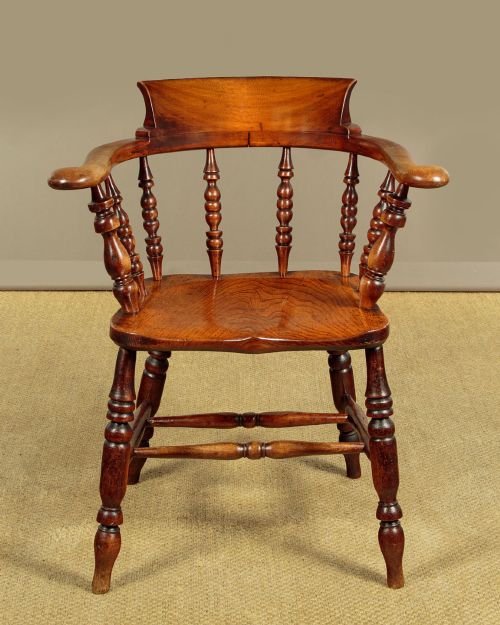
Wooden Leg Armchair
These wooden leg armchairs span country Windsors and formal mahogany seats, offering solid construction and traditional comfort for daily sitting.
Wooden Leg Armchair
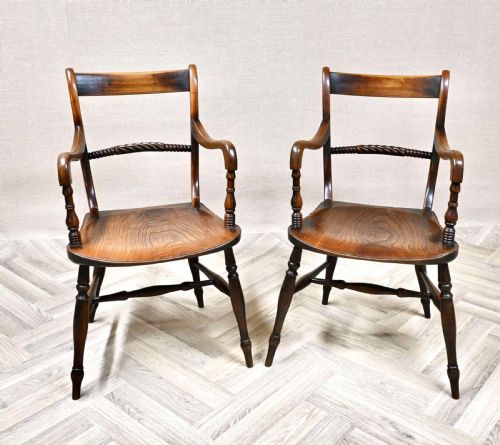
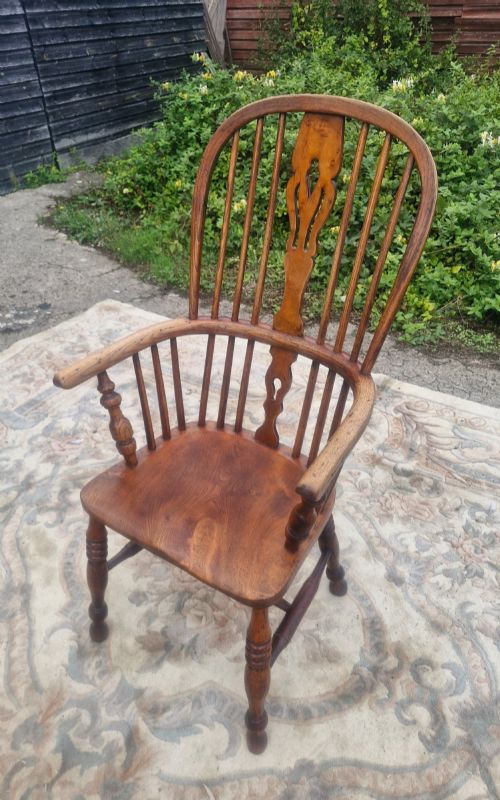
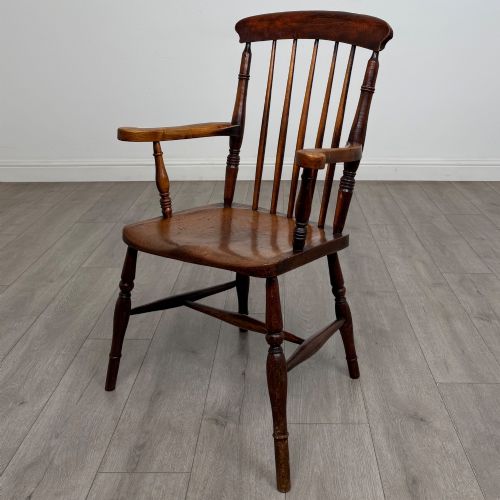
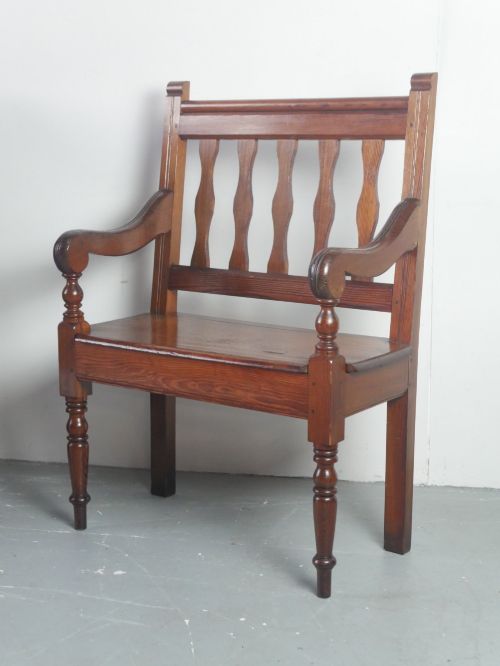
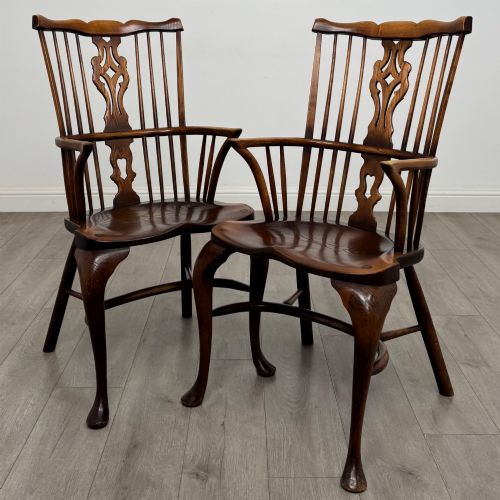
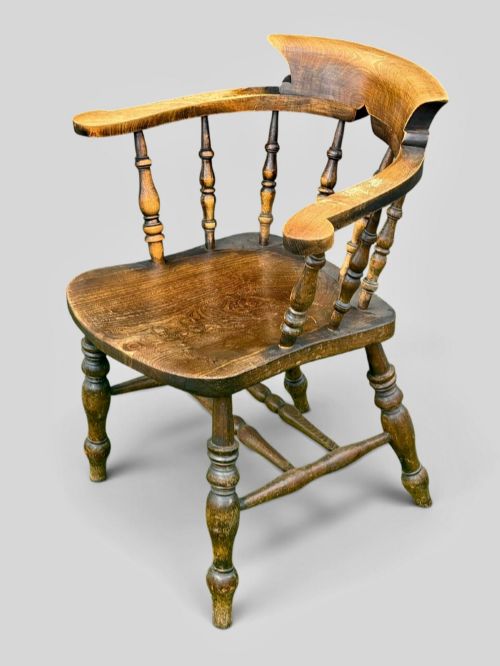
A wooden leg armchair encompasses sturdy country seating like the Windsor alongside formal mahogany and walnut designs from the eighteenth and nineteenth centuries. When searching for a wooden leg armchair, buyers encounter various regional forms including stick backs, wheel backs, and smokers bows.
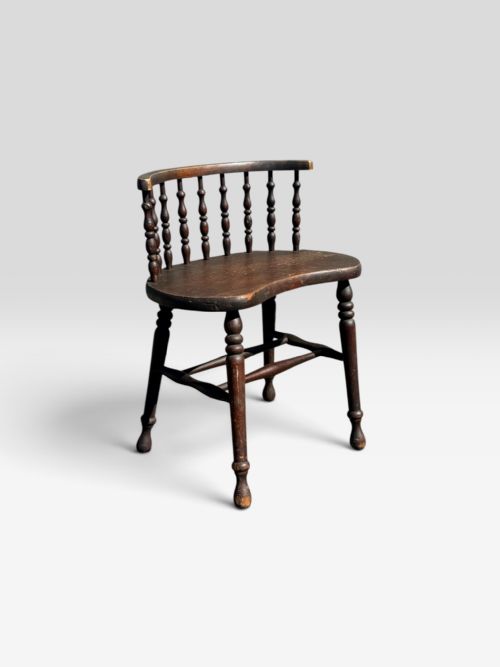
The selection here draws heavily from Victorian and nineteenth-century English traditions, featuring regional outputs in ash, elm, and beech. Buyers will find both low and high back variants suited for kitchen, farmhouse, or parlour use.
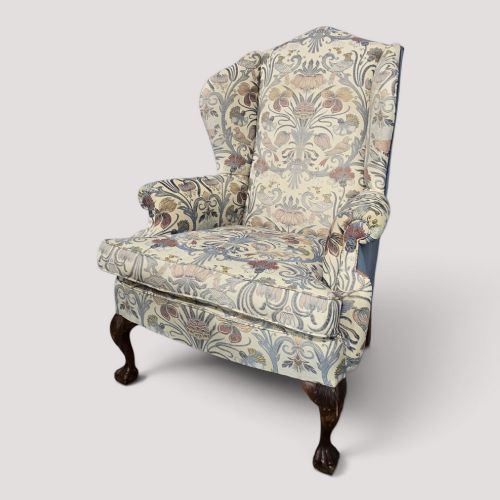
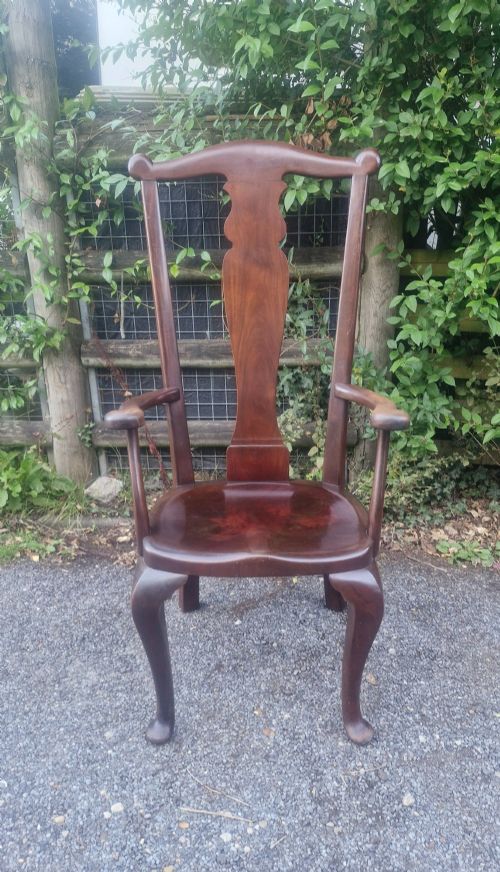
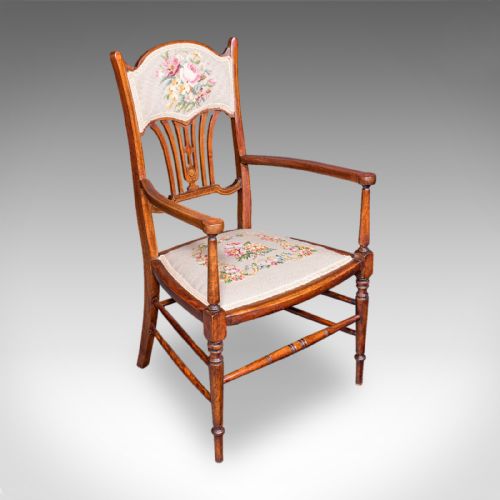
Alongside vernacular country pieces, the inventory holds formal seating including desk chairs, spoon back easy chairs, and Regency or Georgian dining models. These range from simple rush-seated Arts and Crafts designs to upholstered French Louis XV style armchairs.
What varies in quality
Quality rests in the choice of timber, the crispness of the turning on spindles and legs, and the integrity of the underlying joinery. Yew wood examples or those with well-figured elm seats generally represent finer vernacular production.
Proportion and comfort distinguish superior pieces, particularly in country Windsors where the sweep of the arm bow and the height of the back alter the visual balance. Formal mahogany and upholstered chairs vary according to the finesse of the carving and the preservation of the original frame structure.
Common regional timbers include elm, ash, beech, and yew, frequently paired within a single Windsor chair frame.
J SPENCER
The Wooden Leg Armchair Glossary
- Windsor chair
- A wooden chair with a solid carved seat into which the legs and back spindles are separately inserted. They appeared in various regional vernacular styles throughout the eighteenth and nineteenth centuries.
- Comb back
- A Windsor chair variant where the high back resembles the shape of a traditional hair comb. These are typically earlier country pieces dating to the eighteenth century.
- Smokers bow
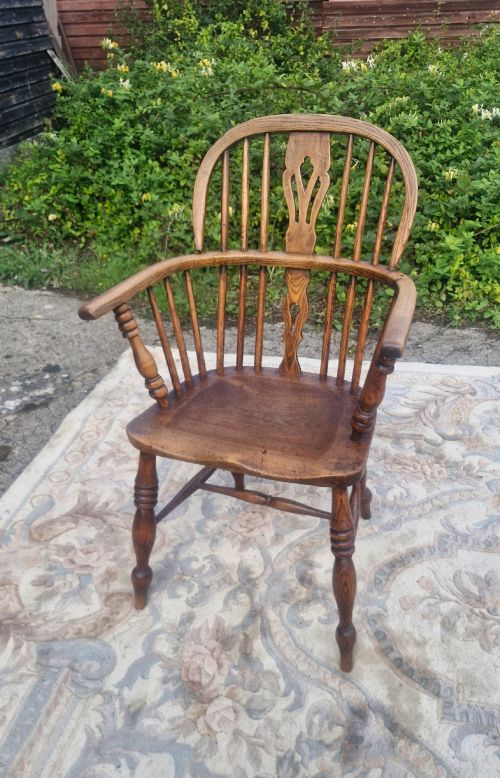
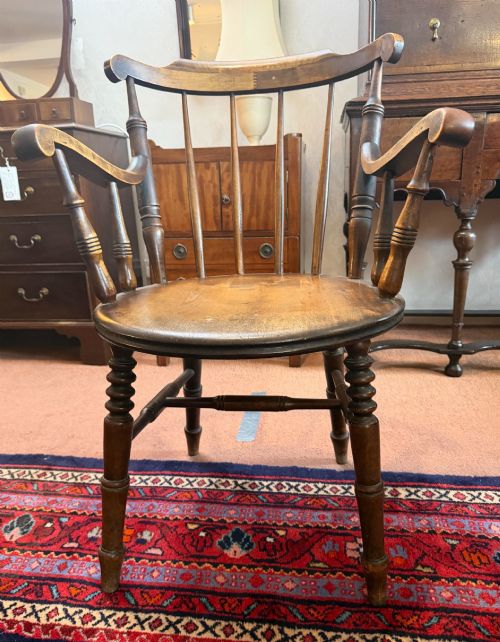
- A low-backed Windsor armchair designed for domestic or tavern use, featuring a continuous curved arm rail. They are frequently constructed from beech and elm.
- Hoop back
- A Windsor chair featuring a single continuous bentwood member forming the back and arms. This technique provided considerable structural strength to nineteenth-century seating.
- Elbow chair
- A traditional term for an armchair, often used to describe vernacular or formal seating with low or open arm rests. They appear across Georgian, Victorian, and Edwardian periods.
- Settle
- A wooden bench with a high back, solid arms, and enclosed base designed to block draughts in cottage interiors. Smaller Georgian examples function as hallway seating.
Wooden Leg Armchair: Frequently Asked Questions
What is a Windsor armchair?
A Windsor armchair is a traditional wooden seat built with a thick solid elm base into which turned legs and back spindles are wedged directly.
Unlike upholstered furniture, the structure relies entirely on exposed woodwork, combining timbers like ash, beech, and yew for strength and visual contrast.
Where were Windsor chairs used?
Windsor chairs served primarily as functional seating in farmhouses, kitchens, and vernacular homes throughout the nineteenth century.
Their robust construction made them suitable for daily household use, writing at a desk, or resting by the hearth.
How do I care for wooden armchairs?
Maintain wooden armchairs by keeping them away from direct heat sources and sudden humidity changes that can dry out native timbers like elm and ash.
Apply a traditional wax polish occasionally to nourish the surface and preserve the natural sheen of the aged wood.