



Wooden Index Drawers
These wooden index drawers are heavy-duty working furniture built to bring order to offices, archives and workshops.
Wooden Index Drawers
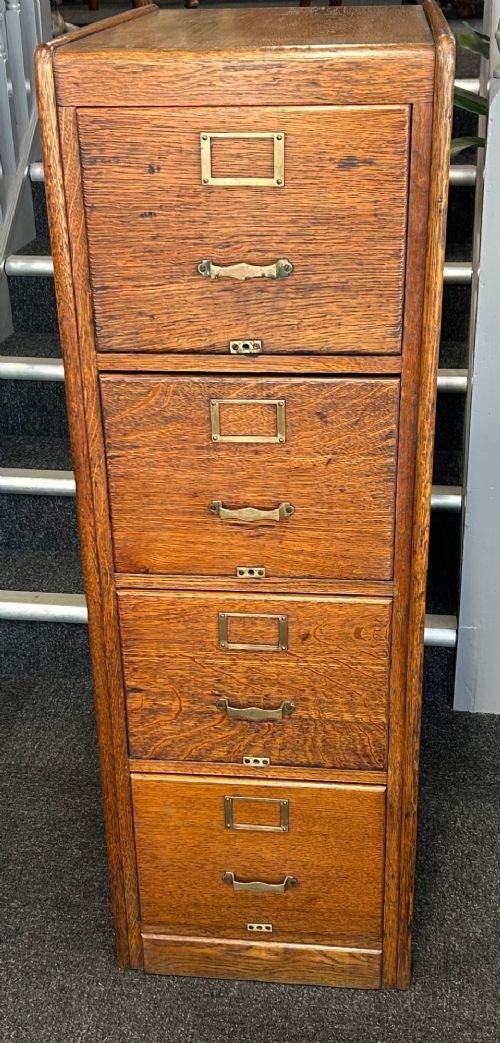
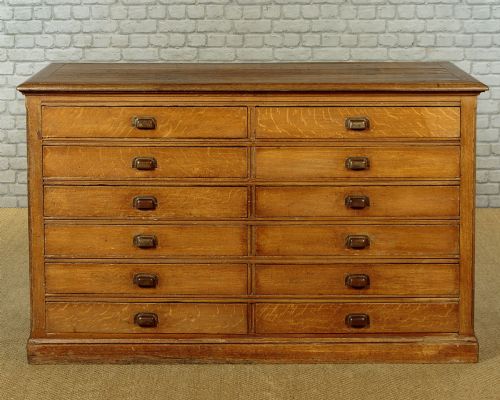
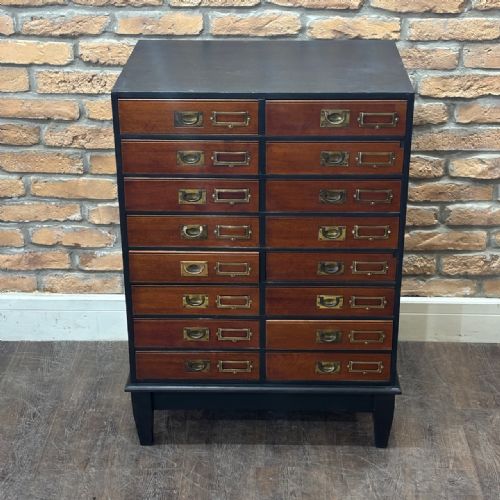
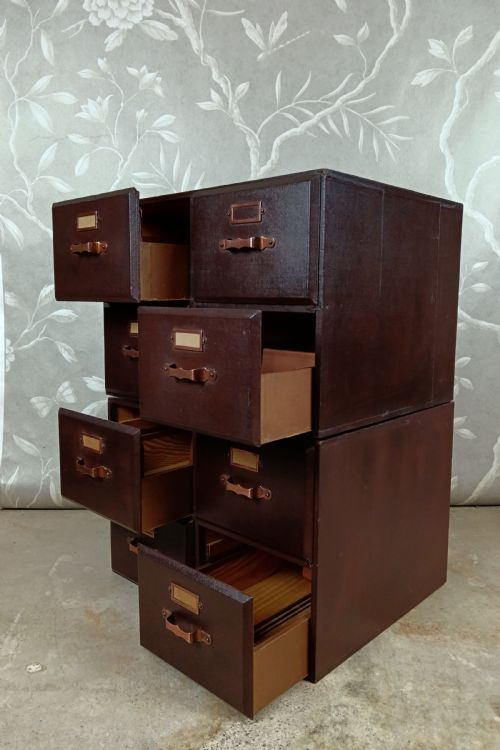
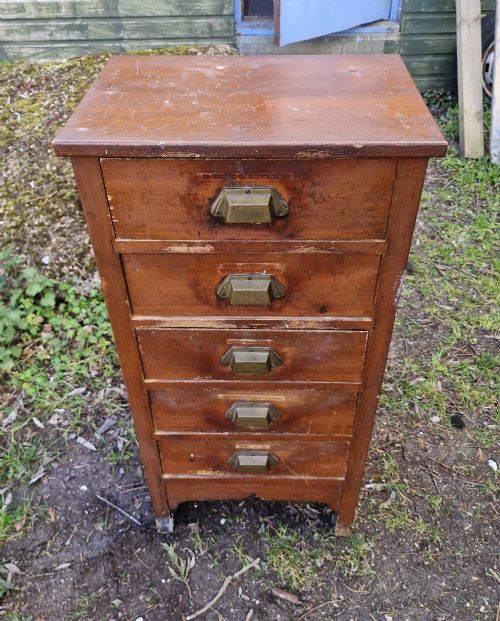
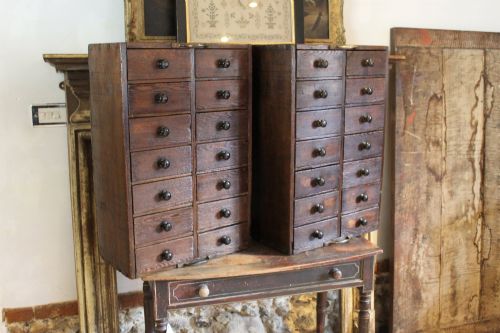
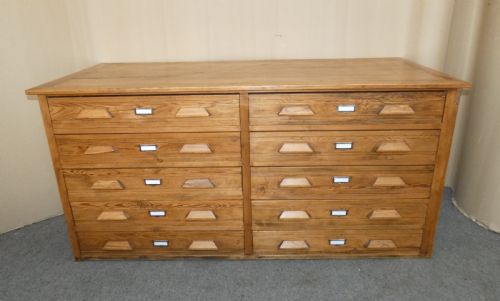
Wooden index drawers are practical filing systems and banks of small drawers designed for sorting cards, letters, and small items in offices, workshops, and libraries. The examples seen here range from compact desktop filing units and library card catalogues to large multi-drawer banks and vertical filing cabinets.
The pieces appearing on this page span the Victorian era, the Edwardian period, and the interwar decades of the twentieth century. You will encounter commercial storage forms such as haberdashers' drawers, watchmakers' banks, and patent letter files alongside domestic chests of drawers.
Makers and inventors like Shannon, Brady, and Amberg appear among these listings, alongside utilitarian pieces built for heavy daily use. Oak is the dominant timber, accompanied by mahogany, walnut, pine, and beech.
How they were made
Makers constructed these cabinets using dense hardwoods like oak, mahogany, and walnut for durability, while secondary timbers such as pine and beech appear on interior components and simpler units. Timber selection matched the intended environment, with heavy commercial cabinets relying on sturdy oak frames to withstand constant daily handling.
Hardware played a functional role, featuring brass handles, label holders, and pulls designed for quick identification of contents. Patent mechanisms such as tambour fronts and specialised letter-filing systems show the mechanical ingenuity applied to office organisation during the late nineteenth and early twentieth centuries.
Wooden Index Drawers Retail Price Guide 2026
Typical asking prices for wooden index drawers among the pieces listed under this phrase on Sellingantiques today, from the lower quarter to the upper quarter. They describe what is for sale here now, not the wider market.
Listings feature oak, mahogany, walnut, pine, and beech, spanning the Victorian period through the 1960s.
What varies in quality
Quality in these filing systems rests on the integrity of the joinery and the survival of original working hardware such as brass label pulls and patent mechanisms. Superior pieces retain their fitted internal divisions, smooth drawer runners, and maker stamps or patent plaques.
The distinction between a standard utility piece and a finer cabinet lies in the choice of timber figure, the neatness of dovetail joints, and whether the unit retains its original surface finish rather than heavy modern alterations.
D Napier And Sons·Brady·Amberg·Shannon
The Wooden Index Drawers Glossary
- Tambour front
- A flexible door made of narrow slats of wood glued to canvas, allowing it to slide smoothly around a curved track to enclose the cabinet drawers.
- Card index
- A structured filing system utilising uniform small cards housed in shallow drawers, widely used in libraries and offices before digital databases.
- Dovetail joint
- A traditional interlocking woodworking joint formed of interlocking wedge-shaped fingers, prized for its tensile strength in drawer construction.
- Patent letter file
- A proprietary storage unit featuring specialised internal mechanisms, spring clips, or drop-fronts designed by makers like Amberg to sort correspondence efficiently.
Wooden Index Drawers: Frequently Asked Questions
What were wooden index drawers used for?
These cabinets were primarily designed for organising correspondence, index cards, and small documents in commercial offices, libraries, and legal practices. They kept paperwork accessible and sorted before modern digital filing systems took over.
Today, they serve similar organizational purposes in modern homes and studios, holding everything from craft supplies to stationery while adding period character to a room.
How do I date a wooden filing cabinet?
Dating relies on observing construction methods, timber choices, and hardware styles across the piece. Edwardian and Victorian examples often feature hand-cut dovetails and heavy brass label pulls, whereas 1930s units may display smoother industrial finishes and tambour doors.
Parks, patent dates stamped on metal hardware, and maker marks by firms like Shannon or Amberg offer precise chronological clues.
Are these drawers suitable for modern paper sizes?
Many older card index drawers and specialised filing boxes were built for specific historical card sizes or folded letters rather than standard modern A4 paper. However, larger multi-drawer banks and vertical filing cabinets can readily accommodate modern documents and stationery.
Check the internal dimensions of the individual drawers if you plan to use the cabinet for active daily filing.
How should I care for an antique cabinet?
Keep wooden filing furniture away from direct heat sources and dramatic humidity fluctuations to prevent the timber and drawers from warping. A simple application of a quality beeswax paste will nourish the wood and maintain the finish.
Avoid overloading heavy drawers, and periodically wax the wooden runners to ensure smooth operation without resorting to modern liquid lubricants.