


Wooden Hearth Bin
A wooden hearth bin keeps fuel tidy beside the fireplace, taking the form of a sturdy wooden box, bucket, or scuttle designed for logs, coal, or peat.
Wooden Hearth Bin
When you search for a wooden hearth bin, you encounter practical fireside storage containers fashioned from various timbers and metals. These functional vessels include coal boxes, purdoniums, log bins, and bucket forms intended to sit neatly beside a fireplace.
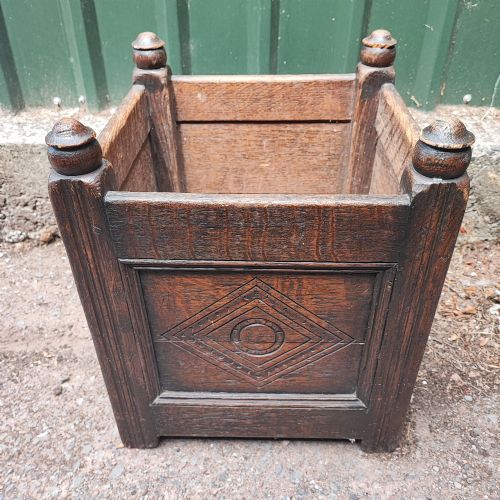
The versions most likely to appear on this page date from the Victorian and Edwardian eras, constructed predominantly from oak, mahogany, walnut, and pine. Earlier examples from the eighteenth century also surface, featuring traditional coopered construction or brass banding.
Makers utilised these sturdy receptacles in domestic interiors to hold solid fuel close to the hearth without scattering debris across the floor. Many pieces retain original metal liners and shovels designed specifically for handling coal or logs.
How they were made
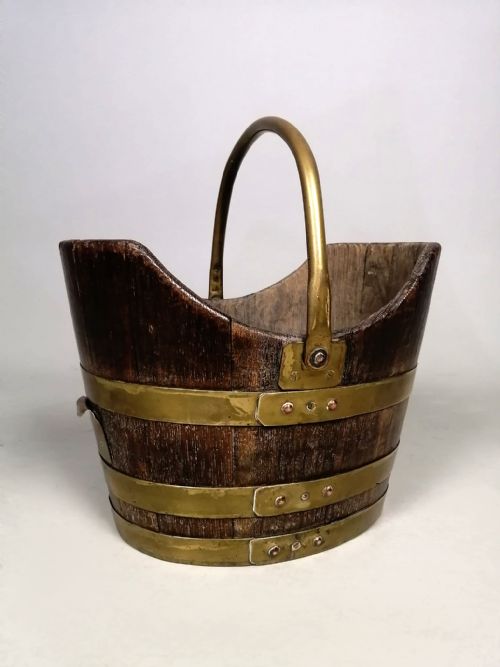
Craftsmen built these containers using robust timbers such as oak, mahogany, walnut, and pine, often enhancing the wooden bodies with brass bands, mountings, handles, and iron reinforcements. Coopered techniques appear in bucket forms, binding wooden staves together with metal hoops to contain peat or logs securely.
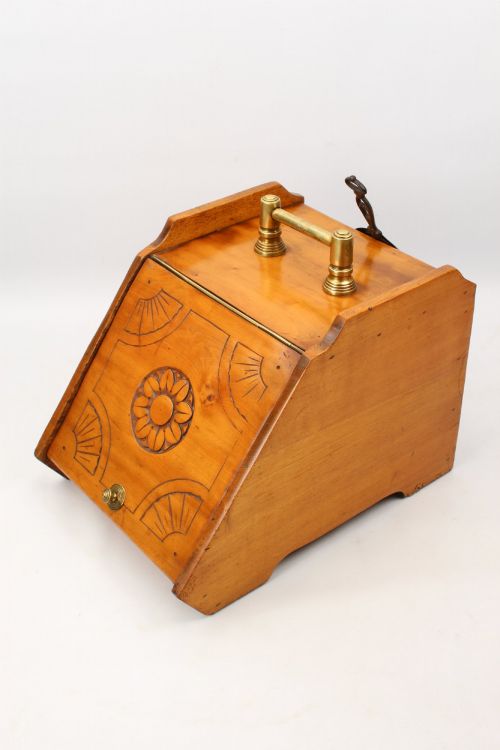
Many items incorporate decorative elements like boxwood inlay, carved wooden fronts, and fitted metal interiors designed to withstand the weight and grime of coal and wood. Original shovels and scoops frequently accompany these boxes, completing the fireside set.
Listings feature wooden hearth bins spanning from the eighteenth century through the Edwardian era, incorporating oak, mahogany, rosewood, walnut, pine, brass, and iron.
What varies in quality
The distinction between standard utility items and finer pieces lies in the selection of cabinet timbers and decorative detailing. Elaborate grain figures in rosewood, walnut, and mahogany, combined with intricate inlay work or carved woodwork, elevate certain boxes above plain pine or basic oak storage.
Survival of original internal metal liners and matching shovels preserves the integrity of a piece. The quality of the brass mounts, handles, and banding also determines whether a box was made for a grand country house drawing room or a simple vernacular interior.
The Wooden Hearth Bin Glossary
- Purdonium
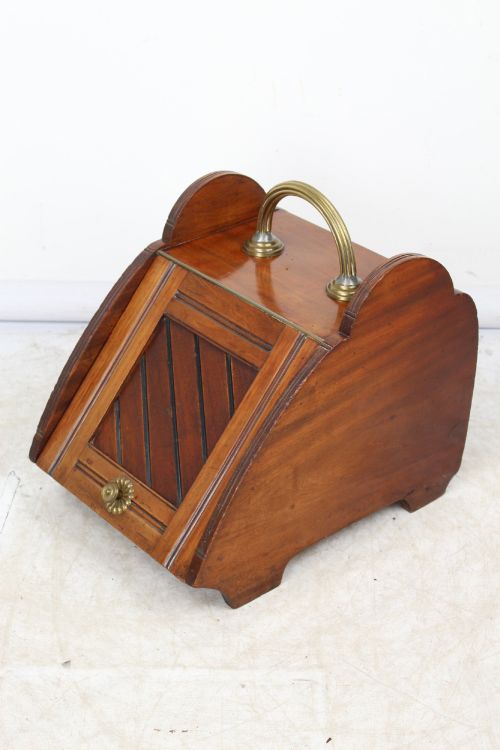
- A specialised type of coal box featuring a sloping front door that drops forward to reveal an internal metal lining and a scoop. These cabinets became popular during the Victorian period for neat fireside fuel storage.
- Coopered
- A method of construction where narrow staves of wood are fitted together and bound with metal hoops, traditionally used to make round buckets and casks for holding peat or logs.
- Coal hod
- A deep container designed specifically for carrying and storing coal, often equipped with a swinging handle and a flat base or angled mouth for pouring.
- Inlay
- A decorative technique where contrasting materials such as lighter woods are inserted into recesses within the main timber surface to create geometric or floral patterns.
- Metamorphic
- Describing an object designed to transform or serve multiple functions, such as a coal scuttle that converts into another fireside accessory.
Wooden Hearth Bin: Frequently Asked Questions
What is a purdonium?
A purdonium is an enclosed wooden coal box featuring a hinged or sloping front door that drops open. It typically houses a removable metal liner and a dedicated shovel.
These cabinets kept coal dust contained and hid the fuel from view in formal reception rooms.
How do I care for a wooden hearth bin?
Keep wooden surfaces clean with a dry cloth and occasionally apply appropriate wax to nourish the timber. Avoid placing damp wood or wet coal directly onto unprotected wood to prevent staining.
Ensure metal liners are emptied regularly to avoid moisture accumulation inside the container.
What woods were used for hearth bins?
Cabinet makers utilised a range of timbers including sturdy oak, rich mahogany, walnut, rosewood, and pine. Many examples also feature brass bands, iron reinforcement, or metal liners.
Swedish and French pieces often showcase painted pine or country workshop construction.
How do I date an antique coal box?
Dating relies on timber choice, construction methods, and stylistic details such as Victorian carved decoration or Edwardian inlay. Eighteenth-century pieces often display hand-coopered staves and heavy brass banding.
Interior linings and accompanying hardware also provide clues to the period of manufacture.