


Antique Wood Log Box
An antique wood log box brings warmth and tidy utility to a fireside, holding fuel close at hand.
Antique Wood Log Box
An antique wood log box serves the hearth by keeping fuel contained and tidy beside the fire. These containers range from rugged country bins to formal Victorian cabinets designed to hold coal or logs.
The pieces listed on this page span the Victorian and Edwardian eras, alongside nineteenth-century Scandinavian examples. Buyers meet everything from simple pine baskets to carved mahogany purdoniums.
Forms vary from hand-woven wood splint baskets to sturdy oak chests and dome-topped Black Forest boxes. Each style reflects the domestic habits and fuel storage needs of its period.
How they were made
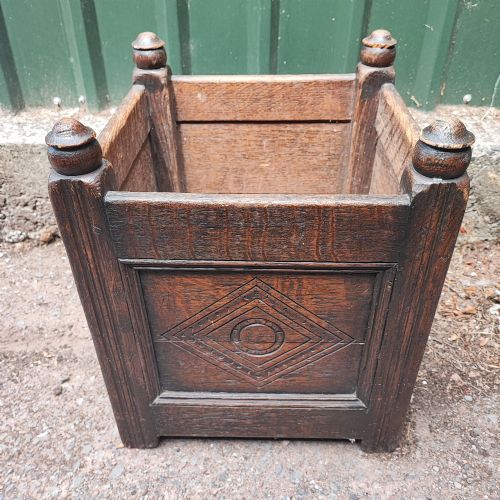
Cabinetmakers and country artisans built these pieces using solid timbers like oak, mahogany, pine, and walnut. Iron bands, brass handles, and metal liners provided reinforcement and durability for heavy loads of wood and coal.
Construction techniques combine dovetail joinery and iron fixings with hand-weaving in wood splint or pine. Painted finishes and carved details appear on specific regional pieces, notably within Scandinavian and Black Forest styles.
Some nineteenth-century Scandinavian pine log boxes retain their original painted surfaces, bearing the quiet rustic marks of daily fireside use.
What varies in quality
Quality rests in the integrity of the timber and the strength of the construction. Solid oak and mahogany cases with original metal liners and robust brass hardware stand apart from simpler utility boxes.
Finer examples show deliberate attention to detail through carved fronts, inlaid woodwork, and well-fitted lids. Regional distinctiveness, such as hand-woven Scandinavian pine, also dictates the character of the piece.
Liberty London
The Antique Wood Log Box Glossary
- Purdonium
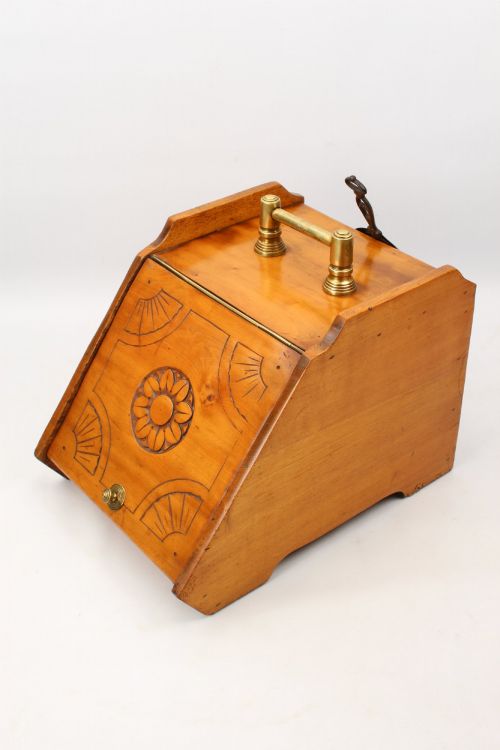
- A specialised cabinet or box designed specifically for holding coal near a fireplace. These often feature a sloping front and an internal metal liner.
- Coal scuttle
- A container or bucket with a handle and sometimes a shovel, used for carrying coal to the hearth. Victorian examples frequently incorporate brass furniture.
- Wood splint
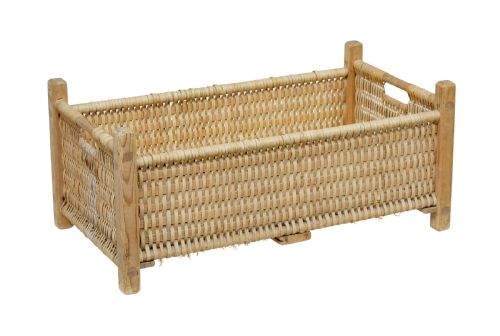
- Thin strips of wood peeled and woven together to create flexible yet sturdy baskets. This technique appears in nineteenth-century Scandinavian log baskets.
- Black Forest style
- Carved wooden decorative work originating from the mountainous regions of central Europe. Pieces often display naturalistic motifs such as leaves and animals.
- Log bin
- A deep container intended for storing larger pieces of firewood. These utilise robust materials like pine, oak, and iron banding to bear heavy loads.
Antique Wood Log Box: Frequently Asked Questions
What is the difference between a log box and a coal purdonium?
A log box is generally a simpler chest or bin built to hold larger pieces of firewood. A coal purdonium is a more formal Victorian cabinet featuring an internal metal liner and a drop-down or sloping front for coal storage.
Purdoniums often included matching shovels and elaborate brass handles, whereas log boxes favored sturdy pine, oak, or iron-banded construction for heavier duty.
How do I care for an antique wood log box?
Keep wooden surfaces clean with a soft cloth and apply traditional beeswax periodically to nourish the grain. Avoid placing damp logs directly onto unprotected antique wood to prevent water marks.
Using an internal metal liner helps protect the base of the box from dirt and moisture originating from stored firewood.
Where were these log boxes originally used?
These containers sat beside fireplaces in drawing rooms, parlours, and country house hearths. Formal mahogany and walnut cabinets belonged in reception rooms, while pine bins and woven baskets served everyday country kitchens.
Scandinavian and French provincial examples brought regional woodworking traditions directly to the fireside.
How can I tell a Victorian log box from an Edwardian one?
Victorian pieces often display heavier proportions, robust oak or mahogany timbers, and detailed carvings or brass fittings. Edwardian examples frequently introduce lighter inlaid woodwork and refined purdonium cabinet designs.
Nineteenth-century Scandinavian pieces lean towards painted finishes and hand-woven pine construction.