




Wooden Hanging Display Unit
A wooden hanging display unit brings vertical storage and surface space to walls, utilising timber and glass to hold small objects and books.
Wooden Hanging Display Unit
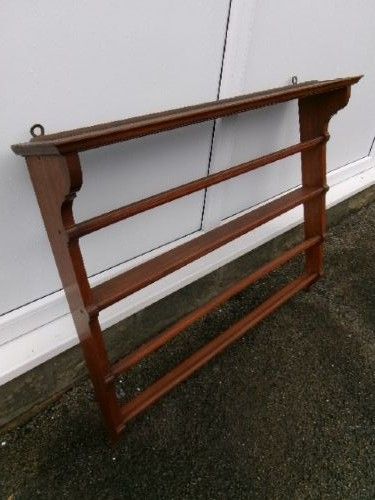
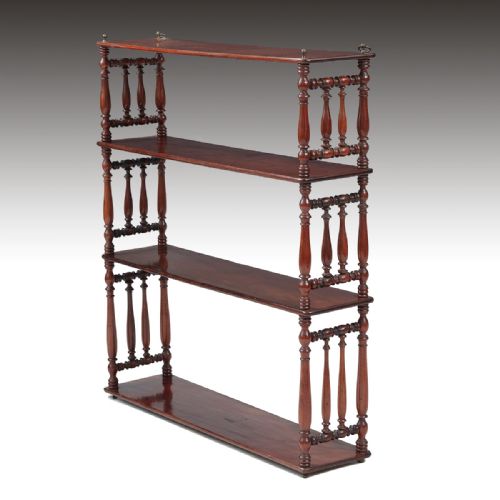
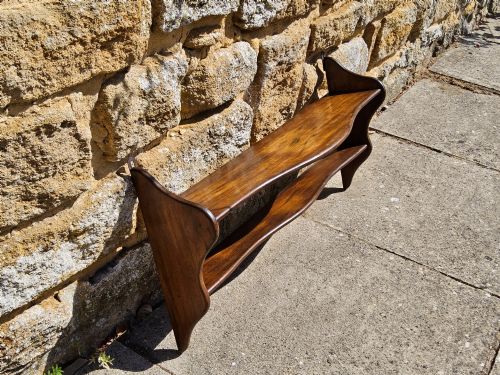
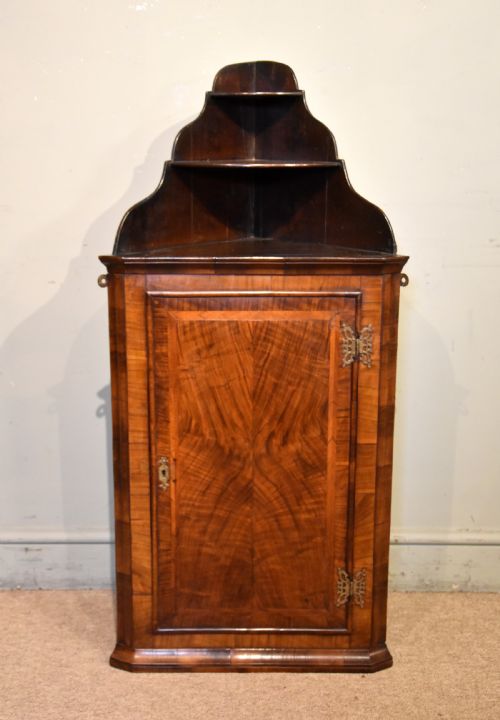
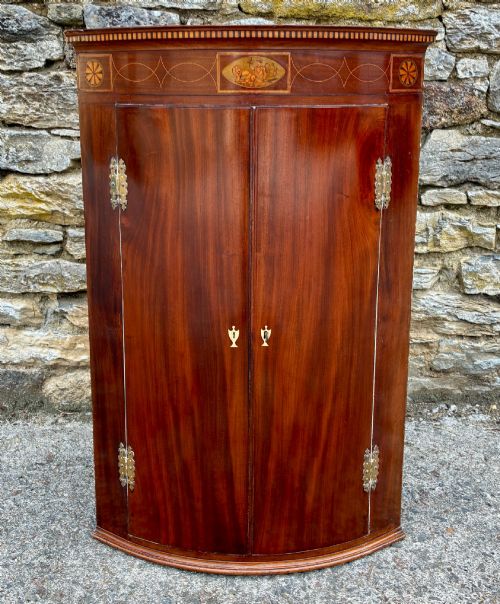
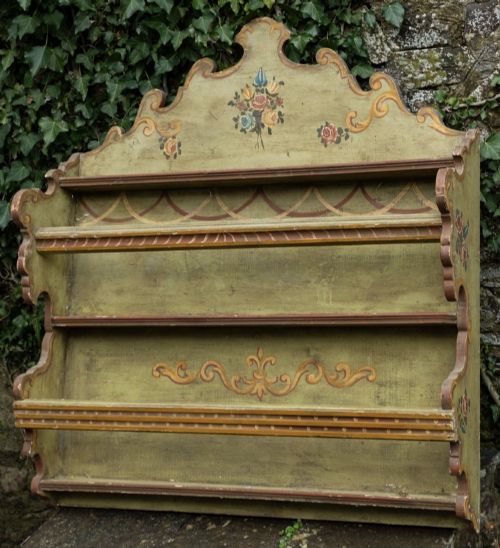
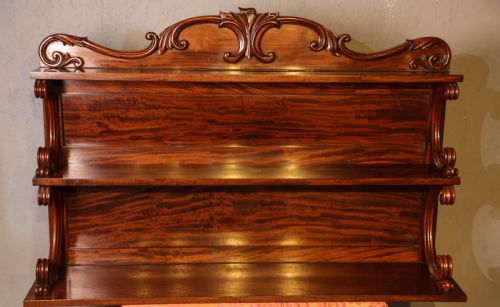
A wooden hanging display unit serves to organise and exhibit small possessions upon walls, taking the form of open wall shelves or enclosed corner cupboards and cabinets. These pieces lift storage off the floor, fitting neatly into room angles or flat expanses alike.
The versions most frequently met on this page span several periods, with Georgian and Victorian examples appearing alongside Regency pieces and later 20th century items. Forms range from simple sets of hanging shelves to bow fronted corner cupboards and detailed wall cabinets.
Makers utilised timber to suit various domestic settings, from English country houses to French chateaux. Collectors encounter pieces shaped from mahogany, oak, walnut, satinwood, and painted wood, often fitted with glass panels or brass details.
How they were made
Craftsmen built these units using solid timbers such as mahogany, oak, walnut, and cherry, often selecting figured grains for prominent surfaces. Structural joints required sturdy joinery to support the weight of books and ceramics when mounted to walls.
Decoration relied on contrasting materials and hand application, incorporating boxwood inlay, marquetry, and painted finishes. Glazed doors protected contents while brass hardware provided functional hinges and hanging brackets.
Materials span mahogany, oak, walnut, satinwood, cherry, satin birch, and olive wood, alongside painted surfaces and glass.
What varies in quality
The refinement of timber selection and complexity of construction distinguish finer examples from simpler vernacular pieces. Superior items display careful grain matching on door panels and drawer fronts, alongside well executed stringing or inlay work.
Architectural details such as broken arch pediments, bow fronts, and properly fitted glazed doors indicate higher workshop standards. Original brass hardware and sound structural integrity further separate standard utilitarian shelving from finer decorative cabinets.
The Wooden Hanging Display Unit Glossary
- Bow front
- A convex curved front facade commonly found on corner cupboards and cabinets of the Georgian and Regency periods. This shape softens room angles and provides additional interior depth.
- Broken arch pediment
- An architectural decorative feature above a cornice where the top moulding is parted or interrupted, often centred on a finial or carved urn. It signals a formal piece of cabinet making.
- Inlay
- A technique where pieces of contrasting wood, such as boxwood, are inserted into recessed cavities on the surface to create decorative patterns. It requires considerable skill from the maker.
- Corner cupboard
- A cabinet specifically constructed with a triangular footprint to fit directly into the internal corner of a room. These units make efficient use of otherwise neglected space.
- Sorrento ware
- Woodwork decorated with micro-mosaic marquetry, originating from the Italian town of Sorrento during the 19th century. Pieces frequently incorporate olive wood and intricate geometric motifs.
Wooden Hanging Display Unit: Frequently Asked Questions
How do I hang a heavy antique wall cabinet safely?
Wall cabinets require secure attachment directly into structural timber studs or solid masonry using appropriate fixings rated for the weight.
Older hanging brackets or brass loops on the back must be inspected to ensure they remain firmly seated in the original wood before lifting the piece into place.
What is the difference between wall shelves and a corner cupboard?
Wall shelves are open tiers designed to mount flat against a wall for the display of books or small objects.
Corner cupboards feature enclosed doors and a triangular shape built to tuck neatly into room angles, offering concealed storage rather than open display.
How can I tell a Georgian hanging unit from a Victorian one?
Georgian units typically exhibit restrained classical proportions, often utilising flame mahogany with subtle string inlay or architectural pediments.
Victorian pieces frequently display heavier walnut framing, darker finishes, or more elaborate revival styling such as Chippendale influences.
Where should I place a wooden hanging display unit in my home?
These units suit spaces where floor area is limited, functioning well above sideboards, in hallways, or flanking fireplaces.
Corner cabinets naturally occupy idle room corners, while flat wall shelves anchor empty expanses above seating or desks.