

Wooden Hall Umbrella Holder
A wooden hall umbrella holder commands the entrance, keeping wet walking sticks and heavy umbrellas neatly contained.
Wooden Hall Umbrella Holder
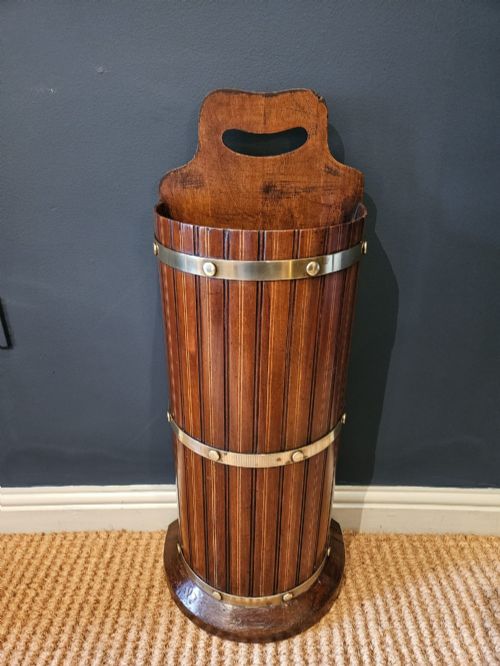
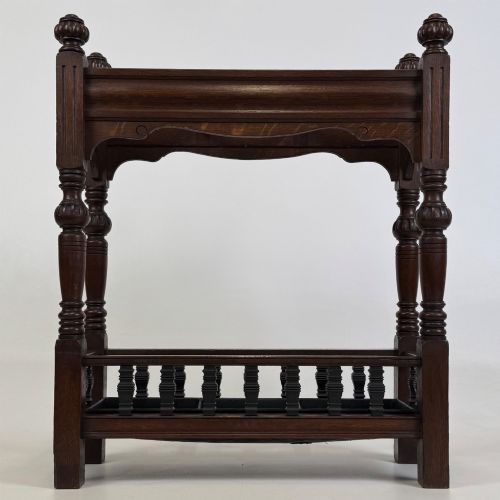
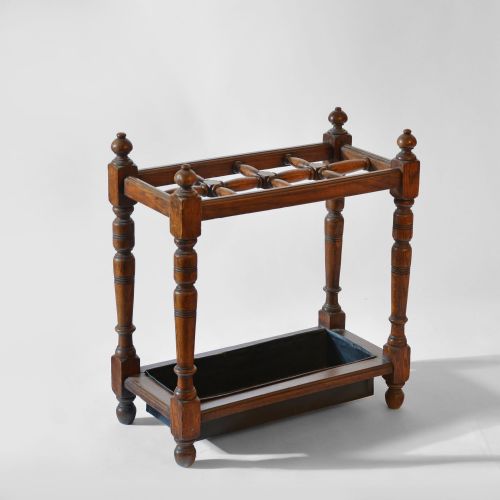
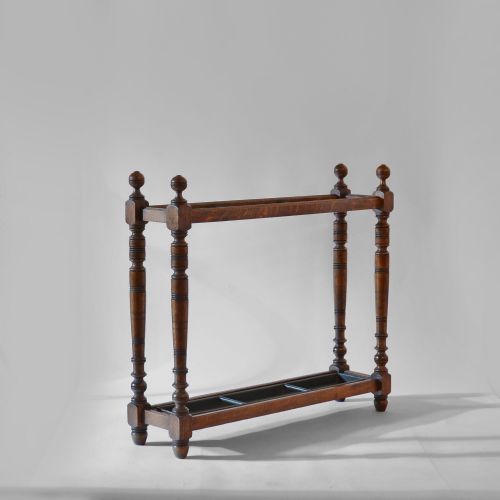
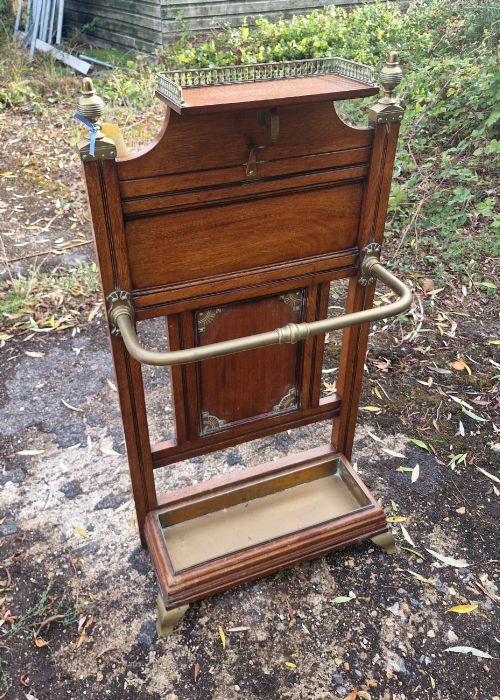
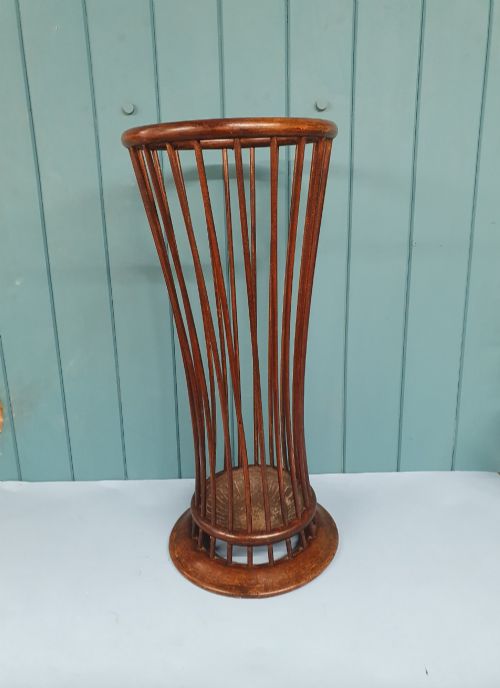
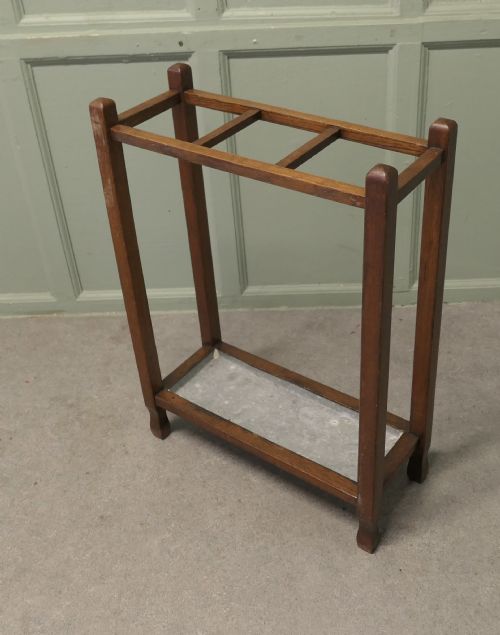
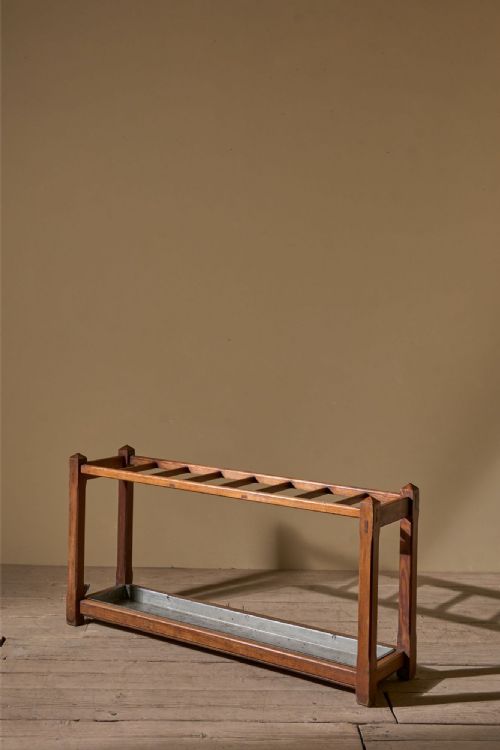
A wooden hall umbrella holder serves as a practical entryway furnishing designed to hold wet walking sticks and umbrellas. These pieces appear frequently in oak, mahogany, and pine forms originating from the nineteenth and early twentieth centuries.
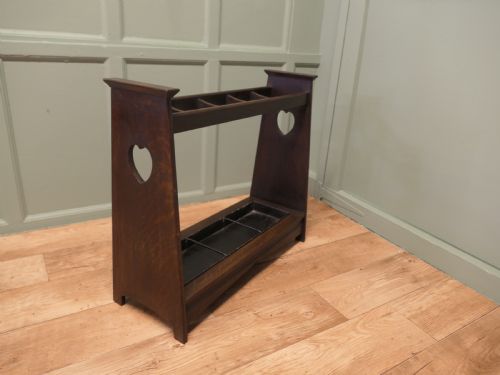
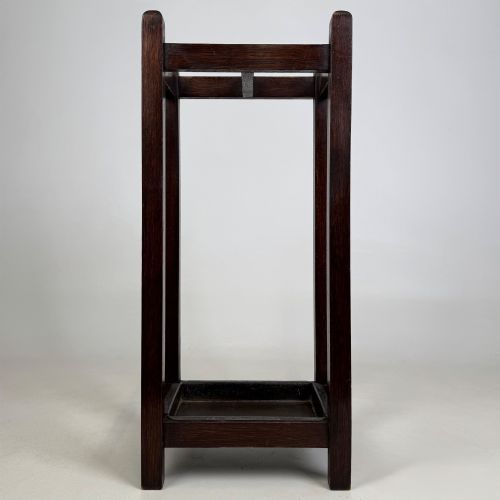
The selection on this page centres heavily on Edwardian and Victorian examples, alongside Arts and Crafts and Black Forest interpretations. Buyers encounter compact corner stands, revolving designs, and large country house hall pieces equipped with integrated racks.
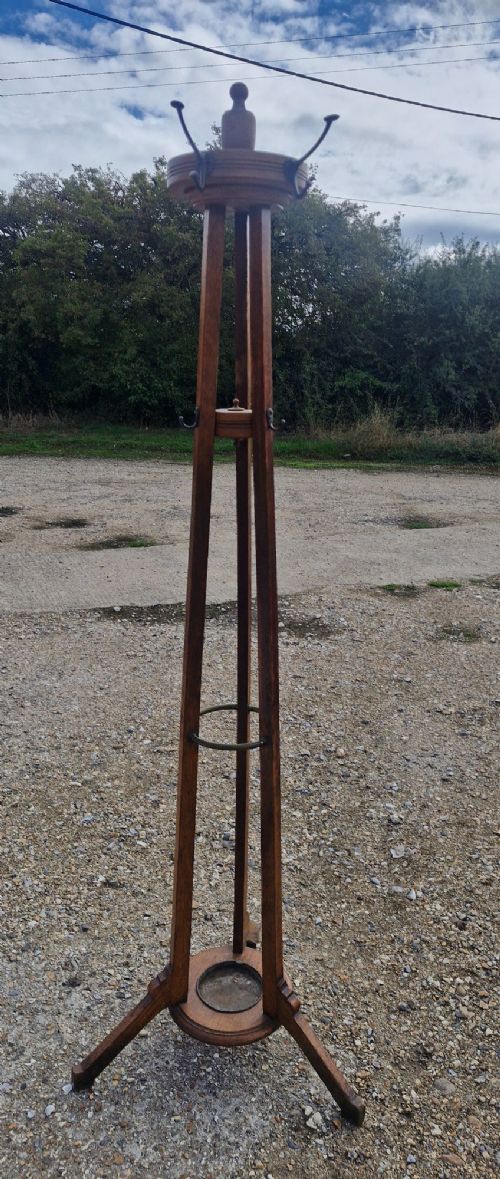
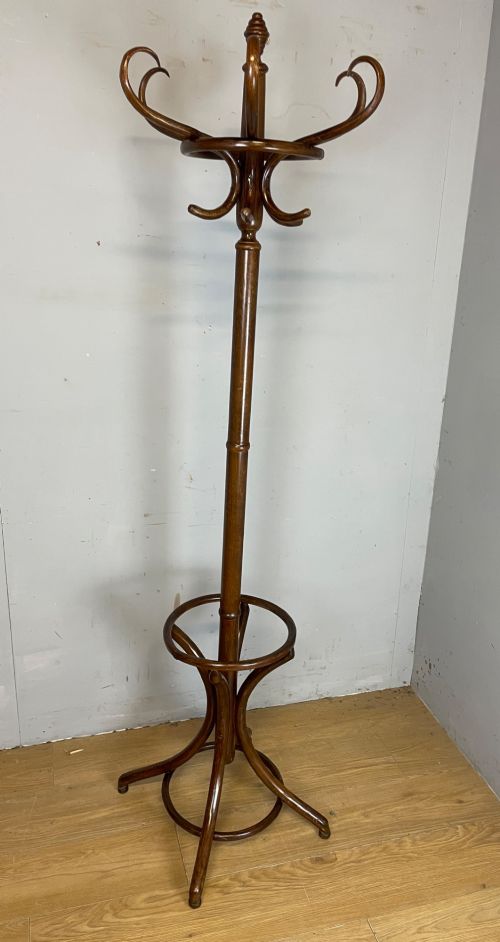
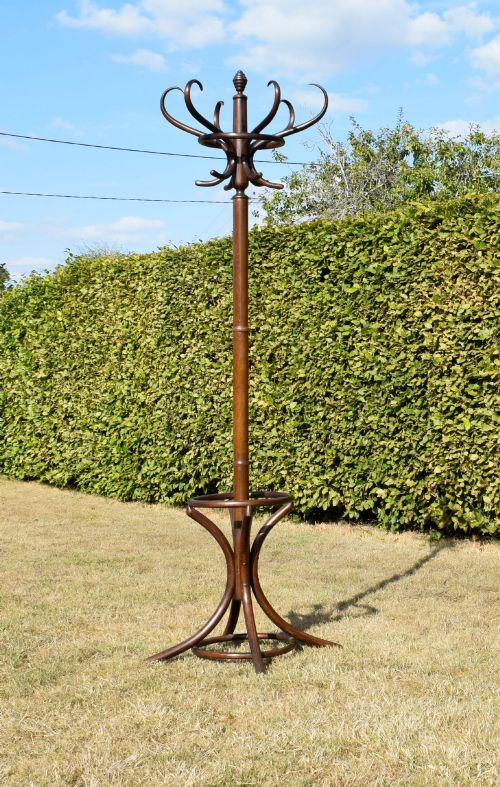
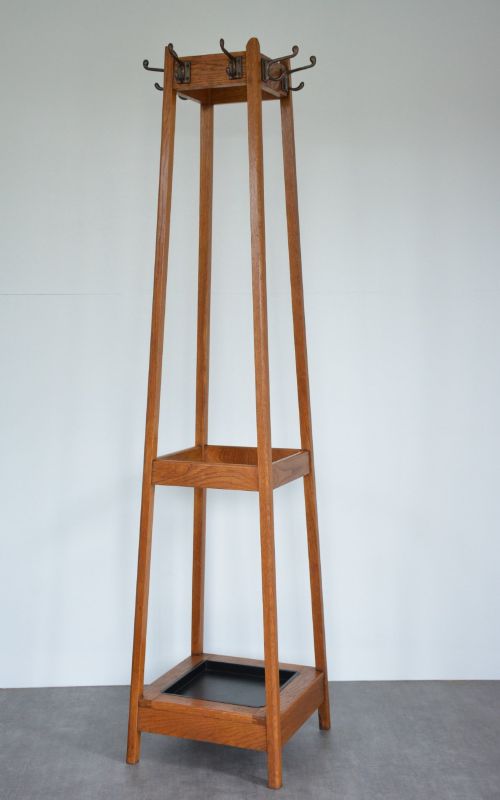
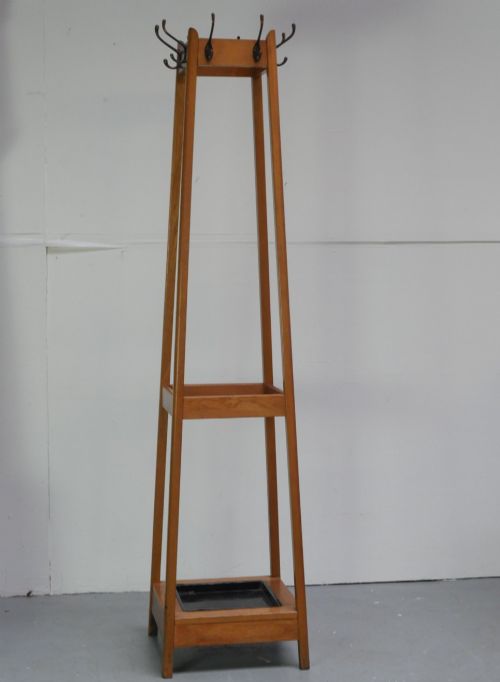
Many variants combine timber frames with metal or zinc drip trays to catch moisture. Some pieces double as coat and hat stands, merging multiple hallway storage functions into a single structure.
Quality variations
Quality rests upon the selection of timber and the ambition of the design, moving from utilitarian pine country house pieces to finely carved walnut and golden oak Arts and Crafts commissions. The presence of original metal drip trays and substantial brass hardware elevates a piece above standard domestic utility.
Construction depth dictates longevity, where solid framing and integrated divisions withstand daily moisture and weight better than light, assembled counterparts.
Listings span the nineteenth and twentieth centuries, featuring oak, mahogany, pine, and beech materials configured into umbrella stands, stick stands, and combined hall trees.
Liberty·Heals of London
The Wooden Hall Umbrella Holder Glossary
- Drip tray
- A removable metal or zinc liner positioned at the base of a stand to catch water from wet umbrellas. This component protects the wooden floor from moisture damage.
- Arts and Crafts
- A design movement prioritising visible construction, simple forms, and honest materials. Pieces from this tradition often feature golden oak and straightforward joinery.
- Black Forest
- A regional style of nineteenth-century carved woodwork, well known for realistic animal figures such as bears holding vessels. These decorative stands combine sculpture with hallway furniture.
- Bentwood
- A technique of steaming and bending wood, notably beech, into curved structural frames. This method creates lightweight, flowing silhouettes seen in hall and hat stands.
- Demi-lune
- A half-moon shape allowing furniture to sit flush against an entryway wall. This format optimises floor space in narrow hallways.
Wooden Hall Umbrella Holder: Frequently Asked Questions
How do I protect the wooden base from water damage?
Ensure the stand contains its original metal or zinc drip tray to catch moisture from wet umbrellas before it reaches the timber.
Period trays can be emptied and dried regularly to preserve the interior wood.
Where should I place an umbrella stand in my hall?
Position the piece near the main entrance door where wet items are deposited upon arrival.
Demi-lune and corner stands fit efficiently into narrower passageways without blocking pathways.
How do I distinguish Victorian from Edwardian stands?
Victorian examples often feature darker mahogany, heavier proportions, and dense carvings.
Edwardian pieces tend to display lighter golden oak tones and more restrained Arts and Crafts lines.
Can these stands hold heavy walking sticks?
Solid oak and framed nineteenth-century stands possess the structural strength to support numerous heavy walking sticks and umbrellas.
Divided sections help keep heavy items upright and balanced within the frame.