
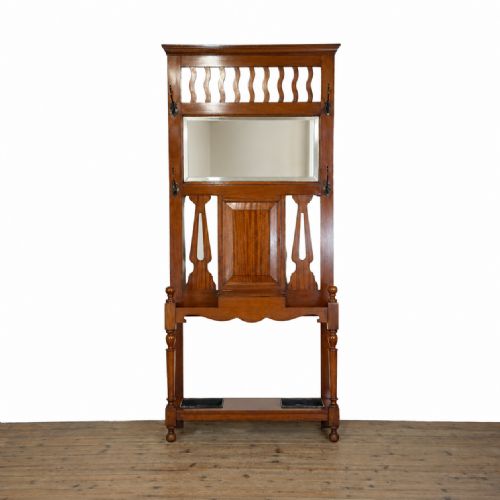
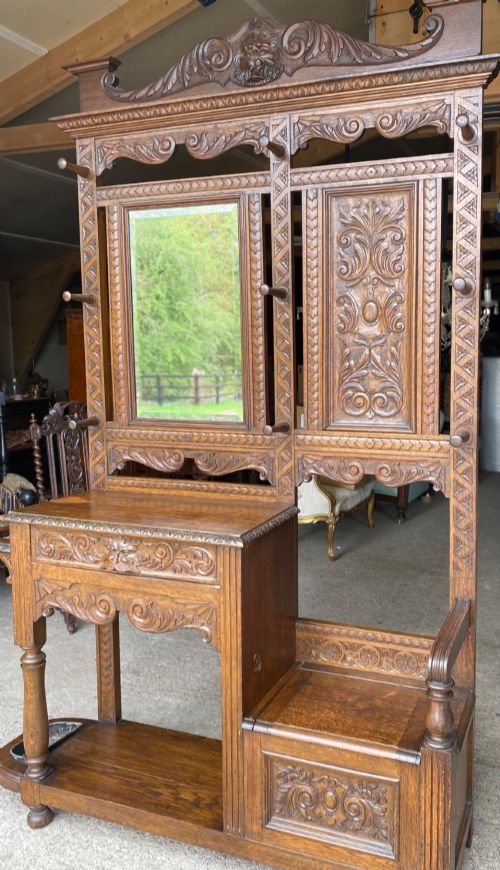

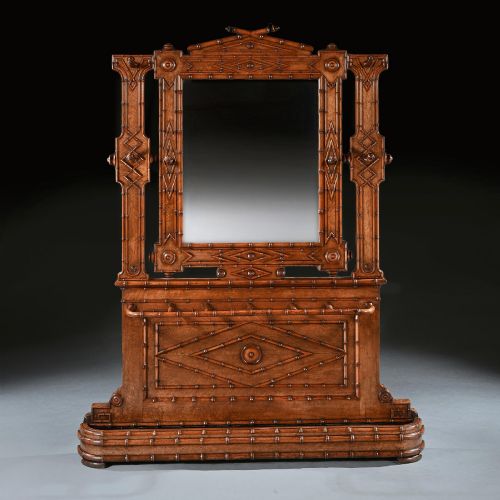
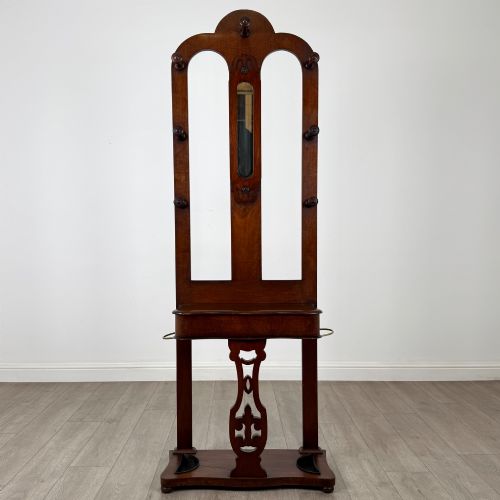


Wooden Hall Tree Mirror
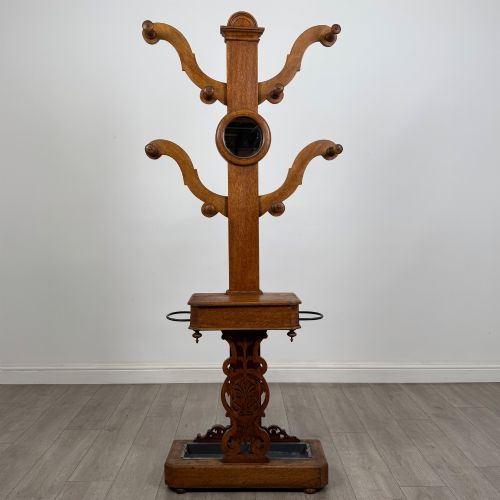
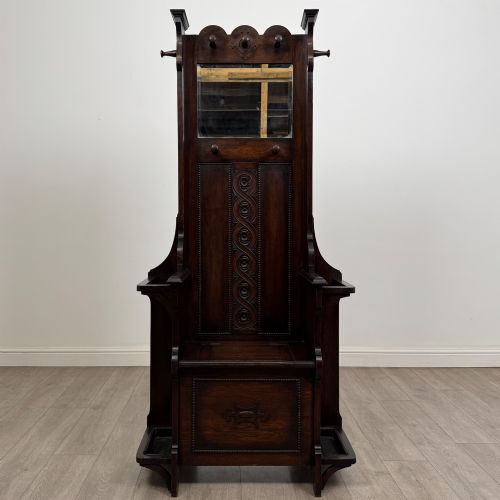
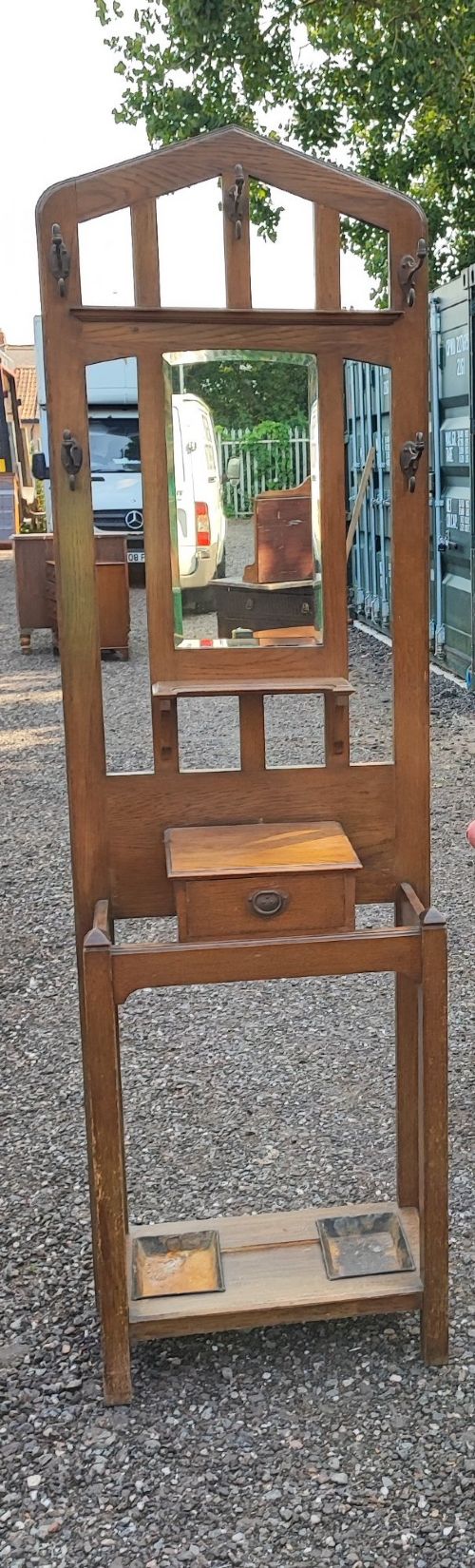
A wooden hall tree mirror combines a heavy coat stand and a glass looking glass to anchor an entrance hall with daily practicality.
Wooden Hall Tree Mirror
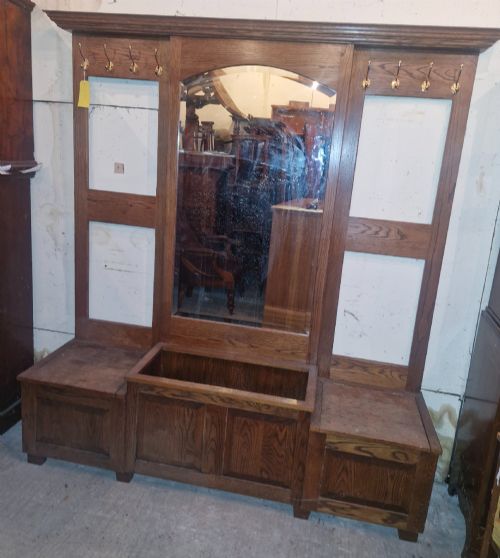
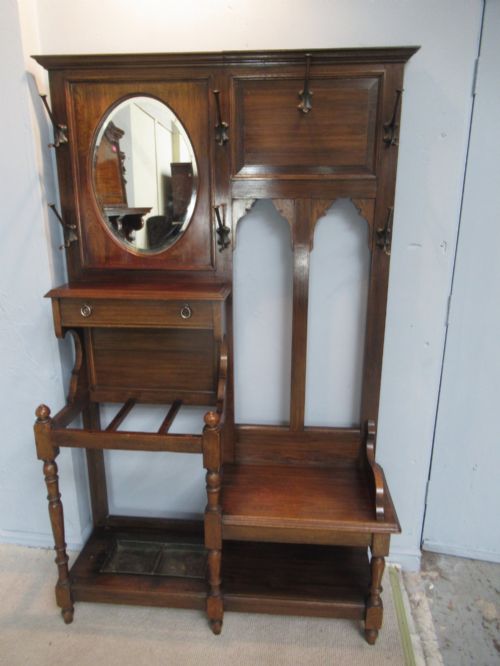
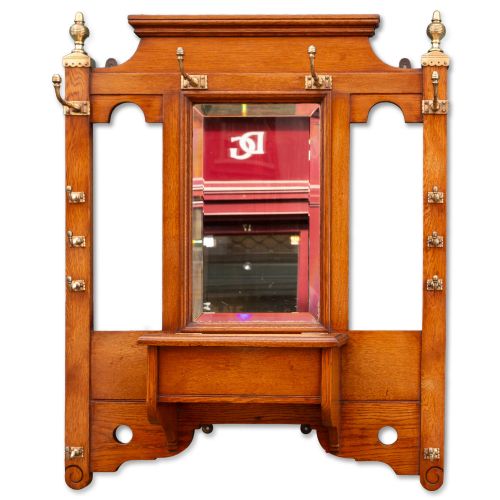
A wooden hall tree mirror serves as a functional anchor for hallways, combining hooks for garments with an integrated looking glass. When you search for a wooden hall tree mirror, you encounter substantial hallway furniture designed to organise hats, coats, and umbrellas while offering a final check of your appearance before leaving the house.
Most examples appearing on this page date from the Victorian and Edwardian eras, constructed predominantly in oak or mahogany. These pieces range from simple wall-mounted racks to large, multi-functional freestanding furniture incorporating umbrella wells and marble inserts.
Stylistic diversity runs from plain utilitarian oak to ornate Aesthetic Movement, Arts and Crafts, and Art Nouveau designs. Some feature carved details such as Greenman motifs or faux bamboo framing, reflecting the varied tastes of the nineteenth and early twentieth centuries.
How they were made
Makers utilised solid timbers such as oak, mahogany, and walnut, frequently shaping them through traditional joining and carving techniques. Structural stability was paramount given the heavy weight of garments and the inclusion of large glass plates.
Functional hardware formed an integral part of the construction, employing brass and cast iron for coat hooks and umbrella drip pans. Many examples incorporate bevelled mirror glass secured within wooden frames alongside decorative tiles or marble ledges.
The listings show a strong representation of oak and mahogany constructions spanning from the Victorian period through the Edwardian era.
What varies in quality
The degree of craftsmanship distinguishes simpler utilitarian hall furniture from ambitious artistic pieces. Finer examples display meticulous hand-carving, well-figured timber selection, and thoughtful integration of varied materials like ceramic tiles and marble.
Structural integrity and the retention of original fittings dictate the standing of a piece. The presence of undamaged bevelled mirror glass, original cast iron or brass hooks, and intact drip trays separates superior survivals from altered or heavily restored items.
The Wooden Hall Tree Mirror Glossary
- Hallstand
- A piece of hallway furniture designed for hanging coats, hats, and storing umbrellas. It frequently includes a mirror and glove drawer.
- Faux bamboo
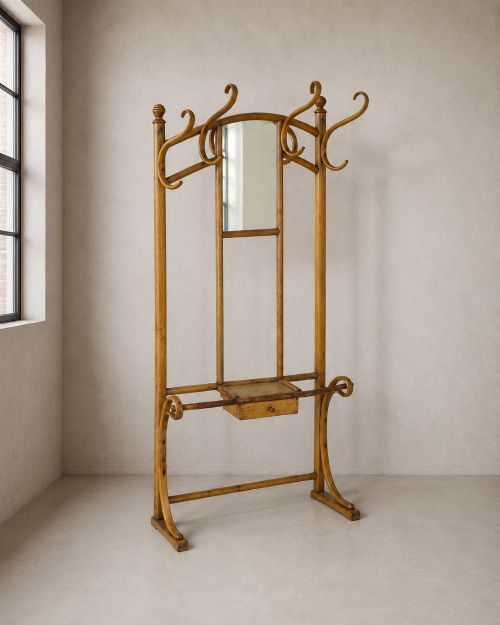
- Wood turned and carved to imitate natural bamboo stalks. This technique was particularly popular during the Aesthetic Movement.
- Bentwood
- Wood softened by steam and bent into curved shapes. This method created lightweight yet resilient frames for hall furniture.
- Japonisme
- The influence of Japanese art on Western design. It appears in furniture through asymmetrical layouts and stylized natural motifs.
Wooden Hall Tree Mirror: Frequently Asked Questions
Where should I place a wooden hall tree mirror?
These pieces suit entrance halls and corridors where guests arrive and outdoor wear is removed. Their height and depth require adequate floor space and a solid wall for anchoring freestanding versions.
Positioning them near a light source helps the glass function effectively for last-minute appearance checks before stepping outside.
How do I clean wooden hall tree mirrors?
Dust the timber regularly with a dry cloth to prevent grime accumulation on carved surfaces and mouldings. Clean the glass with a standard solution applied to a cloth rather than sprayed directly near the wood.
Polish the brass or cast iron fittings sparingly with appropriate metal cleaners to maintain their finish without staining the surrounding timber.
Are these pieces suitable for narrow hallways?
Wall-mounted coat racks and compact stands take up minimal floor space while providing essential hanging points. Freestanding versions with umbrella wells require deeper clearance and work best in wider passages.
Checking the exact dimensions of the base and protruding hooks ensures the furniture does not obstruct the flow of movement through the door.
How can I tell Victorian from Edwardian pieces?
Victorian examples tend to feature darker timbers like mahogany and heavy, elaborate carvings such as Greenman motifs or Gothic influences. They often present a darker, more imposing presence in an entrance.
Edwardian and later pieces frequently utilise lighter golden oak, simpler lines, and the flatter, stylised plant forms associated with the Arts and Crafts movement.