



Oak Mirror Hall Stand
An oak mirror hall stand sets the tone of an entrance hall, combining timber, glass and hooks for daily utility.
Oak Mirror Hall Stand
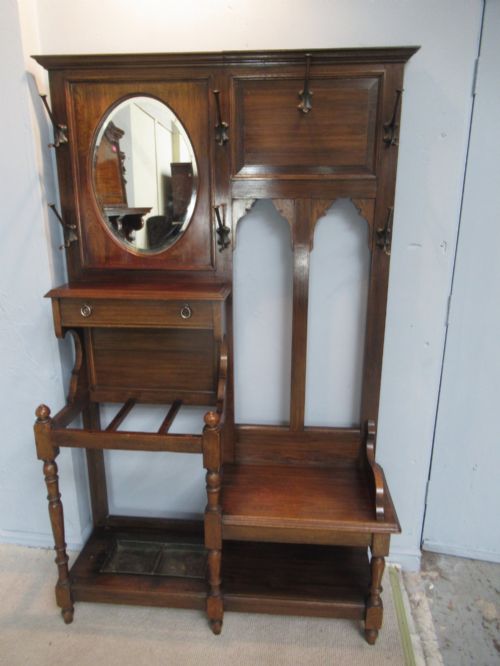
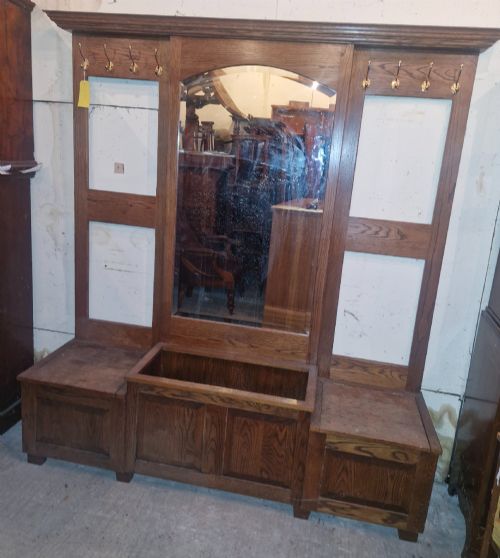
An oak mirror hall stand provides a central station for hats, coats, umbrellas and boots upon entering a property. These pieces combine a vertical wooden frame, an integrated looking glass and various brass or iron hooks.
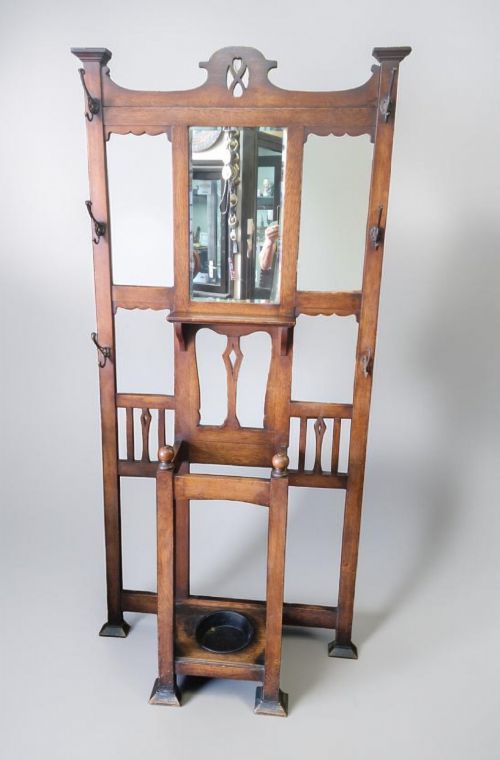
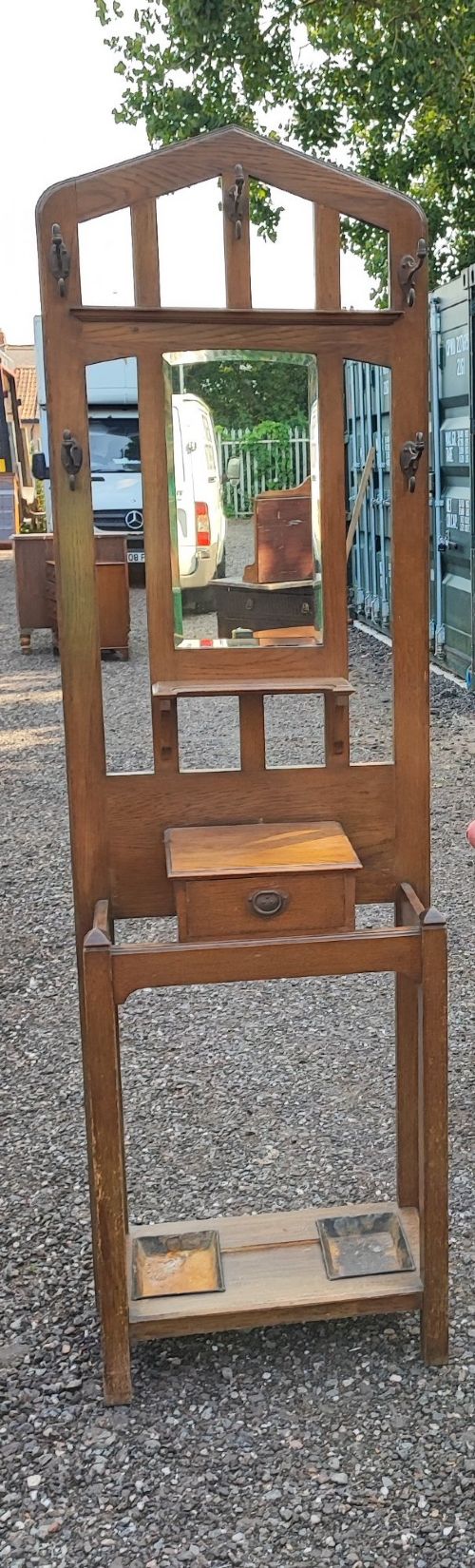
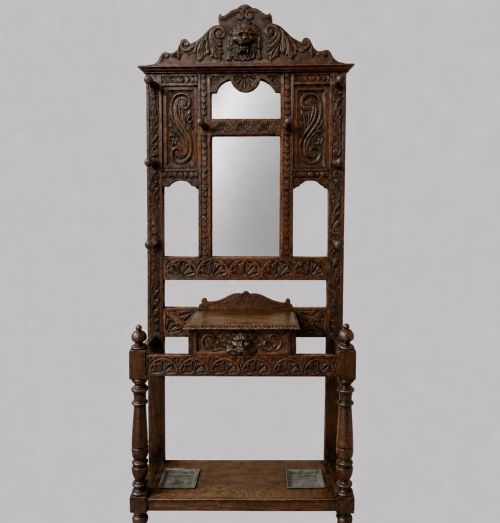
The pieces seen here date from the Victorian and Edwardian eras, stretching from the late nineteenth century into the early twentieth century. Styles range from plain golden oak interpretations to heavily carved Flemish Renaissance Revival and linear Arts and Crafts forms.
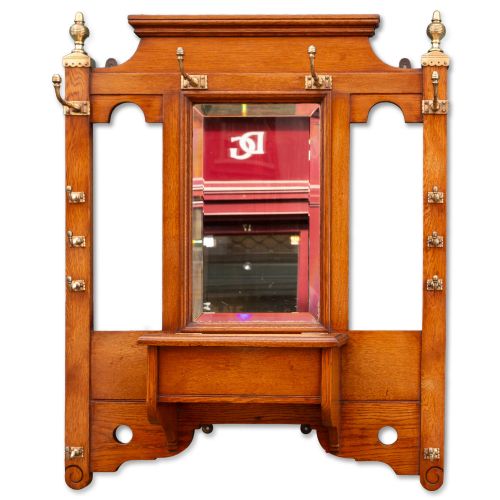
Most examples stand upright on the floor as tall furniture pieces, though wall-mounted racks and narrow console variants also appear. They serve the practical purpose of organising outerwear while reflecting light in narrow hallways.
Materials and construction
Solid and golden oak provide the primary structural timber for these pieces, joined by panelled backboards and architectural mouldings. Carved details frequently feature floral motifs, geometric patterns or expressive Green Man masks.
Mirrors are set centrally into the timber framework, often with bevelled edges to catch the light. Metalwork components consist of brass coat hooks, iron umbrella wells, and sometimes cast iron drip trays or ceramic tile inserts near the base.
Several examples incorporate hidden umbrella drip trays to catch the British drizzle before it reaches the floorboards.
Distinctions in quality
The degree of hand-carving defines the upper tier of these hall stands, moving beyond standard turned spindles to deep relief work and figural sculpture. Timber selection also separates standard production from superior pieces, with figured golden oak and heavy proportions showing greater ambition.
Hardware integration marks quality, where solid brass hooks and fitted metal drip trays remain original to the piece rather than replaced later. Joinery execution, such as panelled construction and secure mirror bevelling, indicates the skill of the workshop.
The Oak Mirror Hall Stand Glossary
- Hall stand
- A piece of entrance furniture designed to hold coats, hats and umbrellas. It typically incorporates a mirror and bench or umbrella wells.
- Bevelled mirror
- A looking glass with an angled edge polished around the perimeter. This treatment adds depth and refracts light across the hallway.
- Arts and Crafts
- A design movement prioritising honest construction, visible joinery and natural materials. Pieces from this style often feature simplified lines and exposed grain.
- Green Man
- A sculptural architectural motif depicting a face carved from leaves and foliage. It represents rebirth and appears on carved wooden panels.
- Barley twist
- A turned wooden support resembling the spiral shape of barley sugar. This decorative carpentry technique appears on upright posts and columns.
Oak Mirror Hall Stand: Frequently Asked Questions
How do I care for the oak finish?
Dust the timber regularly with a dry cloth and apply a traditional beeswax periodically to nourish the grain.
Avoid placing the stand near direct heat sources or damp umbrella wells without protective liners to prevent wood warping.
Are the mirrors original?
Many pieces retain their original bevelled glass plates, often showing minor age spots or silvering loss that confirms their period origin.
Replacement mirrors generally present a cleaner, entirely unblemished reflection without the subtle distortion of older glass.
How do I anchor a tall hall stand?
Due to their height and narrow footprint, many tall stands require attachment to the wall via discreet brackets for stability.
This prevents tipping when heavy winter coats hang from the upper brass hooks.
What is the difference between Victorian and Edwardian styles?
Victorian examples tend towards darker timber, heavier proportions, elaborate carved detailing and rich ornamentation.
Edwardian pieces frequently utilise lighter golden oak, cleaner lines and restrained Arts and Crafts influences.