

Oak Coat Tree
An oak coat tree organises an entrance hall with solid timber practicality, holding hats, coats and umbrellas in one substantial piece of furniture.
Oak Coat Tree
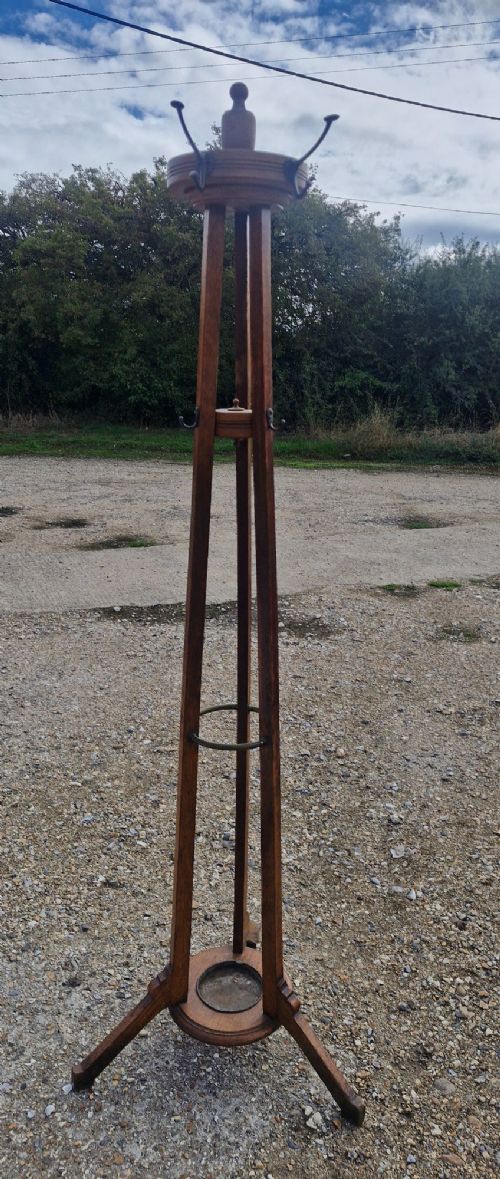
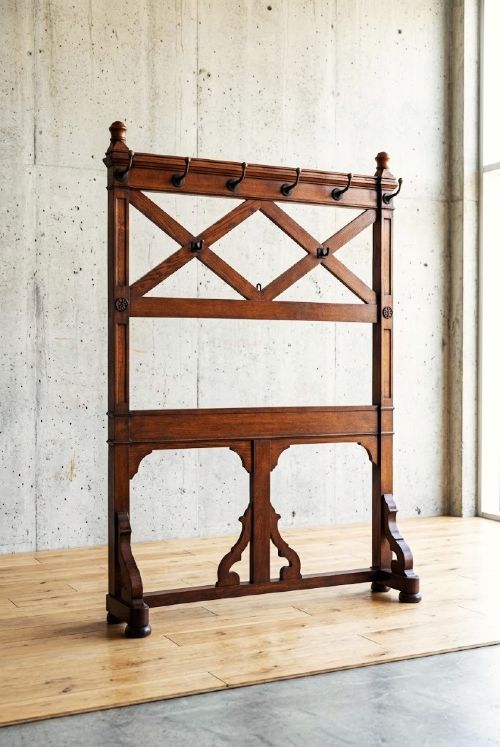
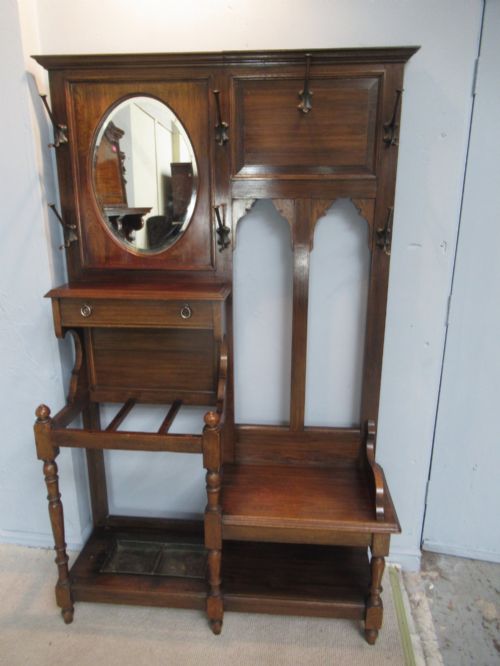
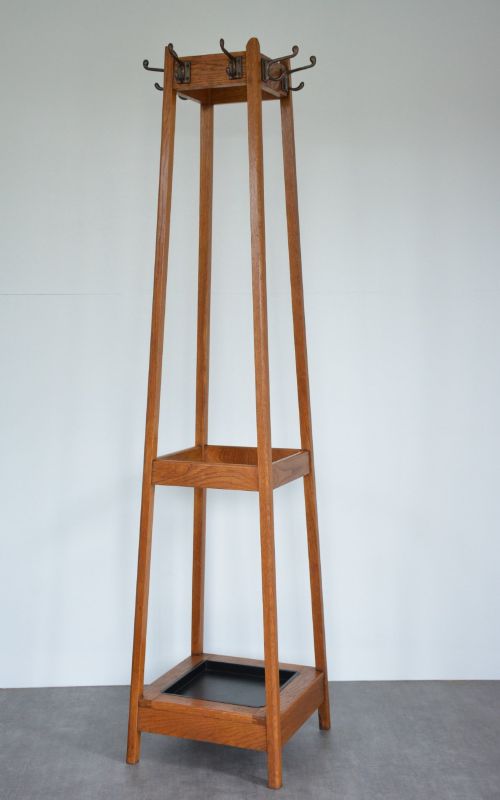
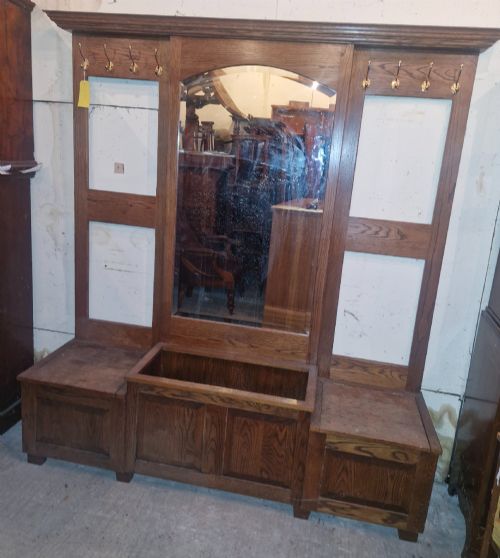
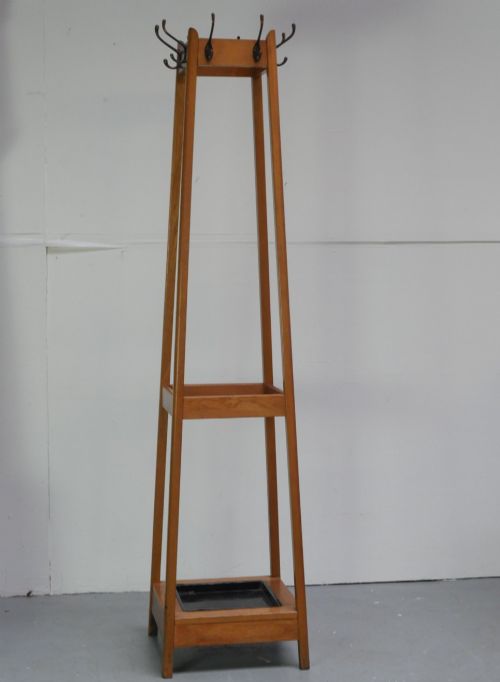
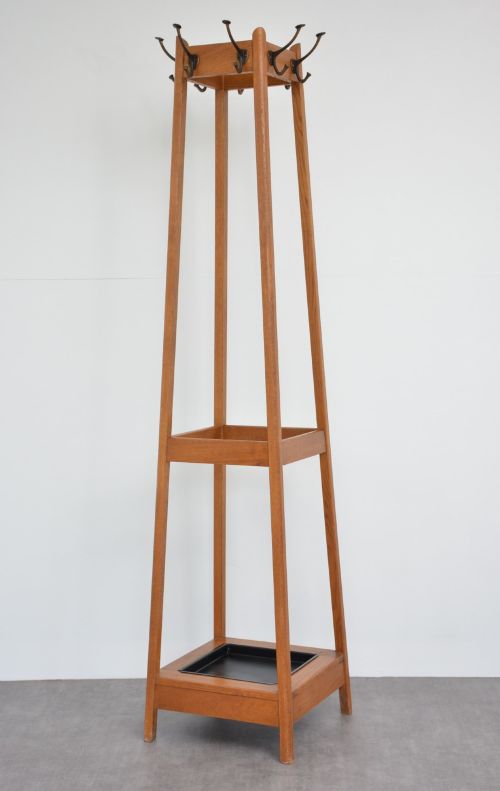
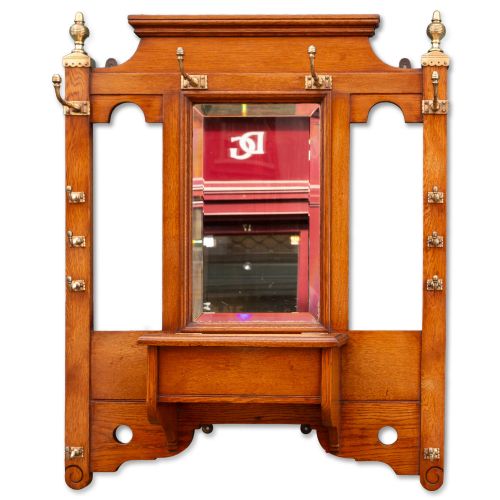
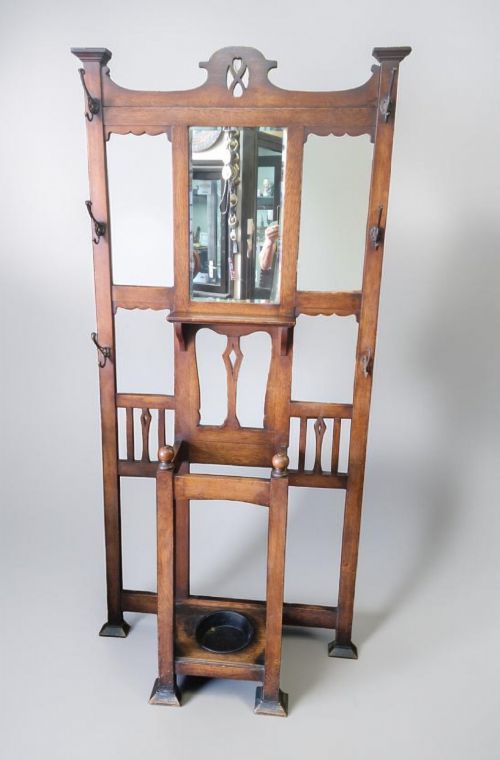
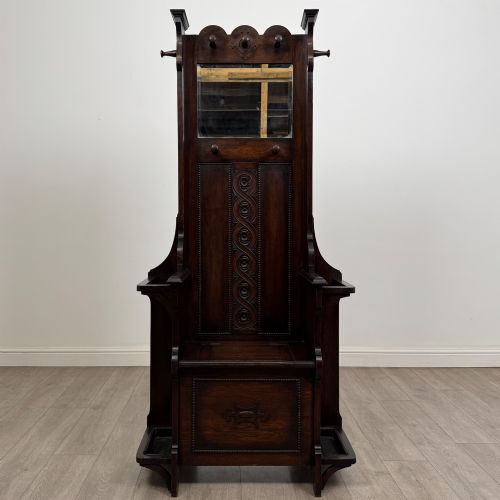
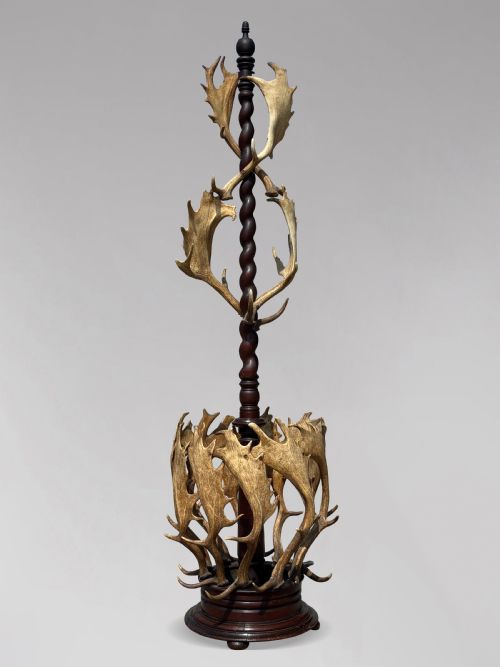
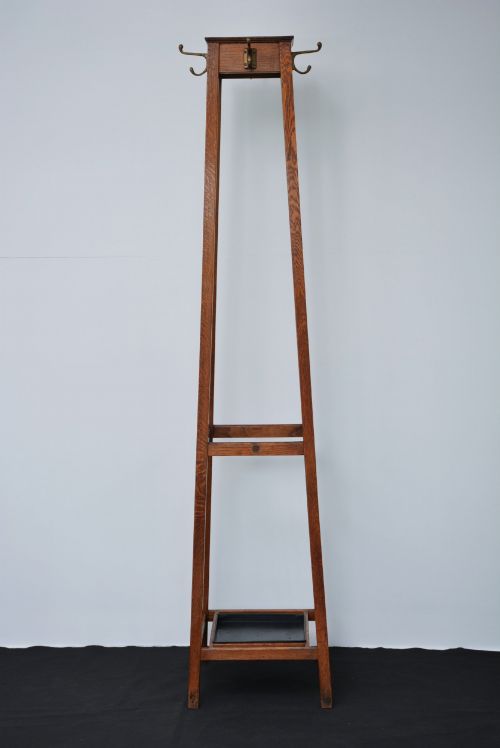
An oak coat tree encompasses freestanding hall stands, coat stands, and wall racks designed for domestic entryways. The pieces on this page span the Victorian and Edwardian eras, stretching from mid-nineteenth century Gothic Revival and Black Forest interpretations to early twentieth century Arts and Crafts designs.
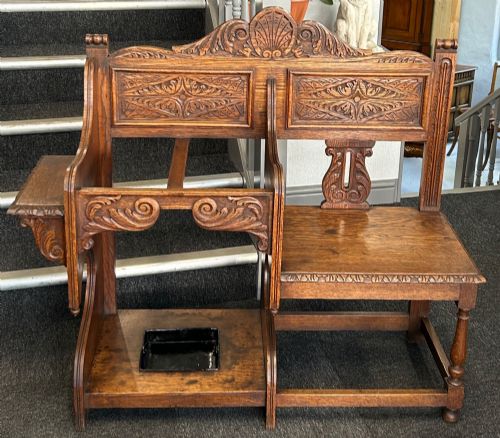
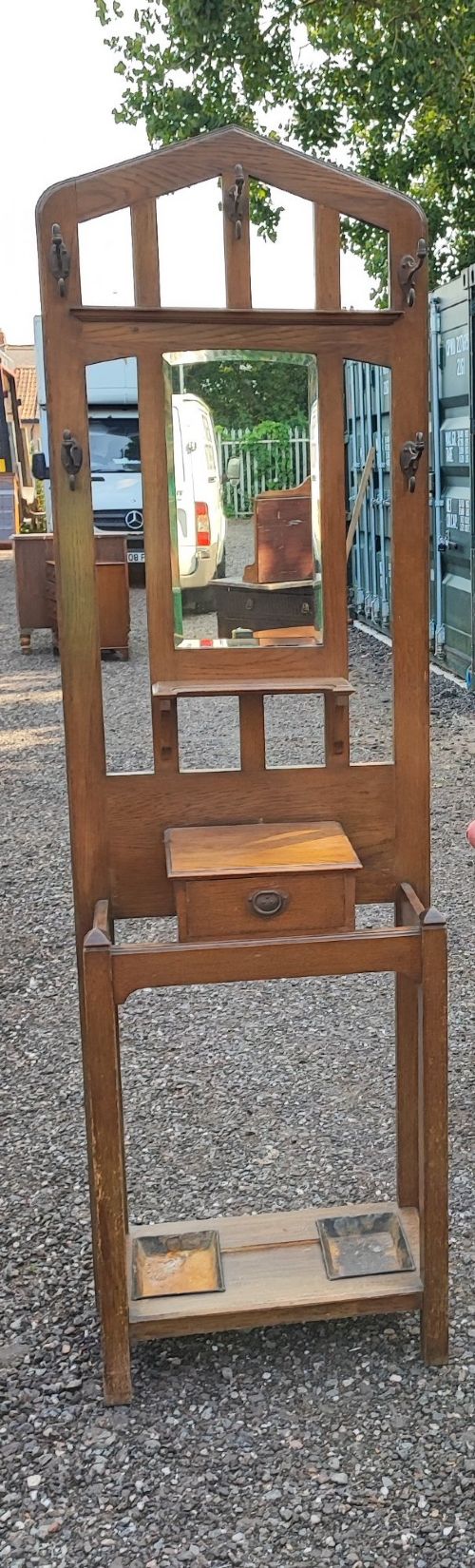
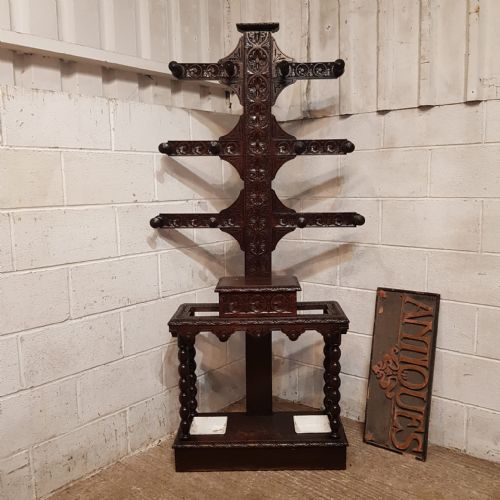
Most examples function as multi-use hall furniture, combining hat hooks, coat pegs, umbrella holders and drip trays into a single timber frame. Larger versions incorporate bench seating, mirrors, and carved motifs such as Green Man masks.
Makers adapted the form across decades, moving from heavily carved Victorian architectural statements to lighter Edwardian utility and industrial twentieth century variants.
Materials and construction
Solid oak provides the structural backbone of these pieces, appearing in dark Victorian finishes, golden quarter-sawn boards, and lighter early twentieth century tones. Joinery relies on traditional pegged mortise and tenon construction to support heavy winter garments and wet umbrellas.
Makers integrated functional hardware directly into the timber frames, incorporating cast iron, brass, and metal hooks alongside zinc or ceramic drip trays. Secondary materials such as cow horn, glass, and carved antler occasionally accent the oak structures in specific Black Forest and nineteenth century examples.
Listings feature oak material predominantly, paired with brass, iron, and occasional horn elements across Victorian to 1950s eras.
Craftsmanship and design
The standard of carving defines the upper tier of these pieces, distinguishing crisp relief work on Green Man masks and linenfold panels from mechanical factory output. Timber selection plays an equally vital role, with figured golden oak and heavy solid scantlings marking out superior production.
Structural integrity and the retention of original fittings dictate long-term worth. Superior items retain matching brass or cast iron hooks, intact drip trays, and original mirrors without silvering loss, whilst inferior examples often suffer from replaced hardware or moisture damage at the base.
J. Parker of Woodstock·Fischel·Astrola·William Whiteley
The Oak Coat Tree Glossary
- Hallstand
- A piece of hallway furniture combining coat hooks, a mirror, and umbrella storage. These items anchor the entrance of a home.
- Green Man
- A sculptural face carved from foliage, frequently appearing on Victorian and Edwardian oak hall furniture. This motif symbolises rebirth.
- Drip tray
- A metal or ceramic basin set into the base of a coat stand to catch rainwater from wet umbrellas. They protect timber floors from moisture.
- Gothic Revival
- An architectural and decorative style drawing on medieval forms, visible in pointed arches and heavy tracery. Pieces in this style often feature robust carved oak.
- Revolving hat stand
- A rotating upper section designed for multiple hats, allowing easy access in confined spaces. This mechanism requires precise internal engineering.
Oak Coat Tree: Frequently Asked Questions
Where should an oak coat tree go?
These pieces suit entrance halls, boot rooms, and wide corridors where guests arrive. Their vertical footprint makes them efficient for narrow spaces.
Position the stand away from direct heat sources to prevent the oak timber from splitting or warping over time.
How do I maintain the oak finish?
Dust the carved surfaces regularly with a dry cloth and apply a traditional beeswax periodically to nourish the grain. Avoid modern liquid polishes containing silicone.
Keep the metal drip trays clean and dry to prevent rust transfer onto the wooden base of the stand.
How do I date an oak hall stand?
Examine the hardware, fixing screws, and mirror bevelling to establish the manufacturing period. Hand-cut joinery and dark finishes typically point to the nineteenth century.
Lighter golden oak tones and simpler chamfered edges usually indicate an Edwardian or Arts and Crafts origin.
Are these stands suitable for daily use?
Solid timber construction makes these pieces robust enough for everyday family life. The weight of the heavy oak base prevents tipping under a full load of winter coats.
Distribute heavier garments evenly around the pegs to maintain balance on freestanding models.