
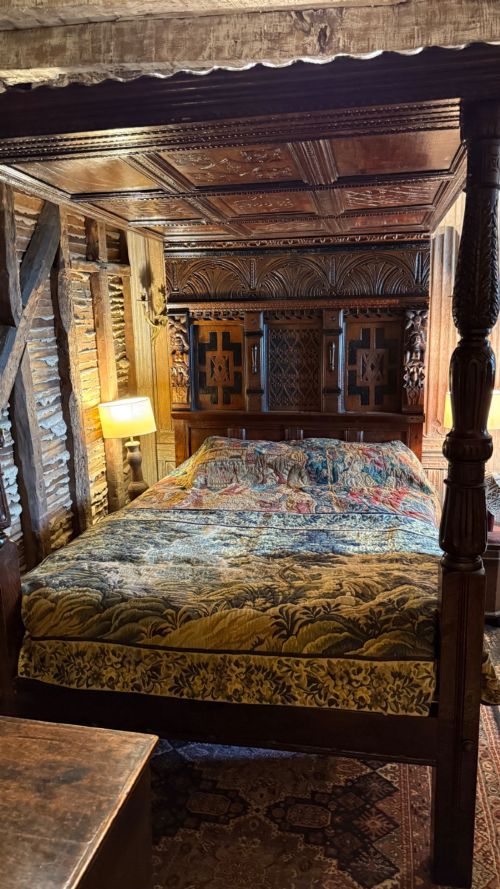


Wooden Four Poster Bed
A wooden four poster bed brings grand architectural presence and deep historical craft directly into the bedroom.
Wooden Four Poster Bed
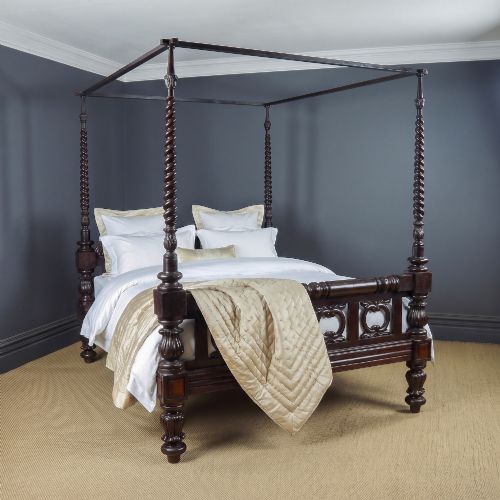
A wooden four poster bed establishes a dominant architectural presence in a room through upright corner posts supporting an overhead tester or canopy. This selection spans centuries of design, ranging from heavy seventeenth-century oak frameworks to refined nineteenth-century mahogany interpretations.
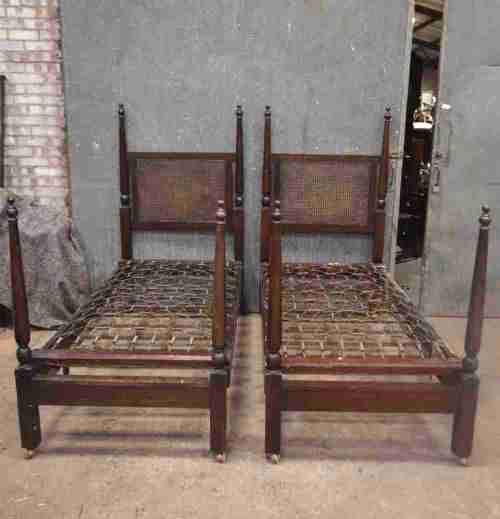
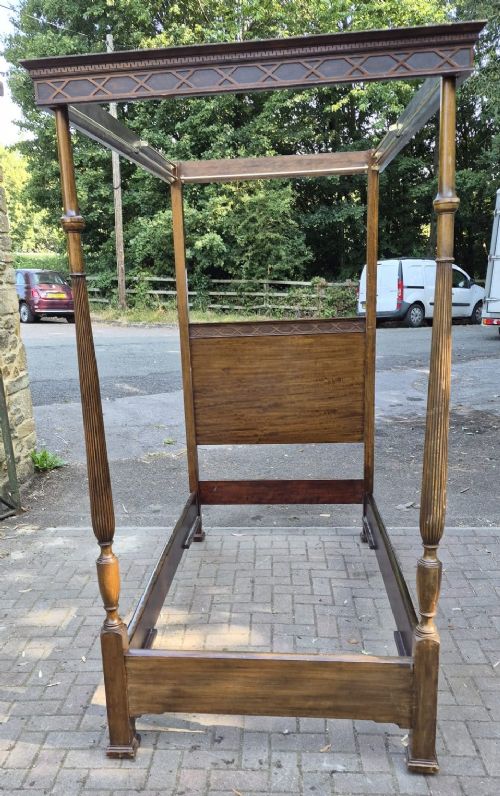
The varieties encountered here extend beyond standard domestic sizes to include single formats, double scales, and specialised pieces such as pet furniture and architectural salvage components. Regional diversity emerges clearly through English oak examples alongside Chinese hardwood and Anglo-Indian colonial iterations.
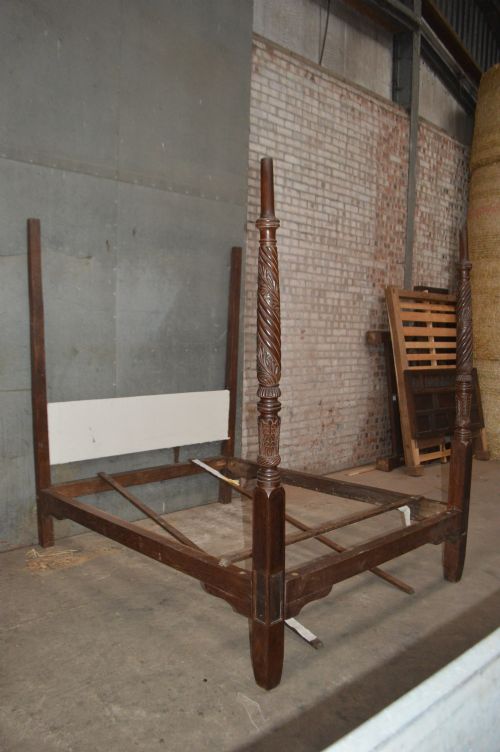
Period expressions fluctuate considerably across the inventory, touching upon Jacobean, Regency, Victorian, and Edwardian aesthetic movements. Buyers encounter complete bedsteads alongside independent bed posts ready for architectural integration.
Distinctions in Quality and Execution
The standard of carving on the upright posts and headboards separates exceptional examples from simpler utilitarian pieces. Crisp, deep relief work executed by skilled hands commands greater visual authority than shallow or mechanical decoration.
The integrity of the timber and the retention of original structural components determine the overall merit of a bedstead. Pieces that maintain their primary framing timbers without extensive modern replacements demonstrate superior historical value.
Canine occupants of the nineteenth century enjoyed equal luxury, as evidenced by the surviving carved mahogany dog four poster bed.
Howard And Sons
The Wooden Four Poster Bed Glossary
- Bergere
- A type of enclosed armchair or inset bed panel featuring woven cane or wickerwork. It adds a lighter textural contrast to heavy wooden framing.
- Half Tester
- A canopy framework that projects from the wall over the head of the bed without requiring full front support posts. This format suits more compact interior spaces.
- Inlay
- A decorative technique where contrasting woods or materials are fitted into recessations flush with the surface. Fruitwood is commonly utilised for this ornamental detailing on dark oak backdrops.
Wooden Four Poster Bed: Frequently Asked Questions
How do I fit a modern mattress into an antique wooden four poster bed?
Many historical beds feature dimensions that deviate from contemporary standard mattress sizes. Custom mattress fabrication is frequently necessary to achieve a proper fit within the antique wooden frame.
Supporting slats and foundations usually require discreet modern adaptation to ensure adequate structural support without altering the visible historical exterior of the bedstead.
How do I tell a seventeenth-century oak tester bed from a later revival piece?
Authentic seventeenth-century construction relies on traditional joinery methods such as mortise and tenon joints secured with wooden pegs. Tool marks left by hand adzes and primary saw blades provide vital physical evidence of early production.
Revival pieces produced during the Victorian or Edwardian eras often display standardised machine-cut components and modern fastening hardware. Examining the underside of the tester and the interior frame reveals these structural indicators.
What is the difference between a full tester and a half tester bed?
A full tester bed incorporates four complete vertical posts that support a solid wooden or fabric-draped canopy covering the entire length of the sleeping surface. This configuration creates a fully enclosed architectural canopy overhead.
A half tester utilises only two primary posts positioned at the head of the bed, supporting a canopy that projects partially over the pillows. This lighter design was favoured for smaller chambers and mid-nineteenth-century interiors.
How should I care for the wood finish on an antique four poster bed?
Routine maintenance requires gentle dusting with a soft, dry cloth to prevent particulate accumulation on carved surfaces and mouldings. Avoid silicone-based sprays and commercial polishes that can degrade historical wax and shellac finishes over time.
Maintaining stable relative humidity in the bedroom protects the timber from splitting or warping. Periodic application of microcrystalline wax preserves the lustre of mahogany and oak without harming the patina.