

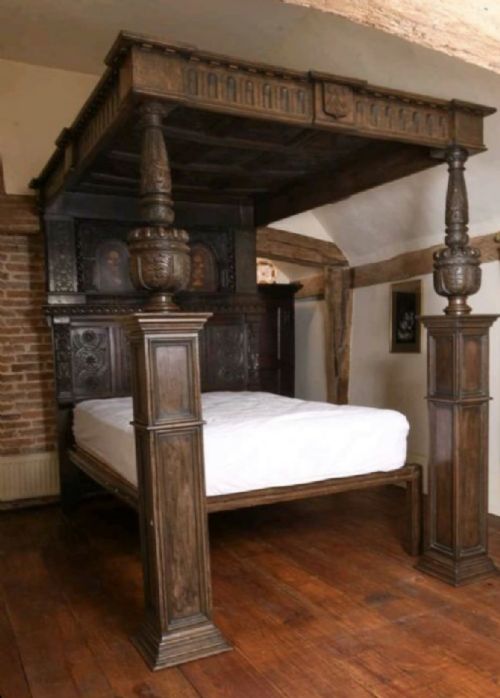


Carved Wood Canopy Bed
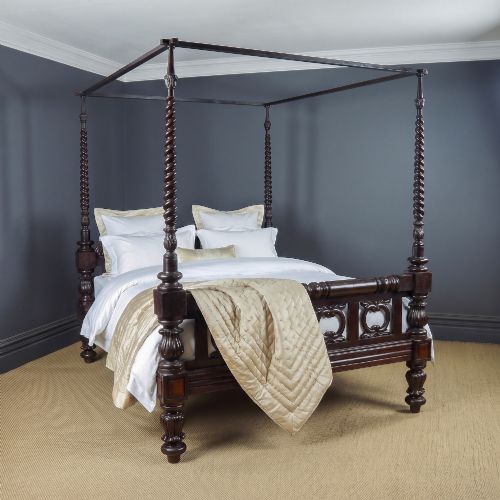
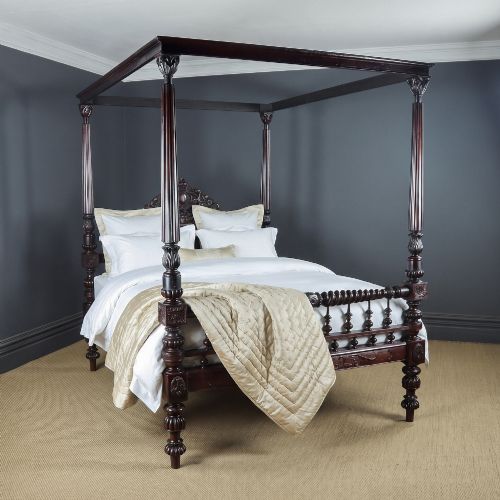
A carved wood canopy bed creates an immediate architectural focus in a room, bringing height, presence, and traditional craftsmanship to a principal bedroom.
Carved Wood Canopy Bed
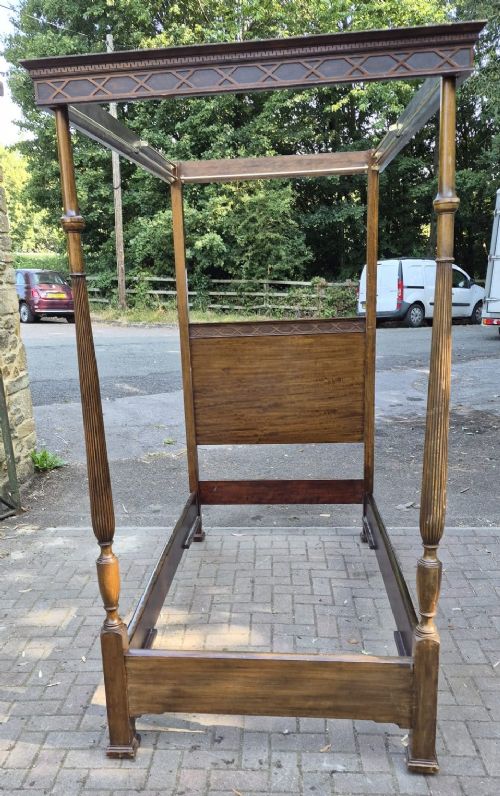
A carved wood canopy bed is a substantial architectural sleeping structure defined by vertical posts supporting an overhead tester or frame. When you search for a carved wood canopy bed, you encounter a range of historic examples spanning several centuries.
The selections available here include substantial pieces from the seventeenth, eighteenth, and nineteenth centuries, alongside revival pieces and colonial examples. Oak and mahogany form the primary structural timbers across these eras.
Four poster beds and tester beds dominate the offerings, occasionally accompanied by associated bed crowns. These pieces range from restrained Georgian revival forms to richly ornamented Anglo-Indian colonial designs.
Materials and construction
Makers utilised dense timbers such as mahogany, oak, teak, and various hardwoods to bear the considerable weight of the superstructure and tester frame. These woods were chosen for structural stability and their capacity to hold deep, detailed hand-carved ornamentation along the posts and headboards.
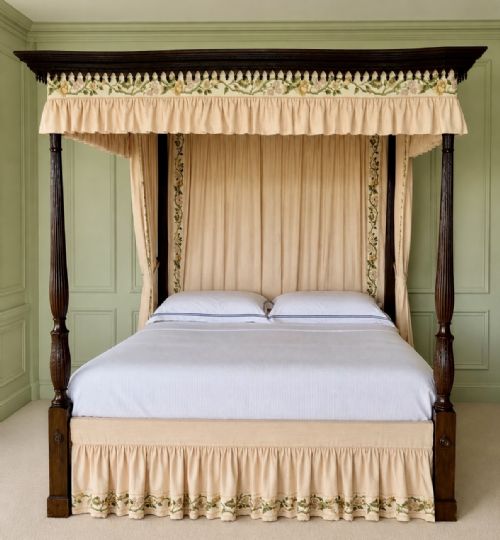
Construction relied heavily on traditional joinery techniques to secure the towering posts to the bed frames and upper testers. Textile elements, fabrics, and ratan panels frequently complement the heavy timber frames in regional styles like Anglo-Indian colonial pieces.
Early canopy beds were essentially wooden rooms within rooms, designed to keep out freezing draughts and the occasional wandering midnight farmyard fowl.
Judging quality and execution
The depth, crispness, and artistic ambition of the hand carving separate standard pieces from exceptional examples. Superior items display fluid, deeply undercut foliage, drapery, or geometric motifs executed by skilled hands rather than mechanical replication.
Proportion and structural integrity dictate the standing of a piece within its period. High-quality examples maintain harmonious architectural balance between the heavy corner posts and the overhead tester, using dense timbers that have aged with desirable patination.
Howard & Sons
The Carved Wood Canopy Bed Glossary
- Bed crown
- A decorative wall-mounted canopy or architectural element placed above a bed to drape textiles. These pieces frame the head of the bed without requiring full vertical posts.
- Anglo-Indian
- A style of furniture produced in India during the British colonial period, typically combining British form with local exotic hardwoods and intricate native carving traditions.
- Tester bed
- An alternative term for a four poster bed featuring an overhead wooden frame. The structure often supported curtains to retain warmth in historic chambers.
Carved Wood Canopy Bed: Frequently Asked Questions
How do I fit modern mattresses?
Many historic four poster beds were built to historic dimensions that differ from standard modern mattress sizes. Custom mattress makers frequently supply bespoke dimensions to fit these traditional frames.
Slat systems or modern supportive bases can often be integrated discreetly within the historic wooden rails to ensure proper support without altering the visible exterior structure.
How were these beds used?
Historic four poster beds served as status symbols and functional retreats in grand homes. Heavy curtains or textiles were originally hung from the tester canopy to block drafts and provide privacy in unheated rooms.
Over centuries, the emphasis shifted from warmth and privacy to architectural grandeur and the display of fine cabinetmaking and carving skills.
How do I care for timber?
Maintain stable indoor humidity levels to prevent the dense hardwoods and structural timbers from splitting or warping over time. Avoid placing these large structures near direct heat sources or strong sunlight.
Apply traditional beeswax or microcrystalline wax sparingly to nourish the wood and preserve the historic surface finish, buffing gently with a soft cloth.
How do I date the periods?
Dating relies on identifying the prevailing style of the carved motifs, the choice of timber, and the construction methods used in the frame. Oak is more prevalent in seventeenth-century pieces, while mahogany dominates eighteenth and nineteenth-century examples.
Revival pieces often combine historic design vocabulary with slightly different proportioning or machine-assisted joinery alongside hand finishing.