

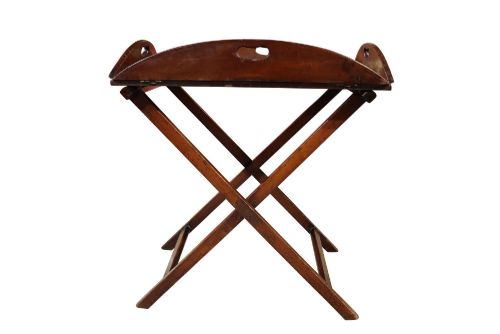
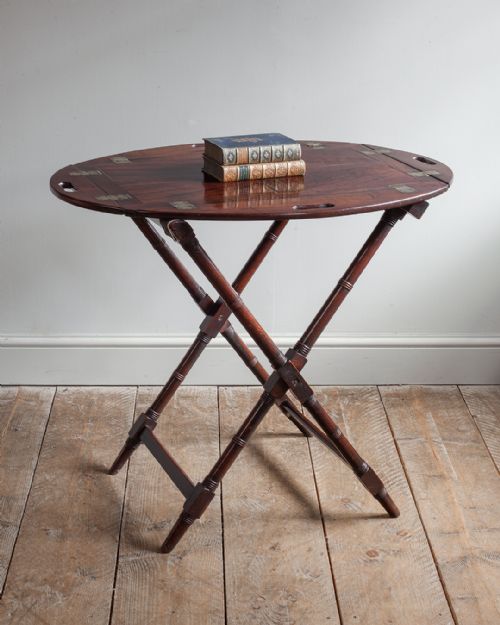
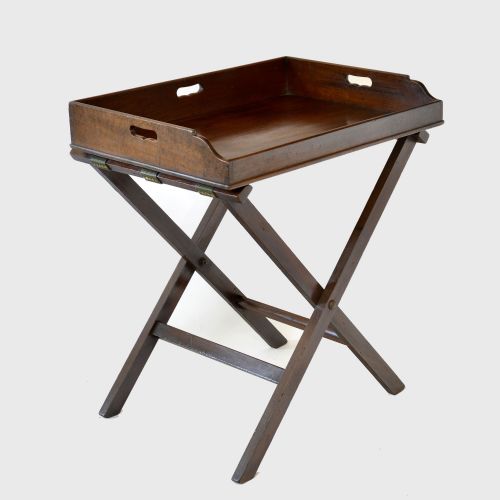
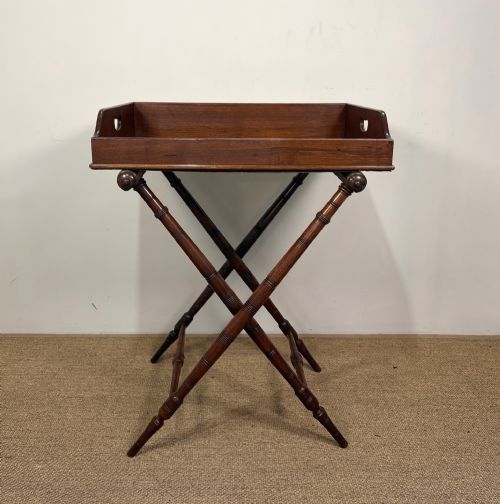

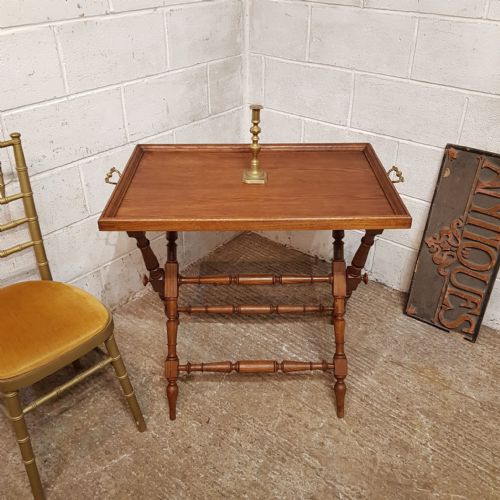


Wooden Folding Tray Stand
A wooden folding tray stand provides a portable surface that combines a removable tray with an collapsible base for practical serving.
Wooden Folding Tray Stand
A wooden folding tray stand unites a portable serving tray with an X-frame or folding base, designed to pack away when not in use. These pieces appear in forms ranging from traditional butlers trays to occasional coffee tables, tiered cake stands, and serving tables.
The selections span centuries of cabinet-making, with examples stretching from the eighteenth century and the Georgian period through the Victorian era into the early twentieth century. Common materials include mahogany, oak, and walnut, alongside brass and copper elements on specific tables.
Materials and Construction
Cabinet-makers utilised timbers such as mahogany, oak, and walnut to build both the trays and the supporting stands, employing solid wood and occasional veneers. Brass hinges, handles, and occasionally complete metal trays or tea services appear alongside textile webbing on selected variants.
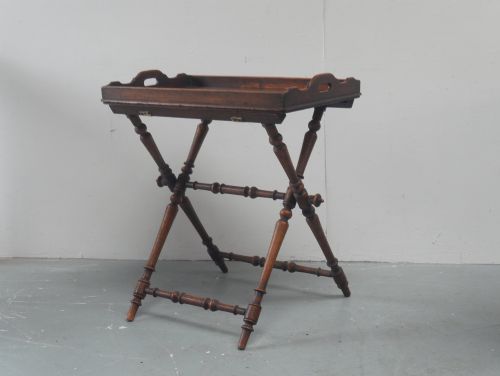
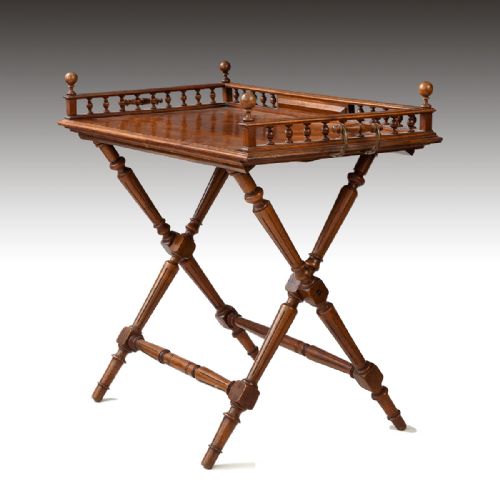
Joinery techniques focus on mobility, incorporating hinged frame legs that collapse smoothly beneath drop-flap or removable trays. Carving appears on specific Victorian and Gothic Revival pieces, while turning shapes the legs of numerous Georgian and Edwardian examples.
One extraordinary late Victorian stand once carried drinks alongside a complete set of boat oars.
Evaluating Quality
The standard of a wooden folding tray stand rests upon the choice of timber and the precision of the folding mechanism. Timbers selected with rich grain patterns and substantial thickness elevate the piece above plain or thinner equivalents.
Original stands that retain their matching trays demonstrate superior integrity compared to later married pairs. Subtle carving, tight joinery, and patinated brass hardware distinguish the finest examples from utilitarian workshop output.
The Wooden Folding Tray Stand Glossary
- Butler's tray
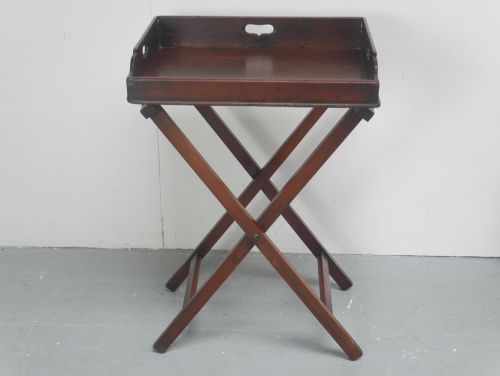
- A removable wooden tray with raised sides, frequently featuring hinged flaps that allow the edges to drop down for serving. These trays lift off their supporting frame entirely.
- Folding stand
- A collapsible X-frame or scissor-leg base designed to support a tray and fold flat for storage. Such stands permit rapid clearing of dining or drawing spaces.
- Drop-flap
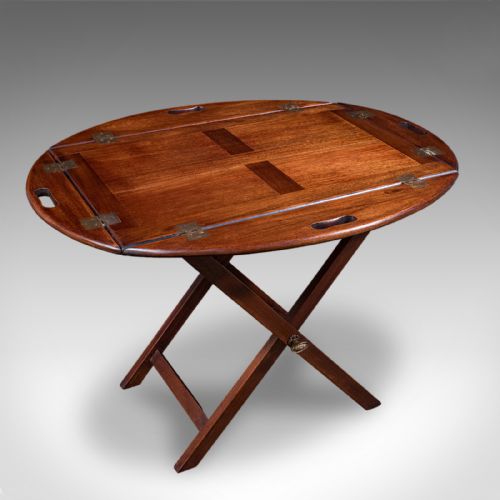
- A hinged section of a tray rim that lowers to create an extended flat surface or lifts to contain items securely during transport. These flaps rely on small brass hinges.
- Tiered stand
- A structure holding multiple levels of trays or plates, often seen in cake stands and occasional tables from the Victorian and Edwardian periods.
- Gothic Revival
- A nineteenth-century style drawing on medieval architectural motifs, visible in pointed arches, heavy tracery, and dark oak construction on selected tray stands.
Wooden Folding Tray Stand: Frequently Asked Questions
What is a wooden folding tray stand?
A wooden folding tray stand is a portable furniture combination consisting of a removable top tray and a collapsible base. This design allows users to serve food or drinks and store the entire unit flat when not in use.
Such pieces range from Georgian mahogany butlers trays to Victorian oak stands and Edwardian serving tables. They bridge the gap between fixed occasional tables and utilitarian serving equipment.
How were these stands used historically?
Historically, servants utilised these stands to transport tea, wine, or meals from kitchens to drawing rooms or dining spaces. The removable tray acted as a serving platter while the stand remained stationary.
Once the meal or gathering concluded, the tray returned to the stand or the service items were cleared, and the base folded away. This mobility suited the fluid entertaining habits of Georgian and Victorian households.
Are the trays removable from the stands?
Most traditional examples feature a tray that lifts completely off the supporting folding frame without mechanical fixings. This allowed servants to carry the tray independently of the base.
Some variations secure the tray with ledges, rails, or specific fittings to prevent sliding during use. Buyers should examine whether a specific piece is designed to separate or remain as a single folding table.
How do I date an antique tray stand?
Dating relies on timber selection, structural joinery, hardware style, and decorative carving. Georgian pieces often display straight-grained mahogany and simple frames, whereas Victorian examples may feature carved oak or walnut and brass hinges.
Later Edwardian and 1930s pieces introduce lighter oak finishes, alternative wood types, or revival styles. Comparing the patination on both the tray and the stand helps confirm whether the components are original to one another.
How do I live with a folding tray stand?
A wooden folding tray stand functions well as a flexible side table, drinks station, or coffee table in modern living spaces. Its collapsible nature allows it to serve as extra surface area during gatherings and store away discretely afterward.
Maintenance involves treating the wooden surfaces with appropriate wax or polish and protecting finishes from excessive moisture. Placing coasters on the tray preserves historical polished timber surfaces from beverage rings.